
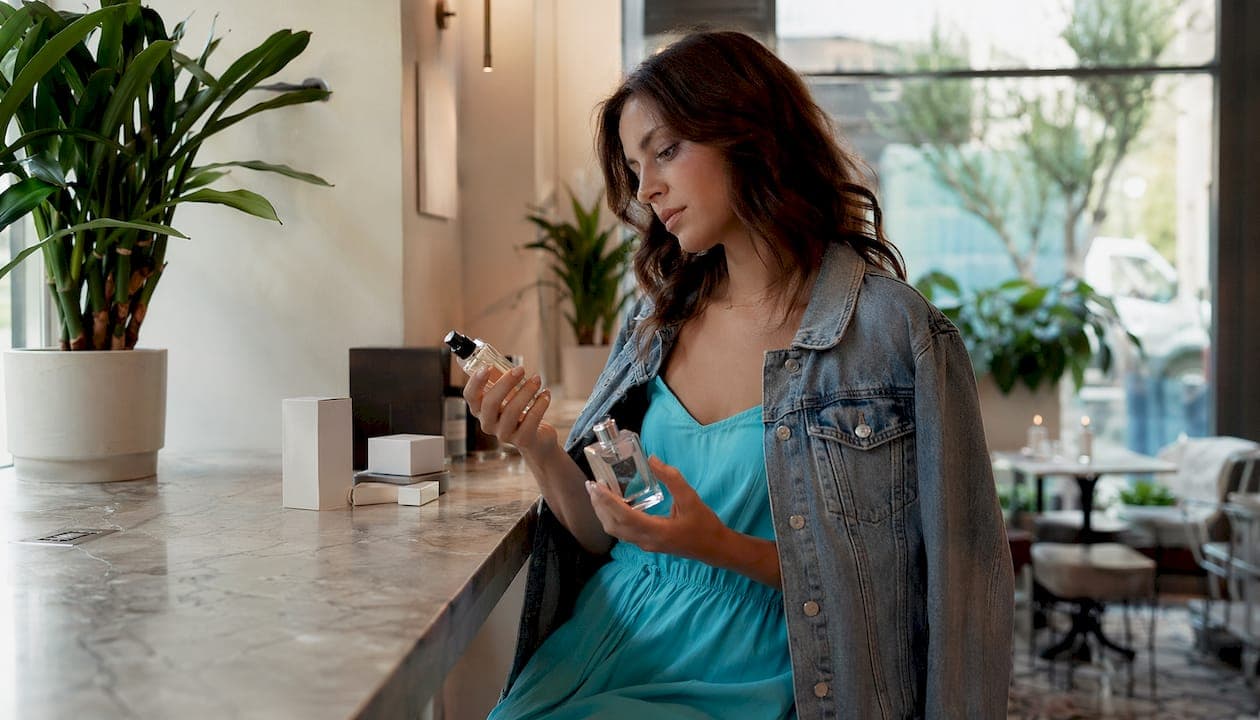
How do department store and online perfume prices actually compare?
Online perfume retailers typically undercut department store prices by a significant margin, and that gap is the central fact every budget-conscious shopper needs to understand before buying. Department stores charge full MSRP and offset it with loyalty points, gift sets, and seasonal coupons. Authorized online discounters typically offer lower prices by reducing overhead costs.
The tradeoff is not purely about price. Department stores give you sealed, current-stock packaging, a trained associate, and the ability to spray a scent on your wrist before spending a dollar. Online channels give you better prices on known fragrances but require you to vet the seller carefully.
| Factor | Department store | Authorized online retailer |
|---|---|---|
| Price vs. MSRP | Full price, offset by promotions | Lower than full MSRP by a noticeable percentage |
| Authenticity assurance | High (direct brand stock) | High when buying from vetted sellers |
| Ability to sample | Yes, in-store testers | No (unless samples ordered separately) |
| Convenience | Immediate pickup | Delivered to your door |
| Return policy | Usually straightforward | Varies by retailer |
Quick comparison highlights:
- Department stores suit first-time buyers, gift shoppers, and anyone who needs the bottle today.
- Online discounters suit repeat buyers who already know the scent and want the best price per milliliter.
- Authenticity risk lives mainly in unverified third-party marketplace listings, not in dedicated fragrance sites.
- Shipping costs can narrow the online price advantage on smaller orders.
Price comparison: where the real savings come from
The price of the same 100ml bottle of a designer fragrance can vary notably between a department store counter and an online discounter on the same day. That spread is not random. Department stores price at MSRP because the brand requires it; discounters source through authorized distribution channels at lower cost and compete on margin.

Department store promotions do close the gap, but only at specific moments: friends-and-family events, Black Friday, and holiday gift-set season. Outside those windows, the shelf price is the shelf price. Online prices fluctuate more freely, which means a scent you track across three or more retailers will show you the real market floor rather than a single retailer's sticker.
Pro Tip: Price per milliliter is the only honest unit of comparison. A 60ml bottle listed at a "deal" price can cost more per ml than a 100ml bottle at full retail. Divide the total price by the bottle size before you decide.
One pricing trap worth knowing: some online listings advertise steep discounts on less common bottle sizes, say a 40ml or 75ml, where the per-ml math is actually worse than a standard 100ml at a modest discount. Check price per milliliter before assuming a smaller bottle is a better deal.
Shipping costs are the other variable. A $12 shipping fee on a $40 bottle erases most of the online savings. Many authorized online retailers offer free shipping above a threshold, so timing a purchase to hit that minimum matters.
Quality and authenticity: what actually differs by channel
Department stores receive stock directly from brand distributors, which means sealed packaging, current batch codes, and no storage uncertainty. That freshness guarantee is real, and for a $150 bottle it matters.
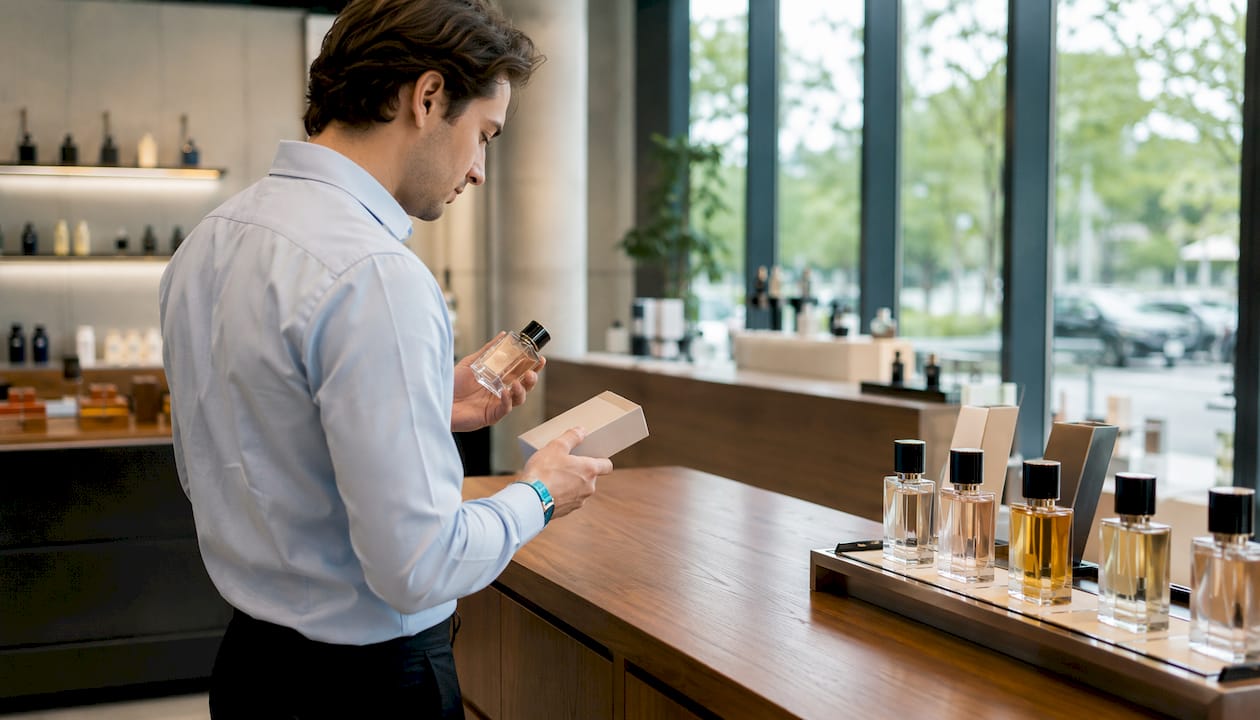
Authorized online discounters maintain authentic inventory too. The authenticity risk concentrates in third-party marketplace listings where a seller has no verified storefront, not in dedicated fragrance sites with established track records. The distinction between a gray-market discounter and a counterfeit seller is important: gray-market stock is genuine product that moved through non-brand distribution channels. The juice is the same; the brand's warranty is not.
Authenticity check tips before buying online:
- Confirm the seller is "sold and dispatched by" the retailer itself, not a third-party listing on a marketplace.
- Look for a physical address, customer service contact, and a clear return policy on the retailer's site.
- Cross-reference the bottle price against two or three other trusted sellers. A price that sits 60%–70% below every other listing is a red flag.
- Check that the listed concentration (EDP vs. EDT) and bottle size match exactly what you want.
- Read recent customer reviews specifically mentioning packaging condition and scent accuracy.
Return policies differ sharply between channels. Department stores generally accept returns with a receipt, no questions asked. Online retailers vary from full refunds to store credit only, and some fragrance discounters do not accept returns on opened bottles. Read the policy before you buy, not after.
Pro Tip: For buying perfume online safely, stick to retailers with a dedicated fragrance catalog, visible contact information, and reviews that mention authentic packaging. A marketplace listing with five reviews and no storefront is not worth the savings.
How to shop smartly for perfume both online and in-store
The channel you choose should match what you already know about the scent. If you have never worn it, go to a department store first. Spray it on skin, not a blotter, and wear it for an hour. Top notes fade; the dry-down is what you will actually live with. Testing on skin accounts for your unique chemistry, and that interaction can completely change whether a fragrance works for you.
If testing in-store is not possible, order a sample or discovery set before committing to a full bottle. Blind buying a $120 fragrance online is a gamble that sampling eliminates for a few dollars.
Shopping checklist:
- Know the exact name, concentration, and bottle size before comparing prices online.
- Use at least three trusted retailers to establish the real market price for that specific version.
- Calculate price per milliliter for every option, including gift sets that bundle travel sizes.
- Check the retailer's shipping threshold and return policy before adding to cart.
- Time larger purchases around Black Friday, holiday gift-set season, or department-store coupon events.
- For gifts, consider the department store: polished packaging and easy exchanges matter more than a $15 savings.
Timing purchases is underrated. Department stores run their deepest fragrance deals during friends-and-family promotions and holiday windows. Online discounters tend to run flash sales and loyalty events year-round, so a shopper who tracks prices consistently will catch deals the casual buyer misses entirely.
Pro Tip: Track prices across retailers for your signature scent over a few weeks before buying. Many "sale" tags are set against an inflated original price, and the real discount only shows up when you compare across the market.
What 2026 fragrance retail data tells us about Parfumla's approach
The price spread in fragrance retail is wide enough that the channel you choose can cost or save you the equivalent of a second bottle. Price differences between department stores and online discounters reach 40%–50% on popular designer scents, and that gap holds even after accounting for shipping on orders above free-shipping thresholds.
Experts frame the department store premium as a "service cost": you are paying for the physical environment, the trained associate, the immediate availability, and the easy return path. That cost is justified for first-time buyers and gift shoppers. For a repeat buyer who already owns a bottle and wants a backup, it is overhead with no return.
Parfumla operates as an authorized online discounter with a large catalog of fragrances, covering popular designer names, niche houses, and celebrity scents. Significant savings off retail prices are available across the catalog, with detailed product reviews to support informed purchasing. Shipping covers both the US and EU, which matters for shoppers comparing total landed cost against a department store pickup.
| Shopper profile | Best channel | Typical savings vs. MSRP |
|---|---|---|
| First-time buyer, unknown scent | Department store | — |
| Repeat buyer, known scent | Authorized online discounter | 20%–50% |
| Gift buyer needing same-day pickup | Department store | — |
| Budget shopper, flexible timing | Online, timed to sales | 20%–50% |
The gray-market versus authorized distinction matters here. Parfumla sources from verified channels, which is what separates a legitimate online discounter from a marketplace listing with no accountability. The price is lower than a department store counter; the product is the same.
How to spot counterfeit or problematic perfume
Counterfeit risk is highest in third-party marketplace listings from sellers without verified authorization. A dedicated fragrance retailer with a real storefront and a track record is a fundamentally different risk profile from a random listing on a large marketplace.
Physical signs of a counterfeit or compromised bottle include uneven font on the box, a batch code that does not match the bottle and box, loose or poorly fitted caps, and a scent that smells sharper or thinner than expected. Genuine fragrance has a consistent, layered opening; a counterfeit often smells like a flat approximation of the original.
For spotting authentic discount fragrances, the most reliable method is buying from retailers with a dedicated fragrance catalog rather than general marketplaces. If a price sits dramatically below every other listing for the same bottle and concentration, that gap is almost never explained by legitimate sourcing. Real discounts cluster within a recognizable range; outliers are outliers for a reason.
Key Takeaways
Online perfume discounters typically beat department store prices by 20%–50%, but the right channel depends on how well you know the scent and how much the shopping experience matters to you.
| Point | Details |
|---|---|
| Price gap is real | Online discounters offer 20%–50% below MSRP; department stores offset with promotions. |
| Price per milliliter matters | Always divide total price by bottle size to find the true unit cost before buying. |
| Authenticity risk is channel-specific | Risk concentrates in unverified marketplace listings, not in dedicated fragrance retailers. |
| Sample before blind buying | Testing on skin or ordering a sample prevents costly mismatched full-bottle purchases. |
| Timing amplifies savings | Black Friday, holiday events, and loyalty days deliver the deepest legitimate discounts. |
The real shift happening in perfume retail right now
Department stores are not losing the fragrance category. They are losing the repeat purchase. A shopper who discovered Dior Sauvage at a Nordstrom counter three years ago has no reason to pay counter price for their fourth bottle. That is the structural shift driving online fragrance growth in 2026: discovery still happens in-store, but repurchase increasingly happens online.
What that means practically is that the two channels are more complementary than competitive. Use a department store to learn what you actually like on your skin. Use a vetted online discounter to buy it at a better price once you know. The shoppers who treat this as an either-or decision tend to either overpay at the counter or take unnecessary authenticity risks online.
Price comparison tools have made buyers sharper. It is common for shoppers to check multiple retailers before buying, making it the default behavior for anyone paying attention. That savviness is why the "service cost" premium at department stores is under more pressure than it was five years ago. Brands and department stores know this, which is why loyalty programs and gift-with-purchase sets have become more generous.
Parfumla's position in this market is straightforward: a catalog deep enough to cover both designer staples and niche finds, priced below retail, with the sourcing transparency that separates a real discounter from a marketplace gamble. For a shopper who has done the in-store testing and knows what they want, that combination is where the value sits in 2026.