
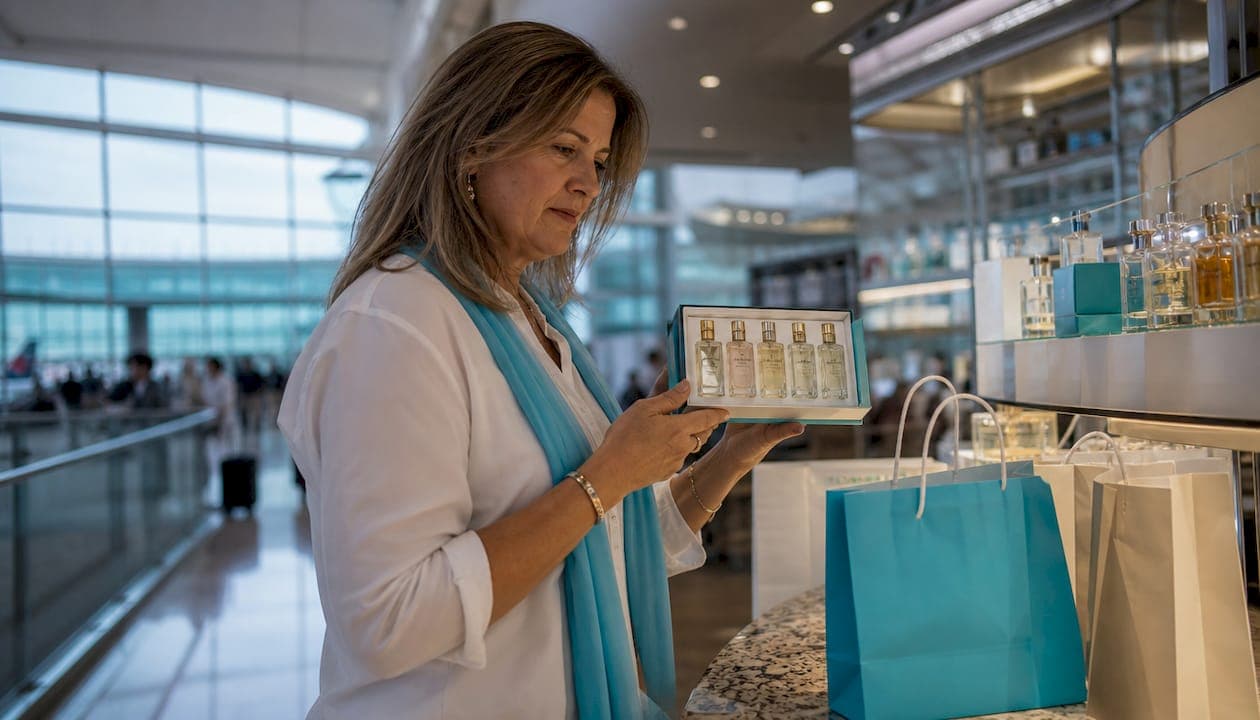
Duty-free fragrance pricing is defined as the sale of perfumes in tax-exempt international zones, where import duties, VAT, and local sales taxes are removed from the final price. That sounds like a guaranteed deal, but the reality is more complicated. Duty-free shops carry retailer markups and high airport overhead costs that eat into the tax savings. Understanding what is duty-free fragrance pricing, and how those competing forces interact, is what separates a smart purchase from an expensive mistake.
What is duty-free fragrance pricing and how does it work?
Duty-free fragrance pricing removes government-imposed costs from the sale price. Specifically, import duties, VAT, and sales taxes are stripped out because the purchase happens in an international transit zone, not on domestic soil. The traveler, not the local economy, is the intended customer.
The catch is what stays in the price. Duty-free retailers still apply a retailer markup, pay airport rent, and cover staffing costs. Those costs are substantial. Airport rent can exceed $1,500 per square meter annually, which is far above what a downtown department store pays. That overhead gets passed directly to the shopper.
The result is a pricing structure that looks like a discount but often delivers a modest one. Average actual savings on premium fragrances at major airport hubs can be as low as 2.3%, according to a 2026 tracking study. That figure puts the "duty-free deal" in sharp perspective.
How are duty-free fragrances priced compared to local retail?
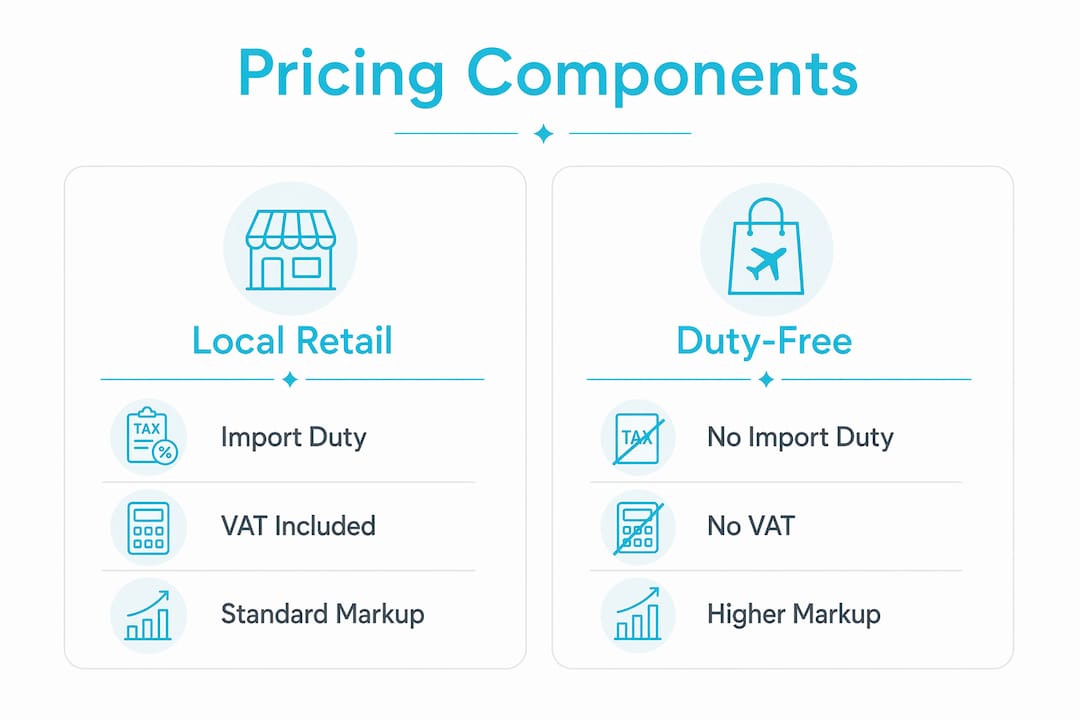
The pricing gap between duty-free and local retail comes down to two competing forces: tax removal and markup inflation. Duty-free retailers apply markups of 25–40% above wholesale cost. Department stores, by comparison, typically mark up 15–22% above wholesale. That difference is significant.
The reason duty-free markups run higher is operational. Airport locations carry security requirements, premium lease agreements, and 24-hour staffing demands that street-level retailers simply do not face. Those costs push the base price up before any tax exemption is applied.
| Pricing component | Local retail | Duty-free |
|---|---|---|
| Import duty | Included | Removed |
| VAT / sales tax | Included | Removed |
| Retailer markup above wholesale | 15–22% | 25–40% |
| Airport rent premium | None | High |
| Net savings for shopper | Baseline | Varies widely |
The table shows why the savings are real but inconsistent. In high-tax countries, removing VAT alone can produce a meaningful discount. In low-tax markets, the inflated markup can cancel out most of the benefit.
Pro Tip: Compare the duty-free price against the local retail price before you travel, not at the register. The markup offset is easiest to spot when you already know the home price.
What kinds of discounts are common on duty-free perfumes?
Travel-exclusive sets are the most visible offer type in duty-free fragrance shops. These bundles often include jumbo bottle sizes, matching body lotion, or a miniature travel spray alongside the main fragrance. In 2023, travel-exclusive gift sets at Singapore Changi were priced about $50 below the combined cost of the individual items at standard retail. That is a genuine saving, but it is not always the case.
Many bundles are designed to look appealing rather than deliver real value. The sticker price on a gift set can be lower than the sum of its parts, yet still higher than buying the fragrance alone at a local sale price. Exclusive packaging and limited-edition bottles add perceived value without reducing the unit cost of the scent itself.
Common offer types you will encounter at duty-free shops include:
- Travel-exclusive gift sets with jumbo or dual-size bottles
- Limited-edition packaging tied to seasonal travel periods
- Loyalty program points redeemable on future purchases
- Complimentary samples or miniatures with qualifying purchases
- Pre-order discounts for travelers who book online before departure
The most reliable way to evaluate any of these offers is to calculate the price per milliliter, not the total sticker price. A 200ml bottle at $120 costs $0.60 per ml. A 100ml bottle at $70 costs $0.70 per ml. The larger bottle wins on unit cost even if the upfront price looks higher.
Is duty-free always cheaper than online or local retail?
Duty-free is not always the cheapest place to buy a fragrance. Seasonal sales and online deals regularly undercut duty-free prices, especially during major retail events. A fragrance marked down 30% during a department store sale will beat a duty-free price that reflects a 2.3% average discount.
Exchange rates add another layer of complexity. Buying a fragrance priced in a foreign currency introduces conversion costs. Dynamic currency conversion at duty-free registers often applies unfavorable rates, quietly eroding the savings before you leave the terminal.
Brands also play a role. Perfume brands and duty-free retailers aim for consistent global pricing rather than the lowest local price. That means duty-free prices are set against a global average, not the cheapest market rate available anywhere. A fragrance you could buy for less in a specific country's local market will not necessarily be cheaper at that country's airport.
| Channel | Typical price range | Key variable |
|---|---|---|
| Duty-free airport shop | Tax removed, markup 25–40% | Regional tax rate |
| Local department store | Full tax, markup 15–22% | Local VAT rate |
| Online retailer | No physical overhead | Promotions and shipping |
The table shows that online retailers carry the lowest structural overhead. That is why online perfume prices are often lower than both duty-free and local retail, particularly outside of sale periods. Checking online prices before any airport purchase takes two minutes and can save you real money.
Practical tips for getting the best price on duty-free fragrances
Getting genuine value from duty-free fragrance shopping requires preparation, not luck. These steps give you a concrete advantage before and during your trip.
- Research local prices before you travel. Note the exact retail price of your target fragrance at home. That number is your benchmark at the duty-free counter.
- Pre-order online for in-store pickup. Many duty-free retailers offer 30–60 day pre-order windows for collection at the airport. Pre-ordering locks in the price and guarantees stock.
- Pay in local currency. Avoid dynamic currency conversion at the register. Use a credit card with no foreign transaction fees to pay in the local currency of the airport country.
- Calculate price per milliliter. Divide the total price by the bottle size in milliliters. This is the only reliable way to compare a travel set against a standard bottle.
- Know your customs limits. Bringing more fragrance than your country's duty-free allowance permits means paying import duties on arrival, which cancels the airport saving entirely.
- Check for VAT refunds at your destination. Some countries allow tourists to claim a VAT refund on purchases made in local stores. That refund can rival or beat the duty-free discount, especially in high-VAT markets.
Pro Tip: Track the price of your target fragrance on a budget perfume shopping site for two to three weeks before your trip. You will know immediately whether the airport price is a deal or just average.
Key Takeaways
Duty-free fragrance pricing removes taxes but adds higher retailer markups, so real savings depend on your home tax rate, the specific retailer, and whether you compare prices before you buy.
| Point | Details |
|---|---|
| Tax removal is real but partial | Import duties and VAT are removed, but markups of 25–40% remain in the price. |
| Average savings are modest | A 2026 tracking study found average actual savings on premium fragrances can be as low as 2.3%. |
| Online and local sales compete | Seasonal promotions and online retailers regularly offer lower prices than duty-free shops. |
| Price per milliliter is the key metric | Always divide total price by bottle size to compare travel sets and standard bottles fairly. |
| Preparation beats impulse buying | Researching prices before travel and pre-ordering online produces better outcomes than deciding at the counter. |
The duty-free myth I keep seeing travelers fall for
Every frequent traveler I have spoken with has a version of the same story. They spotted a familiar fragrance at the airport, saw the duty-free label, and assumed the price was the best available anywhere. They bought it without checking. Later, they found the same bottle for less at a local sale or online.
The duty-free label carries enormous psychological weight. It signals savings before you even look at the price tag. That is exactly what airport retailers count on. The combination of time pressure, travel excitement, and the word "duty-free" creates a buying environment where comparison shopping feels unnecessary.
The truth is that duty-free pricing is a blend of genuine tax exemption and strategic markup, and the buyer carries the responsibility of figuring out which force dominates in any given transaction. That is not a criticism of duty-free shops. It is just the reality of how airport retail economics work.
My advice is simple. Treat duty-free like any other retail channel. Check the price, calculate the unit cost, and compare it against what you already know. When duty-free wins that comparison, buy with confidence. When it does not, walk past the counter and find perfume discounts online instead. The deal is out there. It just is not always at the airport.
— Hamster777
Parfumla: authentic fragrances at prices worth comparing
Knowing how duty-free fragrance pricing works puts you in a stronger position as a shopper. Parfumla gives you a direct alternative with over 14,000 perfumes, including luxury, niche, and celebrity scents, priced up to 60% below standard retail.
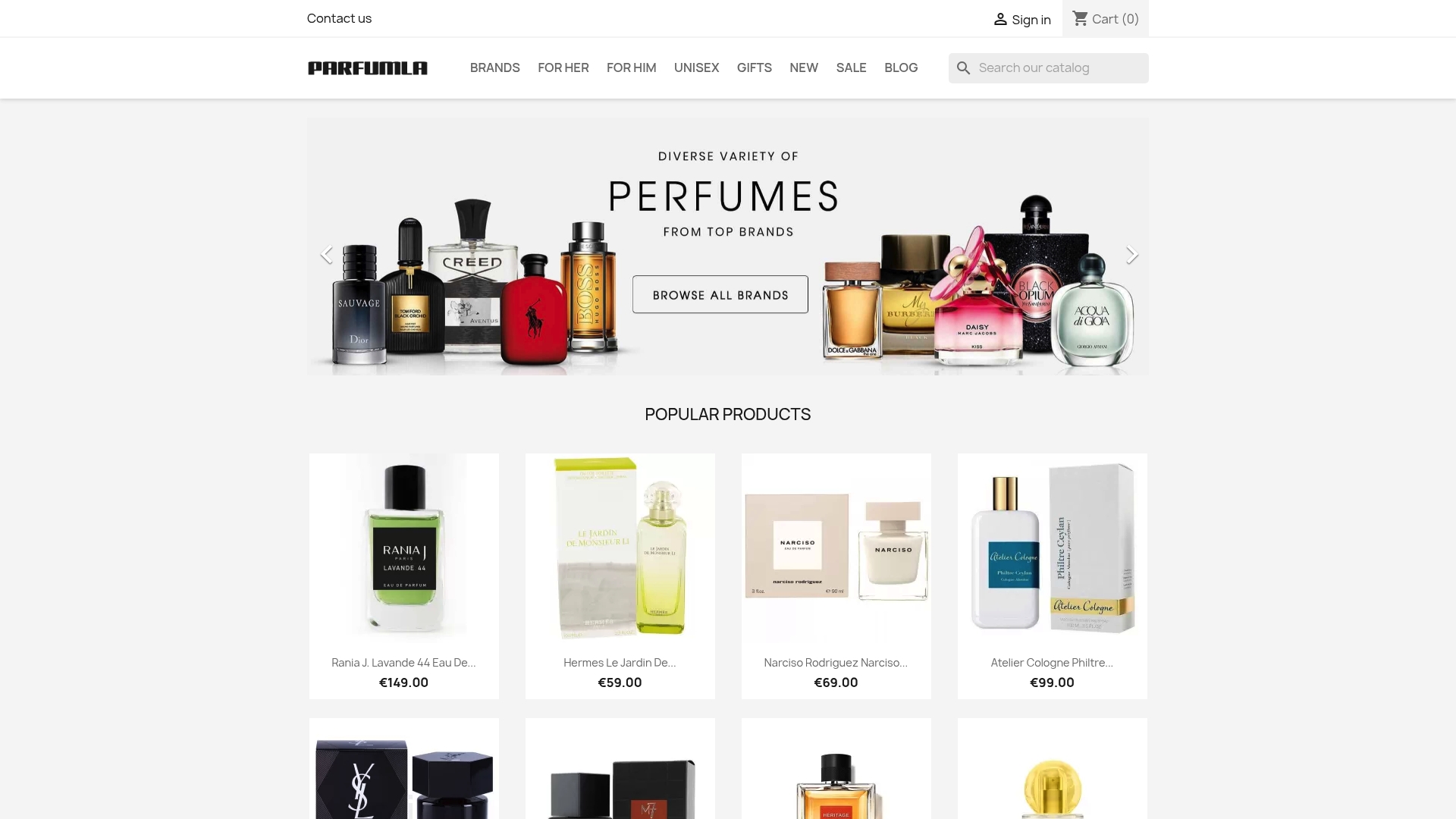
Every listing on Parfumla includes detailed reviews so you can buy with confidence, whether you are picking up a classic like NARCISO RODRIGUEZ Eau de Toilette or a niche option like Ex Nihilo Venenum Kiss. Parfumla ships reliably across the US and EU, so the price you see is the price you pay, without airport markups or exchange rate surprises.
FAQ
What does duty-free fragrance pricing actually mean?
Duty-free fragrance pricing means perfumes are sold without import duties, VAT, or local sales taxes applied, because the purchase occurs in an international transit zone. The final price still includes a retailer markup, which can be 25–40% above wholesale cost.
Are duty-free perfume prices always lower than local retail?
No. Average actual savings on premium fragrances at major airport hubs can be as low as 2.3%, and seasonal sales or online retailers often offer lower prices than duty-free shops.
How can I tell if a duty-free fragrance deal is genuine?
Calculate the price per milliliter and compare it against the local retail price you researched before traveling. If the duty-free unit cost is lower after accounting for any exchange rate costs, the deal is real.
Is pre-ordering duty-free fragrances worth it?
Pre-ordering online for airport pickup locks in the price, guarantees stock availability, and gives you time to compare prices before committing. Many retailers offer pre-order windows of 30–60 days before departure.
When is it smarter to buy fragrances online instead of duty-free?
Online retailers carry lower overhead than airport shops, so their prices are often more competitive outside of peak sale periods. If your target fragrance is available at a significant discount through an online retailer, that price will typically beat the duty-free option.