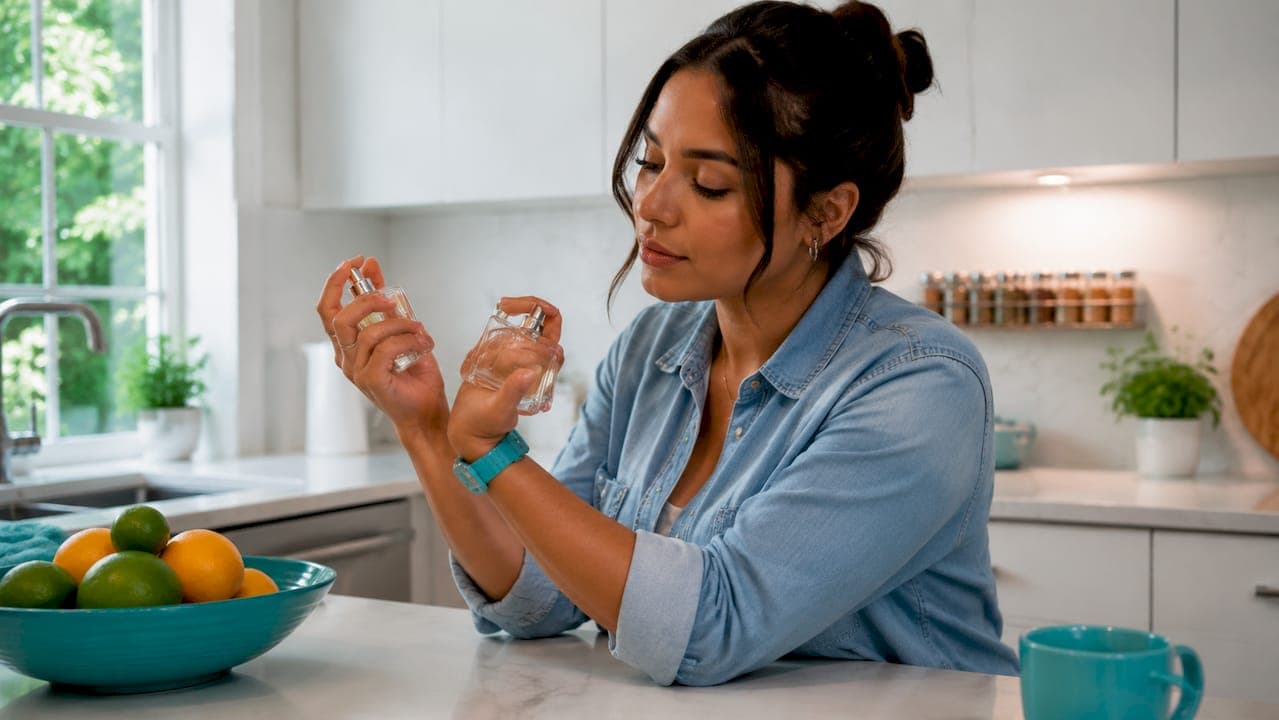
Eau de parfum and eau de toilette are defined by their fragrance oil concentration, which directly controls scent strength, how long the fragrance lasts on your skin, and which situations each type suits best. The difference between parfum and toilette is not simply a matter of one being "stronger" than the other. Perfumers treat each as a distinct formula, selecting different raw materials to create entirely different olfactory experiences. This guide covers concentration ranges, scent profiles, pricing, and application techniques so you can make a confident purchase decision.
What are the concentration differences in eau de parfum vs toilette?
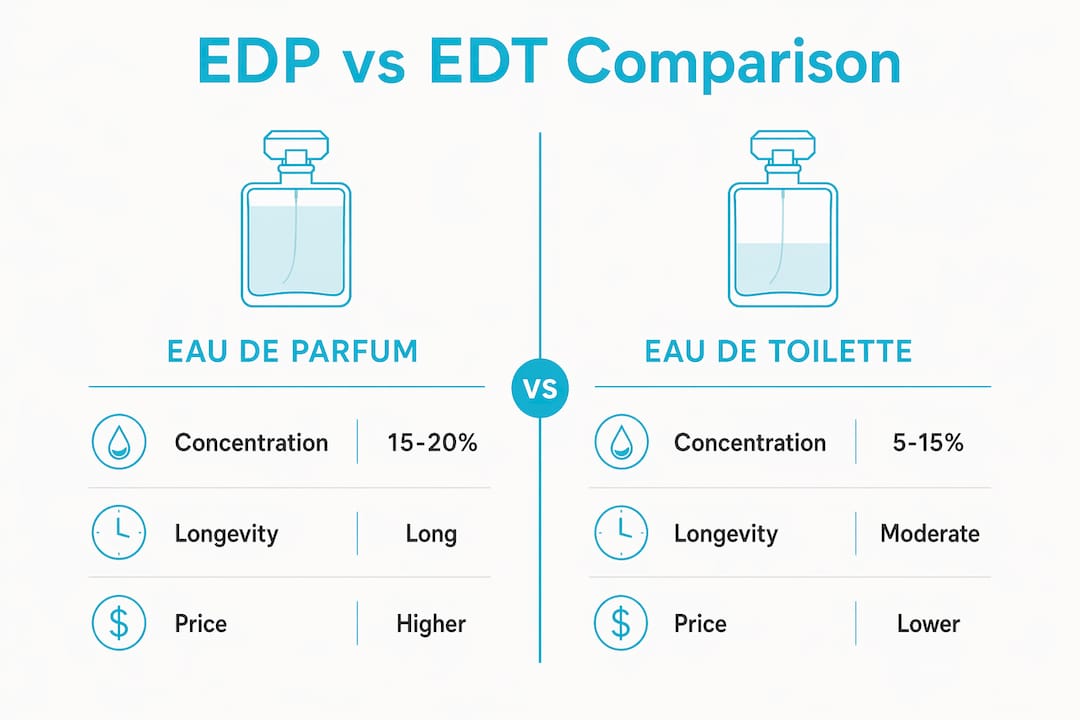
Eau de parfum contains 15–20% fragrance oil, while eau de toilette sits at 5–15%. That gap directly affects how intensely a scent projects and how many hours it stays detectable on your skin. A higher concentration means more aromatic molecules competing for your attention, which is why an EDP typically lasts 6–8 hours compared to an EDT's 3–5 hours.
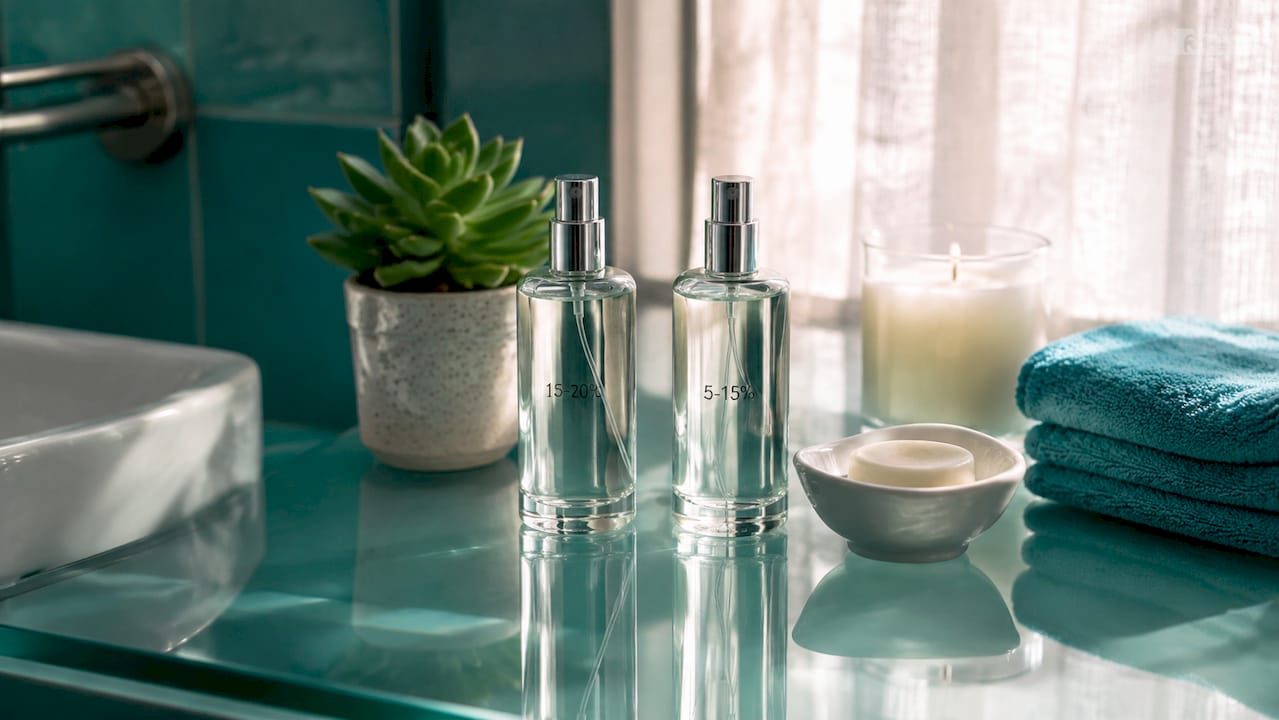
The table below shows how concentration translates into real-world wear:
| Fragrance Type | Concentration | Typical Longevity | Projection |
|---|---|---|---|
| Eau de Toilette (EDT) | 5–15% | 3–5 hours | Light to moderate |
| Eau de Parfum (EDP) | 15–20% | 6–8 hours | Moderate to strong |
One critical nuance: higher concentration does not guarantee better longevity. Skin chemistry, hydration level, and the quality of raw materials all influence how a fragrance performs. Some EDTs built around high-quality musks and woods outlast weaker EDPs on certain skin types. Concentration is the starting point, not the final verdict.
Pro Tip: Apply an unscented moisturizer before spraying any fragrance. Hydrated skin holds scent molecules longer, which matters especially for lighter EDTs.
How do EDP and EDT differ in scent profile and occasion?
The most surprising fact about eau de parfum vs toilette is that they are often composed as fundamentally different scents, not simply diluted versions of each other. Perfumers select distinct raw materials for each format. An EDT version of a fragrance might use neroli, a light citrus blossom, while the EDP version of the same fragrance replaces it with orange blossom absolute, a denser, richer material that behaves completely differently on skin.
This distinction shapes when and why you reach for each type:
- EDT strengths: Bright, transparent, and fresh. Ideal for warm weather, office environments, and daytime wear where a subtle presence is preferred. EDT's lighter character suits situations where you want to smell good without overwhelming the room.
- EDP strengths: Richer drydown, deeper base notes, and longer trail. EDP suits cooler weather, evenings, and formal settings where a more complex, lasting impression is the goal.
- Skin chemistry: Your skin's pH, natural oils, and even diet alter how fragrance notes develop. A floral EDT can smell powdery on one person and green on another.
- Seasonal logic: Many fragrance lovers own both versions of a favorite scent, wearing the EDT in summer and the EDP from fall through winter.
Perfumers tailor the formula between EDT and EDP to evoke distinct emotional experiences, not just different intensity levels. Chanel No. 5 EDT and Chanel No. 5 EDP, for example, share the same DNA but feel like two separate moods. The EDT reads as airy and classic; the EDP reads as opulent and warm.
Pro Tip: When testing a new fragrance, spray it on your wrist and wait 20 minutes before deciding. The top notes that hit first are not the scent you will wear all day.
What are the price differences between EDP and EDT?
Eau de parfum costs more than eau de toilette in almost every case. The price gap between EDT and EDP can range $20–40 or more for the same fragrance line, reflecting both the higher concentration and the costlier base materials used in EDP formulas. Woods, ambers, and resins that anchor EDP compositions are simply more expensive to source than the citrus and aquatic notes that define many EDTs.
Here is how the value equation breaks down:
| Factor | EDT | EDP |
|---|---|---|
| Upfront cost | Lower | Higher |
| Cost per wear | Moderate (reapply more often) | Lower (lasts longer per spray) |
| Versatility | High (daily, casual, warm weather) | Moderate (best for specific occasions) |
| Bottle size options | Widely available in 30–100ml | Often sold in 50–100ml |
The value calculation depends on how you wear fragrance. If you spray once in the morning and forget about it, an EDP delivers better cost per wear because you use fewer sprays to achieve the same effect. If you enjoy the ritual of reapplying throughout the day, an EDT at a lower price point makes practical sense.
Budget-conscious shoppers should also consider that shopping for fragrances on a budget does not mean sacrificing quality. Discount retailers and authorized online stores regularly offer both EDT and EDP options at significant reductions from retail prices.
One more pricing factor worth knowing: marketing labels like "Intense" or "Parfum Strength" do not always mean more fragrance oil. These labels often indicate a formula restructured toward heavier base notes rather than a simple concentration increase. You are paying for a different scent experience, not just more oil per bottle.
How to sample, apply, and wear fragrance for best results
Getting the most from any fragrance starts before you buy. Follow this sequence to avoid costly mistakes:
- Sample on skin, not paper. Testing fragrance on skin rather than a paper strip is the only reliable way to judge how a scent will perform for you. Paper strips show top notes only. Your skin shows the full development from top through base.
- Apply to pulse points. Wrists, neck, and the inside of your elbows generate heat that amplifies fragrance projection. For EDTs especially, these spots extend wear time noticeably.
- Do not rub. Rubbing your wrists together after spraying breaks down fragrance molecules and flattens the scent. Spray and let it dry naturally.
- Layer strategically. Applying a matching or complementary body lotion before your fragrance creates a base that extends longevity. This technique matters more for EDTs, which fade faster. Applying fragrance at pulse points and layering are the two most effective techniques for maximizing wear time regardless of concentration.
- Reapply EDT midday. Carry a travel-size EDT for a midday refresh. A 10ml decant fits in any bag and costs very little. Learning how to sample perfumes affordably also helps you test multiple options before committing to a full bottle.
- Store correctly. Heat and light degrade fragrance oil. Keep bottles away from bathroom humidity and direct sunlight. A cool, dark drawer extends the life of both EDT and EDP significantly.
One underrated tip for EDP wearers: spray once on clothing as well as skin. Fabric holds scent molecules differently than skin and can project a fragrance for hours after your skin has warmed through the top notes.
Key takeaways
Choosing between eau de parfum and eau de toilette comes down to concentration, scent character, occasion, and how much you want to spend per wear.
| Point | Details |
|---|---|
| Concentration defines the baseline | EDP holds 15–20% fragrance oil; EDT holds 5–15%, directly affecting strength and longevity. |
| Formulas are not just dilutions | Perfumers use different raw materials for EDT and EDP, creating distinct scent profiles, not just weaker or stronger versions. |
| Occasion guides the choice | EDT suits daytime and warm weather; EDP suits evenings, cooler seasons, and formal settings. |
| EDP costs more but lasts longer per wear | The $20–40 price gap reflects costlier ingredients; EDP often delivers lower cost per application. |
| Application technique matters as much as type | Pulse point application, layering, and proper storage extend longevity for both EDT and EDP. |
What i have learned after years of wearing both
Most fragrance guides tell you to buy EDP if you want longevity and EDT if you want something light. That advice is too simple. I have worn EDTs that outlasted EDPs on my skin, and I have found EDPs that felt suffocating in summer heat even at a single spray. The label is a starting point, not a guarantee.
What actually matters is understanding your own skin. Dry skin loses fragrance faster regardless of concentration. If you have dry skin, an EDP is almost always the smarter buy because you get more hours without reapplying. If your skin runs oily or warm, even a well-chosen EDT will project confidently for most of a workday.
My other observation: people underestimate how much occasion shapes the right choice. I keep a fresh, citrus-forward EDT for client meetings and a rich, amber-based EDP for evenings out. Neither is better. They serve different purposes the way a linen shirt and a wool blazer do.
The one thing I push back on is the idea that EDP is always the premium choice. Some of the most technically impressive fragrances I have worn are EDTs, built around rare musks and precise accords that reward close attention. Narciso Rodriguez for Her EDT is a perfect example: quiet, skin-close, and surprisingly complex for a format often dismissed as lightweight.
If you are new to fragrance, start with an EDT. The lower price point lets you experiment without regret. Once you know what notes you love, move to the EDP version of your favorite and compare them side by side. That exercise teaches you more about fragrance than any guide can.
— Hamster777
Find your perfect scent at Parfumla
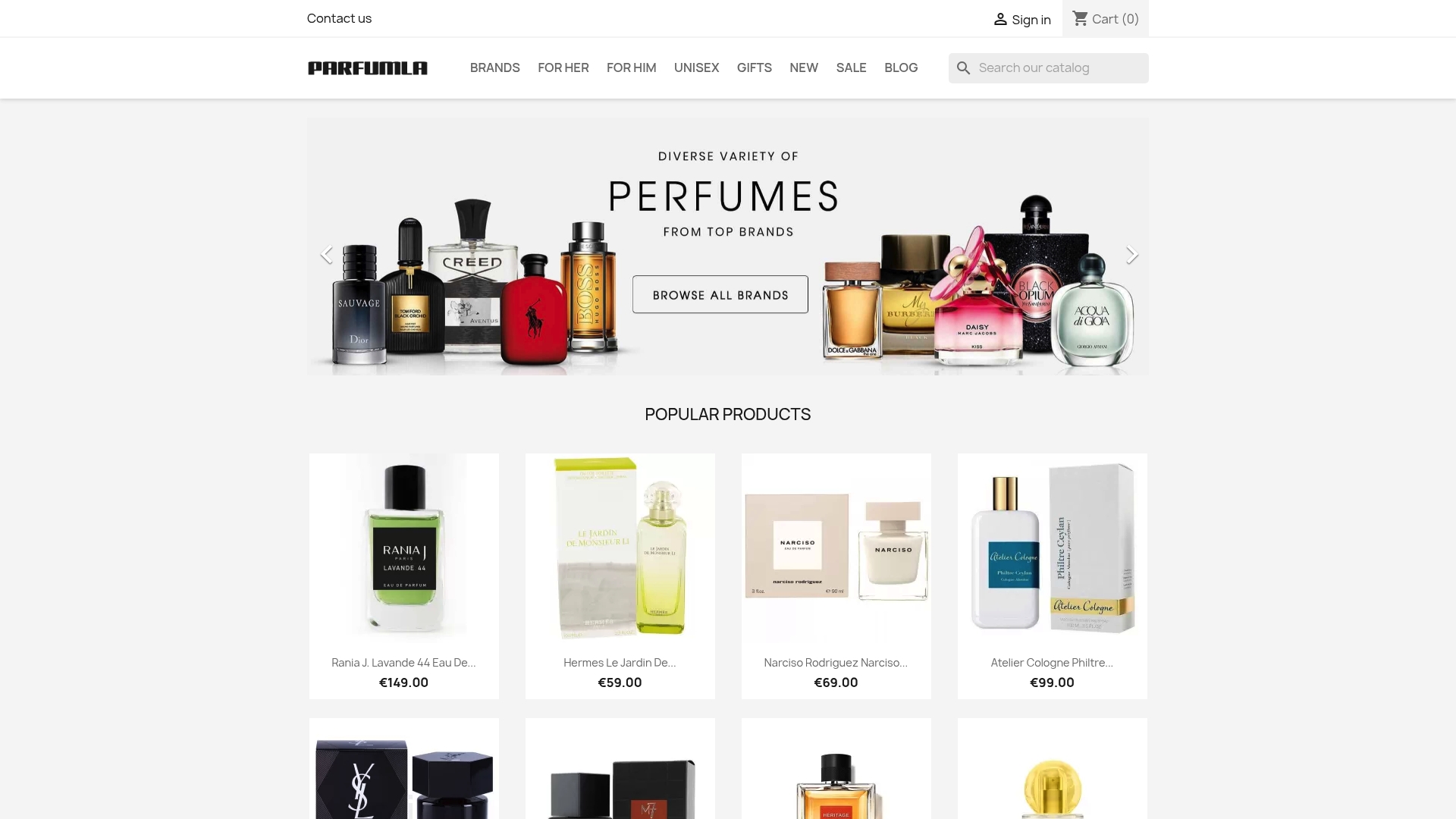
Parfumla carries over 14,000 fragrances at up to 60% off retail prices, covering everything from everyday EDTs to premium EDPs. If this guide has helped you narrow down what you are looking for, the next step is finding the right bottle. The Narciso Rodriguez Eau de Toilette for Women is a standout example of an EDT that punches well above its concentration. For an EDP with serious depth, the Narciso Rodriguez Eau de Parfum for Women shows exactly how the same DNA transforms between formats. Parfumla ships reliably across the US and EU, with detailed reviews on every product page to help you decide before you buy.
FAQ
What is the main difference between EDP and EDT?
Eau de parfum contains 15–20% fragrance oil and eau de toilette contains 5–15%. This concentration gap affects scent strength, longevity, and the raw materials perfumers choose for each formula.
Does EDP always last longer than EDT on skin?
Not always. Skin chemistry and formula quality can override concentration. Some EDTs built around high-quality musks outlast weaker EDPs depending on the wearer's skin type.
Is EDP worth the higher price?
For most wearers, yes. The higher upfront cost is offset by fewer applications needed per day, which lowers the cost per wear over time. The richer base materials also create a more complex scent experience.
When should i choose EDT over EDP?
Choose EDT for daytime wear, warm weather, office settings, or any situation where a lighter, fresher presence is appropriate. EDT's transparency makes it the more versatile everyday option.
Can i wear EDP in summer?
You can, but apply sparingly. One spray on a pulse point is usually enough. Heavy EDP application in heat can become overwhelming. Many fragrance lovers switch to EDT versions of their favorite scents during summer months.