
Eau fraîche is the lightest fragrance format on the shelf, built from mostly water and alcohol with just 1 to 3 percent fragrance oils, so it fades fast, often within an hour or two. Eau de cologne carries a bit more oil, roughly 2 to 5 percent, which gives it a bit more staying power and a slightly bolder presence on skin. Pick eau fraîche when you want a quick, low-commitment refresh. Pick cologne when you want something that reads as an actual scent choice without the weight of an eau de toilette or parfum.
Here's the quick version before you get into the weeds:
- Concentration: Eau fraîche sits at 1 to 3% oils; eau de cologne runs about 2 to 5%.
- Longevity: Eau fraîche typically lasts under two hours; cologne holds on for around 2 to 3 hours.
- Character: Eau fraîche leans watery and clean; cologne leans citrus and aromatic.
- Best for: Eau fraîche for gym bags and hot afternoons; cologne for a light daytime signature scent.
Key Takeaways
| Point | Details |
|---|---|
| Concentration gap | Eau fraîche runs 1 to 3% oils; eau de cologne runs about 2 to 5%, giving cologne more staying power. |
| Longevity difference | Eau fraîche typically fades under 2 hours; cologne holds on for roughly 2 to 3 hours on skin. |
| Scent character | Eau fraîche skews watery and soft; cologne leans citrus, herbal, and lightly woody. |
| Cost-per-wear matters | A cheaper light fragrance can cost more over time if it needs frequent reapplication. |
| Shop smart | Parfumla offers both formats across 14,000+ fragrances at up to 60% off retail, with reviews to guide the decision. |
Table of Contents
- Eau Fraîche vs. Cologne at a Glance
- What Is Eau Fraîche, Exactly?
- What Is Eau de Cologne, and How Is It Different?
- Why Does Fragrance Concentration Change How Long a Scent Lasts?
- How Do You Choose Between Eau Fraîche and Cologne?
- Common Myths About Cologne and Eau Fraîche
- Why Longevity Numbers Never Match the Label Exactly
- Where to Buy Eau Fraîche and Cologne Without Overpaying
- Sources
- FAQ
Eau Fraîche vs. Cologne at a Glance
Set them side by side and the gap is clear even before you get into notes or occasions. The difference between eau fraiche and cologne comes down to three numbers: oil percentage, hours on skin, and how often you'll need to reach for the bottle again.
- Fragrance-oil concentration: Eau fraîche, 1 to 3%. Eau de cologne, 2 to 5%.
- Typical longevity: Eau fraîche, under 2 hours. Cologne, about 2 to 3 hours.
- Scent profile: Eau fraîche is soft, watery, sometimes barely-there florals. Cologne leans citrus, aromatic herbs, and light woods.
- Best occasions: Eau fraîche after a workout or midday refresh; cologne for daytime wear, office settings, or warm-weather errands.
- Reapplication frequency: Eau fraîche needs a reapply every 1 to 2 hours if you want it noticeable; cologne usually gets you through a morning or an afternoon on one application.
The one number that actually changes your routine: if you're buying eau fraîche expecting eau de toilette performance, you'll be reapplying it three or four times a day. That's not a flaw. Budget your spray bottle accordingly.
What Is Eau Fraîche, Exactly?
Eau fraîche translates to "fresh water," and the name is almost literal. It's mostly water with a touch of alcohol and a small dose of fragrance oil, usually 1 to 3%. That's the thinnest concentration in mainstream perfumery, lighter than even a splash-style aftershave in some cases.
On skin, eau fraîche tends to last under two hours before fading into nothing. The notes lean toward watery, marine, or soft floral accords, plus the occasional gentle musk base. Nothing loud, nothing that lingers on a jacket collar three hours later.
- Formula is mostly water and alcohol with 1 to 3% fragrance oil.
- Longevity typically stays under two hours on skin.
- Common notes: marine, aquatic, light citrus, soft florals, clean musks.
- Lower alcohol and oil content often makes it gentler on sensitive skin than heavier formats.
- Best suited for hot climates, workouts, or a midday reset, rather than an all-day signature.
Pro Tip: Spray eau fraîche on clothing as well as skin. Fabric holds onto the lighter molecules longer than skin does, so you'll stretch that short lifespan by another 30 to 60 minutes without oversaturating your pulse points.
If you're someone whose skin reacts to stronger perfumes, eau fraîche's thinner alcohol and oil load is often the more comfortable option, not just the lighter one.
What Is Eau de Cologne, and How Is It Different?
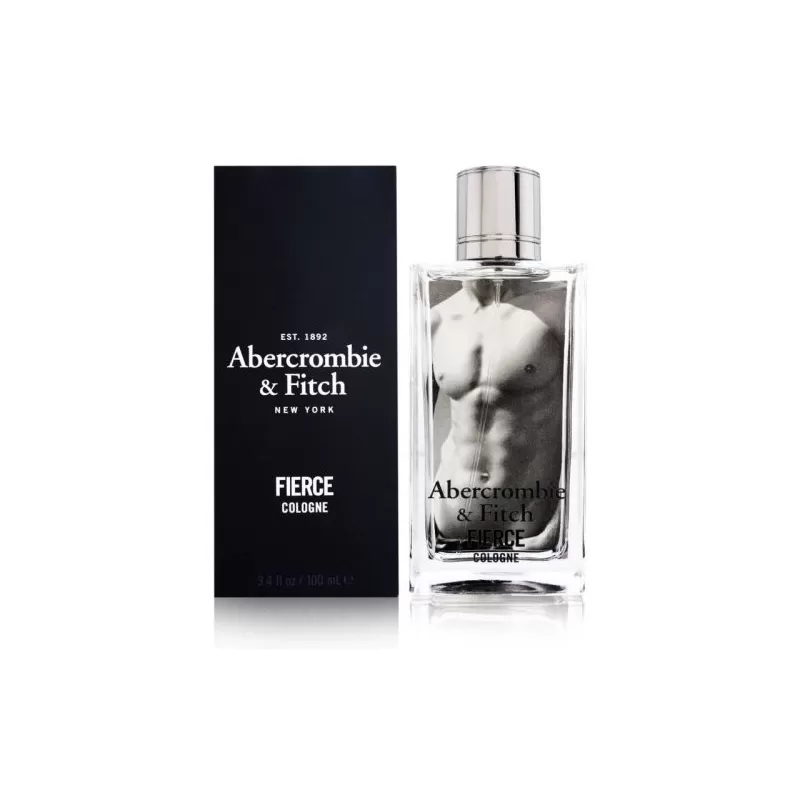
Eau de cologne sits one notch up from eau fraîche, typically holding 2 to 5% aromatic oils depending on the brand, with most sources putting the working range closer to 3 to 5%. That extra concentration buys you real staying power: cologne generally lasts 2 to 3 hours on skin, sometimes longer depending on the formula and how warm your skin runs.
Traditionally, cologne means citrus. Think bergamot, lemon, neroli, backed by aromatic herbs like lavender or rosemary and a light woody or musk base to anchor it. This is the format that built the modern men's fragrance category, though plenty of colognes today are marketed unisex or specifically to women.
- Concentration typically runs 2 to 5% aromatic oils. Scienceaplus pegs it closer to 2 to 4%.
- Typical longevity lands around 2 to 3 hours, longer than eau fraîche but shorter than eau de toilette.
- Classic notes: citrus top notes, aromatic herbs, light woods, occasional spice.
- Works well in warm weather since the citrus brightness doesn't feel heavy in heat.
- Easy to layer under a stronger fragrance later in the day if you want more depth by evening.
Cologne is the format most people reach for when they want something they can wear to work without anyone noticing they're wearing anything at all.
Why Does Fragrance Concentration Change How Long a Scent Lasts?
Concentration is the single biggest lever in how a fragrance behaves, and it's simpler than most perfume marketing makes it sound. Higher oil percentage means more aromatic material sitting on your skin, and more material takes longer to evaporate. Lower concentration means the alcohol and water carrier evaporate almost immediately, taking most of the scent with them.
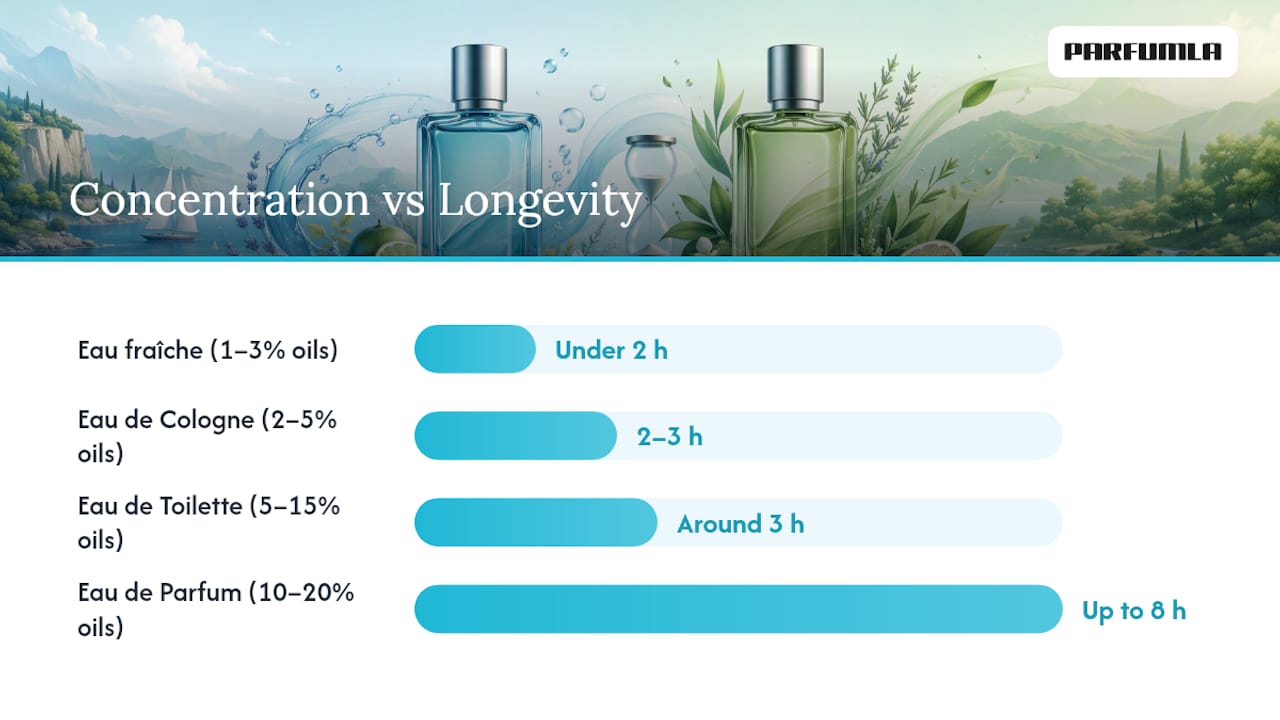
That's the entire mechanism behind why eau fraîche fades in under two hours while eau de cologne holds on for two to three. It's also why eau de toilette, at 5 to 15% oils, typically outlasts both, and why eau de parfum, at 10 to 20%, can run up to eight hours on the right skin.
Here's how concentration maps to real-world hours:
- 1 to 3% oils (eau fraîche): Under 2 hours. Light projection, barely there after the first hour.
- 2 to 5% oils (eau de cologne): Roughly 2 to 3 hours. Noticeable projection early, fades gradually.
- 5 to 15% oils (eau de toilette): Around 3 hours or more, per Southern Living's estimates.
- 10 to 20% oils (eau de parfum): Up to 8 hours, the biggest jump in the hierarchy.
None of these numbers are fixed. Dry skin holds fragrance worse than oily skin. Heat and humidity speed up evaporation, so a cologne that lasts three hours in spring might fade in ninety minutes during a July heat wave. Where you spray matters too: pulse points like wrists and neck run warmer and project scent better than, say, a forearm.
How Do You Choose Between Eau Fraîche and Cologne?
Match the format to what you actually need from the fragrance, not to which one sounds fancier on the label.
- Decide how long you need it to last. If you're out for two hours, eau fraîche works fine. If you need coverage through a full workday, cologne or something stronger makes more sense.
- Consider the setting. A quick errand or gym session calls for eau fraîche's subtlety. An office day or casual date suits cologne's slightly more defined presence.
- Factor in climate. Hot, humid conditions burn through lighter formats faster, so pack a travel-size bottle for reapplication if you're committed to eau fraîche in summer.
- Check your skin sensitivity. If alcohol-heavy formulas irritate you, eau fraîche's lower oil and alcohol content is usually the gentler pick.
- Do the cost-per-wear math. A cheaper eau fraîche bottle that needs three reapplications a day can cost more per wear than a pricier cologne you spray once. This retail pricing guide breaks down how upfront price and actual value rarely match.
Application technique matters as much as the bottle you buy. Spray two to three times on pulse points, moisturize with an unscented lotion first to help the scent hold, and keep a travel decant on hand if you're leaning on eau fraîche for all-day freshness.
Pro Tip: Buy a small sample or travel size before committing to a full bottle of either format. Eau fraîche and cologne both develop differently depending on your skin chemistry, so a sample tells you more in one wear than any product description will.
Pro Tip: Decant a full bottle into a small atomizer for your bag. It's the cheapest way to guarantee you can reapply eau fraîche without carrying the whole bottle around.
Common Myths About Cologne and Eau Fraîche
The word "cologne" causes more confusion than any other term in the fragrance aisle. In everyday American English, people use "cologne" to mean any men's fragrance, regardless of its actual concentration. Eau de cologne is a specific category with its own oil percentage. A men's eau de toilette or eau de parfum gets called "cologne" constantly, even though it's a stronger format entirely.
- Myth: Eau fraîche always smells cheap. Concentration doesn't determine quality. Plenty of eau fraîche formulas use the same quality ingredients as stronger concentrations, just diluted further.
- Myth: Cologne is only for men. Eau de cologne is a concentration category, not a gender category. Citrus-forward cologne formulas exist across men's, women's, and unisex lines.
- Myth: Eau fraîche is a type of cologne. It's not. Eau fraîche and eau de cologne are separate concentration classes that happen to sit near each other on the strength scale.
- Price doesn't always track concentration. A cheap eau de cologne can still outprice a well-made eau fraîche, so check the percentage on the label, not just the price tag.
Why Longevity Numbers Never Match the Label Exactly
Every hour estimate you read, including the ones in this article, comes from average testing conditions. Real-world results shift based on a few consistent factors.
- Skin chemistry: Oily skin holds fragrance oils longer than dry skin, sometimes adding an extra hour of wear.
- Ambient temperature and humidity: Heat accelerates evaporation, which shortens longevity for every concentration, not just light ones.
- Application location and amount: Pulse points (wrists, neck, behind ears) run warmer and project scent more effectively than cooler areas like forearms.
- Formulation differences: Two eau de colognes at the same oil percentage can still perform differently depending on which aromatic compounds they use.
A useful test: apply your fragrance and check back at the one-hour mark in whatever climate you actually live in. That single wear test tells you more about real longevity than any published range, including the 2 to 3 hour cologne estimate cited earlier. If you want to compare options before committing to a full bottle, browsing eau de toilette and eau de parfum formats side by side on Parfumla gives you a clearer sense of where your preferred strength actually lands.
A Retailer's Take on Picking Between the Two
Most people overthink this choice. If you want something you barely notice by lunchtime, get eau fraîche. If you want a scent that still holds up after a few hours without committing to a heavy eau de parfum, cologne is the better buy. Sample both before you spend real money. At Parfumla, that means browsing thousands of options and reading real reviews before deciding, not guessing based on a bottle shape.
Where to Buy Eau Fraîche and Cologne Without Overpaying
Department store markups on light fragrances are rough, especially once you factor in how often you'll be reapplying eau fraîche throughout the day.
If you're undecided, start small. A travel-size bottle or decant lets you test how a scent performs on your actual skin before you commit to a full-size purchase. Parfumla's catalog includes lighter options like the Nina Ricci L'Eau Eau Fraîche and the Chanel Chance Eau Fraîche for women, and the Calvin Klein Encounter Fresh for a fresh daytime option in men's fragrances. If you're leaning toward a slightly heavier daily wear once your eau fraîche runs out, the Guerlain Eau de Lingerie is a solid step up in longevity without jumping all the way to a full eau de parfum.
Before buying, compare cost-per-wear rather than sticker price alone. A cheap bottle you'll reapply four times a day can end up costing more over a month than a slightly pricier one you spray once. Browse the full catalog, check the reviews on each listing, and find your next bottle at Parfumla.
Sources
For readers who want to go deeper into the numbers behind fragrance classes, these sources cover the concentration ranges and longevity estimates referenced throughout this article.
- Eau de toilette - Wikipedia
- Fragrance Cologne Difference: 4 Essential Ways to Choose Right – Scent Knowledge
- Parfum vs Eau de Parfum vs Eau de Toilette vs Eau de Cologne vs Eau Fraiche - A guide to concentration of fragrances | Science A Plus
- The Difference Between Perfume, Eau de Parfum, And Other Fragrances
FAQ
What Is the Point of Eau Fraîche?
Eau fraîche exists for quick refreshes rather than all-day wear.
What Does Eau Fraîche Smell Like?
Eau fraîche typically smells watery, marine, or lightly floral, with gentle musk in the base. It's built to be discreet, so the notes tend toward clean and soft rather than bold or spicy.
What Cologne Is Similar to Versace Eau Fraîche?
What Is the Difference Between Perfume and Eau Fraîche?
Perfume, or perfume extract, typically contains 15 to 40% fragrance oils, making it far more concentrated and long-lasting than eau fraîche's 1 to 3%. Eau fraîche fades in under two hours; a true perfume extract can last most of a day.