

To find perfumes by notes, start with the notes you already love in food, flowers and candles. Search a notes-based tool or a store catalog for those ingredients, and exclude the ones you dislike. Then read each shortlisted perfume's note pyramid from top to base, and test the finalists on your skin. This guide shows how to do each step, how to read the pyramid, and where notes mislead.
TL;DR
- Notes are the ingredients a perfume lists, sorted into top, middle (heart) and base layers by how long they last on skin.
- Search by the notes you want and the ones you want to avoid, then compare the pyramids of the closest matches.
- A note's position matters as much as its name: the same rose smells different in the top than in the base.
- Notes are a map, not a guarantee. Give any finalist about an hour on your skin before you decide.
- Once you have a shortlist, you can browse by category and buy authentic bottles, travel sprays and sets from Parfumla.
Table of Contents
- What perfume notes actually are
- How to read a note list and predict the smell
- Searching perfumes by the notes you want and avoid
- When notes alone mislead
- Test your shortlist before you buy
- Shop by notes at Parfumla
- A simple notes cheat sheet
- Frequently asked questions
- Sources
What perfume notes actually are
A note is a single scent impression in a fragrance, such as bergamot, jasmine or vanilla. Houses list them in a pyramid so you can picture how the perfume will unfold. The pyramid is a timeline, not a recipe: it shows what you smell first, what shapes the middle of the wear, and what lingers at the end.
The layers are built from ingredients that evaporate at different speeds. Light, volatile materials leave the skin first. Heavy, rich ones stay for hours. That is why a perfume can open bright and sparkling and finish warm and soft.
Top, middle and base notes: how long each lasts
Sources agree on the rough pattern, though the exact numbers differ a little. The Perfume Society says top notes last around 5 to 15 minutes, middle notes two to four hours, and base notes usually four to six hours, and that the middle notes make up most of the fragrance. A chemical engineering review in the NCBI archive describes Carles's pyramid with top notes such as citrus and green lasting 15 to 30 minutes, middle notes such as spice, leather and floral lasting 3 to 4 hours, and base notes such as amber and musk lasting over 4 hours.
| Layer | Typical notes | What it does | Rough time on skin |
|---|---|---|---|
| Top | Citrus, green, light fruit, aromatic herbs | First impression, fresh and bright | Minutes to about half an hour |
| Middle (heart) | Florals, spices, leather | The character you smell most | A few hours |
| Base | Amber, musk, woods, vanilla, resins | Depth and the trail that remains | Four hours or more |
These are ranges, not a stopwatch. The stages do not switch over on a fixed schedule: the blend of materials, its concentration, how much you apply, your skin, the temperature and the humidity all change the timing, as Le Chercheur de Parfum explains.
How to read a note list and predict the smell
Reading notes well means going beyond the ingredient names. Use these checks on every perfume you consider.
- Read the base first. Base notes decide what the perfume smells like for most of the day and on your clothes the next morning. If you dislike heavy amber or musk, the top notes will not save the bottle.
- Find the heart. The middle notes carry most of the fragrance. A pyramid with jasmine, tuberose and orange blossom in the heart will read as a white floral, whatever the citrus on top.
- Notice position. Rose in the top reads fresh and dewy. Rose in the base reads darker and deeper. The same name, a different experience.
- Look for the repeated family. If woods, resin and spice appear across all three layers, expect a warm, dense perfume. If citrus, green notes and light musk dominate, expect something airy.
- Count the notes you know. Long lists with unfamiliar materials are harder to predict. Shorter lists are easier to read, and a single-note style is the easiest of all. Our single-note perfume examples show how a simple structure smells.
Group notes into families
Notes cluster into scent families such as floral, woody, oriental, fresh and fougere. If you learn which family a note belongs to, an unfamiliar name becomes easier to place. Our guide to what a fragrance family is walks through each one with typical notes. Floral fans can go deeper with our floral perfume picks by subfamily.
Learn what individual notes smell like
Names on a list mean little until you have smelled the material. Perfumery writer Victoria of Bois de Jasmin recommends smelling raw materials one at a time, smelling consciously, and writing down your impressions. She suggests starting with just one or two ingredients and adding more as you go. Fruit and spices from your kitchen count as raw materials, so you can begin today with a lemon, a cinnamon stick and a vanilla pod.

Another shortcut is a sample set. Smelling five fragrances that share one headline note teaches you more about that note than a dozen descriptions. Travel sprays and small sets, such as the Tom Ford Velvet Orchid gift set of five 11 ml EDP sprays, let you live with a scent over several wears before you commit to a full bottle.
Searching perfumes by the notes you want and avoid
Once you know your notes, you can search for them. Notes-based search tools work in three common ways:
- Include list. You pick the notes you want, such as fig, sandalwood and vanilla.
- Exclude list. You also name notes to avoid, such as patchouli or aldehydes, so any perfume that lists them drops out. For example, Olfactionary's search lets you pick notes to include and optionally notes to avoid. It puts the closest matches first and only counts notes a perfume actually lists.
- Extra filters. Better tools let you narrow by house, family, strength, price or longevity.
A store catalog works well too. Browse by category, such as women's, men's or unisex fragrances, then read the note pyramid on each product page and compare.
Search tips that save time
- Start with two or three notes, not ten. Too many include-notes returns almost nothing.
- Always use the exclude list. Knowing what you dislike narrows the field faster than knowing what you like.
- Search by a family word when a note is too specific, for instance "woody" instead of one particular wood.
- Search by a perfume you already love. Look up its pyramid, then use its notes as your include list. This is the simplest route to a new favorite.
- Check the base layer of every result. Two perfumes that share a heart can finish very differently.
A worked example
Say you love the creamy, sweet opening of a vanilla perfume but get headaches from heavy musk. You enter vanilla and tonka as wanted notes, and white musk as excluded. The results shrink to perfumes with a vanilla base and no musk listed. You then read the middle notes of each: one has jasmine, another has cinnamon. Jasmine suggests a floral gourmand. Cinnamon suggests a spicy, warm one. You pick two of each and sample them.
A second example: you want something fresh for the office. Include bergamot, green tea and vetiver. Exclude amber. You get airy, citrusy woods. Check that the base is not heavy, because a vetiver base is dry and clean, while a vanilla base would turn the scent sweet by the afternoon.

If you like an amber-forward profile, a listing such as this amber-themed women's eau de parfum shows what a warm, sensual base direction looks like in a product description.
When notes alone mislead
Notes are useful, but they are only part of the picture. Suzy Nightingale of The Perfume Society says a search built on information the fragrance houses supply, including the perfumer's inspiration, the ingredients, the character and the mood, is far more accurate than searching by notes alone. Keep these points in mind.
- Accords are not listed. An accord is a blend of notes that smells like something else, such as a leather accord with no leather in the list. A pyramid can omit the effect.
- Marketing notes are simplified. Houses often list the most appealing materials, not every ingredient.
- Concentration matters. The same notes in an eau de toilette and an eau de parfum feel different because of strength and longevity. Our guide to fragrance terms and concentration ranges explains what each label means.
- Skin changes things. Your skin chemistry can pull a perfume sweeter, drier or sharper. Read our skin chemistry matching tips before you judge a scent on one wear.
- Format changes things. An oil and a spray can use the same notes and wear differently. See our comparison of perfume oil and spray.
Test your shortlist before you buy
A shortlist of three to five perfumes is enough. Then test them properly.
- Start with a blotter. The Perfume Society advises trying fragrances on a blotter first to eliminate no-hopers, but adds that blotters are not enough to base a purchase on and that you need to smell a scent on your skin.
- Wear one at a time. Spray one fragrance on one wrist and a second on the other at most. More than two confuses your nose.
- Give it an hour. Nightingale recommends allowing an hour to get a proper sense of what a perfume smells like on you. That way you smell the middle notes and the start of the base.
- Ask yourself questions. If the scent were a fabric, would it be velvet, suede, leather or linen? What colour does it suggest? How does it make you feel?
- Check the drydown. Smell your wrist again after four to six hours. The base is what you are really buying.
Our step-by-step guide to testing perfume covers this in more detail, and our guide to finding your signature scent shows how to turn a shortlist into one favorite.
Our view: notes first, then your skin
We sell perfume, and what we see is that shoppers who start with notes make better choices than shoppers who start with a brand name or a price. Notes give you a vocabulary. Once you can say "I like a dry woody base and a green heart", every product page becomes easier to read.
That is why we pair a wide catalog with travel sprays and samples. Our catalog spans well-known houses and rarer niche creators, so a notes-based search can lead you from a familiar name to something more unusual in the same style. Smaller formats let you check a pyramid against your own skin before you commit to a full bottle.
Our advice is simple: pick the notes you love, read the base, sample the finalists, then buy the one that still smells good after several hours. We source from trusted distributors and stand behind the authenticity of every bottle we ship.
Parfumla
Shop by notes at Parfumla
When your notes shortlist is ready, you can turn it into a purchase. Parfumla is an online store with a curated selection of authentic European fragrances, from popular designer names to niche houses. Many shoppers search for where to buy original perfume from a specific brand, such as Gucci or Creed, and compare the best price on the same bottle. Our catalog is built for that. We source directly from trusted distributors, ship across the US and EU, and offer travel sprays and samples so you can try a scent first.
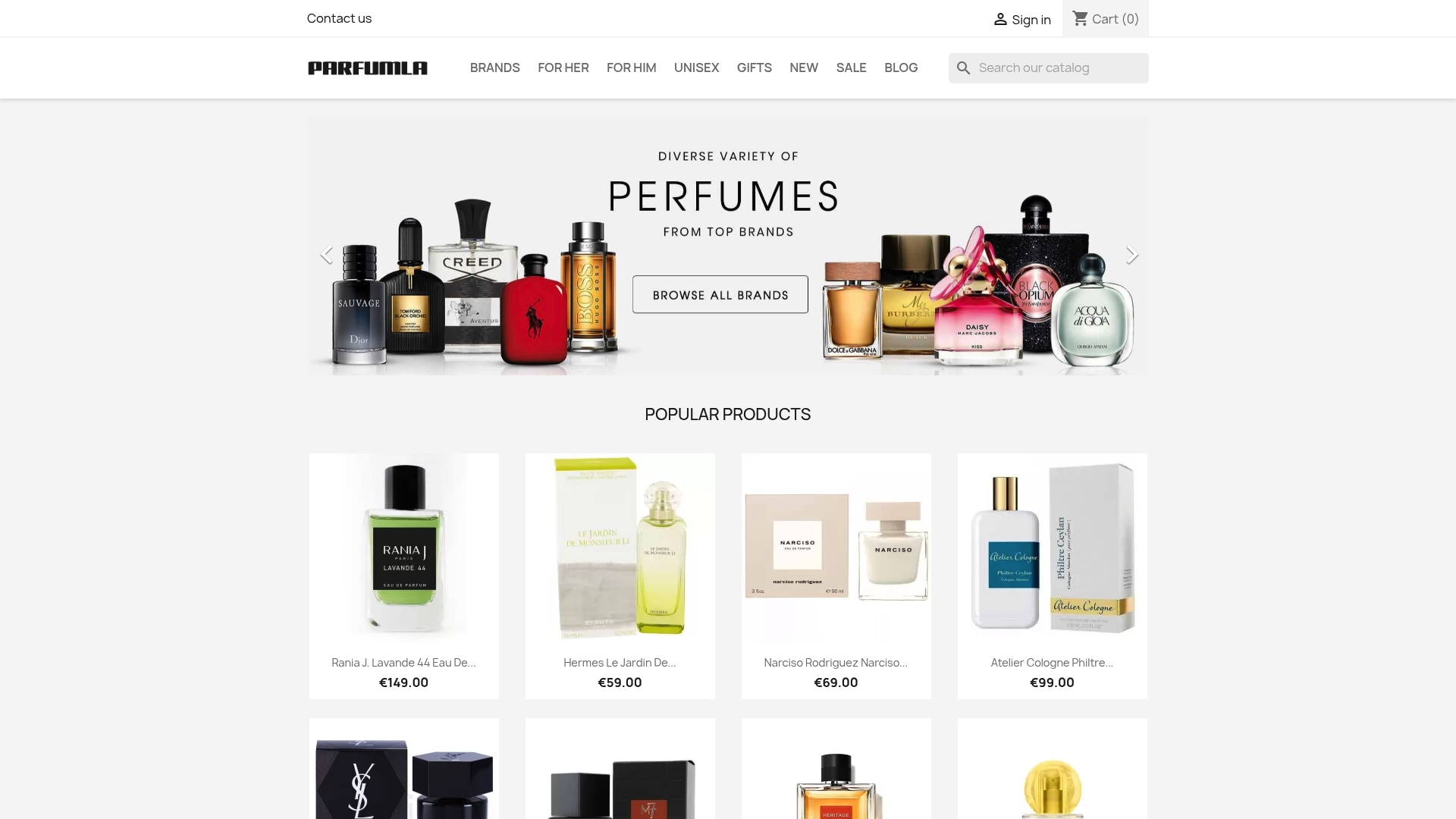
If you want to buy a niche perfume online after your notes search, try the unisex range. The Ex Nihilo Fleur Narcotique Eau de Parfum 100 ml and the Ex Nihilo Citizen X Eau de Parfum 100 ml are two examples. For floral and amber notes in a women's perfume, see the Haute Fragrance Company Diamond in the Sky EDP 75 ml. Shopping for someone else? The gift sets, such as the Christian Dior for Women set of three 20 ml sprays, the Lanvin for Women set and the Dolce & Gabbana for Women set, let the recipient smell several styles.
A simple notes cheat sheet
Use this list to translate common notes into what you will probably smell. It is a general guide, and the exact result depends on the perfume.
| If you like | Look for these notes | Often described as |
|---|---|---|
| Clean and fresh | Bergamot, lemon, green tea, aquatic notes | Bright, airy, daytime |
| Sweet and cozy | Vanilla, tonka, caramel, amber | Warm, gourmand, evening |
| Flowery and romantic | Rose, jasmine, peony, orange blossom | Soft, feminine, classic |
| Dark and smoky | Oud, incense, leather, tobacco | Rich, intense, cold weather |
| Natural and earthy | Vetiver, cedar, moss, patchouli | Dry, grounded, versatile |
| Spicy | Cardamom, pink pepper, cinnamon, clove | Lively, warm, a little bold |
Notes do not belong to one gender. Many fresh citrus scents suit anyone, and many rich amber or leather perfumes are worn by everyone, which is why browsing the unisex range often turns up your best match.
Frequently asked questions
How do I choose a perfume by notes?
Pick two or three notes you love and one or two you dislike. Search for perfumes that list the first group and exclude the second. Compare the base notes of your results, since they define the end of the wear, and sample your top choices on skin.
What are top, middle and base notes?
They are the three layers of a perfume's note pyramid. Top notes appear first and fade within minutes. Middle notes form the heart and last a few hours. Base notes arrive last and can stay for four hours or more, according to the Perfume Society.
Can two perfumes with the same notes smell different?
Yes. Concentration, the quantity of each material, the position of the note in the pyramid and the wearer's skin all change the result. Two perfumes with rose can smell light and dewy or dark and jammy depending on the layer where the rose sits.
How long should I test a perfume before buying?
Give it about an hour on skin to judge the heart, then check again after four to six hours for the base. A blotter is a good first filter, but a decision should rest on how the scent smells on you.
Sources
- FAQs, The Perfume Society
- How to Find a New Fragrance, The Perfume Society
- Perfume and Flavor Engineering: A Chemical Engineering Perspective, NCBI
- What Are Top, Middle, and Last Notes?, Le Chercheur de Parfum
- The 5-Step Method to Decode a Perfume, Bois de Jasmin
- Find Perfumes by Notes, Olfactionary