
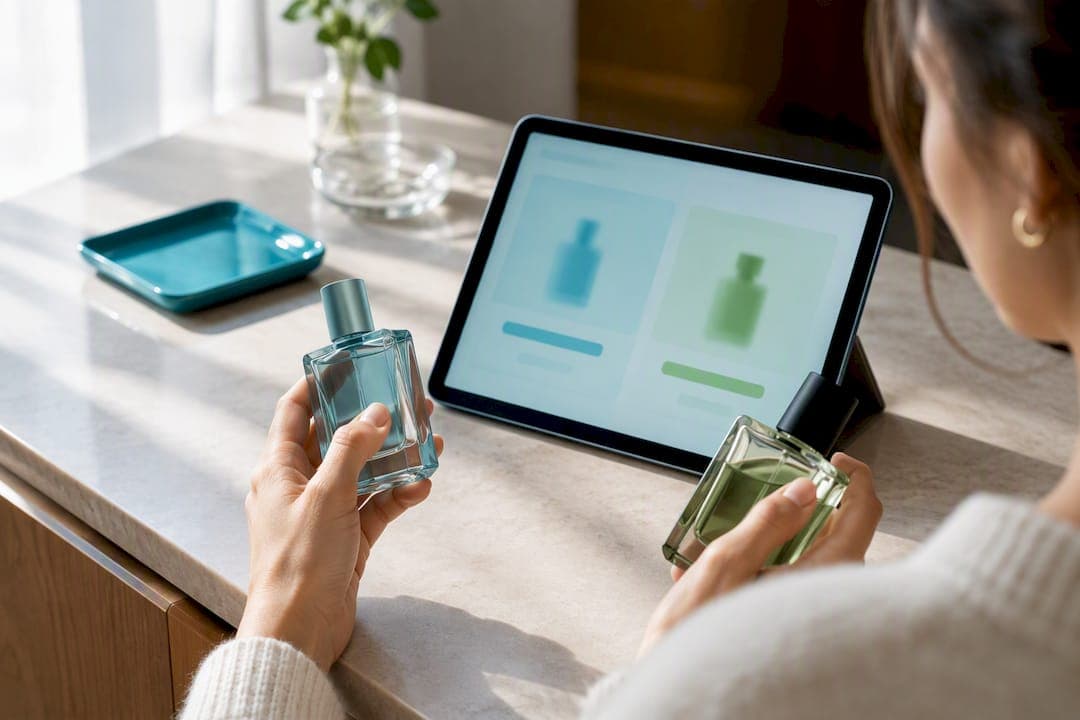
To choose perfume online, start with two or three scent anchors you already love, run them through a notes-based finder or quiz to build a shortlist, then sample those candidates at home before you commit to a full bottle. Skipping the sample step is the single biggest reason people end up with a fragrance drawer full of regret. Everything else in this guide exists to make that three-step process sharper.
TL;DR:
- Fragrance strength and seasonality affect longevity; EDTs are lighter and suited for warmer months, while EDPs last longer and fit cooler weather or evening wear.
- Relying solely on online scent quizzes is risky; they suggest similar scents based on notes and profiles but cannot predict how a fragrance reacts with your skin chemistry.
- Prioritize heart and base notes over top notes when shopping online, and cross-check with independent databases to verify scent characteristics before sampling.
- Sampling on skin across different times and conditions, including fabric testing, provides a more accurate prediction of whether you'll like a scent than quick paper sniffs.
- Always check seller policies, consider smaller sizes or discovery sets, and store samples properly in cool, dark places for reliable testing before making a full purchase.
Table of Contents
- Quick Checklist to Narrow Your Perfume Choices Fast
- Can You Really Trust Online Scent Quizzes and Finders?
- How Do You Choose Perfume by Notes?
- Matching Perfume Strength to Your Season and Occasion
- What Should You Look for in Perfume Reviews and Listings?
- Sampling Strategies That Actually Predict How You'll Like a Scent
- Final Checks Before You Commit to a Full Bottle
- How to Store Perfume Samples and Decants You Get by Mail
- Understanding Fragrance Families to Find Your Type Faster
- Getting Personalized Advice From Perfume Communities and Forums
- My Sampling Routine, and What It Taught Me
- Where Parfumla Fits Into Your Perfume Search
- Sources
- FAQ
Quick Checklist to Narrow Your Perfume Choices Fast
You don't need forty tabs open to make a smart pick. Three moves get you most of the way there.
- Pick your anchors. Name one to three perfumes you already like, or list two to three notes (bergamot, vetiver, oud, tuberose) you consistently gravitate toward.
- Run a finder or filter search. Feed those anchors into a notes-based tool or a site's fragrance-family filters to generate a shortlist of five to ten candidates.
- Order samples or a discovery set before buying a full bottle, and check the seller's return policy first in case a scent flops on your skin.
That's the whole loop. Everything from here just makes each step more accurate.
Can You Really Trust Online Scent Quizzes and Finders?
Somewhat, and that's the honest answer. A scent quiz or notes-based finder doesn't sniff your skin. It matches your inputs against a database using note overlap and similarity scoring, then returns fragrances that share a chemical or thematic profile with what you told it you like. Note-finder tools work best when you feed them multiple preferred notes at once, like bergamot paired with vetiver, rather than a single vague term like "fresh."
Two ways to get useful results:
- Name specific fragrances you already love and let the tool find scent-alike matches.
- List two to three individual notes instead of a broad category, since "citrus and amber" narrows results far better than "something nice."
Treat every result as a shortlist seed, not a verdict. The tools are directional; they teach you which family you belong in and shrink the search field, but they can't tell you how a base note will smell after two hours on your particular skin chemistry. That part still requires a sample.
How Do You Choose Perfume by Notes?
Every fragrance is built in layers, and understanding them changes how you shop. The top notes hit first and fade within 15 to 30 minutes. That's the citrus burst or the sharp herbal opening you smell straight out of the bottle, and it's also the part most people mistakenly judge an entire perfume by. The heart notes (florals, spices, fruit) settle in over the next hour or two and last longer. The base notes (woods, musks, amber, vanilla) are what stays on your skin for the final stretch and what people around you actually remember.
Because heart and base notes carry the long game, prioritize those when you're comparing options online rather than fixating on the flashy top note listed first in the marketing copy.
Pro Tip: Search two or three notes together instead of one. "Vetiver" alone returns hundreds of results; "vetiver plus tonka bean" narrows the field to fragrances that actually share your specific taste profile.
Before trusting a brand's product description, cross-check it against an independent perfume encyclopedia. Sites like Fragrantica aggregate thousands of user votes to generate "main accords," which are community-verified dominant scent characteristics that often diverge from what the retail copy claims. A perfume marketed as "fresh and citrusy" might carry a main accord of "sweet" or "powdery" once real wearers weigh in, and that gap is exactly what independent data catches.
Matching Perfume Strength to Your Season and Occasion
Concentration matters more than most shoppers realize when buying blind. Eau de toilette (EDT) carries a lower fragrance oil concentration, wears lighter, and typically fades faster, which makes it a natural fit for daytime wear or warm weather when you don't want a heavy cloud following you around. Eau de parfum (EDP) usually holds a higher concentration and tends to last longer on skin, which suits cooler months, evening events, or anyone who wants fewer reapplications. That said, formula matters more than the label alone. Two EDTs from different houses can behave completely differently.
A few pairing habits worth building:
- Fresh, citrus, or green fragrances tend to suit warm weather and daytime settings.
- Amber, wood, and spice families lean into cooler months and evening occasions.
- Musk-forward scents work well in close, shared spaces like offices, since they read as personal rather than room-filling.
Pro Tip: If you're shopping for an office scent, look for lower projection and sillage in the reviews, meaning the fragrance stays close to skin rather than filling a room. Nobody wants to be "the smell" three cubicles over.
What Should You Look for in Perfume Reviews and Listings?
Marketing copy will always tell you a fragrance is elegant, sophisticated, and unforgettable. Reviews tell you whether it actually survived past lunch. Focus on specifics over adjectives.
- Look for reviewers who mention exact wear time (four hours versus ten hours) rather than vague praise.
- Note how a scent evolves. Good reviews describe the shift from opening to drydown, the fragrance's final, settled stage after the top and heart notes fade.
- Check whether reviewers mention skin versus fabric behavior, since some perfumes cling to clothing far longer than skin.
- Cross-reference the listing's claimed accords against an independent database rather than trusting the seller's poetic description alone.
- Scan recent reviews specifically for mentions of reformulation or batch changes. A perfume praised in reviews from several years ago may smell noticeably different today if the formula shifted.
- Confirm the seller's return and sample policy before you buy, especially if you're ordering a full bottle sight unseen.
A staged approach, starting with notes and family, then reviews for longevity and projection, then verifying accords independently, and only then sampling, meaningfully cuts down the odds of an unused bottle sitting in a drawer.
Sampling Strategies That Actually Predict How You'll Like a Scent
A single spritz at a counter or a quick sniff of a paper strip tells you almost nothing useful. Testing a fragrance across multiple checkpoints and contexts is the most reliable way to know before buying full-size, and it costs a fraction of a full bottle.
- Spray on skin, not just paper, and check in at 30 minutes, again around the two-hour mark, and once more after five or more hours to track how the scent develops from top to drydown.
- Test on fabric too. Some fragrances behave completely differently on a sleeve or scarf than they do on skin, lasting far longer in the process.
- Build a sampling plan around decants, discovery sets, or official minis rather than buying three full bottles to compare. This keeps the whole experiment affordable while still giving you real data.
- Log your impressions for each candidate, noting the weather, what you wore, and how the scent shifted, so you're comparing notes instead of relying on memory a week later.
Testing the same candidate on two different days, in different weather, catches inconsistencies a single wear will miss entirely.
Final Checks Before You Commit to a Full Bottle
Before you click "buy" on a 100ml bottle, run through a short gut check. Did you genuinely like the drydown, or just the first ten minutes out of the bottle? Did the scent hold up for a reasonable stretch of wear, or vanish within the hour? Does the seller offer samples or a workable return window in case the full bottle disappoints once it arrives?
If you're still unsure, buy smaller. A 30ml bottle or a discovery kit costs less upfront and gives you a real-world trial run without the financial commitment of a full size. And if price is the real obstacle, compare total cost, including shipping and potential return fees, rather than just the sticker price on the product page.
| Final check | What to confirm |
|---|---|
| Drydown | You liked how it smelled hours in, not just at first spray |
| Longevity | Wear time matched your expectations for that concentration |
| Seller policy | Samples, decants, or returns are available if it's wrong |
| Size | A 30ml or discovery kit is an option instead of jumping to 100ml |
| Total cost | Shipping and return fees are factored in, not just list price |
How to Store Perfume Samples and Decants You Get by Mail
Samples and decants are small, which makes them more vulnerable to heat, light, and air than a full retail bottle. A few habits keep them stable until you're ready to test them.
Keep vials away from direct sunlight and heat sources. A windowsill or a car dashboard can cook a fragrance's top notes within days, throwing off the exact evaluation you're trying to make. A drawer, closet shelf, or dedicated box out of light is a better home.
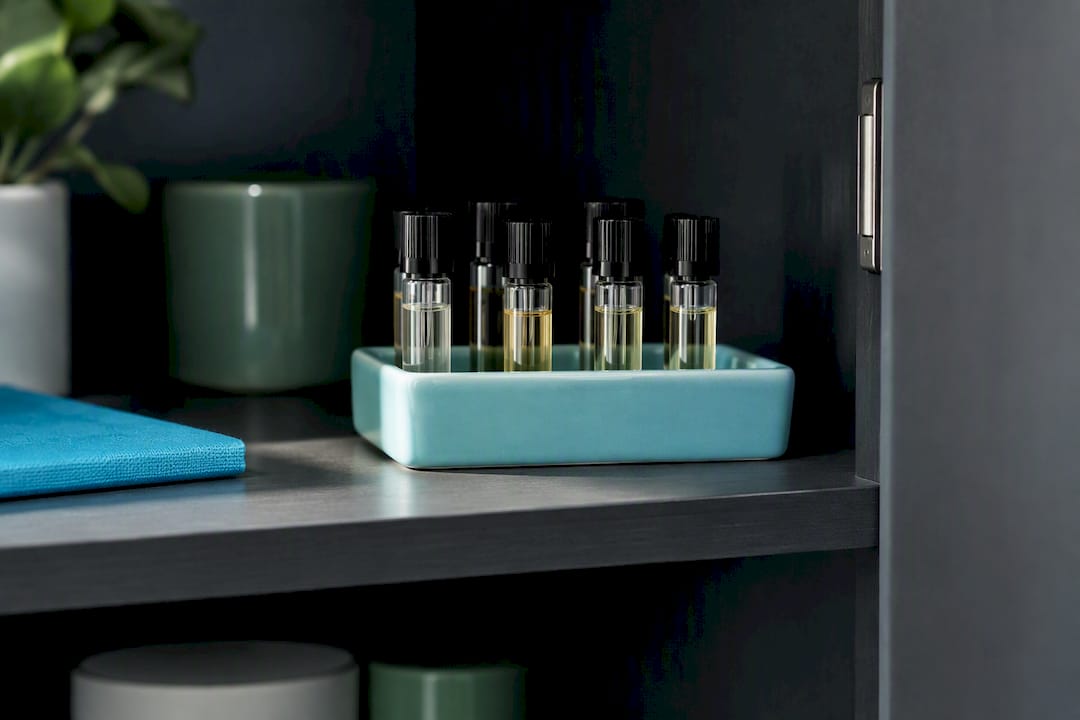
Store vials upright when possible, and keep caps tightly sealed between uses. Repeated exposure to air oxidizes the juice over time, which mutes brightness and can shift the scent's character, especially in citrus-forward fragrances.
Avoid bathroom storage, despite how tempting the mirror shelf looks. Bathrooms swing in humidity and temperature every time someone showers, and that fluctuation degrades fragrance faster than almost anywhere else in a home.
If a decant arrived in a plastic vial rather than glass, consider transferring it to a small glass atomizer for longer-term storage, since some plastics can interact with fragrance oils over extended periods.
Label everything the day it arrives. A pile of unlabeled sample vials a month later turns your careful comparison into guesswork, which defeats the entire point of sampling in the first place. Note the fragrance name and the date received directly on the vial or a piece of tape.
Handled this way, most samples stay accurate for testing purposes for months, giving you plenty of time to run the full multi-day comparison before deciding on a bottle.
Understanding Fragrance Families to Find Your Type Faster
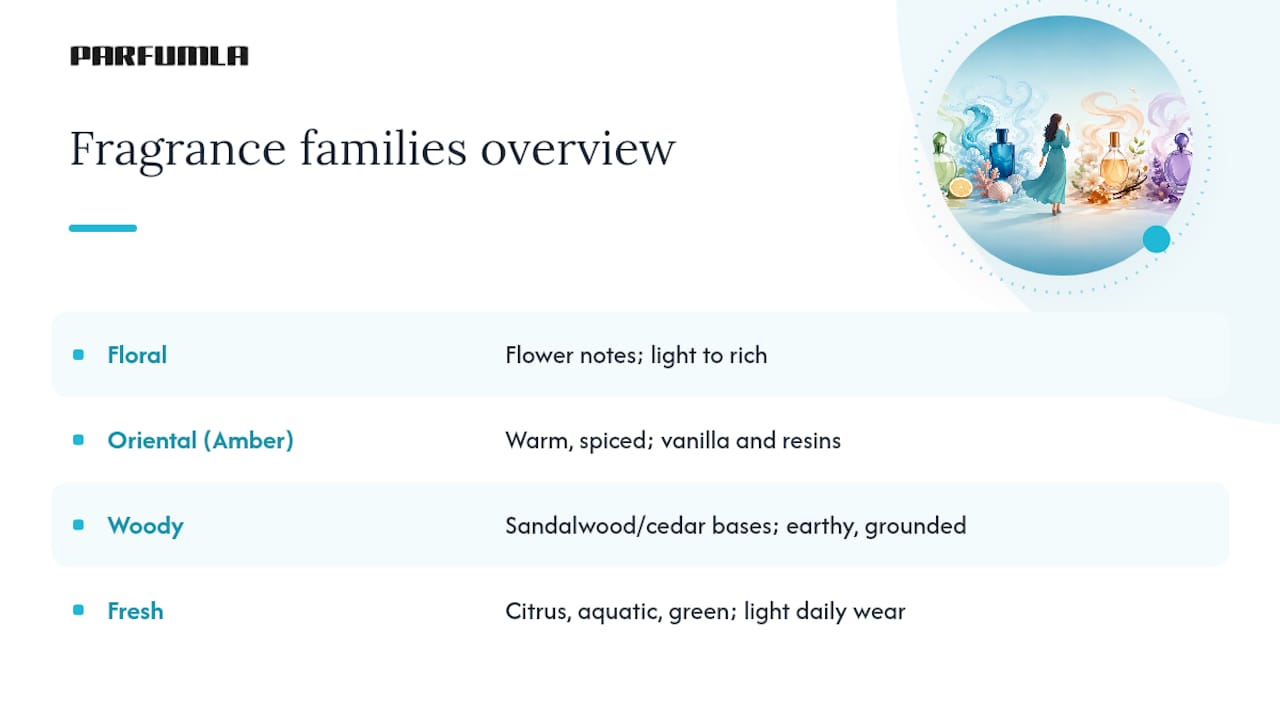
Every perfume falls into a broader family, and knowing yours turns blind online shopping into targeted shopping. The classic groupings are floral, oriental (also called amber), woody, and fresh, with numerous subfamilies branching off each.
Floral fragrances center on flower notes, from soft rose and violet to heady tuberose and jasmine, and they range from light and powdery to intensely rich. Oriental or amber fragrances lean warm and spiced, built around vanilla, resins, and exotic spices, and tend to feel cozy or sensual rather than clean. Woody fragrances rely on sandalwood, cedar, vetiver, and similar bases, often reading as grounded, earthy, or masculine, though plenty of women's fragrances live here too. Fresh fragrances cover citrus, aquatic, and green profiles, built for lightness and everyday wear.
Most people gravitate toward one or two families consistently, even if they've never labeled it that way. If you keep buying bottles that turn out to be woody orientals, that's not coincidence. That's a preference pattern worth naming before your next purchase.
Once you know your family, shopping online gets dramatically easier. You can filter by family first, then narrow by notes within it, rather than scrolling through thousands of unrelated listings hoping something jumps out. It also explains why a scent you disliked on a friend might work beautifully on you, and vice versa, since skin chemistry interacts differently with each family's dominant notes.
Getting Personalized Advice From Perfume Communities and Forums
Independent databases and finders get you most of the way, but real people comparing notes catch things algorithms miss. Fragrance communities and forums built around specific houses, note families, or budget tiers let you ask pointed questions: does this scent run sweet on warm skin, does it fade fast in humid climates, is the newer batch weaker than the one from a few years back.
Search for threads discussing a specific fragrance you're considering rather than posting a broad "what should I buy" question, since specific threads surface the batch-change complaints and skin-chemistry variations that generic advice never catches. Community discussions on sites like Fragrantica often include exactly this kind of detail buried in comment sections under a perfume's main page, alongside the accord voting data.
Forums are also useful for finding "if you like X, try Y" recommendations from people with overlapping taste, which tends to be more nuanced than an algorithm's note-overlap scoring. Someone who has worn fifteen amber fragrances can tell you which one wears warmer or sweeter than the rest in a way a finder tool simply can't quantify.
Use these communities as a second opinion layered on top of your notes research and independent database checks, not as your only source. A forum thread with three enthusiastic replies isn't the same as a documented main accord, but it fills in the real-world texture that raw data leaves out.
My Sampling Routine, and What It Taught Me
A workable routine looks like this: order three to five samples at once, wear one per day for four to five days, and check in at the 30 minute, two hour, and five hour marks each time. Test one on a fabric swatch too, since sleeve behavior often surprises you.
The trade-off is time. Sampling this way takes a week before you're ready to buy, but it eliminates almost every case of bottle regret. Keep a small rotation of three or four confirmed favorites rather than chasing one perfect signature scent, and treat every new sample as one more data point in a shopping process that never fully stops.
Where Parfumla Fits Into Your Perfume Search
Some retailers offer samples and decants, letting you try a fragrance before committing to a full bottle.
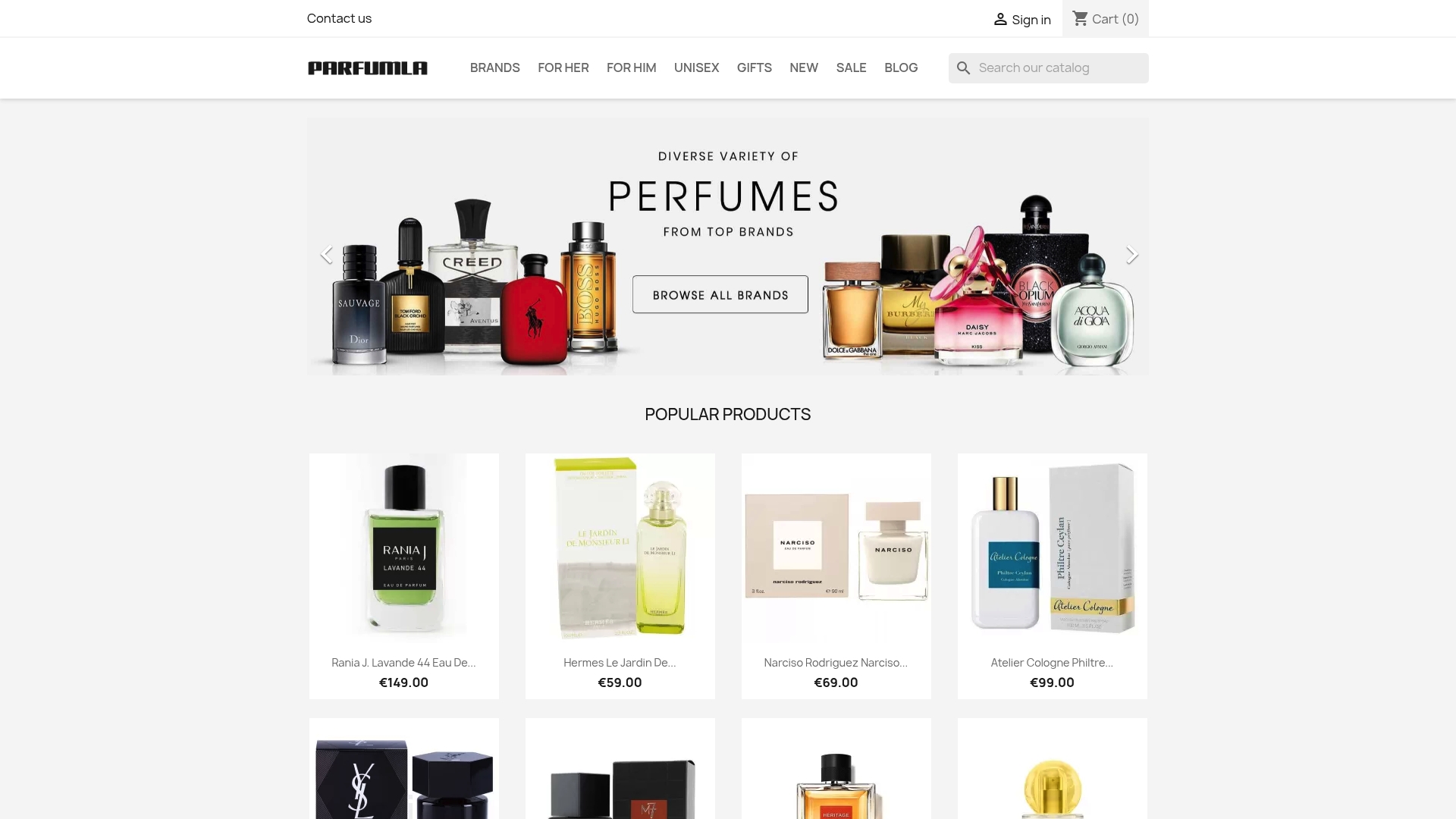
If you're just starting your shortlist, browse the women's fragrance collection or the men's fragrance collection, or check unisex options if your notes research pointed you toward something family-agnostic. Shopping for someone else instead of yourself? The gift collection is built around exactly that use case. And if you're following the sample-first method this whole guide has walked through, start at the decants and samples page before buying a full bottle. That’s where you can buy perfume online for your shortlisted fragrance, often supported by customer reviews to help your choice.
Ready to try before you commit? Head to Parfumla's sample and decant catalog and start your shortlist today.
Sources
- How To Successfully Buy Perfume Online
- Find a Perfume by Notes — PerfumeFinder
- Perfume Finder — Fragrantica
- How to Choose a Perfume Online Without Smelling It First
FAQ
What Is the 5 Spray Rule?
The 5 spray rule suggests applying perfume in five separate small spritzes to different pulse points (wrists, neck, chest) rather than one heavy spray in a single spot. This spreads the scent more evenly and avoids overwhelming projection while still giving you a fuller, more layered read of how the fragrance develops throughout the day.
What Is the Best Online Site for Buying Perfume?
The best site depends on whether you want to sample first or buy a confirmed favorite at a discount. Parfumla offers both: a large catalog of fragrances with discounts, plus a dedicated samples and decants section for testing before you commit to a full bottle, plus a dedicated samples and decants section for testing before you commit to a full bottle.
How Can I Tell Which Perfume Is Right for Me?
Start by identifying two or three notes or fragrances you already love, then run them through a notes-based finder to generate a shortlist. From there, sample the top candidates on your skin across several hours and check the main accords on an independent database before buying full-size.
Should I Buy Perfume Online or in Store?
Buying online generally wins on selection and price, especially through retailers offering deep discounts on authentic fragrances, but it removes the ability to smell before you buy. The fix is ordering samples or a discovery set first, which gives you the same at-home testing window a store visit would, minus the pressure of a sales counter.
Are Online Perfume Quizzes Actually Accurate?
Quizzes and finders are directional rather than exact. They narrow your search to the right scent family and note profile based on your input, but they can't predict how a fragrance will smell on your specific skin, which is why sampling remains the final and most important step.