
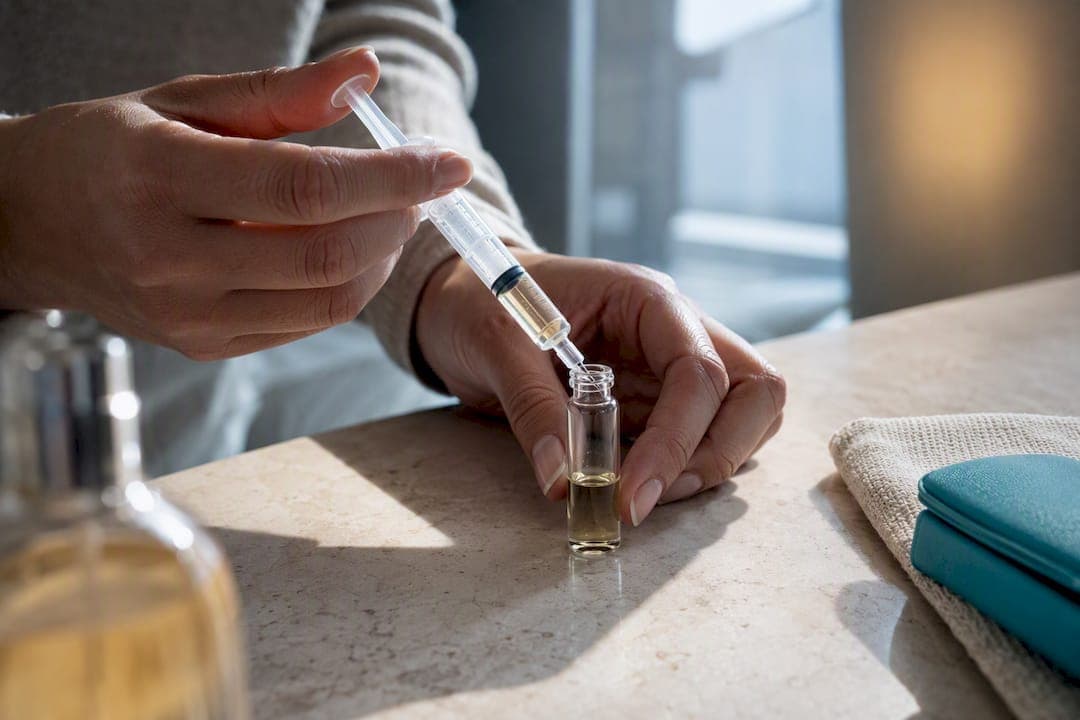
Use a clean syringe with a blunt tip when you want precision, and spray directly into a glass atomiser when the nozzle can't be removed. Both methods work well for travel-sized decants and sample sharing. Stick to glass containers, sanitize everything with isopropyl alcohol first, store your decants cool and dark, and use them within a few months before oxidation dulls the scent.
TL;DR:
- Using a syringe with a blunt tip offers the most control and minimal air exposure when decanting from bottles with removable sprayers.
- Glass containers are superior to plastic for storage because they are inert and prevent scent degradation over time.
- Limit decant size to 5 to 10ml to comply with airline regulations and ensure freshness within three to six months.
- Stringently sanitize tools and avoid shaking or excess agitation to slow oxidation and maintain scent integrity.
- Label decants clearly with fragrance name, concentration, and transfer date, and pack carefully to prevent leaks during travel.
Table of Contents
- Why Decant Perfume, and How to Pick the Right Method
- Essential Equipment and the Best Containers for Decants
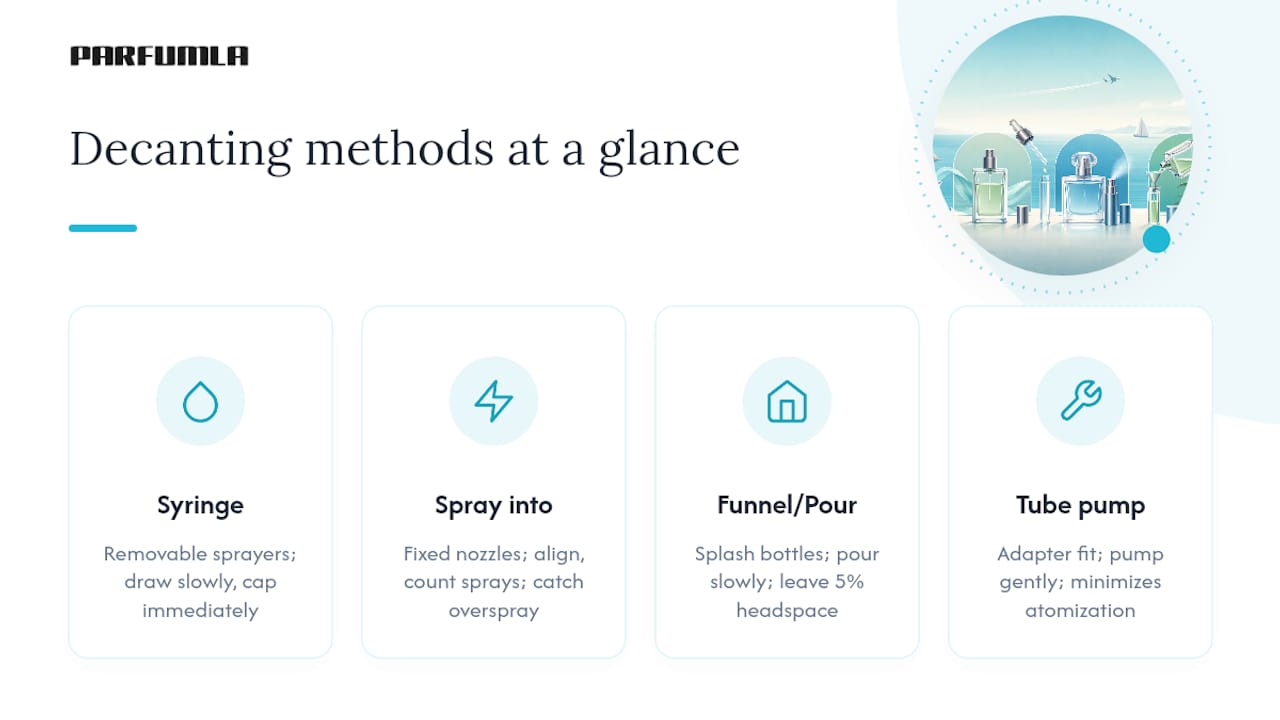
- Step-by-Step: The Four Main Decanting Methods
- Removing Rollerballs and Decanting Sealed Bottles
- Hygiene, Safety, and Storage for Longer-Lasting Decants
- Labeling, Packing, and TSA-Friendly Travel Tips
- Troubleshooting Common Decanting Problems
- Parfumla's Take on Decanting Etiquette
- Where to Find Travel Atomisers and Full-Size Bottles
- Sources
- FAQ
Why Decant Perfume, and How to Pick the Right Method
People decant for three reasons: travel restrictions, splitting a bottle with a friend, and testing a scent before committing to a full bottle. Airlines cap carry-on liquids, so a 100ml bottle of your signature scent has to become something smaller before it goes in your bag. Splitting costs with a friend on an expensive niche release only works if you can actually separate the liquid without wasting half of it. And sampling before buying saves you from spending real money on a bottle that smells different on your skin than it did on the tester card.
Your bottle's design decides your method more than personal preference does. Run through this quick check:
- Removable sprayer or splash top? A syringe gives you the most control and the least air exposure.
- Fixed, non-removable nozzle? Spray directly into a small glass atomiser and count sprays.
- Need to fill several vials fast? A funnel or pour method saves time on splash bottles, though it sacrifices some precision.
- Worried about oxidation? Minimize how much you shake or atomize the liquid; less agitation means less air mixed in.
Essential Equipment and the Best Containers for Decants
Glass beats plastic for one simple reason: it's chemically inert, so it won't react with the alcohol and oils in perfume the way some plastics can over time, according to Luxyora's guide to decanting. Plastic can also degrade the scent profile slightly with longer storage, which matters if your decant is going to sit in a drawer for a few months before a trip.
Here's what actually belongs in a decanting kit:
- Glass travel atomisers, 2 to 10ml, tinted if you can find them (light exposure speeds up degradation)
- 5ml or 10ml syringes with blunt tips (never a needle tip near your face or hands)
- A small funnel or a makeshift foil funnel for splash bottles
- Tube or pump transfer adapters for bottles with removable sprayers
- 70%+ isopropyl alcohol wipes, nitrile gloves, and a clean, uncluttered workspace
Pro Tip: Buy a pack of precision pipettes rather than relying on one syringe for every fragrance. Gridwise Living's pipette packs let you dedicate one tool per scent family, so you're not cross-contaminating a rose eau de parfum with leftover residue from a smoky oud.
Step-by-Step: The Four Main Decanting Methods
Pick the method that matches your bottle, then follow these steps closely. Rushing any of them is how you end up with perfume on your hands instead of in the vial.
1. Syringe method (best for removable sprayers or splash bottles) Sanitize the syringe and your workspace with isopropyl alcohol first. Remove the nozzle or pump mechanism if the design allows it. Draw the liquid slowly to avoid pulling air bubbles into the syringe, which wastes product and throws off your volume count. Transfer into your glass atomiser immediately and cap it, since every extra second of open air exposure invites oxidation.
2. Spray-into-atomiser method (best for fixed, non-removable nozzles) Hold the recipient bottle at the correct spray distance, roughly an inch or two away, and align the nozzle carefully. Count your sprays as you go. Counting sprays is the standard way enthusiasts estimate volume when a syringe isn't an option, since one spray from most atomisers delivers a fairly consistent amount, according to The Top Note's decanting guide. A small funnel taped loosely around the collection vial catches overspray that would otherwise land on your counter.
3. Funnel or pour method (best for splash bottles with no pump) Secure the recipient bottle so it won't tip, then pour slowly and steadily. Leave a small headspace, maybe 5% of the container's volume, so temperature changes during travel don't force liquid out through the cap.
4. Tube pump or transfer tool (best when you have the adapter) Attach the tube pump securely to the source bottle's neck, then pump gently into your target container. This method minimizes atomization entirely, which the fragrance community generally prefers because less atomization means less air contact and better scent preservation over the decant's shelf life.
For thick extrait-strength perfumes, a wider blunt-tip syringe helps since high-concentration formulas can be noticeably more viscous than eau de toilette. Warming the bottle slightly in your hand, never with direct heat, can loosen things up, but always prioritize keeping air exposure to a minimum.
Pro Tip: Test your technique on water before you touch your actual perfume. It costs nothing to mess up, and you'll know exactly how many sprays or syringe pulls it takes to hit 5ml before you risk wasting a drop of the real thing.
Removing Rollerballs and Decanting Sealed Bottles
Rollerball tops complicate things because they're designed not to come off easily. If you want to try, wrap the ball fitting in a soft cloth and use pliers with gentle, steady leverage rather than force. Twisting too hard cracks the glass or bends the metal housing, and at that point you've ruined the bottle for good.
Some situations call for skipping removal entirely:
- Vintage bottles with brittle glass or corroded metal fittings
- Any rollerball where the fitting won't budge after one or two gentle attempts
- Bottles you plan to keep as collector pieces rather than daily wear
When removal feels risky, spray-to-vial or a careful syringe-over-nozzle transfer gets the job done without touching the original fitting. Vintage and fragile bottles deserve extra patience. A cracked collector's bottle isn't worth the ten minutes you'd save by forcing a stuck top.
Hygiene, Safety, and Storage for Longer-Lasting Decants
Sanitize every tool with 70%+ isopropyl alcohol before you touch a single bottle, and let everything air dry fully before use, since residual alcohol on a wet syringe can dilute your fragrance slightly, per WhatScent's hygiene guidance. Wear nitrile gloves throughout the process. Skin oils transfer to nozzles and syringe barrels more easily than people expect, and that oil residue can subtly alter a scent over repeated use.
Perfume is alcohol-based, which makes it flammable. Work in a ventilated room away from any open flame, candles included, and skip decanting near a stove or space heater.
Small glass atomisers in the 5 to 10ml range fit within most airline carry-on liquid limits, which makes them the practical default size for travel decants.
Storage matters just as much as the transfer itself:
- Keep decants cool, dark, and upright, never in direct sunlight
- Avoid the bathroom; humidity and temperature swings from showers accelerate breakdown
- Plan to use small decants within three to six months, since more surface-area-to-air exposure in a small container speeds oxidation
- Run a leak test (cap on, bottle upside down over a tissue for a minute) before packing anything for travel
Labeling, Packing, and TSA-Friendly Travel Tips
A mislabeled decant is a guessing game every time you reach for it, and it's a real problem if you're carrying more than one scent. Handle it in three steps:
- Label clearly: fragrance name, concentration if known (EDP or EDT), and the date you transferred it. A strip of masking tape and a permanent marker works fine.
- Pack it defensively: leave a small headspace, run your cap test again right before the trip, then double-bag the atomiser inside a sealed plastic bag before it goes in your liquids pouch.
- Check the size against carry-on rules: most airlines cap carry-on liquids at 100ml per container. A 5 to 10ml glass atomiser sits comfortably within that limit and leaves room in your quart bag for other essentials.
Sticking to smaller sizes also means less liquid at risk if a cap fails somewhere over the Atlantic.
Troubleshooting Common Decanting Problems
Leaks almost always trace back to one thing: a cap that wasn't seated all the way, or an atomiser thread that's slightly damaged from a previous fill. Check the threading before you blame the product. Cross-contamination between scents usually happens because a syringe or funnel wasn't fully cleaned between fragrances, so give tools a full alcohol wipe and dry cycle before switching scents.
If a decant smells "off," meaning flat, sour, or missing its top notes entirely, that's usually oxidation talking. Small containers with more air relative to liquid volume degrade faster than the original full bottle sitting sealed on a shelf.
A few habits save you money and frustration long term:
- Practice with water before touching real perfume, every single time you try a new tool
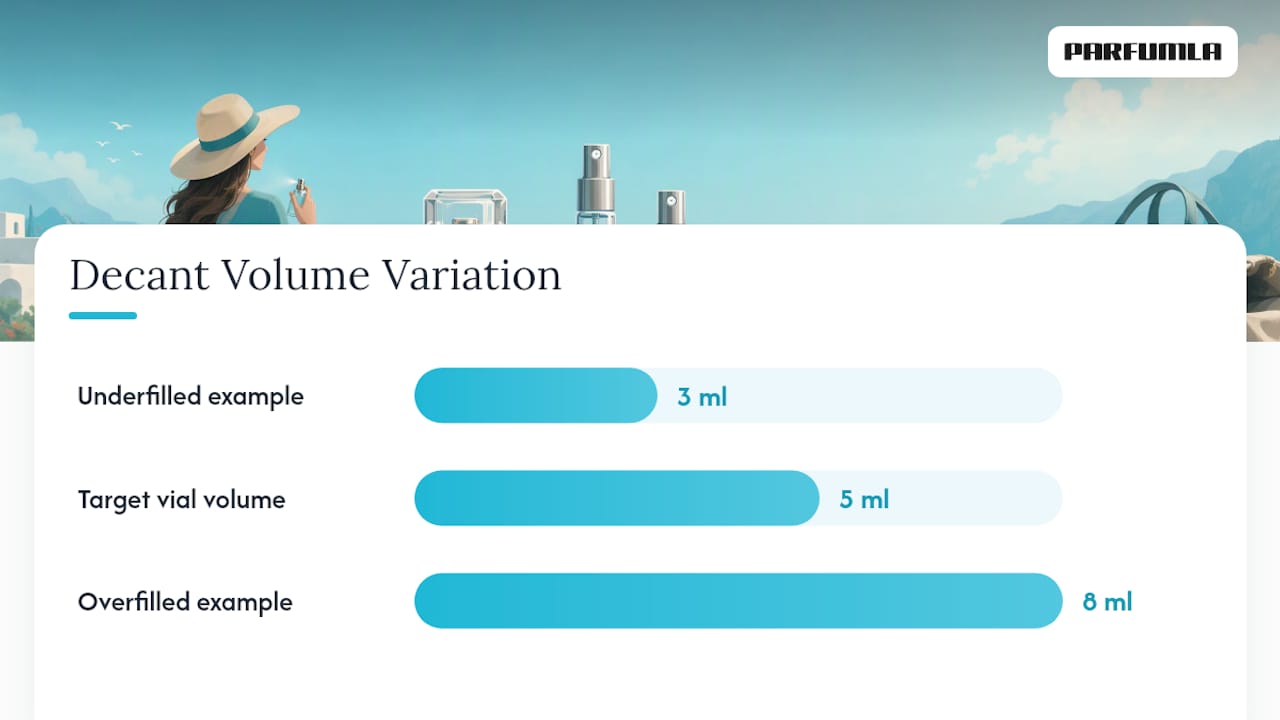
- Count sprays consistently so your 5ml vial actually holds 5ml, not 3ml or 8ml
- Discard a decant that's changed color, smells sharp or vinegary, or has visible sediment
Pro Tip: Keep a small notebook or phone note with your spray counts per fragrance. Atomiser output varies by brand and nozzle design, so "12 sprays for 5ml" on one bottle won't hold true for another.
Parfumla's Take on Decanting Etiquette
Sharing a few milliliters with a friend so they can try something before buying a full bottle is normal, low-stakes, and honestly good for the whole fragrance community. It's how most people discover their next favorite scent without gambling $150 on a blind buy. Selling decants commercially is a different matter entirely. That can run into licensing and trademark questions, and original packaging often factors into whether a resale is even legitimate, so we'd steer casual decanters away from turning a hobby into a side business.
Preserving the integrity of what you decant matters beyond the vial in your bag. A degraded sample gives you a false impression of a fragrance, and that false impression can talk you out of a scent you'd actually love at full strength. Decants exist for sampling and travel, not as a permanent replacement for the bottle. For more on choosing sizes and long-term storage, our guide on what a sample decant perfume actually is breaks down the basics further.
— Parfumla
Where to Find Travel Atomisers and Full-Size Bottles
Once you've settled on a scent through sampling and decanting, buying the original bottle is the natural next step.
If your decanting experiments confirmed that a clean, understated scent is your match, the NARCISO RODRIGUEZ Eau de Toilette for Women is a solid full-size pickup. Our budget sampling guide and our travel-size buying guide cover more ground if you're still narrowing down which bottle deserves a permanent spot on your shelf. When you're ready, browse the catalog and check current pricing before you commit, since knowing where to buy original perfume at the best price for your favorite fragrance starts by comparing what's actually in stock right now.
Sources
- How to Decant Perfume Safely — Split Bottles With Friends (India Guide) | Florencia
- A Beginner’s Guide to Decanting Perfume Safely and Elegantly | Luxyora
- Decanting & Labeling Perfume: Tools, Hygiene, & Safety | WhatScent
- How to Decant Perfume - The Top Note
FAQ
How Long Do Perfume Decants Last?
Most decants stay true for three to six months when stored cool, dark, and upright, though smaller vials with more air exposure fade faster than the original sealed bottle.
Is Decanting Perfume Safe?
Yes, decanting is a common and safe practice when you sanitize your tools, work quickly to limit air exposure, and store the results properly, according to Florencia's decanting guide.
Does Decanting Damage the Fragrance?
Decanting itself doesn't damage perfume when done correctly. The risk comes from repeated air exposure and poor storage afterward, not the transfer process.
Can I Bring Decanted Perfume on a Plane?
Yes, glass atomisers in the 5 to 10ml range fit comfortably within the standard 100ml carry-on liquid limit most airlines enforce.
What's the Best Container for a Perfume Decant?
Glass atomisers beat plastic because glass is chemically inert and won't react with the fragrance over time, preserving scent quality far better through months of storage.