
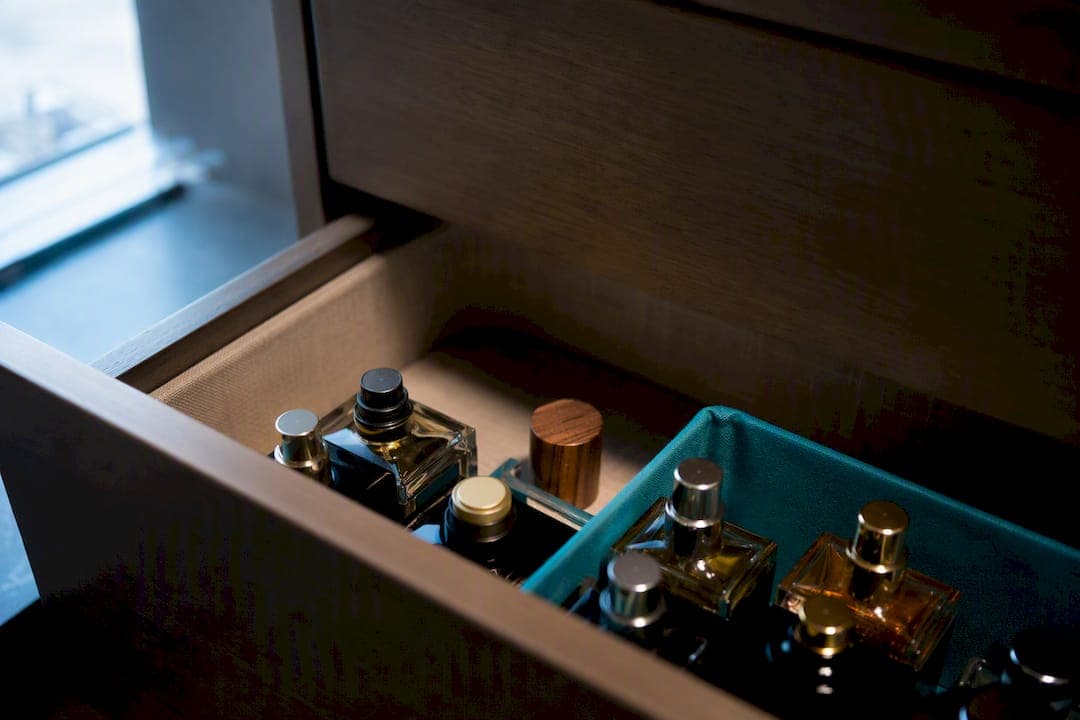
Keep every bottle cool, dark, dry, capped, and standing upright. That single habit does more to preserve fragrance than any product or gadget. Refrigeration is worth considering only for delicate, rare, or all-natural formulas, not everyday bottles. Handled this way, most perfumes remain true to their original scent for a few years after opening.
TL;DR:
- Proper storage in a cool, dark, dry place at around 59 to 68 degrees Fahrenheit helps maintain perfume longevity, especially for natural or delicate formulas.
- Exposure to direct sunlight, high heat above 77°F, humidity swings, or repeated air contact from splash bottles accelerates scent breakdown and should be avoided.
- Using spray bottles instead of splash containers limits oxygen exposure and extends a perfume’s shelf life; always reseal caps tightly after each use.
- Refrigeration can temporarily preserve fragile scents but is unnecessary for most bottles unless living in a hot, humid climate or storing rare, natural compositions.
- Most perfumes last about two to four years if stored properly, with heavier scents like oriental and woody musk formulations typically lasting longer than citrus or "clean" fragrances.
Table of Contents
- How to Store Perfume: What Actually Damages the Scent
- Where Should You Store Perfume at Home?
- Does Refrigeration Actually Help Preserve Perfume?
- Daily Habits That Protect Your Collection
- Packing Perfume for Travel Without Ruining It
- Signs Your Perfume Has Gone Bad (And What's Normal Aging)
- A Simple Storage Checklist You Can Actually Keep Up With
- Parfumla's Take on Storage and Smart Buying
- Where to Buy Perfume Built for Better Storage
- Sources
- FAQ
How to Store Perfume: What Actually Damages the Scent
Perfume ages because of chemistry, not time alone. Heat speeds up the chemical reactions that break apart fragrance molecules, and it pushes lighter top notes to evaporate faster than they should. A bottle left near a window on a warm afternoon can lose brightness within weeks, even though nothing looks different from the outside.
Light matters just as much. Ultraviolet rays trigger oxidation, which is the same process that turns a sliced apple brown. You'll often see it first as a subtle darkening of the juice, followed by a flatter, less vivid smell.
Humidity and temperature swings are sneakier culprits. A bottle that swings between a warm afternoon and a cold night is under more stress than one held at a steady 65 degrees Fahrenheit, because repeated expansion and contraction destabilizes the formula. Stable cool storage between roughly 59 and 68 degrees Fahrenheit is generally cited as the sweet spot, while sustained heat past 77 degrees accelerates breakdown.
Spray bottles have an advantage here that splash bottles don't: each spritz limits how much air reaches the juice, while an open splash bottle exposes the whole surface to oxygen every time it's opened.
Four things shorten a fragrance's life faster than anything else:
- Direct sunlight or bright artificial light
- Heat above roughly 77°F (25°C)
- Humidity swings, especially bathroom-level moisture
- Repeated air exposure from splash bottles or loose caps
Where Should You Store Perfume at Home?
A closed bedroom drawer, a shaded closet shelf, or a dark cabinet all beat leaving bottles out in the open. The original box helps more than most people realize. It blocks light completely and buffers against small temperature changes, which is exactly why brands ship fragrance in solid packaging rather than clear sleeves.
Skip these spots entirely:
- The bathroom, where humidity and daily temperature swings accelerate formula changes every time you shower
- A windowsill or any surface hit by direct sun
- Shelves near radiators, stoves, or space heaters
If you like displaying bottles on a vanity or dresser, keep the ones you use daily out and rotate the rest into dark storage. UV-filtering glass cabinets reduce light exposure for a display setup, and a shaded shelf away from windows is a reasonable middle ground. For anyone building a dedicated collection space, a closet system with enclosed, shaded compartments, like the options from custom closet organization builders, keeps bottles both accessible and protected.
Does Refrigeration Actually Help Preserve Perfume?
Refrigeration works, with real limits. A stable, cool environment slows the oxidation and evaporation that ruin fragrance over time, and short-term refrigeration can meaningfully protect delicate natural formulas, which tend to be more sensitive to heat than synthetic-heavy compositions.
The risks are just as real. Constant opening and closing of a fridge door invites condensation, and moisture can work its way past the cap over months. Brand guidance from Lancôme cautions that very cold refrigerator temperatures can shock a fragrance, which is why most brands say refrigeration isn't necessary unless your climate genuinely demands it.
If you decide to try it:
- Keep bottles sealed tightly before placing them in the fridge
- Reserve this method for rare, expensive, or naturals-heavy bottles rather than your everyday rotation
- Let a bottle sit at room temperature for several minutes after removing it, before spraying
Pro Tip: If you live somewhere with consistently hot, humid summers and no reliable air conditioning, a dedicated mini fridge for fragrance beats a bathroom cabinet every time.
Daily Habits That Protect Your Collection
Small routines matter more than any single storage location. Three habits do most of the work:
- Replace the cap immediately after every use, and always store bottles standing upright.
- Skip the shaking. It's an old habit that actually introduces more air into the juice and speeds up oxidation.
- Favor spray mechanisms over splash bottles whenever you have the choice, since sprays limit air contact with each use.
Decanting for travel or sharing needs its own rules. Small dark glass or metal atomizers hold up far better than clear decorative decanters, because every transfer between containers adds oxygen exposure. Decant only 5 to 10 milliliters at a time, and label each atomizer with the fragrance name and the date you filled it.
Pro Tip: Keep a small stash of pre-labeled travel atomizers ready to go. Filling one the night before a trip beats digging through a suitcase for a full bottle at 5 a.m.
Packing Perfume for Travel Without Ruining It
A metal or dark glass atomizer is the safest way to carry fragrance. Clear decorative decanters look nice on a shelf, but they let in far more light and are a bad choice for a suitcase or carry-on.
Pack fragrance in your carry-on rather than checked luggage whenever airline rules allow it. Cargo holds swing through extreme temperatures, and a hot car trunk on the way to the airport can do damage before your flight even leaves the ground. A step-by-step guide to packing perfume for travel covers TSA-safe container sizes if you're flying with liquids.
Bring only what you'll realistically use on the trip, and label every decant clearly. A few smart habits:
- Choose metal or dark glass atomizers over clear ones
- Keep fragrance in your carry-on, not checked baggage
- Never leave a bottle in a parked car, especially in summer
- Label decants with fragrance name and fill date
Signs Your Perfume Has Gone Bad (And What's Normal Aging)
A sour, metallic, or flat smell is the clearest red flag. Cloudiness, visible sediment, or a noticeable color shift toward amber or brown also signal that the formula has broken down, even if the bottle looks fine from a distance.
Test a suspect bottle the right way: spray it onto a paper strip first, wait for the drydown, then test a small amount on your skin before trusting it fully. A step-by-step testing method walks through exactly how long to wait and what to watch for.
Lifespan varies more by composition than most people expect. Many opened perfumes stay usable for two to four years when stored well, though citrus and other "clean" formulations often fade sooner because their top notes are more volatile. Heavier oriental and woody musk compositions tend to hold up longer. Unopened bottles, kept sealed and away from light, generally outlast opened ones by a wide margin. If you want a deeper breakdown of how quality degrades year by year, this guide to perfume expiration covers the timeline in more detail.
Watch for these warning signs specifically:
- A sour, metallic, or noticeably flat scent compared to when new
- Cloudy or separated liquid, or visible sediment at the bottom
- A color that's darkened or shifted from the original
- Any skin irritation on application that didn't happen before
A Simple Storage Checklist You Can Actually Keep Up With
Preservation doesn't require a complicated system, just a few consistent checkpoints.
- Daily: Cap every bottle immediately after use and return it to its storage spot, away from light.
- Monthly: Check caps and seals for looseness, glance for any color change, and spot-test older bottles on a paper strip.
- Annually: Photograph your collection for a simple inventory, rotate which bottles sit on display, and decide whether any delicate naturals need cooler storage given your climate.
A decorative storage box with a lid, like the kind sold by storage product makers such as Keter, works well for keeping boxed bottles organized and shielded from light in a closet or cabinet.
Pro Tip: Set a recurring phone reminder for the first of each month. A two-minute glance at your collection catches problems long before they ruin a $150 bottle.
Parfumla's Take on Storage and Smart Buying
Storage habits should shape what you buy, not just how you keep it. That's why Parfumla often points shoppers toward travel-friendly formats and smaller sizes. A smaller bottle gets used up before oxidation becomes a real concern, while a full 100ml bottle you rarely reach for sits exposed to more storage risk over its lifetime. Pair the buying decision with our practical testing guidance and you'll waste far less fragrance to poor storage.
— Parfumla
Where to Buy Perfume Built for Better Storage
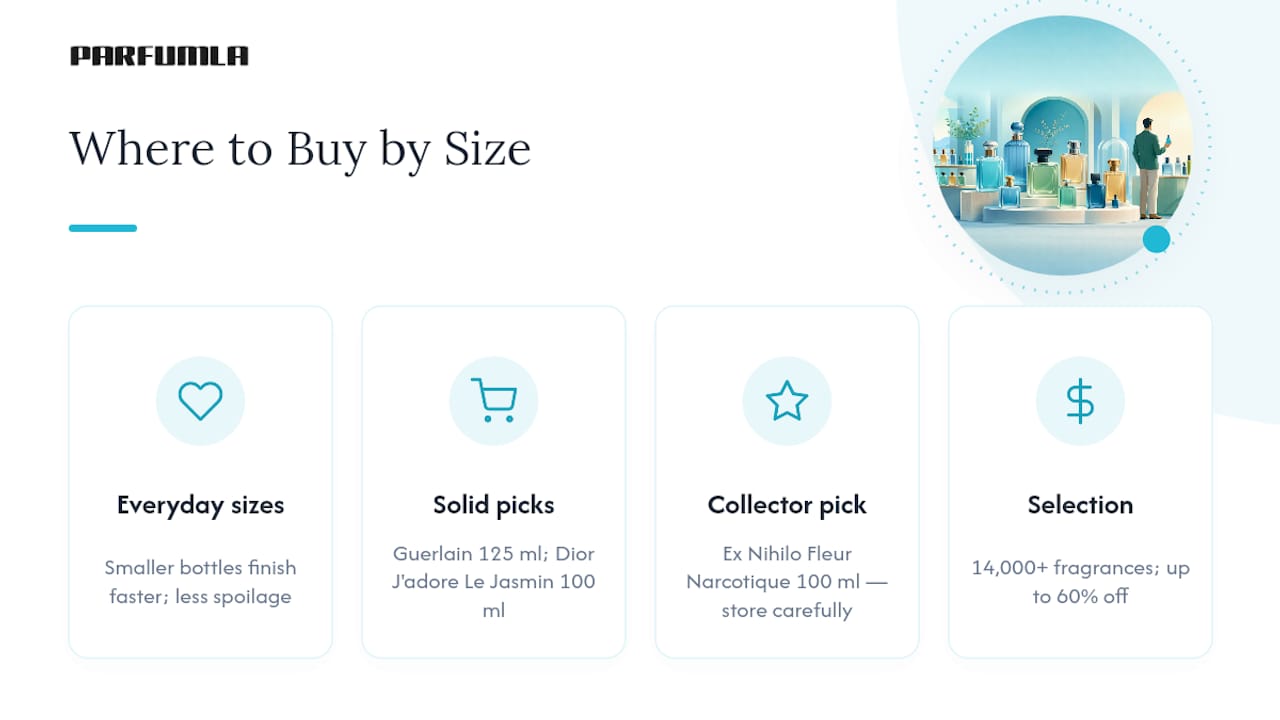
Smaller bottles and travel atomizers aren't just convenient. They're one of the easiest ways to sidestep the storage problems covered above, since less juice sitting exposed to air and light over time means less chance of it turning before you finish it.
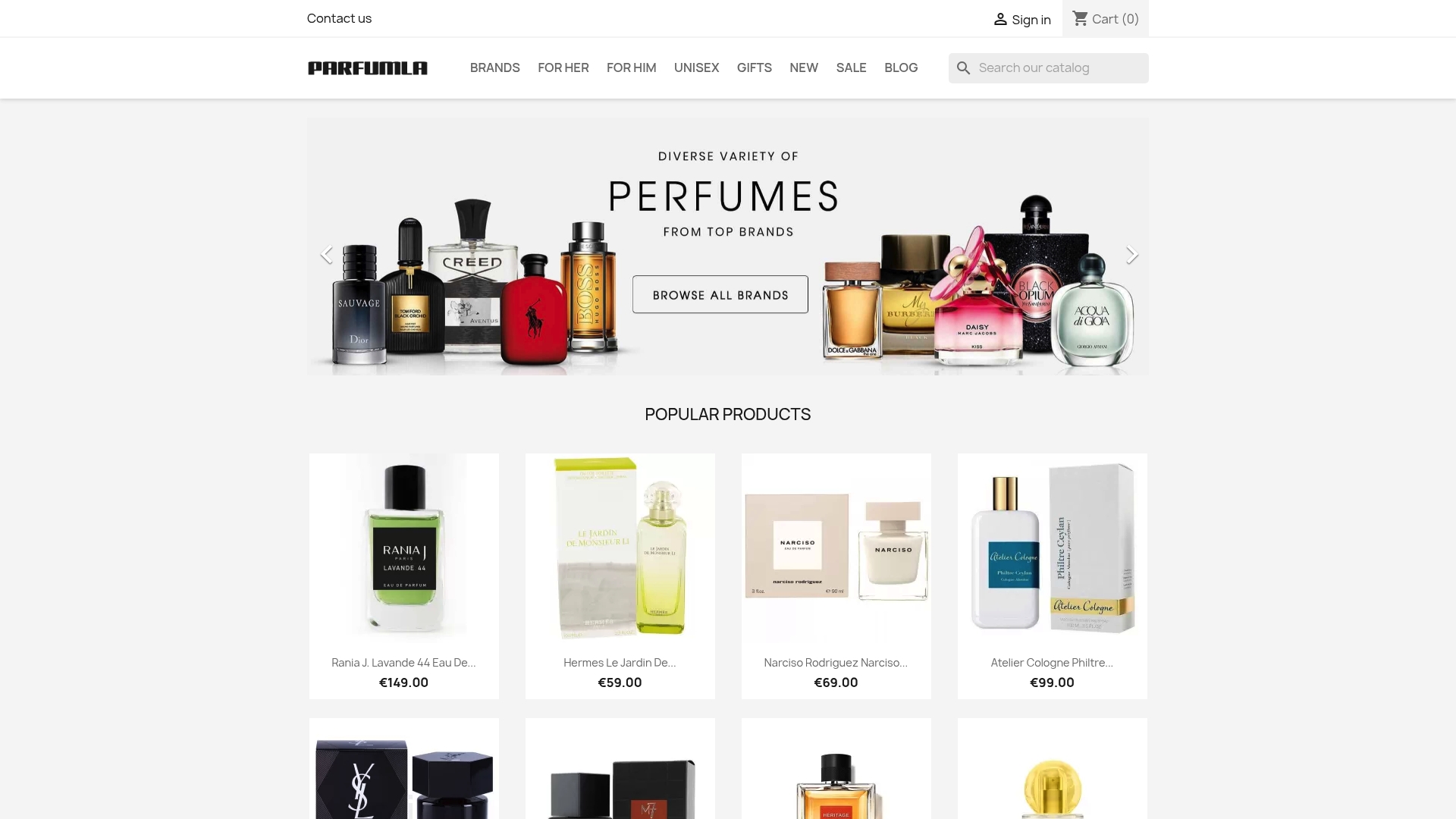
If you're shopping to buy Parfumla perfume online, browsing by size is a smart place to start. The GUERLAIN Eau de Lingerie Eau de Toilette 125ml and the Christian Dior J'adore Le Jasmin Summer 100ml are both solid choices if you want a bottle that gets used up at a reasonable pace rather than lingering half full for years. Parfumla carries over 14,000 fragrances at up to 60% off retail, which makes it far easier to buy a size that actually matches how often you'll wear a scent instead of overcommitting to a bottle that outlasts your interest in it. For collectors chasing something rarer, the Ex Nihilo Fleur Narcotique 100ml is worth a look, and it's exactly the kind of bottle worth storing with extra care once it arrives.
Ready to find your best price for favorite fragrance? Browse Parfumla's full catalog and check current stock before your next reorder.
Sources
- The 1 Trick That Makes My Perfume Last So Much Longer
- Where is the best place to store perfume?
- Decanting for beginners: safety & hygiene
FAQ
What Is the Best Way to Store Perfume?
Keep it cool, dark, dry, capped tightly, and standing upright, ideally in its original box inside a closet or drawer away from sunlight and heat.
Does Perfume Need to Be Refrigerated?
No, refrigeration isn't necessary for most fragrances, but it can help preserve delicate naturals in hot or humid climates as long as bottles stay sealed and adjust to room temperature before use.
Should Perfumes Be Kept in Their Original Boxes?
Yes, the original box blocks light completely and buffers against small temperature changes, making it one of the simplest ways to extend a bottle's life.
How Long Does Perfume Last if Stored Correctly?
Most opened perfumes remain enjoyable for two to four years with proper storage, while unopened bottles kept sealed and shaded typically last longer, especially heavier oriental and woody compositions.
Where Can I Buy Original Perfume at a Good Price?
Parfumla offers over 14,000 popular, niche, and celebrity fragrances at up to 60% off retail, with reliable shipping across the US and EU for shoppers who want the best price for original bottles.