
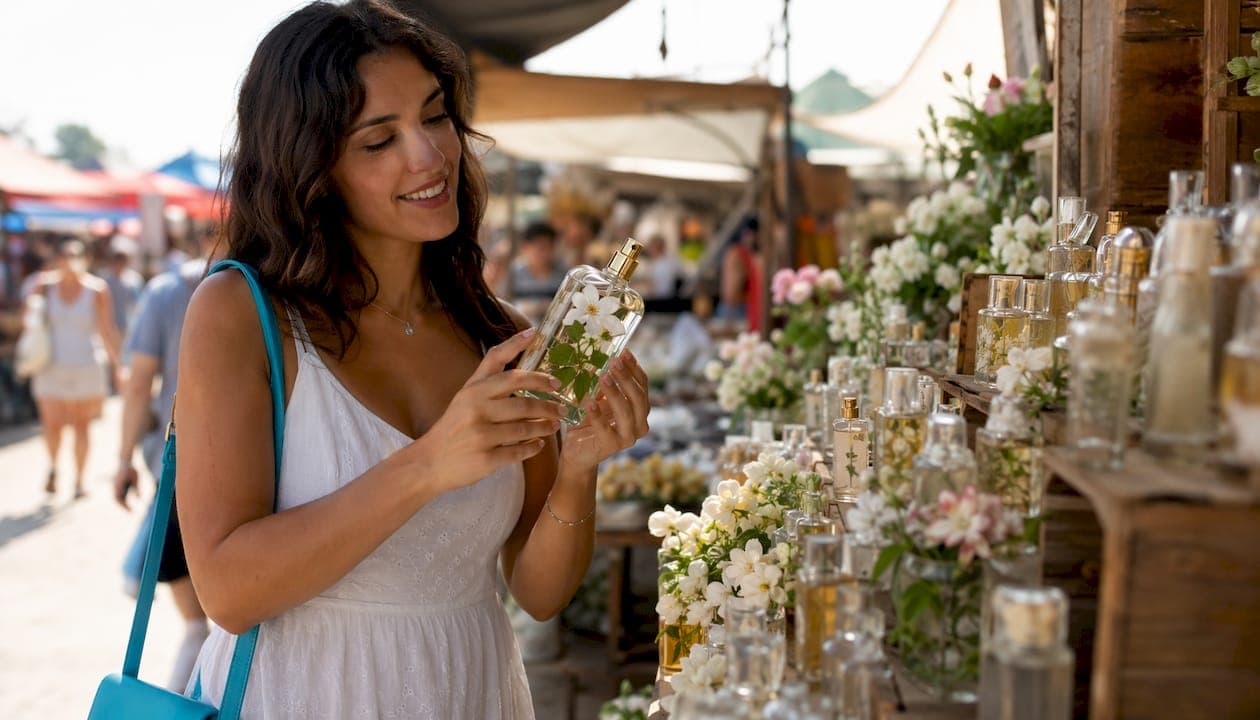
If you want one jasmine perfume to start with, Christian Dior J'adore Le Jasmin Summer is the clearest entry point. It captures jasmine at its most luminous — bright, clean, and wearable across seasons — without tipping into the heavy, powdery territory that puts some people off the note entirely. You can buy it at a significant discount through Parfumla, which carries the full 100ml EDP and ships reliably across the US.
- Best overall start: Dior J'adore Le Jasmin Summer EDP (bright, fresh-floral jasmine)
- Why it works: Balances jasmine's natural sweetness with citrus and white musk so it reads modern, not dated
- Where to buy: Parfumla product page — up to 60% off retail
Table of Contents
- What jasmine fragrance perfume style fits you?
- How does jasmine actually work in a perfume?
- How do you choose the right jasmine perfume?
- How to test and wear jasmine properly
- What fragrance experts actually say about jasmine
- Key Takeaways
- Why jasmine is still the most misunderstood floral note
- Where to buy authentic jasmine perfumes at the best price
- Useful sources
- FAQ
What jasmine fragrance perfume style fits you?
Jasmine is not one smell. Perfumers pull it in wildly different directions depending on what they pair it with. Here is a practical shortlist organized by style, with a pick and a price signal for each.
- Fresh/green jasmine — Light, dewy, almost grassy. Pairs with citrus and green tea. Great for daytime and warm-weather wear. Budget range: moderate pricing for fresh and green jasmine styles. Try the Dior J'adore Le Jasmin Summer for a polished version of this style.
- Floral-clean jasmine — Soft, airy, and slightly soapy. Often built around jasmine sambac with white musk. Works as an everyday signature. Mid range: typical pricing for floral-clean jasmine styles. The Salvatore Ferragamo Incanto Heaven EDT fits this lane well.
- Rich/oriental jasmine — Warm, honeyed, and full-bodied. Jasmine grandiflorum layered over amber, sandalwood, or vanilla. Built for evenings and cooler months. Mid-to-splurge: pricing levels fitting for rich and oriental jasmine styles.
- Indolic/siren jasmine — Raw, slightly animalic, intensely floral. This is jasmine at its most complex and polarizing. Not for the faint-hearted, but unforgettable on the right skin. Splurge: higher price category for indolic and complex jasmine fragrances. The BVLGARI Jasmin Noir EDP leans this direction with a dark, woody twist.
- Modern gourmand jasmine — Jasmine softened by marzipan, vanilla, or caramel. Sweet but not cloying when done well. A crowd-pleaser for gifting. Mid range: usual price range for modern gourmand jasmine scents. The Lancôme Jasmins Marzipane EDP is a textbook example.
For gifting: Fresh and floral-clean styles are the safest choices for someone whose preferences you are not certain of. Rich and indolic styles reward a recipient who already loves jasmine and wears it confidently.
How does jasmine actually work in a perfume?
Jasmine is one of the most-used ingredients in perfumery, and fragrance editors describe it as simultaneously creamy and luminous, or green and fresh, depending entirely on the formula around it. That range is the whole point.
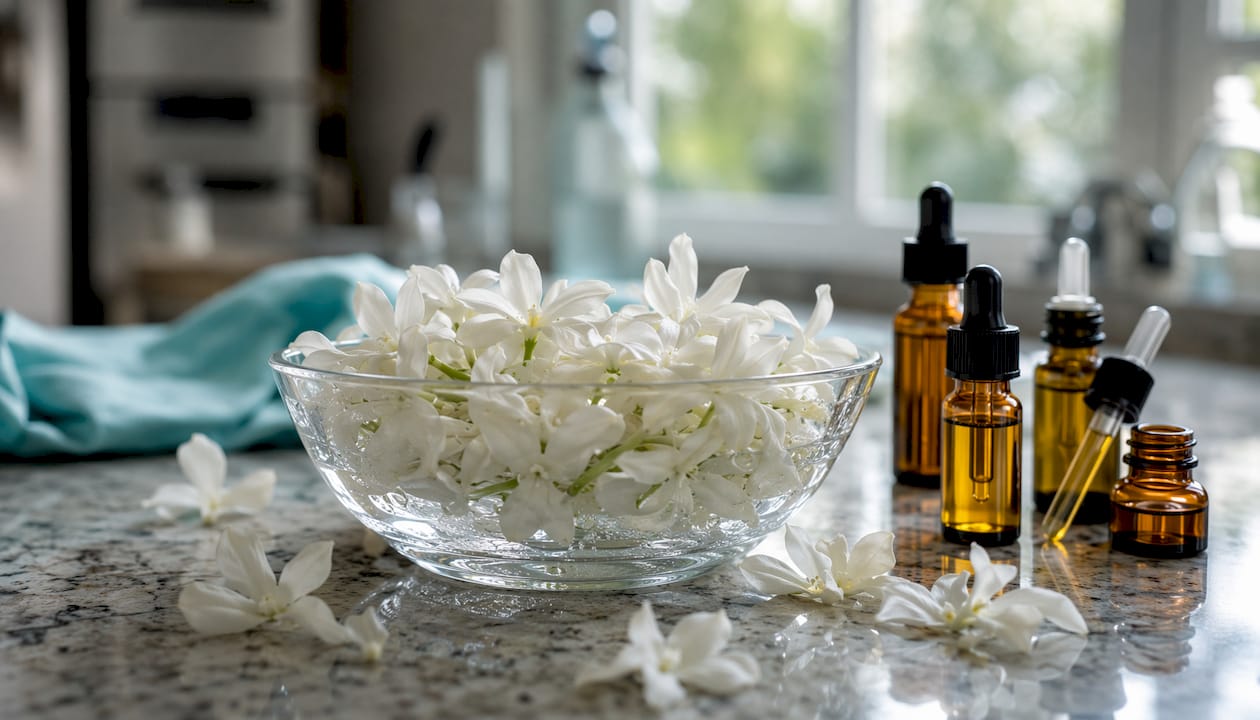
Sambac vs. grandiflorum
Two species dominate commercial perfumery. Jasmine sambac (used in many Asian and modern florals) smells warmer, creamier, and slightly tea-like. Jasmine grandiflorum (the classic Grasse variety) is more intensely floral, slightly fruity, and carries a faint indolic edge that gives it depth. Most mainstream jasmine perfumes use grandiflorum or a synthetic approximation; sambac shows up more often in niche and Asian-market releases.
Common pairings and what they do
| Pairing | Effect on jasmine | Best for |
|---|---|---|
| Citrus (bergamot, lemon) | Lifts and brightens; reads fresh and clean | Daytime, spring/summer |
| White musk | Softens and extends; adds skin-like warmth | Everyday wear, layering |
| Vanilla/tonka | Sweetens and deepens; pushes toward gourmand | Evening, cooler months |
| Sandalwood/cedar | Grounds and dries down; adds sophistication | Date night, fall/winter |
| Rose | Creates a classic floral heart; more feminine | Weddings, formal gifts |
| Vetiver/patchouli | Adds earthiness; intensifies the indolic edge | Bold, statement wear |
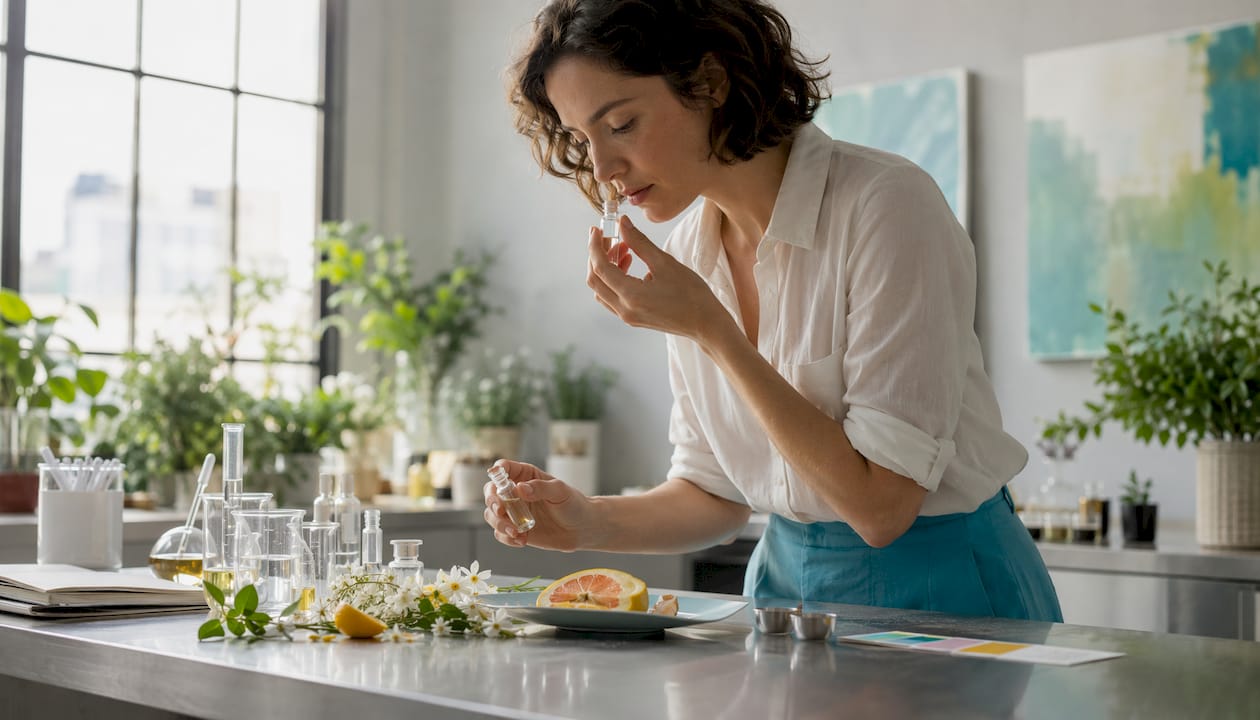
The indolic quality in jasmine — that slightly animalic, almost narcotic undertone — is what divides people. Citrus and musk suppress it. Vanilla and woods amplify it. Knowing which direction a formula takes is the single most useful thing you can learn before buying.
How do you choose the right jasmine perfume?
The decision comes down to five factors, and most people skip at least three of them.
- Concentration. An EDP (Eau de Parfum) generally lasts longer and projects more strongly, while an EDT (Eau de Toilette) tends to be lighter and shorter lasting. For jasmine specifically, EDP tends to show off the note's complexity better; EDT versions can smell thinner.
- Season. Fresh and green jasmine profiles work in spring and summer. Rich, oriental, and indolic jasmine profiles come into their own in fall and winter. Wearing a heavy oriental jasmine in July is not wrong, but it can feel overwhelming in heat.
- Skin chemistry. Jasmine can read powdery, sweet, or slightly sharp depending on your skin's pH. Always test on skin, not just a blotter, before committing to a full bottle.
- Longevity vs. projection. Some jasmine EDPs last all day but stay close to the skin (low sillage). Others project loudly for two hours then fade. Neither is better — it depends on whether you want a personal scent or a room presence.
- Budget. Designer jasmine EDP prices vary, and niche options can be more expensive. Buying from trusted retailers offering significant discounts can make higher-end selections more accessible. For more on stretching your budget, the Parfumla budget shopping guide covers the strategy well.
Questions to ask yourself when testing:
- Does the jasmine stay bright, or does it go powdery within an hour?
- Does it smell like the flower, or more like a synthetic approximation?
- Does the dry-down (the base notes after 30+ minutes) still appeal to you?
How to test and wear jasmine properly
Most people test perfume wrong. They spray, sniff immediately, and decide. That misses the entire middle act of a fragrance.
- Step 1: Spray once on your inner wrist or forearm. Wait 10 minutes before forming any opinion. The alcohol needs to burn off first.
- Step 2: At the 20–30 minute mark, smell again. This is the heart note phase — where jasmine actually lives in most compositions.
- Step 3: Check back at 60–90 minutes for the dry-down. If you still like what you smell at that point, you will probably like wearing it all day.
- Blotter vs. skin: Blotters are useful for a quick first impression, but they never tell you how a fragrance behaves on your body chemistry. Always confirm on skin before buying.
- Limit your session: Test no more than two or three perfumes per outing. Your nose fatigues quickly, and everything starts smelling the same after the fourth spray.
- Skip the coffee beans: The idea that sniffing coffee resets your nose is largely a retail myth. Fresh air and a 10-minute break work better.
Application spots for longevity: Inner wrists, the base of the throat, and the inside of the elbows. Jasmine's warmth means it performs especially well on pulse points where body heat amplifies the floral heart.
Pro Tip: Layer a jasmine EDP over an unscented or lightly scented body lotion. Moisturized skin holds fragrance significantly longer than dry skin, and it softens any sharp edges in the opening notes.
What fragrance experts actually say about jasmine
Jasmine has a long history of being credited with mood-lifting and even aphrodisiac properties. The honest picture is more nuanced. Healthline notes that while jasmine essential oil is used in aromatherapy for relaxation and mood, clinical evidence for these effects is limited. The same applies to aphrodisiac claims — they are mostly anecdotal, and scent choice should be driven by personal enjoyment, not wellness promises.
On the safety side, jasmine absolute (the concentrated extract used in fine perfumery) is regulated by the International Fragrance Association (IFRA), which sets usage limits to minimize sensitization risk. If you have sensitive skin or known fragrance allergies, patch-test any new jasmine perfume on your inner arm and wait 24 hours before wearing it on your neck or chest.
What fragrance editors do agree on: jasmine's enduring market role comes from its flexibility. It can anchor a soft, airy floral or carry the weight of a deep oriental. That is why it appears in the heart of so many iconic perfumes across decades, and why the note keeps showing up in new releases every year.
- Aromatherapy mood claims: anecdotal, not clinically established
- Aphrodisiac claims: no strong clinical support; enjoy jasmine for the scent itself
- Skin safety: patch-test first; IFRA guidelines govern usage levels in commercial perfumes
- Sourcing note: jasmine absolute is labor-intensive to produce, which is why many commercial perfumes use high-quality synthetics that closely replicate the natural flower
Key Takeaways
Jasmine is one of the most versatile floral notes in perfumery — the right style and concentration make all the difference between a scent you love and one that sits unused on a shelf.
| Point | Details |
|---|---|
| Start with fresh or floral-clean | Dior J'adore Le Jasmin Summer is the clearest, most wearable entry point for new jasmine buyers. |
| Match style to season | Fresh/green jasmine suits spring and summer; rich and oriental profiles perform best in fall and winter. |
| Always test on skin | Blotters give a first impression only; skin chemistry changes how jasmine smells after 30–60 minutes. |
| EDP outlasts EDT | For jasmine specifically, EDP concentration shows off the note's complexity and lasts significantly longer. |
| Shop Parfumla for value | Parfumla carries over 14,000 perfumes including jasmine EDPs at up to 60% off retail, with US shipping. |
Why jasmine is still the most misunderstood floral note
The "old lady" reputation jasmine carries in some circles is almost entirely a formulation problem, not a jasmine problem. The heavy, powdery jasmine compositions that defined certain decades were built around specific synthetic musks and aldehydes that read as dated today. Modern perfumers have moved on. The note itself — the actual flower — is one of the most complex and beautiful in the natural world.
What gets overlooked is how much jasmine rewards patience. It is not a top note. You do not smell it the moment you spray. It opens in the heart, usually 15–20 minutes in, and that is where the real character lives. Shoppers who dismiss jasmine after a quick blotter sniff are missing the best part of the fragrance entirely.
For gifting, a fresh or floral-clean jasmine is almost always a safe and appreciated choice. For personal wear, the indolic and oriental styles are worth exploring once you have a baseline. Parfumla's catalog makes that exploration affordable — you can try multiple styles without paying full retail on each one.
Where to buy authentic jasmine perfumes at the best price
Parfumla is one of the most practical places to buy jasmine perfumes online in the US. With over 14,000 fragrances in inventory — including designer, niche, and celebrity scents — and discounts up to 60% off retail, it removes the usual trade-off between selection and price.
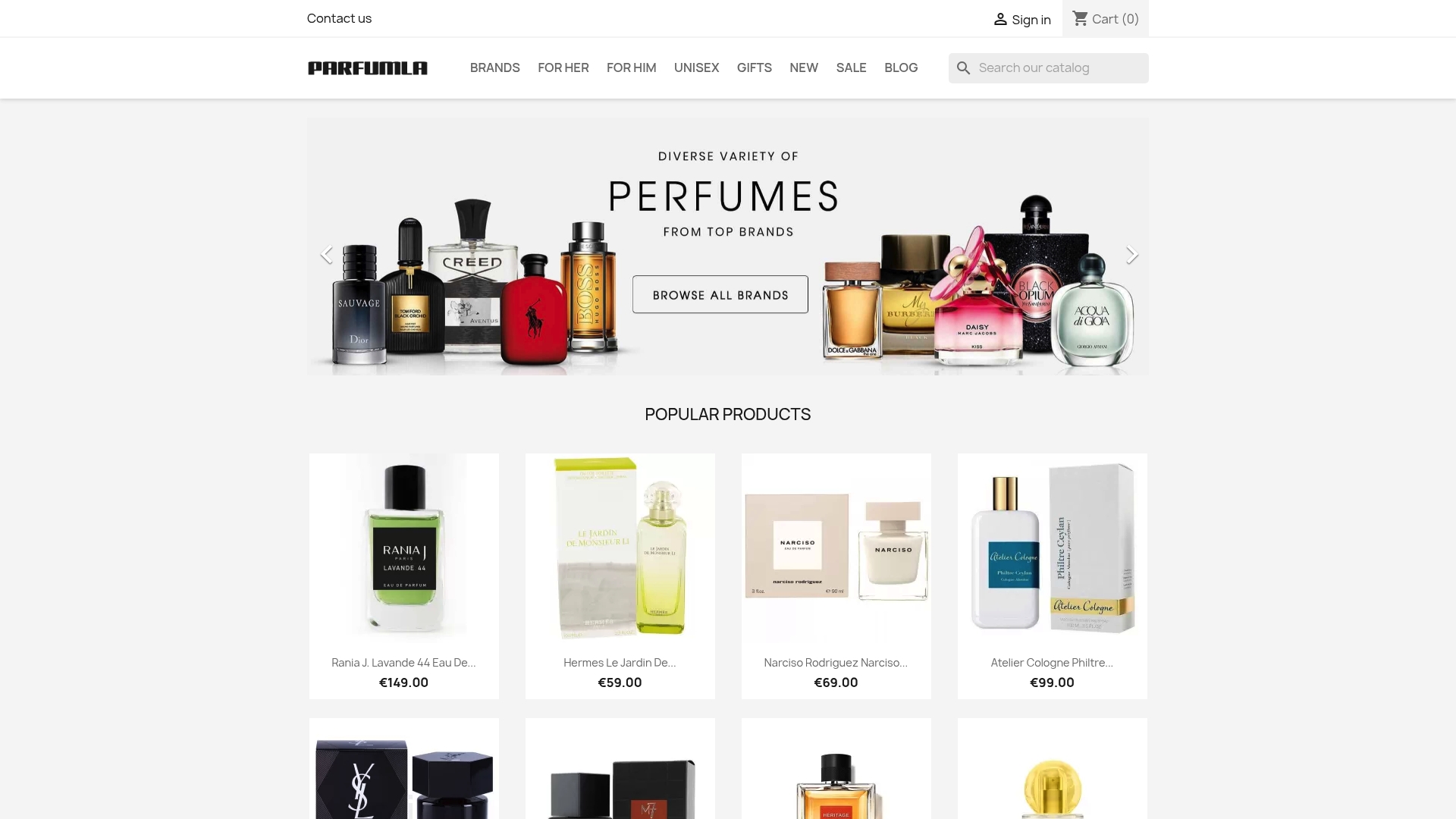
The Dior J'adore Le Jasmin Summer EDP is available directly through Parfumla with reliable US shipping. If you want a musky-floral alternative with jasmine-adjacent depth, the NARCISO RODRIGUEZ EDP for Women is another strong pick from the same catalog. Both come with detailed product reviews to help you decide before you commit. Browse the full jasmine selection at parfumla.com and use the filters to sort by concentration, price, and fragrance family.
Useful sources
- Healthline: Jasmine Essential Oil Health Benefits and Uses — balanced overview of aromatherapy claims and safety notes
- Who What Wear: The 13 Best Jasmine Fragrances of 2026 — editor-tested roundup covering fresh through rich jasmine profiles
- Marie Claire: 14 Best Jasmine Fragrances — useful for category labels and style comparisons
- doTERRA: Jasmine Essential Oil — sourcing and extraction context for jasmine absolute vs. distilled oil
- Fragrantica: Jasmine Note — community-sourced fragrance data and note descriptions
- Parfumla: Dior J'adore Le Jasmin Summer EDP — product page for the recommended pick
- Parfumla: Perfume Discovery Sets Guide — how to use discovery sets to sample jasmine styles before buying a full bottle
FAQ
What is the best jasmine smelling perfume?
Dior J'adore Le Jasmin Summer EDP is one of the most praised modern jasmine perfumes for its bright, luminous interpretation of the note. For a darker, more sensual take, BVLGARI Jasmin Noir EDP is a widely recommended alternative.
Is jasmine an old lady scent?
No. That perception comes from specific heavy, powdery formulations from earlier decades, not from jasmine itself. Modern jasmine perfumes are formulated to be fresh, clean, and versatile across ages and occasions.
Which jasmine is the most fragrant?
Jasmine grandiflorum (the Grasse variety) is generally considered the most intensely floral and complex, with a slightly fruity, indolic depth. Jasmine sambac is warmer and creamier but typically less assertive in projection.
What does jasmine smell like in perfume?
Jasmine in perfume reads as sweet, creamy, and floral with a slightly animalic or honeyed undertone depending on the formula. Paired with citrus it smells bright and fresh; paired with vanilla or woods it becomes warm and sensual.