
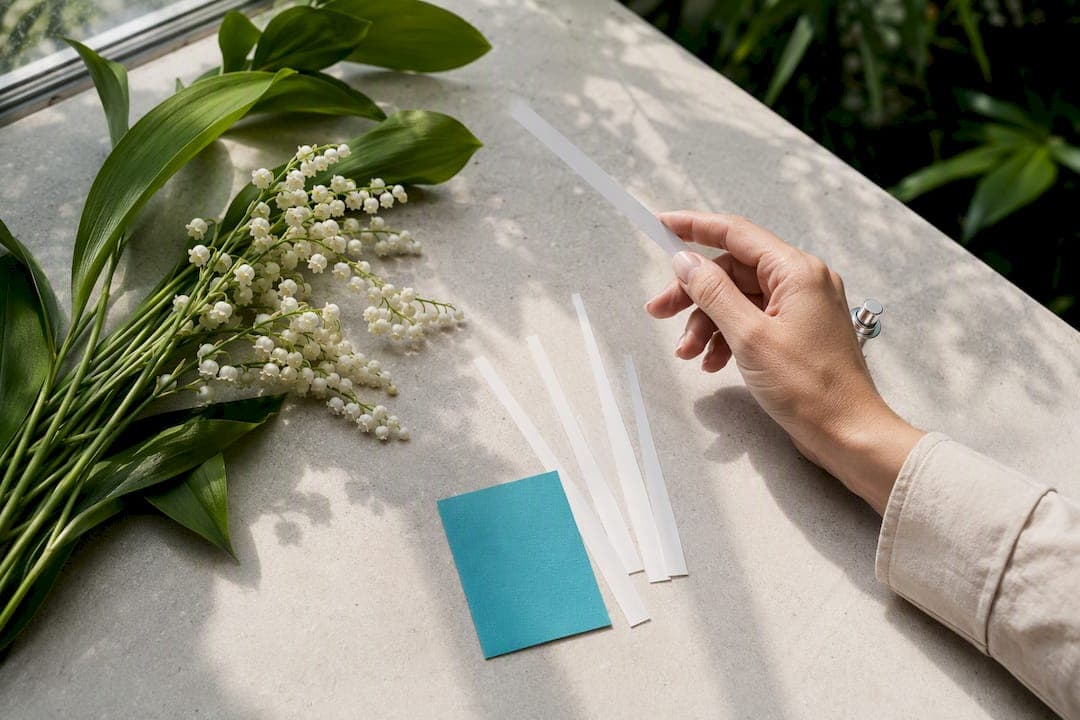
Lily of the valley perfumes deliver a green, milky white floral accord that reads as fresh and slightly soapy, with jasmine-like sweetness underneath. Because the flower's absolute doesn't translate into wearable perfume, nearly every version you'll find is built from synthetic materials, and reformulations over the past two decades have shifted how many of them smell. Judge a bottle by how prominently that muguet note sits in the blend and how it actually develops on your skin, not just by what the label promises.
TL;DR:
- Modern lily of the valley perfumes largely rely on synthetic materials due to the plant's limited extraction options.
- The scent profile often includes green, soapy, jasmine-like nuances that change significantly over time on the skin.
- Reformulations due to safety regulations have shifted the raw materials, making contemporary versions smell different from vintage ones.
- To find the best fragrance, focus on its prominence in the scent and sample multiple stages, as the note evolves from brightness to muskier dry-down.
- Sampling on skin before buying is essential, as skin chemistry can drastically alter how the fragrance smells and lasts.
Table of Contents
- What Does Lily of the Valley Smell Like in a Fragrance?
- Why Modern Muguet Perfumes Smell Different From Vintage Ones
- How Do You Choose the Right Lily of the Valley Perfume?
- Best Seasons and Pairings for Lily of the Valley Scents
- How Parfumla Makes Finding Lily of the Valley Fragrances Easier
- Why Buying Lily of the Valley Perfume Comes Down to Sampling, Not Marketing
- Find Your Lily of the Valley Perfume at the Best Price
- Sources
- FAQ
What Does Lily of the Valley Smell Like in a Fragrance?
Perfumers and reviewers consistently describe lily of the valley, also called muguet, as a green white floral note with soapy, sweet, jasmine-like nuances. That combination is what makes it tricky to spot for anyone new to fragrance vocabulary: it's floral but not heavy, sweet but not gourmand, and it carries a faint cleanliness that some people compare to fresh laundry rather than a flower shop.
The "soapy" quality comes from aldehydic and green facets layered against the sweeter floral base. On its own, muguet smells crisp and a little watery, almost like the inside of a stem freshly cut from a garden. It rarely appears completely isolated in commercial perfumery. Instead, it gets built out with supporting notes that push it in different directions.
Common notes that shift how lily of the valley reads:
- Jasmine deepens the floral sweetness and adds a heady, slightly indolic warmth.
- Rose rounds out the bouquet and makes the composition feel more classically feminine.
- Citrus (bergamot, lemon, mandarin) sharpens the green top notes and speeds up the fresh, airy impression.
- Green stem or leaf accords reinforce the "just picked" quality and keep the scent from turning powdery.
- Musk softens the dry-down and gives the fragrance staying power once the brighter top notes fade.
Concentration matters more than most shoppers expect. An eau de toilette built around muguet tends to stay light and transparent, which suits the note's naturally airy character. Move up to an eau de parfum or a true parfum concentration, and the same lily of the valley accord can feel denser, warmer, and noticeably longer lasting, though sillage (how far the scent projects off your skin) still depends heavily on the specific formula and the other materials blended in.
Pro Tip: Test a lily of the valley fragrance in three stages, not one. Spray it, then check back at 15 minutes, one hour, and three hours. The green, soapy top note that hits first is often the most fleeting part of the whole composition.
Here's a fact that trips up a lot of shoppers: the note almost never smells identical from the first spray to the final dry-down. What opens as a bright, dewy floral can settle into something softer and muskier within an hour, because the lighter aldehydic materials volatilize faster than the heavier base notes holding up the structure underneath.
When you're reading a product description or a review, look for phrases like "centered on" or "a lily of the valley heart," which usually signal the note plays a starring role rather than a background one. A fragrance that lists muguet fifth or sixth among a dozen notes is going to present it very differently than one built specifically around it.
Why Modern Muguet Perfumes Smell Different From Vintage Ones
Real lily of the valley flowers don't yield a usable essential oil or absolute through standard extraction methods, which is exactly why fragrance houses rely on synthetic materials to recreate the scent rather than distilling the actual plant. That single fact explains almost everything confusing about how muguet perfumes have changed over the decades.
The classic building blocks of the note have a specific history. Hydroxycitronellal was the first widely used lily-of-the-valley material, prized for its clean, floral, slightly citrusy character. Lyral and lilial followed later and became industry standards for decades, prized for adding depth and a soft, powdery sweetness that hydroxycitronellal alone couldn't deliver.
Then the regulatory landscape shifted. Bodies like the International Fragrance Association maintain standards libraries that set usage limits or restrictions on individual fragrance materials based on safety data, and lilial in particular faced restrictions that forced perfume houses to reformulate products that had relied on it for years. This isn't a conspiracy theory circulating on fragrance forums. It's a documented regulatory reality that changed the raw materials available to perfumers overnight.
Historically important lily-of-the-valley odorants include hydroxycitronellal, lyral and lilial. Regulatory restrictions on materials like lilial forced reformulations that changed the aroma profile of many classic scents, meaning a bottle purchased today may smell measurably different from the same name purchased fifteen years ago.
The practical effect: a fragrance that built its identity on lilial's specific powdery sweetness had to find a replacement, and no substitute recreates a discontinued material perfectly. Some houses turned to newer synthetics designed for stability and safety compliance. Others developed proprietary aldehydes in-house, guarding the exact formulas as trade secrets.
What this means for how modern muguet perfumes smell:
- Newer synthetics often skew lighter and more transparent than the older materials they replaced, since current formulations favor persistence without relying on restricted aldehydes.
- Vintage-style descriptions in marketing copy don't always mean the formula matches what was sold decades ago.
- A fragrance marketed as "inspired by" or "in the tradition of" classic muguet compositions is signaling an homage, not a chemical duplicate.
Diorissimo remains the fragrance most frequently cited as the archetype that popularized lily of the valley in modern perfumery, and it's worth understanding as a reference point rather than a single product recommendation. When reviewers and fragrance writers talk about "classic muguet," they're usually measuring a new release against that historical benchmark, even when the specific formula in question has been reworked multiple times since its debut.
If you see phrasing like "original formula" or "vintage-style" on a listing, treat it as an invitation to sample first. Because phraseology sometimes describes an intended impression rather than an exact chemical match to older versions, the only reliable way to know what you're actually getting is to smell it on your own skin.
How Do You Choose the Right Lily of the Valley Perfume?
Start with what role you want the note to play, because "contains lily of the valley" covers everything from a supporting accent to the entire structure of the perfume.
- Decide how prominent you want the note. If you want muguet as the star, look for descriptions that call it a "heart note" or say the composition is "centered on" lily of the valley. If you just want a floral fragrance with a hint of freshness, a scent listing it fourth or fifth among many notes will feel very different.
- Match the fragrance family to your taste. White floral bouquets lean sweeter and heavier; green florals stay crisp and understated; citrus-forward blends built around muguet feel brighter and more casual.
- Pick a concentration based on how long you need it to last. Eau de toilette suits daytime wear and lighter exposure; eau de parfum holds up through longer days or evening events.
- Consider the occasion and season before the bottle. A soapy, green muguet works beautifully for spring daytime wear or office settings; a musk-heavy interpretation handles cooler weather and evening wear better.
- Sample before committing to a full bottle, especially with gift purchases where you can't predict how the fragrance will interact with the recipient's skin chemistry.
Skin chemistry changes fragrance more than most people realize. The same lily of the valley perfume can smell noticeably soapier on one person and sweeter or muskier on another, purely because of differences in skin pH, oil production, and body temperature. That's why sampling on skin rather than paper, and checking the scent at multiple intervals, remains the most reliable evaluation method available to shoppers.
Pro Tip: Spray on your wrist or inner arm, not paper. Wait at least 10 minutes before your first real evaluation, then check again at the one hour and three hour marks. Paper testers show you the formula; skin shows you the fragrance.
Gift-giving adds another layer of complexity. Lily of the valley skews toward classically feminine, fresh, and universally approachable, which makes it a safer bet than heavier orientals or aggressive gourmands for someone whose exact taste you're unsure of. That said, safe doesn't mean boring: a bright citrus-muguet blend feels appropriate for almost any recipient, while a musk-anchored version leans more personal and works better when you know the person's existing fragrance preferences.
If you're buying for someone else and can't test it on their skin, consider a smaller size or a sample set instead of committing to a full bottle outright. It costs less to be wrong about a scent when you've only invested in a sample. On the shopping side, check return policies, confirm the retailer states authenticity clearly, and pay attention to shipping timelines if you're buying for a specific occasion like a birthday or holiday.

Best Seasons and Pairings for Lily of the Valley Scents
Lily of the valley belongs to a handful of overlapping fragrance families, and where a specific bottle lands within those families tells you a lot about how and when to wear it.
The main families you'll encounter:
- White floral bouquets pair muguet with jasmine, rose, or tuberose for a fuller, more traditional floral experience.
- Green florals keep the composition crisp, emphasizing stem and leaf accords alongside the flower itself.
- Fresh citrus blends brighten the muguet with bergamot or mandarin, producing something closer to a modern, everyday scent.
- Powdery musk compositions soften the note into something warmer, often better suited to cooler months.
Freshness-forward pairings (citrus, green stems) tend to suit daytime wear and warmer weather, since they read as light and clean rather than heavy. Warmth-forward pairings (musk, soft woods) hold up better in cooler seasons or evening settings, where a bit more richness feels appropriate rather than overwhelming.
Seasonally, muguet has strong cultural ties to spring. Its bridal and springtime associations keep it in steady seasonal rotation, which is why so many retailers position lily of the valley releases as warm-weather or wedding-season fragrances. That doesn't mean it's off-limits outside spring: a muskier, deeper interpretation can work perfectly well through fall, and a green citrus version makes an easy summer everyday scent.
Think through the occasion before the bottle. A soapy, green muguet suits a wedding or a daytime office setting, where subtlety matters. A sweeter white floral bouquet fits well for evening wear or a special dinner. For layering, a matching unscented lotion helps a lighter eau de toilette formula last longer without changing the scent's character, and pairing your fragrance with a similarly toned candle or home scent can extend the mood beyond what you're wearing.
How Parfumla Makes Finding Lily of the Valley Fragrances Easier
Finding a specific note like lily of the valley across thousands of scattered product listings is genuinely tedious, which is exactly the problem Parfumla's catalog is built to solve. With more than 14,000 perfumes spanning popular, niche, and celebrity releases, the odds of finding both a heritage-style muguet and a fresher, modern interpretation in one place go up considerably.
What shopping on Parfumla actually looks like for a muguet-focused search:
- Use the site's search bar to look up "lily of the valley" or "muguet" directly, or filter by fragrance family under floral categories.
- Narrow results further by concentration (EDT, EDP, parfum) once you've decided how strong you want the note to project.
- Check the detailed reviews on individual product pages before buying, especially for notes as skin-dependent as lily of the valley.
- Compare price points across the catalog to find offerings at prices below typical retail rates on many listings.
If you're chasing the archetypal muguet experience, Diorissimo is available directly through the catalog. Shoppers looking for a lighter, spring-leaning floral alternative might also compare Lancôme's La Vie Est Belle Bouquet de Printemps, which leans into a similarly fresh, floral register.
Buy Parfumla perfume online with the confidence that comes from reliable shipping across the US and EU, so a gift purchase timed for a specific occasion has a realistic path to arriving when you need it. For readers weighing where to buy original the lily of the valley perfume without paying full retail, checking a listing's review count and rating on the product page before adding it to your cart is worth the extra thirty seconds.
Why Buying Lily of the Valley Perfume Comes Down to Sampling, Not Marketing
The biggest mistake shoppers make with this note is trusting the name on the label more than their own nose. A perfume can market itself as classic, vintage-inspired, or true to the original muguet tradition while running on a completely different set of materials than whatever inspired that description. That's not dishonesty. It's the reality of a regulated industry where certain ingredients simply aren't available anymore.
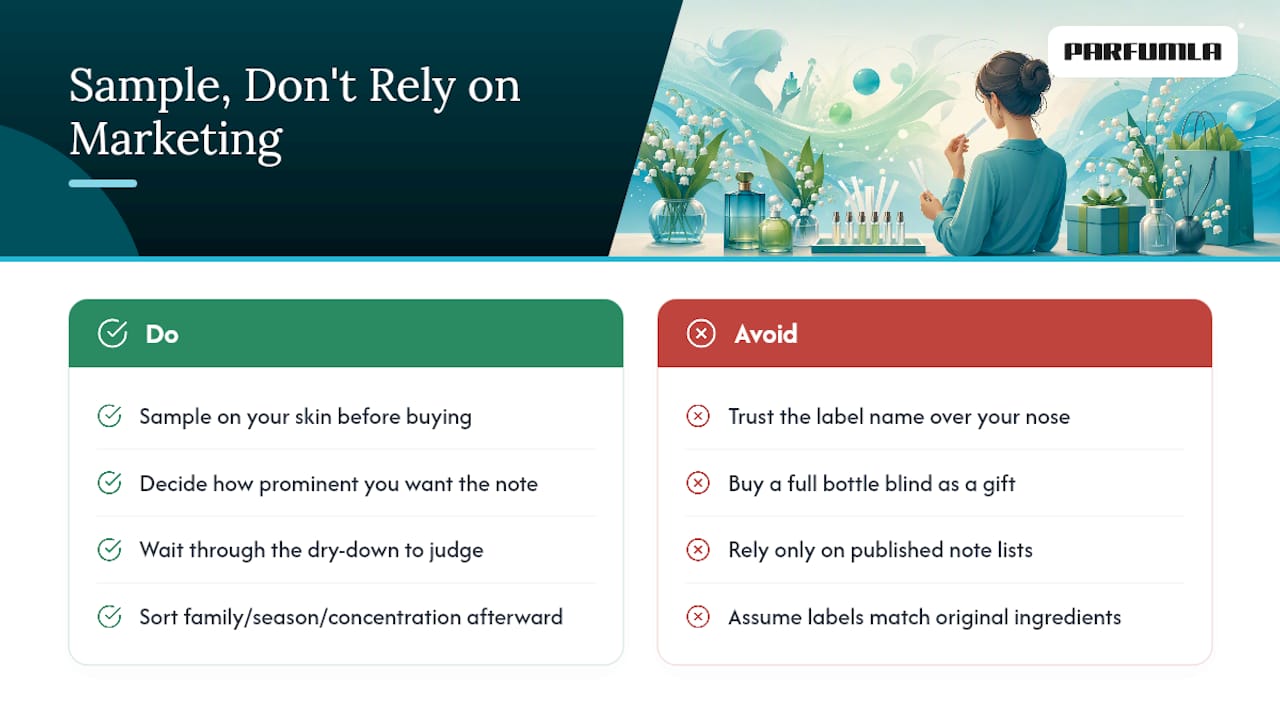
What gets underrated in most buying guides is skin chemistry's role in all of this. Two people can spray the exact same bottle and walk away with completely different impressions, one getting a soapy freshness, the other something sweeter and muskier. No amount of reading note lists replaces putting the fragrance on your own skin and waiting through the dry-down.
If there's one thing to prioritize, it's this: figure out how prominent you want the note before you shop, then sample before you commit to a full bottle, especially as a gift. The rest, family, season, concentration, is easier to sort out once that first decision is made.
— Parfumla
Find Your Lily of the Valley Perfume at the Best Price
Parfumla exists for exactly the moment you've reached after reading this far: you know roughly what you want, and now you need somewhere to actually find it without overpaying.
If your search leads you toward other white florals or fresh, spring-appropriate scents while you compare options, J'adore Le Jasmin is worth a look for a jasmine-forward alternative in the same family. Pairing a fragrance gift with something tactile also tends to land well. A curated gift collection or a complementary scented candle rounds out a bottle nicely for a birthday or wedding gift.
For a fresh, distinctive option that pairs beautifully with a floral wardrobe, check out the Narciso Rodriguez Eau de Toilette on Parfumla's site now, compare it against your shortlist, and place your order with shipping available across the US and EU.
Sources
Readers who want the technical background behind the claims in this guide can go directly to the sources: Fragrantica's note profile on lily of the valley covers the material history in depth, Bois de Jasmin's review of Diorissimo explains the archetype's lasting influence, and the IFRA standards library documents the regulatory limits driving reformulation across the industry.
- Lily of the valley — glossary entry
- Christian Dior — Diorissimo perfume review (Bois de Jasmin)
- Lily-of-the-Valley — Fragrantica notes and materials
- 13 beautiful lily of the valley perfumes — Harper's Bazaar
FAQ
Which Perfume Smells Most Like Lily of the Valley?
Diorissimo is the fragrance most consistently cited as the archetypal lily of the valley composition, though modern reformulations mean it presents a lighter, more transparent version of the note than older releases did.
What Is the Most Popular Lily of the Valley Perfume?
Diorissimo remains the most frequently referenced name in fragrance reviews and community discussions of muguet, largely because it set the template that later releases are measured against.
What Perfume Uses Lily of the Valley?
Many white floral, green floral, and fresh citrus fragrances feature lily of the valley, either as the central note or as a supporting accord alongside jasmine, rose, or musk. Checking a product's listed notes or searching Parfumla's catalog for "lily of the valley" is the most direct way to find current options.
What Does Lily of the Valley Smell Like in Fragrances?
It smells green and milky floral with a soapy, sweet quality and jasmine-like nuances, often described as fresh and slightly watery rather than heavy or overly sweet. How pronounced that impression feels depends on concentration, supporting notes, and your own skin chemistry.