
If you can no longer smell the perfume you just applied, you have olfactory fatigue, also called scent acclimation or nose blindness, not a bad bottle. Your brain has flagged the scent as familiar background noise and stopped alerting you to it, even though the people around you can usually still smell it fine. The fix is fast: step into fresh, scent-neutral air for a few minutes, and resist the urge to spray more.
TL;DR:
- Wearing the same fragrance daily accelerates nose blindess, so rotating scents weekly can extend your perception window.
- Applying perfume away from your nose and taking regular scent-free breaks helps maintain olfactory sensitivity over time.
- Sniffing coffee beans does not effectively reset scent perception; the key is simply removing exposure and allowing receptors to recover.
- Testing fragrance longevity with fabric swatches and external observers prevents misjudging scent fade caused by adaptation.
- Heavy or synthetic fragrances with stable base notes tend to cause faster scent fatigue compared to lighter, more volatile compositions.
Table of Contents
- What Nose Blindness Really Means for Perfume Wearers
- The Coffee Bean Myth and Other Overspraying Mistakes
- How to Rotate, Place, and Reset Perfume to Avoid Fatigue
- A Testing Protocol That Separates Real Fade From Nose Blindness
- When It's Not Nose Blindness: Medical Smell Loss and Red Flags
- How Nose Blindness Changes the Way You Experience Perfume
- Everyday Habits That Keep Your Sense of Smell Sharp
- Why Some Fragrances Trigger Nose Blindness Faster Than Others
- The Psychological Toll of Losing Your Own Scent
- Our Take: Test First, Buy Second
- Try Small Sizes Before You Commit to a Full Bottle
- Sources
- FAQ
What Nose Blindness Really Means for Perfume Wearers
Nose blindness is not a flaw in your nose. It is a normal, healthy function of your nervous system doing exactly what it is designed to do: filtering out constant stimuli so you can notice new ones. When you apply a fragrance, your olfactory receptors fire and send a signal to the brain. Keep that signal constant for long enough, and the brain reclassifies it as "known" and stops routing it to conscious attention. This is often called olfactory fatigue, and it is the same neurological family of process that lets you stop noticing your own house smells or the hum of your refrigerator.
Researchers have traced this to specific biological mechanisms. Studies cited by The New York Times point to chemical and neural gating processes that reduce signaling from olfactory neurons once exposure continues past a certain point. The receptors themselves may still be detecting molecules; the brain is choosing not to pass that information forward. That distinction matters, because it explains why other people can walk up to you and immediately catch the scent you swear has vanished. Their nose has not adapted to your perfume the way yours has.
Here is the short version of what's happening at each stage:
- Initial exposure: Receptors fire strongly, and you notice the fragrance clearly.
- Sustained exposure: Receptor signaling weakens, and the brain starts down-ranking the input as unimportant.
- Full adaptation: You stop consciously registering the scent, often within minutes of application, though timing varies by fragrance concentration and individual sensitivity.
- Recovery: Once you leave the scent source or get a break in exposure, sensitivity typically returns within minutes to a couple of hours.
This process is described in accessible terms by GQ, which frames olfactory fatigue as the brain deprioritizing a constant signal so it can stay alert to new smells in the environment, a survival mechanism more than a malfunction.
Pro Tip: If you genuinely cannot recall the last time you smelled your own perfume clearly, even right after a fresh application, that is a stronger signal to check for adaptation than any single "I can't smell it today" moment.
The key contrast to hold onto is this: olfactory fatigue is temporary and situational. Anosmia, a partial or total loss of smell, is a medical condition and does not resolve just by leaving the room. If a break from the scent restores your perception, you are dealing with ordinary fragrance fatigue. If it does not, that points toward something else worth investigating, which we will get to later in this article.
The Coffee Bean Myth and Other Overspraying Mistakes
Sniffing coffee beans between fragrance samples is one of the most repeated pieces of perfume advice, and it does not hold up. Experimental research examining olfactory reset methods found that sniffing coffee beans performed no better than plain air or lemon slices at restoring the ability to discriminate between scents. The ritual feels productive because it gives you something active to do between samples, but the actual reset comes from the break in exposure, not the coffee.
The instinct that causes more damage is overspraying. When you can't smell your perfume, the natural reaction is to apply more. That almost always backfires:
- Adding more perfume increases the constant signal your brain is already tuning out, deepening the adaptation instead of breaking it.
- Heavier application means the people around you smell considerably more fragrance than you intended, since their noses are not fatigued to it.
- Repeated overspraying trains your nose to adapt faster to that specific fragrance over time, shortening how long you can perceive it before each future wear.
Concentration and skin chemistry also change how quickly nose blindness sets in. A dense, diffusive eau de parfum with heavy synthetic musks will saturate your receptors faster than a light eau de cologne with citrus top notes, as explained in this guide to body spray vs perfume. Warmer skin, higher body oil production, and even hydration levels affect how a fragrance evaporates and how long its signal stays "loud" enough to keep triggering adaptation.
Pro Tip: Instead of reaching for coffee beans, smell the inside of your own elbow or forearm skin (an area without fragrance on it). It gives your olfactory system a genuinely neutral reference point, and it costs nothing.
The fastest legitimate reset is still the simplest one: leave the scented environment. Fresh outdoor air, or even just a different room, lets receptor sensitivity recover because the constant trigger is removed.
How to Rotate, Place, and Reset Perfume to Avoid Fatigue
You cannot eliminate olfactory fatigue entirely, since it is a normal nervous system response, but you can manage how fast and how often it happens. The tactics below come from fragrance-wearing habits that actually address the underlying cause: constant, unbroken exposure to the same signal.
- Build a rotation. Wearing the same fragrance every single day trains your nose to adapt to it faster and faster. Fragrance enthusiasts commonly rotate between two or more scents across the week specifically to keep the brain treating each one as relatively novel. Even a simple two-scent rotation, one for weekdays and a different one for evenings or weekends, meaningfully slows habituation.
- Spray away from your nose. Applying perfume to the back of the neck, the inside of your wrists held below chin level, or your forearms puts the scent in a position where you get intermittent whiffs rather than a nonstop stream. Continuous exposure at close range to your nostrils accelerates fatigue faster than almost anything else.
- Take a scent-free day. If you wear fragrance daily, one day off gives your olfactory receptors a genuine chance to reset their baseline instead of adapting to a rolling backlog of exposure.
- Use short air breaks during the day. Step outside for several minutes, or just move to an unscented room. Adaptation is temporary and reversible once the trigger is removed, and a short break is often enough to restore noticeable perception.
- Layer instead of respraying. If you feel your fragrance has faded and want to refresh it midday, add a complementary layer, like a matching body lotion or a lighter version of the same scent family, rather than blasting on more of the original spray. Layering techniques change how a fragrance diffuses without simply repeating the same saturating signal your nose already tuned out.
- Sample new families periodically. Introducing an unfamiliar fragrance family, say, moving from a warm amber to something green and aquatic, gives your olfactory system a genuinely new pattern to process, which resets your baseline sensitivity faster than sticking with variations of the same profile.
Pro Tip: Keep your rotation simple. Two to four fragrances in steady rotation is plenty to slow adaptation without turning your morning routine into a decision paralysis exercise.
None of these tactics require buying more perfume than you need. They require using what you already own more deliberately.
A Testing Protocol That Separates Real Fade From Nose Blindness
Before you decide a fragrance has weak performance, rule out your own nose as the variable. Nose blindness and genuinely poor longevity produce the same symptom, you stop smelling the scent, but they have completely different causes and completely different fixes.
Run this simple test the next time you're unsure:
- Apply as usual, one or two sprays on your intended pulse points, and note the exact time.
- Check at 15 minutes. This is peak top-note territory. If you smell nothing here, something is off with the application itself, not your nose.
- Check at 60 minutes by smelling a piece of fabric, not your skin. Spray a small amount on a clothing swatch or a cotton square at the same time you apply to your skin. Fabric holds and releases oils differently than skin, and testing it gives you a cleaner read on whether the fragrance is actually still present.
- Check at 180 minutes using the same fabric swatch. If the fabric still carries a clear scent but your skin seems to have "lost" it, that's strong evidence you've adapted, not that the perfume faded.
- Ask someone else. A friend, partner, or coworker who hasn't been around the scent all day gives you an objective outside check. If they can smell it and you can't, that confirms nose blindness rather than actual fade.
A few extra notes make this test more reliable:
- Test one fragrance at a time. Sniffing multiple scents back to back, the way you might in a store, causes cumulative adaptation and reduces your accuracy with every additional sample.
- Save this checklist and reuse it whenever you're evaluating a new bottle, especially before deciding a fragrance "doesn't work" for you.
- If you're testing multiple fragrances in one sitting for a buying decision, our step-by-step testing guide walks through pacing your samples to avoid exactly this kind of fatigue-driven false negative.
This protocol takes about three hours from first spray to final check, but most of that is passive waiting. The actual effort is five minutes of attention spread across an afternoon.
When It's Not Nose Blindness: Medical Smell Loss and Red Flags
Ordinary nose blindness resolves with a break in exposure. If it doesn't, or if the pattern looks different from what's described above, that's worth paying attention to.
Watch for these signals that point toward something beyond habituation:
- Smell loss that doesn't recover even after hours away from any fragrance or scented environment.
- Sudden onset, especially following a cold, sinus infection, or viral illness. Post-viral smell loss is a recognized and fairly common cause of persistent anosmia.
- Smell loss affecting all odors, not just your perfume, including food, coffee, or cleaning products.
- Distorted smells, where familiar scents suddenly smell wrong, unpleasant, or "off" rather than simply absent.
- Smell changes tied to your menstrual cycle or hormonal shifts, which can genuinely alter scent sensitivity temporarily, though this typically fluctuates rather than disappearing entirely.
Common, non-habit causes to rule out first include nasal congestion from allergies or a cold, chronic sinus inflammation, and certain medications that affect mucus membranes. Try a simple self-check: smell something distinctive and strong, like ground cinnamon, vanilla extract, or a citrus peel. If you can't detect it even alone in a quiet room away from any fragrance, that's a different situation than not smelling your own perfume after wearing it for hours.
If smell loss persists beyond a few days, doesn't respond to congestion treatment, or came on suddenly and completely, see an ear, nose, and throat specialist (ENT). Typical evaluation includes a nasal exam, a smell identification test, and sometimes imaging if structural causes are suspected. Nose blindness from perfume wear resolves in minutes to hours. True anosmia does not resolve on its own timeline that fast, and it deserves a real diagnosis.
How Nose Blindness Changes the Way You Experience Perfume
Nose blindness doesn't just make you think a bottle is defective. It quietly reshapes your relationship with scent over months and years of wear. People who wear the same signature fragrance daily for a decade often report that they can barely detect it at all anymore, even at first application, because their baseline adaptation has shifted permanently toward that specific chemical profile.
This has a practical downside: you lose the ability to judge your own presence. You might think you're wearing a light touch when you're actually projecting heavily, simply because your nose stopped giving you accurate feedback long ago. It also changes how you shop. Someone whose nose has adapted to heavy, dense fragrances for years often finds lighter, more delicate compositions "weak" or "boring" on first smell, not because those fragrances lack quality, but because their baseline sensitivity has shifted.
The upside is that this same adaptability means your nose can be retrained. Wearers who deliberately rotate and vary their fragrances over time often report a sharper, more nuanced sense of smell across the board, not just for perfume but for food, wine, and other scent-driven experiences. Nose blindness, in that sense, is less a permanent limitation and more a reflection of habits you can adjust.
Everyday Habits That Keep Your Sense of Smell Sharp
A few lifestyle factors influence how easily and how often you experience fragrance fatigue, beyond the rotation and placement tactics already covered.
Hydration affects nasal mucus function, and a dry nasal passage detects scent less efficiently overall. Smoking dulls olfactory receptor sensitivity over time and is one of the more significant long-term contributors to reduced smell perception generally, separate from any single-fragrance adaptation. Poor sleep and chronic stress both reduce the brain's attentional resources, which affects how well you register subtle sensory input, including smell.
Environment matters, too. Wearers who spend most of their day in strongly scented environments, candle shops, spas, kitchens, cleaning-product-heavy households, tend to experience faster fragrance fatigue across the board because their baseline exposure to competing smells is already high. Giving your nose regular access to plain, unscented air during the day, rather than moving from one strong smell to another, helps preserve your sensitivity for when it matters most.
Diet plays a smaller but real role. Zinc deficiency has been linked to reduced smell acuity in some individuals, though this is not a universal fix and shouldn't be assumed as the cause without other supporting symptoms. The simplest, most broadly useful habit is straightforward: give your nose breaks from strong smells of any kind, not just perfume, throughout your day.
Why Some Fragrances Trigger Nose Blindness Faster Than Others
Not every perfume causes fatigue at the same rate, and the composition is a big part of why. Some modern diffusive molecules, including certain musks and synthetics like ambroxan, create a steady, unbroken background signal that your brain adapts to quickly because there's no variation for it to keep tracking.
Fragrances built heavily around these long-lasting, low-variation base notes tend to "disappear" for the wearer faster than fragrances with brighter, more volatile top notes like citrus or aromatic herbs, which shift and evolve more over the first hour of wear. That evolution gives your olfactory system new information to process periodically, which slows full adaptation.
This is one reason gourmand and heavy amber fragrances often get complaints of "I can't smell it after an hour" from their own wearers, while lighter cologne-style fragrances rarely generate the same complaint, even though both may have similar overall staying power to a third party. The composition itself partly determines how fast you personally go nose blind to it, independent of how strong the fragrance actually is on your skin or clothing.
If you tend to adapt quickly to your fragrances, choosing scents with more top-note complexity, rather than dense, single-note-dominant compositions, is a reasonable strategy worth testing.
The Psychological Toll of Losing Your Own Scent
There's a real emotional undercurrent to not being able to smell your own perfume, beyond the practical question of whether it's working. Fragrance is deeply tied to identity and self-presentation for a lot of people. When you can't perceive something that's supposed to represent how you want to be experienced by others, it creates a specific kind of quiet anxiety: did I overdo it? Did I underdo it? Am I even wearing anything at all right now?
That uncertainty can lead to compulsive checking behaviors, repeatedly smelling your wrist throughout the day, asking people if they can smell your perfume, or avoiding a favorite fragrance altogether because you no longer trust your own judgment about it. Some wearers describe a genuine sense of loss when a long-worn signature scent stops registering, similar to losing a small, familiar piece of a daily ritual.
The reassuring part, backed by what the neuroscience actually shows, is that none of this reflects your fragrance failing or your nose being broken. It reflects a normal adaptive process working as designed. Understanding that distinction tends to reduce the anxiety considerably, because the fix isn't buying a new bottle out of frustration. It's adjusting how and how often you wear what you already have.
Our Take: Test First, Buy Second
Most perfume disappointment traces back to one habit: judging a fragrance by how it smells to a nose that's already adapted to something else. The conventional advice, sniff coffee beans, spray more, assume the bottle went bad, gets the diagnosis backwards almost every time.
The testing protocol matters more than any trick for "curing" nose blindness, because there is no cure. It's a normal function, not a problem. What actually helps is separating your perception from the fragrance's real performance: check fabric, not just skin; ask someone else; give yourself air breaks before judging longevity.
If we had to prioritize one change, it's this: stop respraying the moment you think a scent faded. Wait twenty minutes in fresh air first. More often than not, it's still there. Your nose just needed a break, not more fragrance.
— Parfumla
Try Small Sizes Before You Commit to a Full Bottle
Testing a fragrance properly, giving it real time on fabric, checking back after a few hours, wearing it on its own without five other scents competing for your attention, is a lot easier when you're not locked into a full-size bottle you're not sure about.
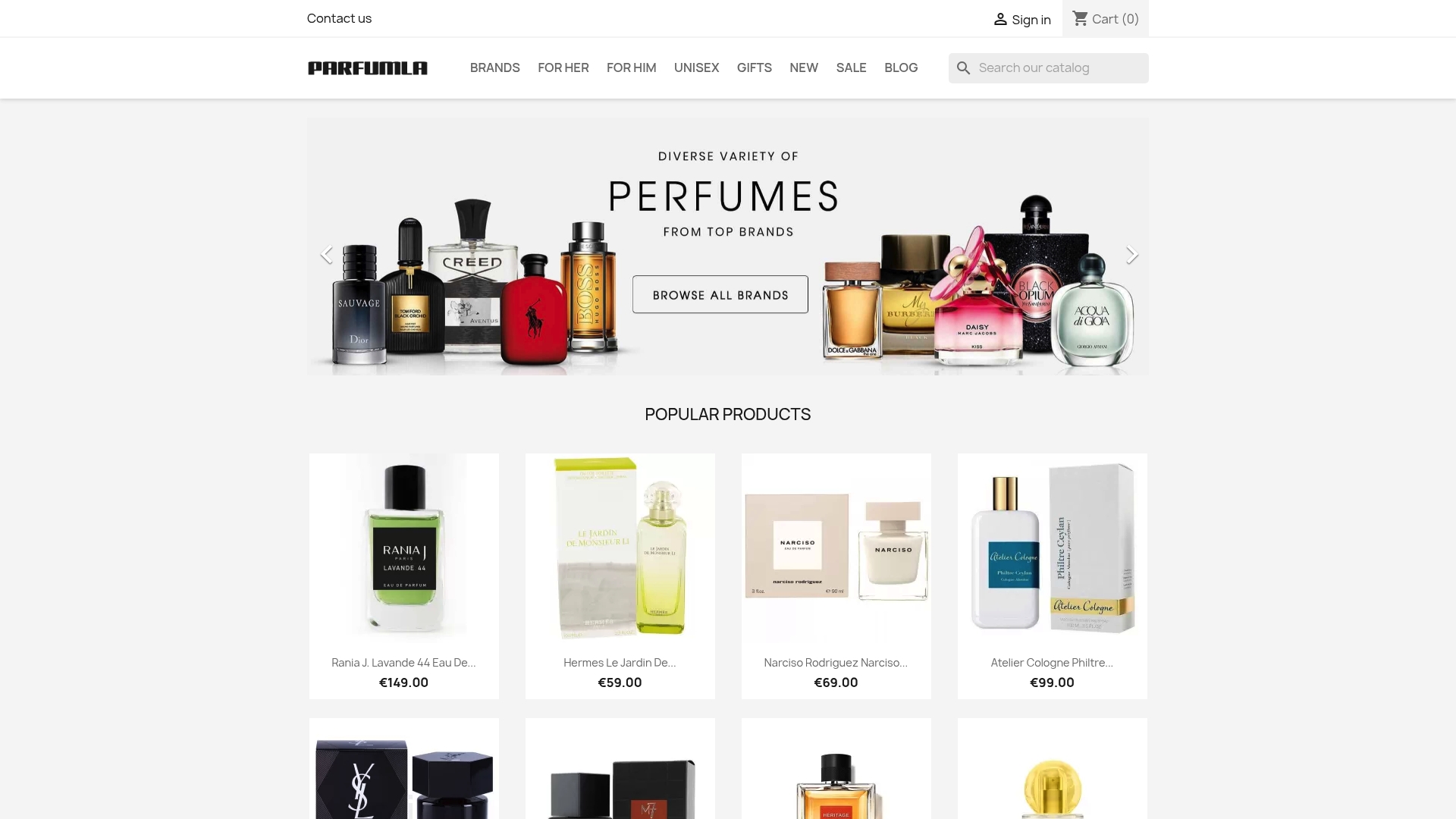
If you're rebuilding a rotation to fight fragrance fatigue, a lighter, more diffusive option like the ESCENTRIC MOLECULES Molecule 01 pairs well against a heavier signature scent, giving your nose genuine variation instead of another dense, easily adapted-to profile. For something classic and versatile enough to anchor a rotation, the NARCISO RODRIGUEZ Eau de Toilette For Women is a reliable place to start.
Browse the catalog to buy Parfumla perfume online, compare prices against retail, and find the best price for the fragrance you already know you love, or the one you've been meaning to test properly.
Sources
- Why you stop smelling your own fragrance while everyone else still can
- Why your perfume no longer reeks
- Olfactory fatigue — Wikipedia
- Can perfume cause nose blindness? | Perfume On Skin
FAQ
How do you get rid of nose blindness to perfume?
Step away from the scent into fresh, unscented air for several minutes. Sensitivity typically returns once the constant exposure is removed, since olfactory adaptation is temporary rather than permanent.
Is nose blindness a real thing?
Yes. It's a documented neurological process where the brain deprioritizes signals from a constant, unchanging smell, including your own perfume, so it can stay alert to new odors in the environment.
What is scent blindness?
Scent blindness, more accurately called olfactory fatigue, is the temporary inability to consciously perceive a smell you've been continuously exposed to, even though your receptors are often still detecting it and other people can usually still smell it on you.
Does sniffing coffee beans reset your sense of smell?
Not reliably. Controlled testing found that coffee beans performed no better than plain air or lemon slices at restoring scent discrimination, despite the ritual's popularity in fragrance stores.
How do I know if it's nose blindness or my perfume actually faded?
Spray a fabric swatch at the same time you apply to your skin, then check the fabric hours later. If the fabric still smells but your skin doesn't, you've adapted, not the fragrance faded.