

An online perfume shopping checklist is a step-by-step framework that helps you select the right fragrance, control your budget, and buy safely from trustworthy retailers without ever setting foot in a store. Buying perfume online without a structured approach leads to costly mistakes: wrong concentrations, counterfeit bottles, and scents that smell nothing like you expected. This guide covers every stage of the process, from identifying your scent preferences and understanding concentration types to sampling strategies, price comparison, and seller vetting. Whether you are buying your first bottle or your fiftieth, this fragrance checklist for shopping will sharpen every decision you make.
1. Start with your online perfume shopping checklist: know your scent family
The first step in any perfume buying guide is identifying which fragrance families genuinely appeal to you, because shopping without this filter means scrolling through thousands of options with no direction. The four core fragrance families are floral, woody, oriental, and fresh. Floral scents center on rose, jasmine, and peony. Woody scents use sandalwood, cedar, and vetiver as their backbone. Oriental fragrances are warm and spiced, often built around amber, vanilla, and musk. Fresh scents lean citrus, aquatic, or green.
Without access to a physical store, you can still map your preferences. Read product descriptions carefully, paying attention to the listed top, heart, and base notes. Discovery sets from brands like Maison Margiela Replica or Byredo give you five to eight samples in one purchase, letting you test an entire family before committing. Fragrance communities on platforms like Fragrantica also publish detailed note breakdowns and community reviews that go far beyond marketing copy.

Narrowing your search to one or two families before you browse cuts decision fatigue significantly. A focused shortlist of 3 to 5 fragrances per shopping session produces better decisions than an open-ended scroll through hundreds of listings.
Pro Tip: Keep a fragrance journal or use an app like Fragrantica's collection tracker to log your impressions after each sample. Note the occasion, season, and how the scent evolved on your skin over four hours. This record becomes your personal reference for every future purchase.
2. Understand perfume concentrations before you buy
Concentration is the single most misunderstood variable in online fragrance shopping, and getting it wrong means paying for a scent that either disappears in an hour or overwhelms every room you enter. Concentration refers to the percentage of aromatic compounds in the formula, and it directly controls intensity, longevity, and price.
The main concentration types you will encounter are:
- Eau Fraîche: 1 to 3% concentration, very light, lasts under two hours
- Eau de Cologne (EDC): 2 to 4%, fresh and casual, best for warm climates
- Eau de Toilette (EDT): 5 to 15%, lighter and fresher, ideal for daily warm-weather wear
- Eau de Parfum (EDP): 15 to 20%, richer and longer-lasting, suits cooler weather and evenings
- Extrait de Parfum: 20 to 40%, maximum intensity, one application lasts all day
EDT versus EDP is the most common choice you will face. EDT works well for office environments or summer days when projection should stay moderate. EDP is the better pick for evenings, fall, and winter, when you want the scent to carry and last. Extrait suits collectors and those who want a single daily application with no reapplication needed.
When reading product descriptions online, the concentration label appears in the product title or specifications. If it is missing, treat that as a red flag and contact the seller before purchasing.
3. Build an effective sampling strategy to avoid buyer's remorse
Sampling is the most important step in any online scent selection process, and skipping it is the single biggest cause of expensive regret. Your skin chemistry, including moisture level, pH, and body temperature, changes how a fragrance smells on you compared to a paper strip or a reviewer's description. Skin chemistry affects how fragrances develop, making paper strip tests unreliable for final purchase decisions.
Follow this testing sequence for accurate results:
- Order samples or a discovery set before committing to a full bottle
- Apply one fragrance to each wrist and one to the inner elbow
- Wait 15 to 20 minutes for the top notes to settle before forming any opinion
- Evaluate again at the 2-hour mark when the heart notes dominate
- Check the dry-down at 4 to 6 hours to assess base notes and longevity
- Log your impressions immediately after each stage
Limit testing to 3 to 4 fragrances per session to avoid olfactory fatigue. Testing more than four scents in one sitting reduces your ability to distinguish between them, which means your impressions become unreliable. Take a 30-minute break between sessions, or smell coffee beans to reset your palate.
2ml perfume samples cost between 3 and 15 euros, and some retailers credit the sample cost toward a full bottle purchase. Decant services and sample subscription programs like those offered by fragrance communities are another affordable route. You can also find guidance on sampling perfumes affordably to keep testing costs low without skipping the step entirely.
| Testing stage | What to evaluate |
|---|---|
| 0 to 15 minutes | Top notes: first impression, brightness, citrus or spice |
| 15 to 120 minutes | Heart notes: the true character of the fragrance |
| 2 to 6 hours | Base notes: depth, warmth, longevity on your skin |
| Next morning | Residual scent on clothing or skin, overall satisfaction |
Pro Tip: Never rub your wrists together after applying perfume. Rubbing breaks down top notes by generating heat that accelerates evaporation of volatile molecules, distorting the fragrance's intended development from the very first stage.
4. Set a realistic budget and compare prices across stores
Online perfume prices vary widely for legitimate reasons, and understanding those reasons protects you from both overpaying and falling for counterfeits. Authorized retailers carry lower overhead than department stores, which is why online perfume prices are lower than brick-and-mortar equivalents for the same authentic product. Distribution agreements, import costs, and retailer margins all influence the final price you see.
When comparing prices, look beyond the bottle cost and factor in:
- Shipping fees and whether free shipping applies at your order size
- Return policy terms, especially for opened bottles
- Sample availability and whether sample costs apply toward a purchase
- Currency conversion if ordering from international retailers
- Customs duties for cross-border shipments
A price that sits 20 to 30% below the average market rate for a popular fragrance is worth investigating. A price that is 60% or more below retail with no explanation is almost always a counterfeit signal. Legitimate discounts at that level exist but require verification through seller reputation, not just price alone.
Use a simple comparison approach: check the same fragrance across three to five trusted retailers, note the total landed cost including shipping, and factor in the return policy value. The cheapest option with no returns and no reviews is rarely the best value.
5. Verify seller reputation and avoid counterfeit perfumes
Seller vetting is the most critical step in your fragrance checklist for shopping, because a counterfeit fragrance does not just smell wrong. It can contain unregulated ingredients that irritate skin or cause allergic reactions. Prioritize seller reputation and transparent return policies over low prices when buying perfume online.
Check every seller against these criteria before purchasing:
- Business transparency: The site must display a physical address, contact email or phone, and consistent branding across all pages
- Review quality: Look for detailed, specific reviews that mention scent development and longevity, not just star ratings. Detailed and specific reviews covering scent development and limitations signal a trustworthy review base
- Return policy clarity: Return policies often exclude opened perfumes, so confirm the exact terms before you buy, not after
- Product detail completeness: Authentic listings include batch codes, country of origin, full ingredient lists, and multiple product photos showing the box and bottle
- Shipping origin: A fragrance shipped from an unexpected country with no explanation warrants a direct question to the seller
- Seller responsiveness: Test the customer service channel before purchasing. A seller who does not respond to a pre-sale question will not help you after a problem arises
Pro Tip: Use CheckFresh or a similar batch code verification tool to confirm a fragrance's production date and authenticity after receiving your order. Enter the code printed on the box base to verify the batch against the manufacturer's records.
Understanding online return policies in general retail helps you recognize when a perfume seller's terms are unusually restrictive, which is itself a signal worth noting.
Key takeaways
A successful online perfume purchase requires knowing your scent family, matching concentration to occasion, sampling before committing, comparing total costs, and vetting every seller for authenticity and clear return terms.
| Point | Details |
|---|---|
| Know your scent family first | Narrow to one or two fragrance families before browsing to cut decision fatigue. |
| Match concentration to use case | Choose EDT for daily wear and EDP or extrait for evenings and cooler seasons. |
| Sample before every full purchase | Test 3 to 4 fragrances per session on skin, not paper, to get accurate impressions. |
| Compare total landed cost | Factor in shipping, returns, and sample credits, not just the bottle price. |
| Vet sellers before paying | Confirm business transparency, review quality, and return policy terms on every order. |
Why I stopped buying perfume on impulse
I spent years buying fragrances based on viral recommendations and striking bottle designs, and I accumulated a shelf full of expensive bottles I rarely reached for. The turning point was realizing that skin chemistry makes every fragrance personal. What smells extraordinary on a reviewer smells flat or sharp on me, and no amount of reading notes pyramids changes that reality.
The checklist approach changed my hit rate dramatically. I now start every search by identifying the family and occasion before I look at a single product page. I order samples without exception, even for fragrances I think I already know. And I have learned to read seller pages the way I read a contract: looking for what is missing, not just what is present.
My honest advice for beginners is to resist the pressure to buy a full bottle on the first encounter with a scent you like. The fragrance that thrills you in the first 20 minutes may disappoint you at the four-hour dry-down. Patience in the sampling phase saves money and builds a collection you actually wear.
For experienced buyers, the most underused tool is the fragrance journal. Tracking impressions over time reveals patterns in your preferences that no algorithm can surface. You start to see that you consistently reach for woody orientals in winter and citrus-forward fresh scents in summer, and that knowledge makes every future purchase faster and more accurate.
— Hamster777
Find authentic fragrances at prices that make sense
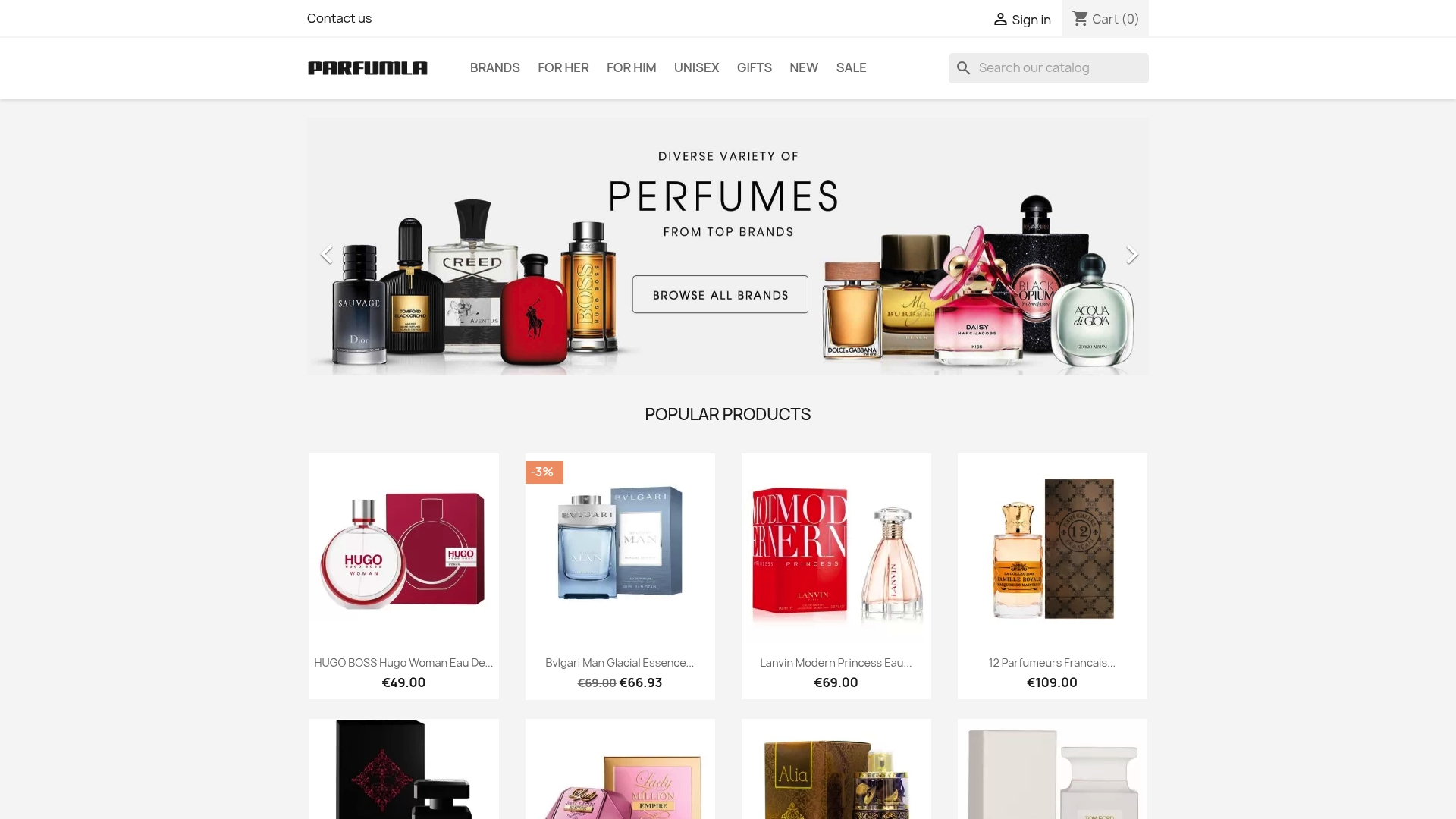
Parfumla carries over 14,000 fragrances, including popular, niche, and celebrity scents, at up to 60% off retail prices. Every listing includes detailed reviews so you can evaluate scent development, longevity, and suitability before adding to your cart. If you are working through your checklist and ready to move from sampling to buying, the Narciso Rodriguez Eau de Toilette for Women 100ml is a strong example of a well-reviewed, authentic fragrance available at a price well below department store retail. Parfumla ships reliably across the US and EU, and the site's product detail pages give you the concentration, notes, and customer feedback you need to shop with confidence.
FAQ
What is an online perfume shopping checklist?
An online perfume shopping checklist is a structured set of steps covering scent family selection, concentration choice, sampling, price comparison, and seller vetting to help you buy the right fragrance without regret.
How many perfume samples should I test at once?
Test no more than 3 to 4 fragrances per session. Testing beyond that threshold causes olfactory fatigue, which reduces your ability to accurately distinguish between scents.
How do I know if an online perfume seller is legitimate?
A legitimate seller displays a physical address, detailed product information including batch codes, balanced customer reviews, and a clear return policy. Prices more than 60% below retail with no explanation are a strong counterfeit signal.
What is the difference between EDT and EDP?
Eau de Toilette contains 5 to 15% aromatic concentration and suits daily or warm-weather wear. Eau de Parfum contains 15 to 20% and delivers greater intensity and longevity, making it better for evenings and cooler seasons.
Can I return a perfume I opened when buying online?
Most online retailers exclude opened perfumes from their standard return policy. Confirm the exact return terms before purchasing, not after, to avoid being stuck with a fragrance that does not work for you.