
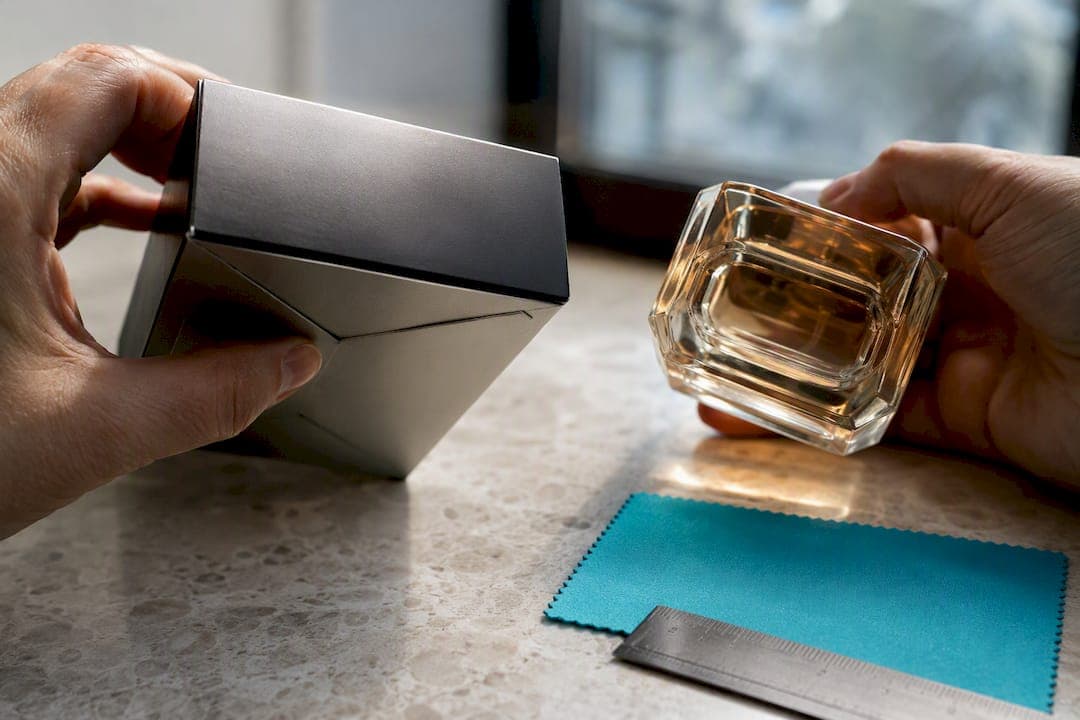
A perfume's batch code gives an estimated manufacture date and works as a useful consistency check, but it cannot alone prove a bottle is authentic or fresh. Matching codes on the box and bottle raise your confidence. A missing decoder result, a mismatched code, or a code that looks copied should slow you down. Treat decoding as step one of a short verification routine, not the whole routine.
TL;DR:
- Decoding a batch code provides an estimated manufacturing date but does not guarantee a perfume's authenticity or freshness.
- Using multiple free decoders can improve reliability, especially if one tool returns no result or estimates rather than exact dates.
- Matching batch codes on the box and bottle, along with high-quality print and clear storage conditions, should be verified before trusting the label.
- A bottle can be old but still wearable if stored properly, but signs of degradation like off smells or discoloration indicate aging regardless of the batch date.
- Selling platforms with sealed bottles, clear return policies, and transparent proof of purchase offer the best protection when buying perfume online.
Table of Contents
- What Perfume Batch Codes Actually Tell You
- Top Free Batch-Code Decoders and What They Do
- How to Find and Check a Perfume Batch Code
- Reading Batch Code Formats: Estimated Vs. Exact Dates
- Why a Clean Decode Is Not Proof of Authenticity
- Using the Manufacture Date to Judge Freshness
- Your 60-Second Pre-Purchase Checklist
- How Parfumla Verifies Batch Codes When Sourcing Stock
- Buy Parfumla Perfume Online With Batch-Code Confidence
- Key Decoders and Guides Worth Bookmarking
- Sources
- FAQ
What Perfume Batch Codes Actually Tell You
A batch code, sometimes called a lot number, identifies a specific production run. It is not the same string as the barcode or EAN printed under the box, and it has nothing to do with the volume markings (50ml, 100ml) stamped near the cap. The batch code is usually shorter: a handful of letters and numbers, often three to ten characters, stamped, laser etched, or printed near the bottom of the box and on the base or shoulder of the bottle itself.
Free decoders translate that string into a production date. Coverage varies by house. Tools like Batchcode and CheckFresh read production dates from batch codes across hundreds of brands, and both get updated as manufacturers shift their formats. Scento's checker reports an exact month and year for many mainstream houses, while some niche labels only return an estimated window because their code systems are less documented or change more often. That distinction between "exact" and "estimated" matters when you're deciding how much weight to put on the result.
Top Free Batch-Code Decoders and What They Do
Run the same code through more than one decoder before drawing a conclusion. Coverage gaps are real, and a blank result from one tool often turns into a clean read from another.
- Scento's batch code checker returns exact month and year for many mainstream designer brands, and labels niche-house results as estimated when its database lacks precise records.
- CheckFresh documents production dates for a wide range of brands and is a go-to among fragrance enthusiasts for a quick manufacture-date lookup.
- BatchCode.org covers hundreds of brands and updates its database regularly, which makes it a solid second opinion when your first tool comes up empty.
- CheckCosmetic's cosmetic calculator estimates manufacture dates for both cosmetics and perfumes and lists which brands it supports before you even enter a code.
- Lot Date's checker pairs its decoder with guidance on comparing box and bottle codes, useful if you want the tool and the explanation in one place.
Most of these run in a browser on any phone, so you don't need a dedicated app. If a brand uses non-Latin characters or region-specific codes, take a clear photo first. A blurry phone screenshot is the number one reason decoders misread a character.
How to Find and Check a Perfume Batch Code
Finding the code takes less time than deciding what to do with the result.
- Locate the box code first. Check the bottom flap or side seam. It's usually a short alphanumeric string, separate from the barcode.
- Locate the bottle code. Look at the base of the bottle, the shoulder, or occasionally the underside of the cap. Manufacturers etch or print it directly onto the glass or plastic.
- Ignore the barcode and volume stamp. These are longer numeric strings meant for retail scanning and bottle size, not for dating the batch.
- Photograph both codes in good light. Angle the shot to avoid glare on glass, which is where most transcription errors happen.
- Transcribe carefully. The letter O and the number 0, the letter I and the number 1, and B versus 8 are the most commonly swapped characters when people type codes by hand.
- Enter the brand and code into two decoders. Compare results. If one tool returns nothing, try a second before assuming the code is invalid.
- Screenshot every result. Save the decoder output alongside your box and bottle photos.
Pro Tip: Save your screenshots and photos in one folder before you contact a seller about a discrepancy. Having a documented record ready makes refund or dispute conversations faster and puts the burden of proof where it belongs.
Reading Batch Code Formats: Estimated Vs. Exact Dates
A batch code is a production-run identifier, not an expiration stamp. It tells a decoder (or a trained eye) roughly when a bottle was filled and sealed, not when it will stop being wearable.
Format conventions vary by manufacturer, and that variation is exactly why decoders exist instead of a single universal formula.
- YYMMDD-style codes embed the year, month, and day directly, which lets a decoder return an exact date with high confidence.
- Short alphanumeric codes use a letter or digit to represent a production year and another for the month, requiring the brand's specific key to translate correctly.
- Repeating or cyclical codes show up at some houses that reuse short sequences every few years, which is where decoders have to fall back on an estimated window rather than a single date.
Scento's tool and similar decoders flag results as "estimated" specifically when a brand's system doesn't map cleanly to a calendar date. Treat an estimated window as directionally useful, not as a precise birthday for the bottle.
Why a Clean Decode Is Not Proof of Authenticity
A batch code that decodes cleanly rules out sloppy counterfeits, but it does not rule out a good one. Counterfeiters copy real batch codes from legitimate bottles onto fake ones constantly, which means the code itself passes the decoder while the perfume inside does not match the brand at all. A matching code is necessary, not sufficient.
Database gaps compound the problem. If a decoder returns no result for a niche or vintage house, that often means "unknown to this database," not "fake." Older formulations and small independent perfumers frequently use code systems no public tool has mapped yet.
Run these checks alongside any decode:
- Compare box and bottle codes for an exact match. A mismatch is a red flag worth pausing on.
- Inspect print quality and any laser etching for sharpness and consistent spacing.
- Check the cap fit and how the spray mechanism feels compared to known authentic units.
- Smell the opening. A wrong or thin opening accord is often the fastest tell a seasoned nose will catch.
- Ask the seller for proof of purchase or photos of the bottle still sealed in cellophane.
Guides on authentication cues, including brand-specific resources like Insta-Auction's Chanel authentication guide, walk through packaging and print details that are worth learning if you shop a specific house often.
Pro Tip: A matching box and bottle code is a quick filter, not a certificate. Use it to eliminate the obvious fakes, then move on to the visual and scent checks before you commit.
Using the Manufacture Date to Judge Freshness
Once you know roughly when a bottle was made, the real question becomes how it was stored, not just how old it is. Many perfumes stay perfectly wearable for years past their manufacture date. A commonly cited guideline puts general cosmetic shelf life around 36 months, but that number is a broad rule of thumb for cosmetics generally, and plenty of well-stored perfumes outlast it comfortably.
Heat, light, and temperature swings degrade fragrance oils faster than time alone does. A bottle left near a sunny window or in a hot car for one summer can age faster than one sitting in a cool, dark drawer for five years. Fill level matters too. An opened bottle with more air in the headspace oxidizes faster than a full one.
Watch for these signs regardless of what the batch code says:
- A sour or vinegar-like top note that wasn't there originally.
- A metallic or off smell replacing the fragrance's usual opening.
- Visibly darkened liquid compared to a fresh reference bottle.
- A weakened spray pattern or clogged nozzle from oxidized residue.
A closer look at how quickly perfume quality actually drops breaks down storage conditions in more detail if you're trying to extend a collection's life.
Your 60-Second Pre-Purchase Checklist
Run this before you click "buy" on any listing, new or secondhand.
- Photograph both codes. Get the box and the bottle in the same session.
- Decode in two tools. Screenshot whatever each one returns, including a blank result.
- Compare packaging photos. Check print sharpness, cap fit, and box construction against known authentic references.
- Confirm the return policy. A seller who won't accept returns on a fragrance is telling you something.
If a seller can't produce a clear photo of the actual bottle, hesitates on return terms, or the code returns nothing across multiple decoders for a mainstream brand, that's your signal to ask more questions or walk away. A broader shopping checklist covers seller reputation and pricing red flags beyond the code itself.
Pro Tip: Favor listings that show the bottle still sealed in its original cellophane or that include a purchase invoice. Sealed condition plus a clean decode is the strongest combination you'll find without lab equipment.
How Parfumla Verifies Batch Codes When Sourcing Stock
Parfumla treats a batch code as one signal among several, not a final verdict. Sealed condition, supplier reputation, and clear return protections all factor into how stock gets sourced and listed. For readers who want to go deeper on evaluation, Parfumla's guide on spotting authentic discount fragrances and its step-by-step testing guide walk through the same layered checks in more detail.
— Parfumla
Buy Parfumla Perfume Online With Batch-Code Confidence
Parfumla is the alternative to guessing your way through marketplace listings: every bottle ships sealed, at up to 60% off retail, so the code-checking routine above is a formality rather than a gamble. With over 14,000 fragrances across popular, luxury, niche, and celebrity brands, you get the best price for of a fragrance without wondering whether the batch code on your screen matches what actually arrives.
Run the checklist anyway. Decode the box and bottle codes, compare them, and keep your screenshots. Then browse a listing like the Narciso Rodriguez Eau de Toilette 100ml to see how a clear product page, honest condition notes, and US and EU shipping make buying original perfume online straightforward. If you're ready to shop the full catalog, that's the best place to start.
Key Decoders and Guides Worth Bookmarking
- Batchcode for broad brand coverage and regular database updates.
- CheckFresh for reading production dates directly from batch codes.
- Scento's batch code checker for exact month/year results on many mainstream brands.
- Lot Date's checker and guide for combined decoding and box-versus-bottle comparison advice.
Try more than one tool before trusting a result, and contact the brand's customer service directly if every decoder comes back blank on what should be a well-documented release.
Sources
- Perfume Batch Code Checker — Free Production Date Lookup | Scento
- Check the date of manufacture of perfumes and cosmetics
- Lot Date perfume batch code checker — Perfume batch code guidance
- Batchcode
FAQ
Can you check a perfume batch code yourself?
Yes. Locate the short alphanumeric code on the box and bottle, then enter it into a free decoder like BatchCode.org or CheckFresh to get a manufacture date.
Is a 7-year-old perfume still good?
Often, yes, if it was stored away from heat and light with the cap on tight; the common 36-month guideline is a general rule for cosmetics, not a hard cutoff for perfume, and storage conditions usually matter more than age alone.
Can I check a batch code online for free?
Yes, tools such as Scento, CheckFresh, BatchCode.org, and CheckCosmetic all offer free batch-code lookups, and trying two of them is smart practice when one returns no result.
Do fake fragrances have real batch codes?
Sometimes. Counterfeiters can copy a genuine batch code onto a fake bottle, so a code that decodes successfully is a good sign but not proof on its own. Pair it with packaging inspection and a scent check before you trust it fully.