
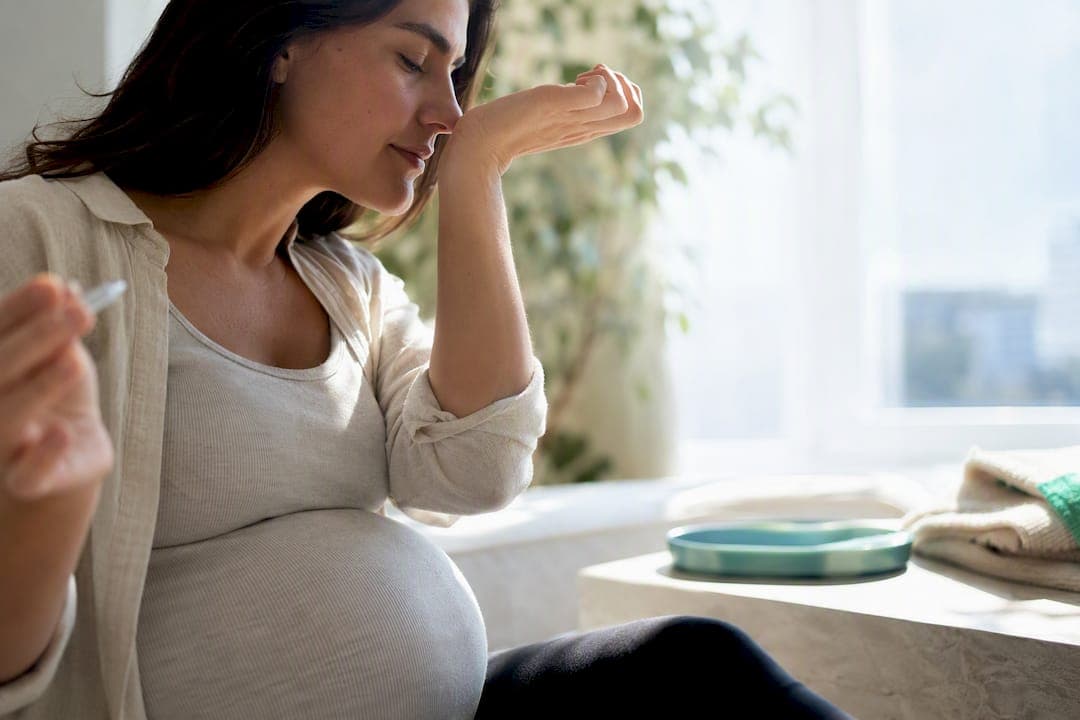
Typical perfume use is generally considered safe during pregnancy in moderation, according to guidance cited by The Bump and pregnancy health resources. The practical rule most ob-gyns give: limit sprays, apply to clothing rather than skin, and stop if you notice headaches, nausea, or skin irritation. Neither Harvard Health nor the FDA classifies normal fragrance use as a pregnancy hazard, though both flag certain ingredients worth watching. Some fragrance retailers offer sample and decant options that make it easy to test tolerance before committing to a full bottle.
TL;DR:
- Fragrance use during pregnancy is generally safe if kept to moderate levels, with guidelines emphasizing limited sprays and applying to clothing rather than skin.
- Concerns about fragrance ingredients focus mainly on phthalates, which have been linked to developmental issues and preterm birth in some studies, but exposure from perfume is typically small.
- Pregnant women often experience heightened scent sensitivity and skin reactivity, making lighter, citrus, or herbal scents better tolerated, while heavy florals may trigger nausea or skin irritation.
- Testing fragrance tolerance with samples or decants before buying a full bottle is crucial, as hormonal changes can alter scent preferences and skin reactions during pregnancy.
- Immediate cessation and medical consultation are advised if symptoms like rash, breathing difficulty, or severe nausea occur after perfume application.
Table of Contents
- Why Some Experts Raise Concerns About Perfume Ingredients
- Pregnancy Symptoms That Change How Perfume Feels
- How to Wear Perfume More Safely While Pregnant
- When to Stop and Call Your Provider
- How Parfumla Helps You Shop Safely Through Pregnancy
- Scent, Comfort, and Common Sense During Pregnancy
- Shop Smarter Before You Commit to a Full Bottle
- Sources
- FAQ
Why Some Experts Raise Concerns About Perfume Ingredients
No study has established that normal perfume use during pregnancy causes birth defects or measurable harm to a fetus. That's the baseline, and it's worth saying plainly because a lot of pregnancy forums make it sound scarier than the science supports. Major health authorities don't treat fragrance the way they treat known teratogens like alcohol or certain medications.
The caution comes from a narrower place: phthalates, a class of chemicals used to help scent molecules last longer on skin. Some research has linked prenatal phthalate exposure to developmental effects, and NIH-supported studies have connected higher exposure levels to preterm birth. The exposure in those studies typically comes from a mix of sources, not perfume alone, but it's part of why some clinicians recommend minimizing fragranced products where it's easy to do so.
The bigger obstacle is transparency. The FDA acknowledges that fragrance formulas can be listed generically as "fragrance" on a label, protected as trade secrets. That means you often can't tell whether a specific bottle contains phthalates just by reading the back label.
A few things follow from that:
- "Phthalate-free" and "hypoallergenic" claims depend on brand honesty and third-party testing, not a guaranteed federal standard.
- You can't reliably screen out every synthetic musk or phthalate derivative from an ingredient list alone.
- Ob-gyns interviewed by The Bump generally frame this as a moderation issue, not a reason to panic over an occasional spritz.
The gap between theoretical risk and everyday exposure matters here. Cosmetic-level phthalate exposure from perfume is small compared to other sources, and researchers still can't fully separate causation from correlation at those levels. That's why the guidance lands on "use less, choose wisely" rather than "avoid entirely."
Pregnancy Symptoms That Change How Perfume Feels
Pregnancy rewires your sense of smell, often early and often intensely. A scent you loved in January can turn your stomach by March, and that shift catches a lot of people off guard. The American Pregnancy Association notes that many pregnant people find lighter, cleaner notes, citrus, lavender, rose, chamomile, more tolerable than heavy florals or musk-forward blends, which tend to worsen nausea.
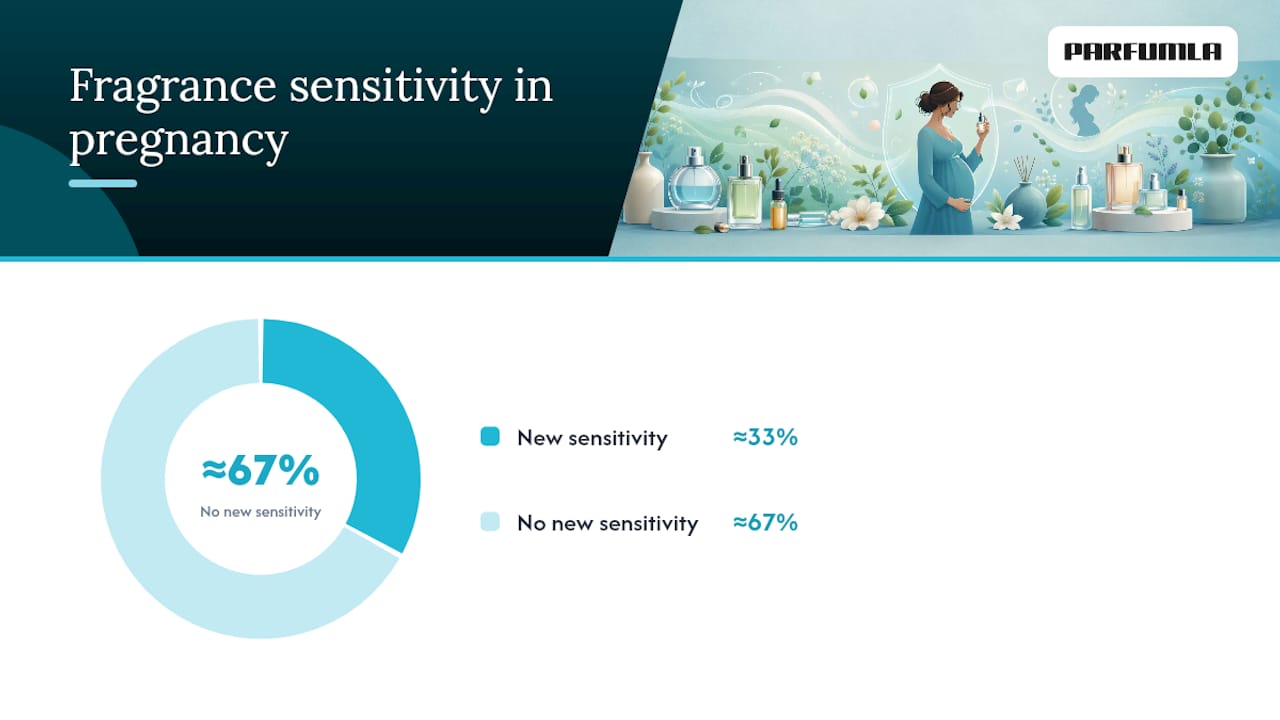
Skin gets more reactive too. Hormonal shifts increase the odds of contact dermatitis, and fragrance ingredients are a common trigger. Some clinical reviews suggest as many as one in three pregnant women notice new fragrance sensitivities they never had before, according to a dermatology-focused overview from VeriMom.
Watch for:
- Nausea or headache that starts within minutes of applying a scent you used to wear comfortably.
- Redness, itching, or a rash where perfume touched skin.
- Tightness in the chest, wheezing, or shortness of breath, especially if you have asthma or a history of fragrance-triggered reactions.
Pro Tip: Keep a small notebook or phone note logging which scents trigger symptoms and when. Pregnancy sensitivity changes fast, and what bothers you in the first trimester may not bother you at all by the third.
How to Wear Perfume More Safely While Pregnant
You don't have to give up fragrance. You just have to be smarter about how much and where.
- Cap it at 1 to 3 short sprays a day. Many experts suggest even less, one or two dabs, especially if you're new to a scent or in your first trimester.
- Apply to clothing or hair, not skin. This reduces direct absorption and keeps concentrated fragrance off skin that's already more reactive during pregnancy.
- Skip the belly and any pregnancy-safe body-adornment practices on irritated skin entirely. Fragrance on already-sensitive areas increases the odds of a reaction.
- Ventilate the room. Spray in an open space, not a closed bathroom, and let it settle before you're breathing it directly.
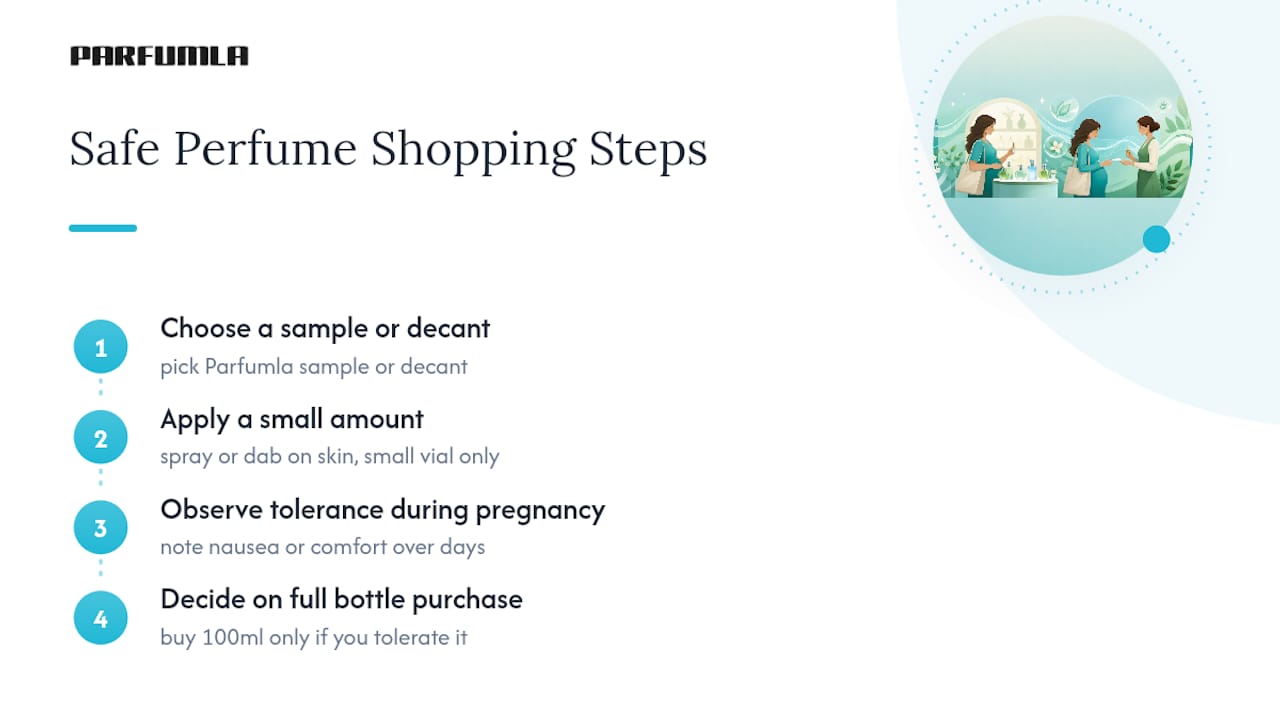
- Test before you commit. Order a sample or decant and wear it for a day before buying a full bottle, your reaction at 10 weeks might not match your reaction at 30.
When shopping, look for phthalate-free or hypoallergenic labeling, and lean toward lower-alcohol formulas or body mists over heavily concentrated extraits. A step-by-step patch-testing guide can help you figure out tolerance before you're committed to a full-size purchase. Keep a neutral, fragrance-free option on hand for days when nothing smells right, that's normal, and it passes.
When to Stop and Call Your Provider
Stop wearing a scent immediately if you notice a rash spreading beyond where you applied it, wheezing or shortness of breath, sudden severe nausea tied to the smell, or facial swelling. Facial swelling, throat tightness, or trouble breathing needs emergency care, not a wait-and-see approach.
For milder but persistent symptoms, mention it at your next routine appointment. Save the product name and a photo of any rash so your provider has something concrete to look at.
How Parfumla Helps You Shop Safely Through Pregnancy
Testing tolerance before buying a full bottle is the single most useful thing you can do, and it's exactly what Parfumla's samples and decants are built for. You get to try a scent for real, on your skin, during your actual pregnancy, before spending on a 100ml bottle you might not wear past week 20.
Product pages on some perfume sites include detailed customer reviews that often flag how a scent wears, which helps you spot patterns before you buy. Browsing the women's fragrance category or unisex options is a practical way to find lighter, citrus-forward alternatives if your usual heavy florals have started triggering nausea. Following a smart online shopping checklist helps you compare scent strength and ingredient notes before you commit to anything.
Scent, Comfort, and Common Sense During Pregnancy
A signature scent is a small, stubborn piece of feeling like yourself when everything else about your body is changing fast. That's worth protecting, within reason. Moderation, symptom awareness, and a quick conversation with your provider if something feels off will get you through nine months without giving up what makes you feel like you.
— Parfumla
Shop Smarter Before You Commit to a Full Bottle
Buying a full-size bottle without testing it first is a gamble most pregnant shoppers can't afford, not because of cost alone, but because your sense of smell and skin sensitivity can shift week to week. Some online perfume retailers offer catalogs of thousands of fragrances along with dedicated samples and decants, so you can try a scent in real conditions before spending on the full size.
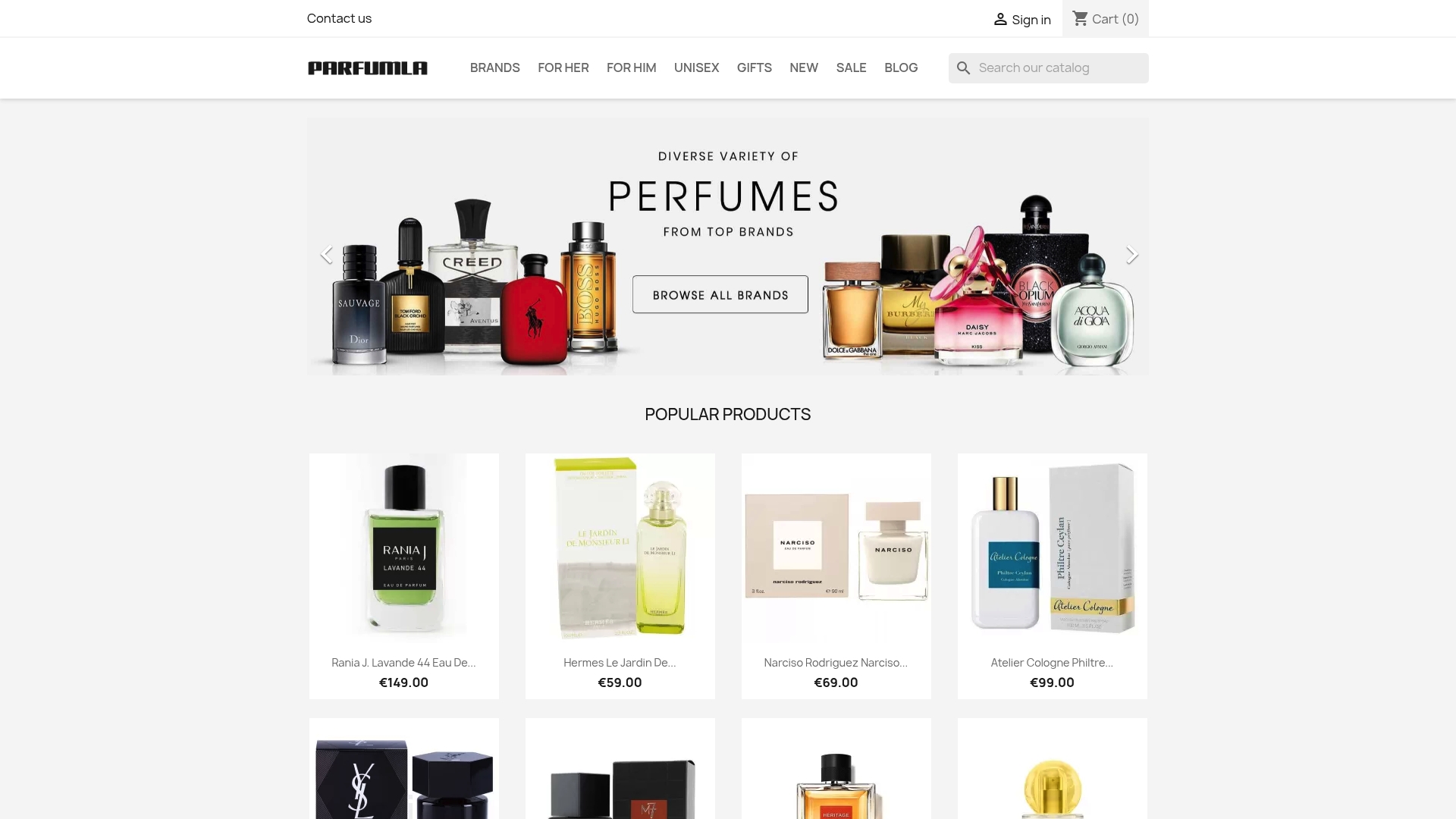
Start with the Decants & Samples page to find low-commitment sizes of popular and niche scents, read the customer reviews on each product page for real-world notes on how a fragrance wears, and compare women's, men's, and unisex options side by side. If you're shopping for someone else navigating the same nine months, the gift category has lighter, crowd-pleasing options too. Prices run up to 60% off retail across the catalog, so testing a few scents before settling on one costs far less than guessing wrong on a full bottle. Browse the samples and decants landing page now and pick your first low-dose option to try this week.
This article is general information, not a substitute for advice from a qualified doctor. Consult a qualified healthcare professional about your own circumstances before acting on anything here.
Sources
- Is Using Perfume Safe During Pregnancy? — The Bump
- Perfume and Pregnancy — American Pregnancy Association
- NIH: Preterm birth more likely after exposure to phthalates
FAQ
Does perfume smell affect babies?
There's no conclusive evidence that a pregnant person smelling perfume harms fetal development directly. The concern centers on ingredient exposure, particularly phthalates, not the act of smelling fragrance itself.
What scents are not good for pregnancy?
Heavy, musk-forward, or highly concentrated florals tend to worsen nausea for many pregnant people, while lighter notes like citrus, lavender, and chamomile are usually better tolerated. Anything that triggers a headache or nausea on contact is worth avoiding regardless of scent family.
What things should be avoided during pregnancy?
Beyond fragrance, pay attention to scented lotions, candles, air fresheners, and cleaning products, since these contribute to overall fragrance and phthalate exposure the same way perfume does. Moderation and checking labels for phthalate-free claims apply across all of these, not just perfume bottles.
Is Sol de Janeiro safe for pregnancy?
Sol de Janeiro products aren't specifically studied for pregnancy safety, so the same general rule applies: patch test first, use in moderation, and stop if you notice skin irritation or nausea. If you want to try a scented body product before committing, ordering a small size or sample is the safer way to test your reaction.
How much perfume can I wear while pregnant?
Most guidance points to 1 to 3 short sprays a day, applied to clothing rather than skin, as a reasonable practical limit. Some experts recommend even less, closer to one or two dabs, particularly during the first trimester when sensitivity tends to run highest.