

Start by sampling three to five scents directly on your skin, not paper strips, and settle on two or three roles you actually need: an everyday scent, an evening option, and a signature you reach for by default. Buy small first. A 30ml bottle or a handful of discovery vials lets you test real fragrance behavior on your own skin for a full day before you commit to a full-size bottle you might regret.
TL;DR:
- Testing fragrances on skin for at least a full day reveals true personality, especially as base and heart notes develop over time.
- Beginners should focus on a small collection of role-specific scents, such as one fresh daytime and one richer evening option, to avoid redundant purchases.
- Sampling small sizes or discovery sets helps prevent costly mistakes, with a 30ml bottle suitable for initial commitments after thorough skin testing.
- Over-application and testing too many scents at once often cause confusion and fatigue, so limiting to 2-3 sprays per occasion and on pulse points is recommended.
- Skin chemistry significantly influences scent development, making in-person testing on your own skin essential before buying or committing to a fragrance.
Table of Contents
- What Perfume for Beginners Actually Means (And the Terms You Need First)
- How to Test Perfume the Right Way (Not on a Paper Strip)
- Building Your First Scent Wardrobe Without Overbuying
- How Many Sprays and Where: Application Rules That Actually Matter
- Smart Buying: Samples, Sizing, and When to Go Full Bottle
- Common Beginner Mistakes (And 10 Tips to Skip Them)
- Common Fragrance Ingredients and Allergens Worth Knowing
- Parfumla's Take on Starting Your Fragrance Collection
- Where to Buy Your First Bottle Without Overpaying
- Sources
- FAQ
What Perfume for Beginners Actually Means (And the Terms You Need First)
"Perfume for beginners" isn't really about which bottles are easiest to like. It's about understanding just enough fragrance vocabulary to stop buying blind. Every fragrance is built in three layers, and knowing them changes how you shop.
Top notes hit your skin in the first 5 to 15 minutes. They're the citrus, light herbs, or sharp fruit you smell in the store and mistake for the whole perfume. Heart notes (also called middle notes) emerge over the next hour and usually carry the florals, spices, or greener elements that give a scent its personality. Base notes are the slow burn: musk, woods, amber, vanilla. They can take 30 minutes to two hours to fully surface, and they're what still lingers on your sweater the next morning. The base is the part that decides whether you'll actually love a fragrance, because it's what you live with the longest.
This is why so many beginners get burned buying based on a first sniff. You're smelling top notes and judging the whole perfume by a preview.
Fragrance families include floral, fresh/citrus, woody, oriental/amber, fougère, and gourmand. These categories help guide fragrance selection by character and typical use.
Retailer roundups consistently point beginners toward what they call "easy to wear" notes: gentle musk, soft florals, light citrus, and vanilla. These profiles are recommended as low-risk starting points because they read as pleasant to most noses rather than polarizing. Parfumla's guide to fragrance families for beginners breaks these down further if you want to match a family to your existing candle or lotion preferences.
The last piece of vocabulary that trips people up is concentration. Higher concentration generally means stronger projection too, not just longer wear, so an EDP isn't just "the EDT but longer." It smells noticeably richer from the first spray.

How to Test Perfume the Right Way (Not on a Paper Strip)
Testing on paper tells you almost nothing useful. Skin has warmth, oils, and its own chemistry that a strip of cardstock can't replicate, and skin chemistry meaningfully affects how a perfume develops, sometimes changing a scent from sweet to sharp or from light to heavy depending on your body temperature and even your diet. If you only ever smell perfume on paper, you're testing something other than what you'll actually wear.
Here's a testing method that actually works:
- Limit yourself to 2 or 3 fragrances per session. Your nose fatigues fast, and by the fourth scent you're just smelling noise.
- Spray on a pulse point (inner wrist, inside of the elbow) and never rub it in. Rubbing breaks down the top notes and can distort the blend.
- Wait 20 to 40 minutes before judging anything. This is when the heart notes take over and the perfume starts telling you the truth.
- Wear it for a full day before deciding if you like it. A scent that's electric on first spray can turn one-dimensional two hours later, and one that seems quiet at first sometimes blooms beautifully by evening.
- Repeat on a different day if you're still unsure. Weather, hydration, and even stress levels shift how fragrance reads on your skin.
Pro Tip: Skip the coffee beans at the fragrance counter. They don't "reset" your nose the way people claim, they're mostly a psychological pause. Stepping outside for two minutes of fresh air does more to clear olfactory fatigue than sniffing roasted coffee ever will.
This is also where discovery sets earn their keep. A curated set covering three different families, say fresh, woody, and gourmand, tends to be the fastest way to figure out what you actually gravitate toward, rather than guessing from a single bottle at a department store counter. Parfumla's breakdown of how to test perfume properly walks through this session by session if you want a printable version to bring shopping.
One more thing worth internalizing: your favorite scent on a friend might smell completely different on you. That's not a flaw in the perfume. It's skin chemistry doing its job, and it's exactly why testing on your own skin, over your own day, is non-negotiable.
Building Your First Scent Wardrobe Without Overbuying
You don't need ten bottles. You need two or three that actually cover your life, and the fastest way beginners waste money is buying five variations of the same vanilla musk because nothing forced them to think about roles first.
A workable starter lineup looks like this:
- Everyday/fresh — something light and citrus or floral you can wear to work, class, or errands without overwhelming a room
- Evening/cozy — a richer amber, woody, or gourmand scent for dinners, dates, or cooler weather
- Signature/versatile — the one you reach for when you don't want to think, usually something balanced that works across seasons
Organizing fragrances by role rather than by brand or note list is what actually prevents duplicate purchases. If your "everyday" and "signature" both smell like the same soft floral, you've bought one fragrance twice under two different labels. The contrast between roles matters more than the specific notes inside each one.
Before you buy anything else, audit what you already own. Pull out any perfume, body spray, or scented lotion in your bathroom right now and sort them into those three buckets. Most beginners already own an "everyday" scent without realizing it, usually a gift or an impulse buy, and just need to fill the evening or signature gap rather than start from zero.
If you're drawn to florals as your entry point, Parfumla's floral perfume picks by subfamily is a reasonable place to browse examples without wading through the entire catalog. And if you want the fuller framework behind role-based buying, The Scent Blueprint's guide to building a scent wardrobe covers layering combinations most beginners don't think to try until much later.
How Many Sprays and Where: Application Rules That Actually Matter
More sprays isn't more sophistication. It's usually just more headache for the people sitting near you on the bus.
- Everyday wear: 2 to 3 sprays is plenty for most EDTs and EDPs
- Evening or special occasions: 3 to 5 sprays, adjusted for concentration, gives you more projection without crossing into overwhelming
- Placement: neck, inner wrists, and behind the ears hold scent well; avoid spraying directly onto clothing, which can stain fabric and trap fragrance oil unevenly
- Never rub it in. Friction breaks down the molecular structure of top notes and can make a fragrance smell flatter, faster
These spray counts aren't arbitrary. Style and grooming guides converge on roughly the same range precisely because shared spaces, offices, elevators, public transit, punish over-application fast. What smells perfect to your own nose after an hour of wear can read as aggressive to someone who just walked into the room.
Storage matters just as much as application. Keep bottles away from direct sunlight, bathroom humidity, and temperature swings. A perfume stored on a sunny windowsill can start breaking down within months, while the same bottle kept in a cool, dark drawer can stay stable for years. If you're experimenting with layering two scents, start light. Parfumla's guide to fragrance layering for beginners has a safer starting method than just spraying two perfumes and hoping.
Smart Buying: Samples, Sizing, and When to Go Full Bottle
A full-size bottle at 100ml can run anywhere from $60 to $200 or more depending on the brand and concentration, which is a rough way to find out you don't actually like something. A 1 to 2ml sample vial typically gives you 10 to 20 sprays, enough for 3 to 5 days of real-world testing, for a fraction of the cost per milliliter.
That math should guide your first few months of buying:
- Start with samples or discovery sets covering multiple families before you spend on anything full-size
- Compare cost-per-ml, not sticker price. A $15 sample set that saves you from a $150 mistake is the better deal every time
- Watch for seasonal sales, especially around major shopping holidays, when discovery sets and smaller sizes get discounted further
- Verify authenticity before buying from any retailer, especially for niche or luxury names, by checking batch codes and buying only from retailers who disclose their sourcing
- Choose 30ml when you're still deciding. It's small enough to limit the damage of a wrong pick, large enough to actually live with a scent through a season
- Move up to 50 to 100ml only after you've worn a fragrance for at least a full week and still reach for it
Strategic purchasing, discovery sets, buying smaller volumes, timing seasonal sales, is what makes exploring perfume financially sane rather than a hobby that quietly drains your budget. You don't need to buy your way to clarity. You need to sample your way there first.
Pro Tip: *If a full bottle of your favorite discovery-set scent feels expensive, check whether the brand also sells a lower concentration version.
Parfumla's guide to sampling perfumes affordably and its explainer on what a discovery set actually includes are both worth bookmarking before your first order.

Common Beginner Mistakes (And 10 Tips to Skip Them)
The single biggest mistake beginners make is blind buying: purchasing a full bottle based on a review, an influencer video, or a friend's recommendation without ever testing it on your own skin. The second biggest is testing too many scents in one sitting, which guarantees nose fatigue and a decision made on garbage data. The third is trusting the bottle's listed notes as gospel, when the actual dry-down on your skin can smell completely different from the marketing copy.
Here are 10 tips that fix most of that:
- Keep a simple scent journal, even just notes in your phone, tracking what you tested and how it wore over 8 hours
- Rotate your fragrances seasonally; a heavy amber that's perfect in winter can feel suffocating in July
- Always test in the climate you'll actually wear the scent in, since heat and humidity intensify projection
- Test exclusively on skin, never trust a paper strip's verdict
- Start with well-known designer names before venturing into niche territory, since they tend to be more versatile and forgiving
- Cap yourself at 2 to 3 scents per testing session
- Give every sample a full day before forming an opinion
- Buy small (30ml or samples) until you've confirmed real-world longevity
- Store bottles away from sunlight, heat, and bathroom humidity
- Audit what you own before adding anything new to avoid duplicate roles
Save that list. It covers almost every regret beginners report after their first year of buying fragrance.
Common Fragrance Ingredients and Allergens Worth Knowing
Certain ingredients show up constantly across mainstream perfumes, and a few are common triggers for sensitive skin. Linalool (found in lavender and citrus notes), limonene (common in citrus top notes), and certain musks and oakmoss derivatives are among the most frequently flagged fragrance allergens. Reactions usually show up as redness, itching, or mild irritation where the perfume touched skin, not from smelling it across a room.
If you have sensitive skin or a known fragrance allergy, patch-test before you commit to wearing anything for a full day. Spray a small amount on your inner forearm and wait 24 hours before applying it anywhere else. Fragrance-free and unscented are not interchangeable labels, either. Unscented products can still contain masking fragrance chemicals, while true fragrance-free formulas skip them entirely. Understanding that distinction matters if you're perfume shopping while also managing sensitive skin elsewhere in your routine.
Concentration plays a role here too. Higher fragrance-oil percentages in EDP and parfum mean more of the potential allergen sitting on your skin per spray, so if you're reactive, starting with EDT strength and fewer sprays is the more cautious approach while you figure out your tolerance.
Parfumla's Take on Starting Your Fragrance Collection
Beginners don't need more choices. They need a smaller, smarter set of choices, which is exactly the opposite of what a wall of 200 bottles at a department store gives you.
That matters most for the exact strategy this guide recommends: sample first, buy small, commit only after a real skin test. Parfumla's catalog is built to support that approach rather than push you toward a single full-size bottle on your first visit. Detailed reviews on product pages give you a second opinion beyond the marketing copy, and reliable shipping across the US and EU means you can build a testing rotation without worrying about whether an order will actually arrive intact.
If you're not sure where to start, Parfumla's internal guides on testing perfume properly and sampling on a budget are written for exactly the stage you're at now: curious, a little overwhelmed by choice, and not looking to gamble $150 on a guess.
— Parfumla
Where to Buy Your First Bottle Without Overpaying
Once you know your two or three roles and you've tested your shortlist on skin for at least a few days each, the actual purchase should be simple, not stressful.
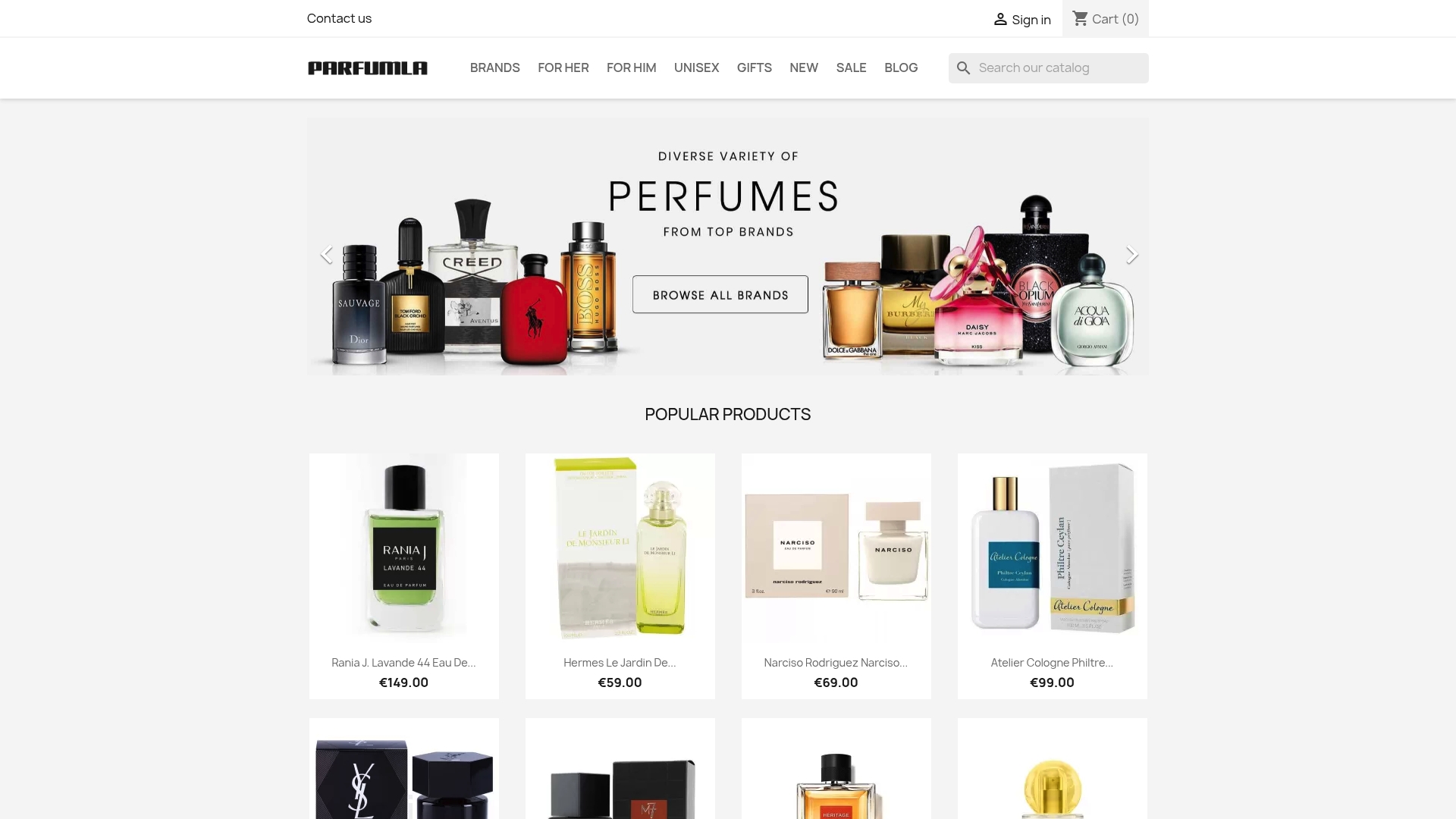
Parfumla is built for exactly this stage of the process. If you want to buy Parfumla perfume online, the catalog spans everyday florals, cozy evening scents, and niche unisex options side by side, so you're not stuck choosing from whatever a single mall brand happens to stock that season.
If your testing pointed you toward something soft and floral for daytime, the Guerlain Eau de Lingerie Eau de Toilette is a reasonable everyday-role candidate to check out. If your evening slot is still open, browsing unisex options like Ex Nihilo Fleur Narcotique is worth a look for something richer without going fully oriental. For the best price on original fragrances rather than gambling on unverified sellers, Parfumla's detailed reviews and product pages give you a way to check before you buy, not after.
Start by browsing a category that matches the role you're missing, add a couple of options to compare, and place a small order before committing to anything full-size.
Sources
- How to make perfume hobby affordable and more fun — Bois de Jasmin
- How to choose a perfume: A complete beginner's guide for 2026 — The Scent Stories
- How to build a scent wardrobe for beginners — The Scent Blueprint
- The best beginner perfumes at MECCA — MECCA Memo
FAQ
What is the 3-1-1 rule for perfume?
There's no single agreed-upon "3-1-1 rule" in fragrance, but the practice it usually refers to is testing no more than 2 to 3 scents per session, waiting roughly 1 hour for the heart notes to settle, and giving each finalist 1 full day of wear before deciding. Treat it as a testing rhythm rather than a strict formula.
What is the 5-spray rule?
The "5-spray rule" generally refers to capping evening or special-occasion application at around 3 to 5 sprays, adjusted for concentration, so the scent projects without overwhelming a shared space. Everyday wear usually calls for fewer, closer to 2 to 3 sprays.
How many perfumes should a beginner own?
Most beginner guides, including Parfumla's own approach, recommend starting with 2 to 3 fragrances covering distinct roles: an everyday scent, an evening option, and a signature you default to. That's enough variety without the redundancy of owning five bottles that all smell similar.
Should I test perfume on paper or on my skin?
Always test on skin. Skin chemistry, including body temperature and natural oils, changes how a fragrance develops in ways a paper strip simply can't replicate, so a scent that seems perfect on paper can smell completely different after 20 minutes on your wrist.
What size bottle should a beginner buy first?
A 30ml bottle is the practical starting size, big enough to live with a scent through a season, small enough that a wrong pick doesn't cost you $150. Move up to 50ml or 100ml only after a fragrance has proven itself over at least a week of real wear.