
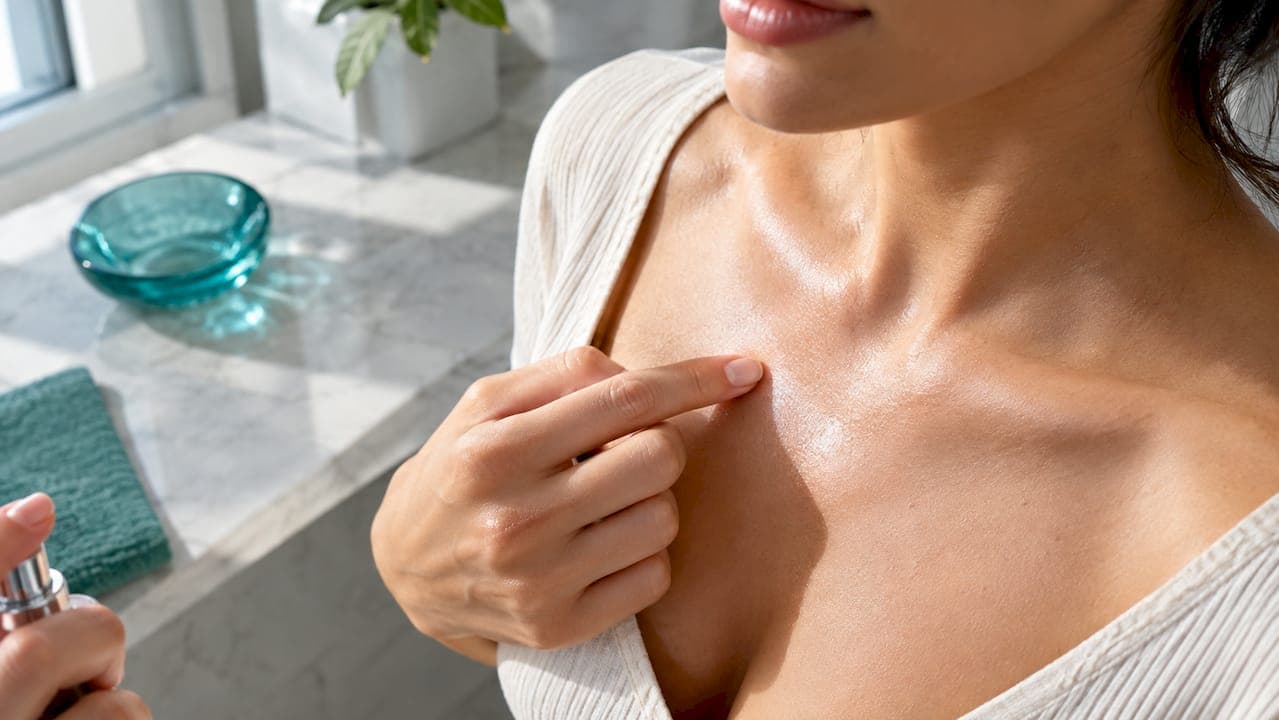
Oily skin usually makes perfume last longer but can push top notes into overdrive, so the fix is picking lighter fragrance families, cutting back on sprays, and always testing on your own skin before you commit. That one shift, fewer sprays of a fresher scent instead of a heavy dose of something dense, solves most of the complaints oily-skin wearers have about perfume turning cloying by midday.
TL;DR:
- Oily skin extends fragrance wear time, sometimes by several hours, but can also amplify top notes, making scents sharper or more intense initially.
- Fresh, transparent fragrances like citrus, green, aquatic, and clean musks are best suited, while gourmands and orientals should be used sparingly and mainly in cooler conditions.
- Lighter concentrations such as Eau de Cologne or Eau de Toilette are more reliable for oily skin, with a single spray or dab typically sufficient for daytime or humid weather.
- Applying perfume on cooler, less oily areas like the chest or collarbone and testing on skin rather than paper ensures more accurate scent behavior.
- Minimize alcohol irritation and prevent scent distortions by skipping heavy layering, using unscented moisturizer, and avoiding reapplication to already saturated skin.
Table of Contents
- Why Oily Skin Changes How Perfume Performs
- Best Notes and Fragrance Families for Oily Skin
- Choosing the Right Fragrance Concentration for Oily Skin
- How to Apply Perfume on Oily Skin
- Skin Prep That Helps Perfume Behave
- Layering Techniques Built for Oily Skin
- Adjusting for Climate and Occasion
- Common Mistakes and Quick Fixes
- Ingredients to Watch on Oily, Breakout-Prone Skin
- Long-Term Effects of Daily Perfume Wear on Oily or Acne-Prone Skin
- Parfumla's Take on Shopping for Oily Skin
- Where to Find EDT, EDC, and Skin-Scent Options on Parfumla
- Sources
- FAQ
Why Oily Skin Changes How Perfume Performs
Sebum acts like a slow-release capsule for fragrance. Oil on the skin's surface traps scent molecules and releases them gradually instead of letting them evaporate right away, which is why a spray that fades on a dry-skinned friend in three hours might still be going strong on you at hour eight. Skin oils capture and hold fragrance molecules, slowing evaporation and stretching out wear time.
That same trapping effect changes the shape of the scent, not just its duration. Top notes, the citrus, herbal, or sharp opening accords, tend to get amplified because oil holds onto those volatile molecules longer near the skin's surface before they fully evaporate. A fragrance built to open bright and settle into something softer can instead stay bright, or even sharp, well past when it should have mellowed.
This is exactly why paper strips are useless for oily-skin shoppers. Testing on skin instead of a card is essential because body chemistry, pH, and sebum levels all alter how a scent evolves, and none of that shows up on a strip of cardstock.
A few practical takeaways follow from this:
- Oily skin generally extends wear time, sometimes by several hours compared to dry skin.
- Amplified top notes can make a fragrance smell stronger or sharper in the first hour than the bottle promises.
- A scent that smells perfect on a tester card can smell completely different an hour after it hits your wrist.
- The only reliable test is on warm, clean skin, not paper, not the air, not someone else's arm.
Best Notes and Fragrance Families for Oily Skin
Fresh, transparent scent families are the safest bet because they play well with the natural warmth and oil your skin already produces. Citrus, green, aquatic, and clean musk notes are frequently recommended for oily skin because they balance oiliness instead of fighting it, and they rarely tip into cloying territory even after hours of wear.
Here's how the major families tend to behave on oily skin:
- Citrus (bergamot, grapefruit, mandarin): bright and clean, though it fades fastest and needs the lightest touch since oily skin will hold it longer than you expect.
- Green (galbanum, fig leaf, cut grass): crisp and slightly bitter, a good match for skin that already runs warm.
- Aquatic (sea notes, ozonic accords): light and airy, ideal for humid weather when heavier scents feel suffocating.
- Clean musks: soft, skin-like, and less likely to turn sharp or soapy as the day wears on.
- Heavy gourmands and dense orientals (vanilla, amber, tonka, dark chocolate accords): gorgeous in small doses on cool evenings, but oily skin can push these into syrupy territory fast.
Save the gourmands and orientals for one restrained spray on a cold evening rather than your everyday rotation. For daytime and office wear, a citrus or green EDT does the job without demanding attention it hasn't earned.
Pro Tip: Spray a gourmand or oriental fragrance once on your chest instead of your wrists. Chest skin runs a bit cooler than pulse points, which slows the amplification effect just enough to keep the scent from turning heavy.
Choosing the Right Fragrance Concentration for Oily Skin
Concentration matters more for oily skin than for any other skin type, because a strong base already gets a longevity boost from your natural oil. Layering a heavy concentration on top of that is how a perfume becomes a headache by noon.
- Eau de Cologne (EDC) or Eau de Toilette (EDT): your default for daily wear, hot weather, or the office. Lighter concentrations perform better in humid climates on oily skin, since the oil does the work of extending wear that a heavier concentration would otherwise need to do.
- Eau de Parfum (EDP): reserve for evenings or cooler days, and cut your usual spray count roughly in half.
- Parfum/Extrait: the most concentrated option, best applied as a single dab rather than a spray. On oily skin, one dab often lasts as long as three sprays of an EDT.
Switching concentrations by season, not just by scent preference, is the single most useful habit an oily-skin wearer can build.
How to Apply Perfume on Oily Skin
Where you spray matters almost as much as what you spray. The goal is even diffusion without concentrating the fragrance in one hot, oily zone that will amplify it past comfort.
- Inner elbows and wrists: standard pulse points, but on oily skin, use fewer sprays here since these areas run warm and hold scent aggressively.
- Chest and collarbone: cooler surface area that diffuses scent upward without the intensity spike you get on wrists.
- Hair or a scarf: a light mist here spreads fragrance gently through the day without direct skin contact amplifying it. Applying on warm, clean skin after a shower gives the most even, predictable result.
For spray counts on oily skin: two to three sprays of an EDT, one to two sprays of an EDP, and a single dab of parfum is typically plenty. If you need to top up midafternoon, one spray on the chest or a fresh mist in the hair beats reapplying to the same pulse points, which just stacks scent on already-saturated skin.
Pro Tip: Keep reapplication small and targeted. A full second application of your morning dose almost always overcorrects on oily skin, since the original spray hasn't fully faded, just quieted down.
Skin Prep That Helps Perfume Behave
Clean, lightly hydrated skin is the best canvas for fragrance, but "lightly" is the key word for oily skin types. Skipping moisturizer entirely doesn't help either, since dehydrated skin can throw off how a scent reads.
- Wash the area you plan to spray, then let skin cool down before application. Fragrance goes on warm skin, not hot, freshly showered skin.
- Use an unscented lotion as your base layer. A scented lotion competes with your perfume and muddles the notes you actually chose.
- On unusually oily or humid days, a quick blotting sheet on pulse points before spraying keeps excess surface oil from over-amplifying the opening notes.
- If your skin runs oily only in specific zones (a common T-zone pattern doesn't just apply to your face; wrists and inner elbows can behave the same way), spray slightly off-center from the oiliest patch.
Layering Techniques Built for Oily Skin
Layering works differently when your base skin already extends wear time. The goal isn't to add more scent, it's to add depth without adding weight.
- Use a minimalist "skin scent" as your anchor and mist a lighter EDT on top for a bit of brightness. Skin scents and minimalist musks sit close to the body and suit people who prefer subtlety, which makes them ideal bases rather than standalone showstoppers.
- Skip stacking two or three scented products (body wash, lotion, perfume) all built around different fragrances. One scented layer plus unscented everything else keeps things clean.
- Molecules like Iso E Super and clean musk work as quiet, skin-hugging bases. They don't compete with the top notes of whatever you spray over them, they just extend and soften the overall effect.
If you're new to the concept, a beginner's guide to fragrance layering walks through pairing logic in more depth.
Adjusting for Climate and Occasion
Hot, humid weather and oily skin are a demanding combination, since heat amplifies sebum production right when you'd want the least amplification. Stick with EDC or EDT, fresh citrus or aquatic notes, and two sprays maximum. Guides on humid-weather fragrance go deeper into seasonal swaps.
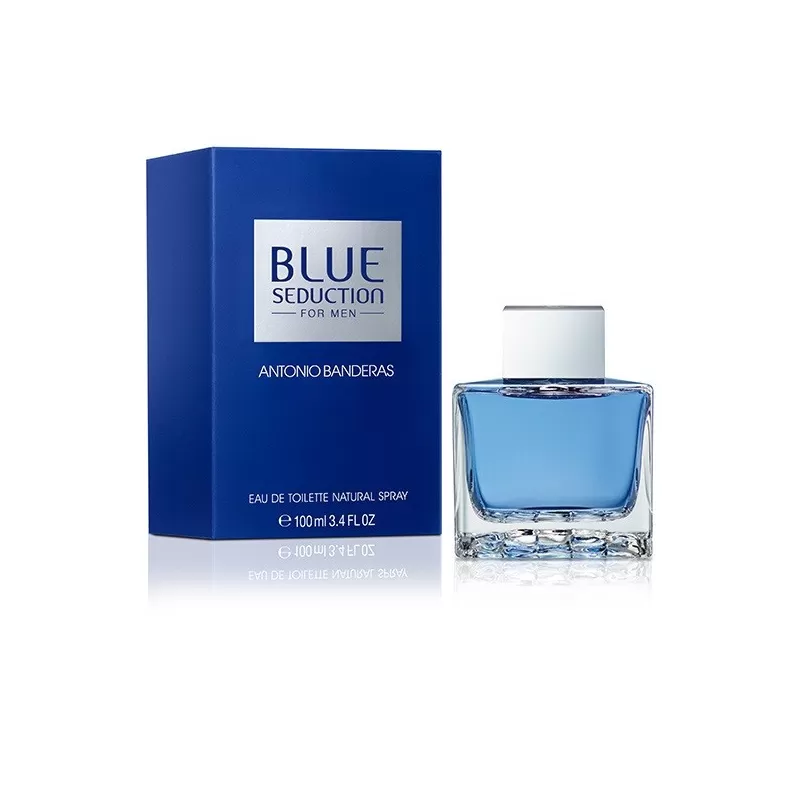
Cold, dry conditions give you more room. A light EDP or a single small parfum spray reads as appropriately warm without turning heavy, since lower humidity slows the amplification effect somewhat.
For the office, stay restrained: one spray, clean notes, done. For a date night, one small EDP spray on a warm area (chest, not wrists) gives you presence without walking into a room ahead of yourself.
Common Mistakes and Quick Fixes
Over-spraying is the single biggest issue oily-skin wearers report, and it's almost always fixable without buying a new bottle.
- If a scent is too strong hours after application, blot the area gently with a tissue rather than washing, which can strip the drydown you actually want to keep.
- A light dusting of unscented powder at the hairline or chest can mute sillage fast if you sprayed too heavily before an event.
- If a fragrance smells different on you than it did in the store, retest on skin, wait an hour, and judge the dry-down before writing it off completely.
- A scent that turns sour, sharp, or "off" within 30 minutes on your skin, even after a fair retest, is a real sign it's not a match for your body chemistry, not a flaw in your application.
Ingredients to Watch on Oily, Breakout-Prone Skin
Alcohol-heavy formulas are the most common irritant complaint among oily-skin wearers, since high alcohol content can dry the surface layer of skin while doing nothing to address oil production underneath, sometimes triggering a rebound where skin overcompensates with even more sebum. This doesn't mean alcohol-based perfumes are unsafe, most fragrances use alcohol as a base, but it does mean spraying directly onto already-irritated or freshly exfoliated skin is asking for trouble.
Heavy synthetic musks and dense vanilla or amber bases don't cause breakouts on their own, but they can feel occlusive when combined with an already oily skin surface, especially in humid weather. If you're acne-prone, patch-test any new fragrance on your inner arm rather than your face or neckline, since perfume drifting onto already-congested skin can contribute to irritation in sensitive individuals.
Essential oil concentrates and heavily citrus-forward formulas can be photosensitizing on skin exposed to direct sun, an issue that has nothing to do with oiliness specifically but matters more if you're already applying fragrance to warm, exposed skin in summer. If you notice redness, small bumps, or persistent itching after wearing a specific fragrance, that's a reaction worth taking seriously rather than pushing through, and switching families (from a heavy oriental to a clean, low-alcohol EDT, for instance) is often enough to resolve it.
Long-Term Effects of Daily Perfume Wear on Oily or Acne-Prone Skin
Wearing perfume daily doesn't inherently worsen oily or acne-prone skin, since scent molecules sit on top of skin rather than penetrating pores the way a comedogenic moisturizer would. The bigger long-term risk is cumulative irritation from repeated alcohol exposure on the same small patches of skin, particularly wrists and inner elbows that get sprayed every single day without variation.
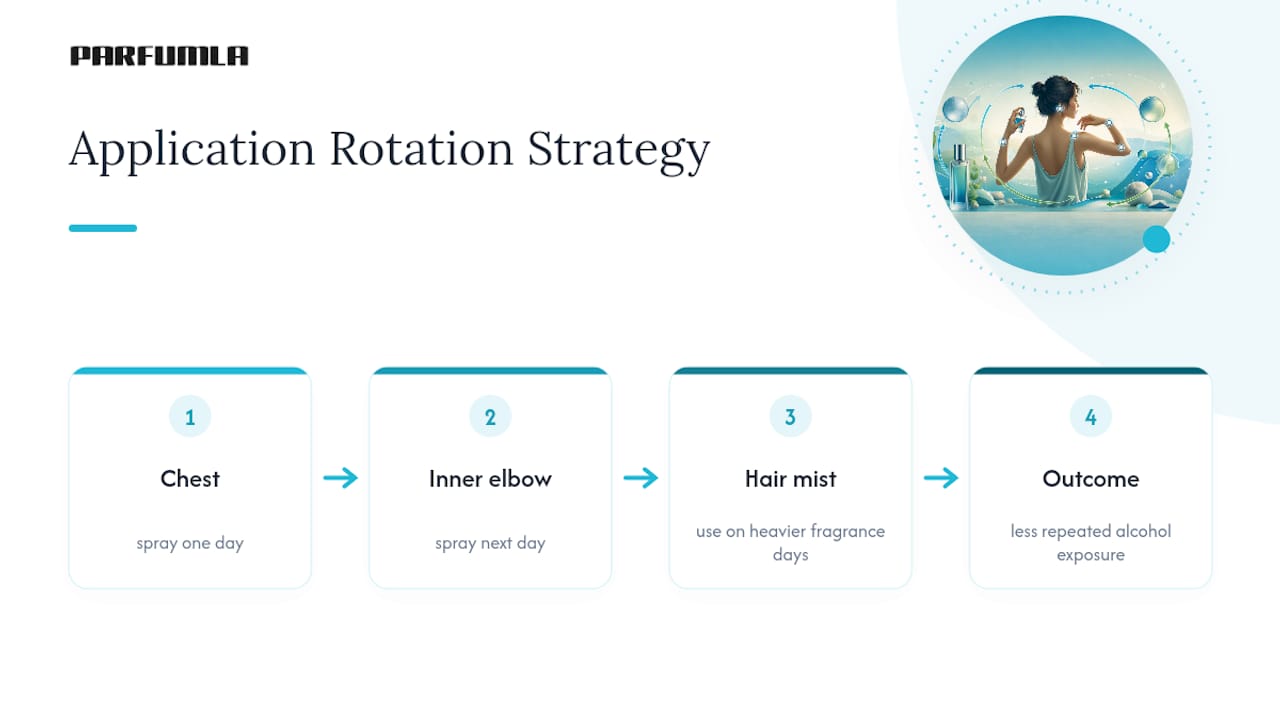
Rotating where you apply, chest one day, inner elbow the next, hair mist on heavier fragrance days, reduces that cumulative effect meaningfully. It also means no single patch of skin is getting hit with alcohol and fragrance concentrate day after day for months.
For genuinely acne-prone skin, the bigger long-term consideration isn't the perfume itself but what it's layered over. Applying fragrance directly onto active breakouts or freshly treated acne spots (especially spots treated with retinoids or benzoyl peroxide) can sting and irritate compromised skin barrier function. The fix is simple: spray fragrance-free zones, and let treated skin do its work without added alcohol on top.
Parfumla's Take on Shopping for Oily Skin
We built Parfumla's catalog with over 14,000 fragrances precisely because no single scent works for every skin type, and oily skin has its own rules. Filters can help narrow down EDT and EDC options, or browse skin-scent and clean-musk families, instead of scrolling blind. We always tell shoppers the same thing: test on your own skin, give it an hour, and layer light rather than heavy. Use the filters, trust the wait time, and let your skin tell you the real story.
— Parfumla
Where to Find EDT, EDC, and Skin-Scent Options on Parfumla
Once you know your skin runs warm and amplifies fragrance, shopping gets a lot simpler: filter by concentration first, then narrow by note family.
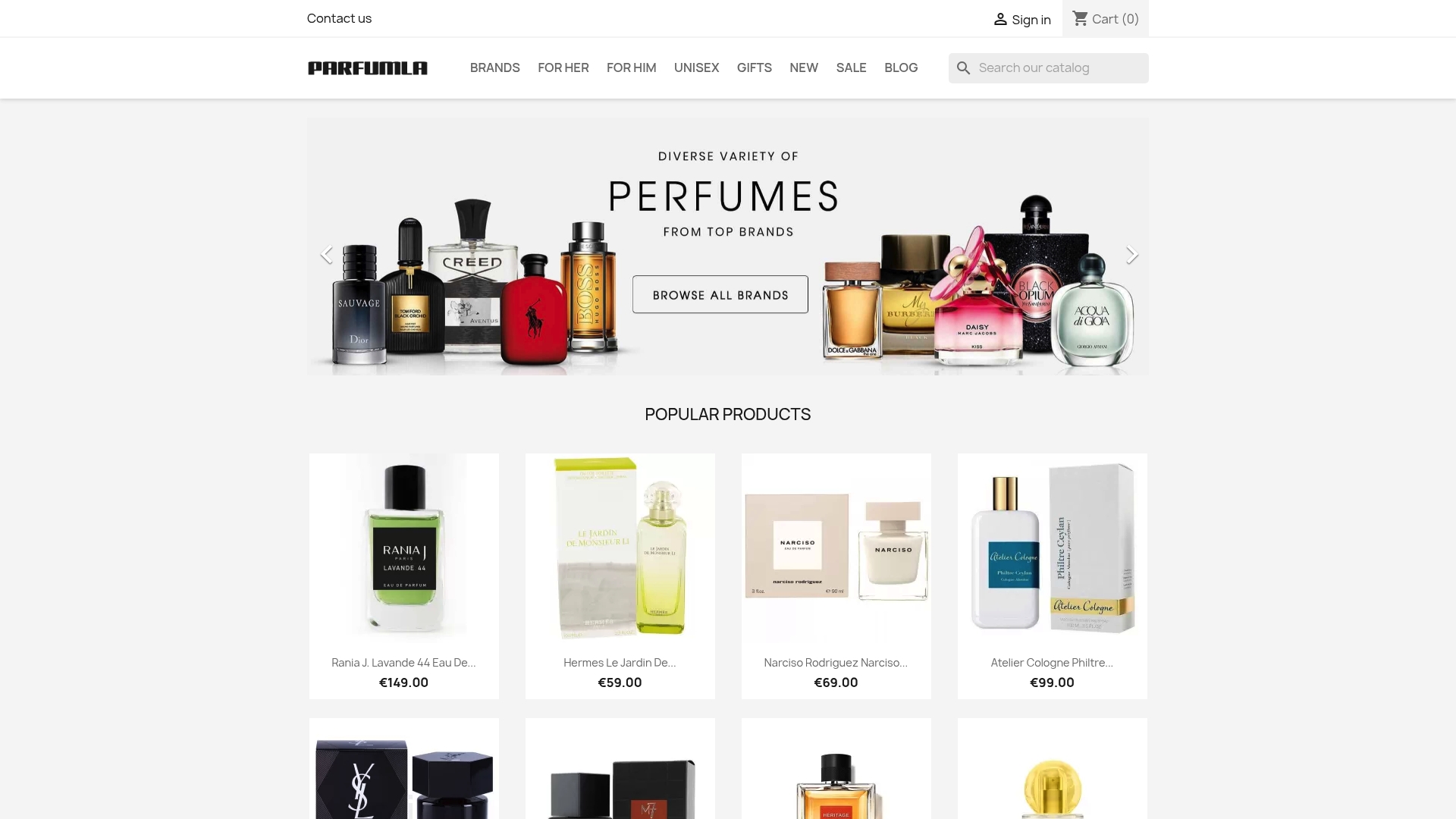
The catalog lets you sort by Eau de Toilette or Eau de Cologne directly, which cuts out the guesswork of reading every product description for concentration details. If you're after something fresh and citrus-forward for daily wear, the NARCISO RODRIGUEZ Eau de Toilette For Women is a clean, restrained option built for exactly the lighter daily rotation oily skin does best with. For something with more presence on a cooler evening without tipping into heavy territory, the CHRISTIAN DIOR J'adore Le Jasmin Summer Fragrance EDP offers a light floral EDP that still respects the "fewer sprays" rule. Shoppers drawn to the minimalist, skin-scent approach discussed earlier should look at unisex musk-forward options like the Ex Nihilo Venenum Kiss Eau De Parfum, which anchors well as a subtle base layer.
Before you buy a full bottle of any of these, a quick checklist helps: filter by concentration first (EDT or EDC for daily wear), search for "fresh," "green," or "aquatic" in the note description, and always test on your wrist or inner elbow and wait an hour before deciding. Whether you're searching to buy Parfumla perfume online, comparing the best price for of a Parfumla fragrance, or simply want to know where to buy an original Parfumla perfume with confidence, browsing by brand is the fastest way to land on the right bottle for oily skin.
Sources
- How to Test Perfumes for Your Skin Type
- Best perfumes for oily skin types
- A Guide to Selecting The Best Perfume For Your Skin Type
- The best skin scents (Allure)
FAQ
Which brands are best for oily skin?
There's no single brand that suits every oily-skin type, but fragrance houses known for fresh, citrus-forward, or clean-musk compositions tend to translate well, since those note families balance natural oil rather than fighting it. Look within the EDT and EDC categories of any brand catalog before focusing on a specific name.
How do you know your skin chemistry?
The only reliable way is to test a fragrance directly on your skin, not a paper strip, and wait 30 to 60 minutes before judging it, since skin oils change how a scent evolves over that window. If a scent consistently turns sharp, sour, or overly sweet on you within that time, that's useful data about how your particular skin chemistry interacts with certain notes.
Which perfume is best for sweaty or oily skin?
Light EDT or EDC formulas in citrus, green, or aquatic families generally hold up best, since they're built to read as fresh rather than heavy even as your skin's natural oil extends their wear time. Clean musk bases also perform well because they don't turn cloying the way dense gourmands can.
What can I use for extremely oily skin?
Stick to the lightest concentrations (EDC or EDT), apply just one to three sprays depending on strength, and favor citrus, green, or aquatic notes over sweet or heavy compositions. Blotting the skin lightly before application and choosing an unscented lotion as a base also helps keep amplification in check.