
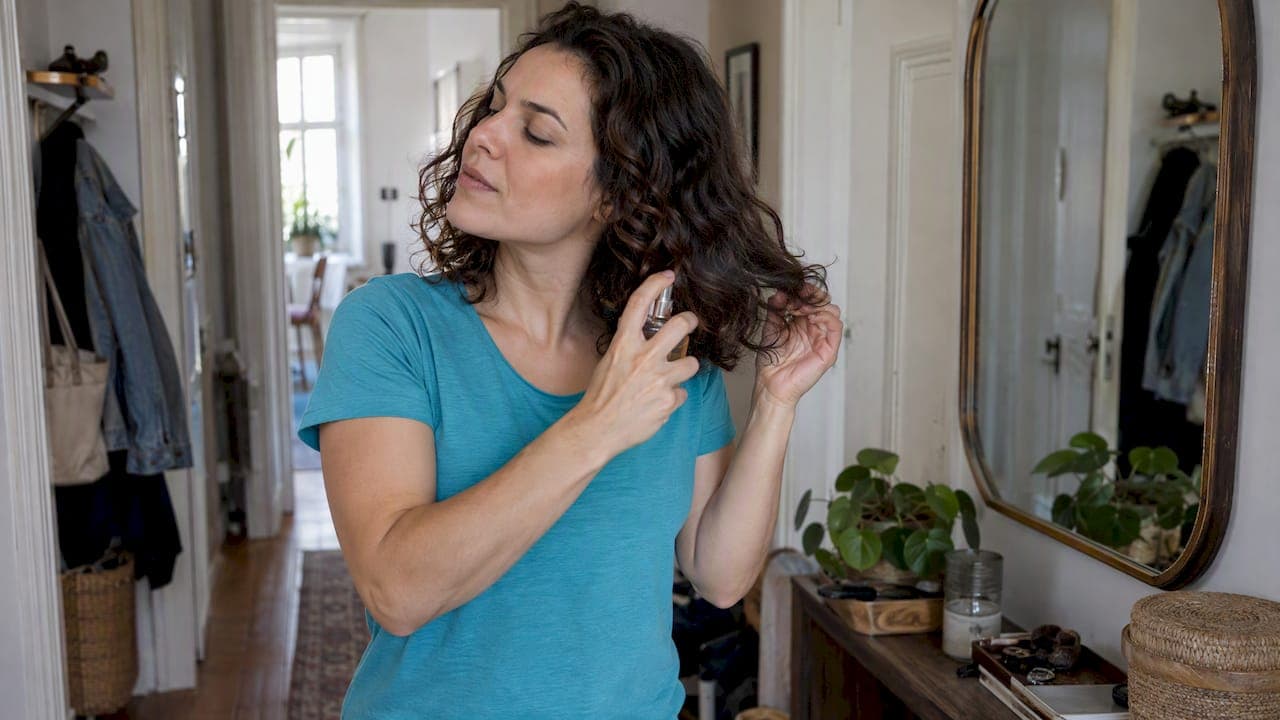
Occasional light misting of regular perfume in hair is usually fine, but daily direct spraying is not. Most perfumes run 80 to 95% ethanol, which strips natural oils and can leave hair dry and brittle over time. Fragrance ingredients are also a known trigger for allergic contact dermatitis, so sensitive scalps should lean on hair-formulated mists or safer application techniques instead.
TL;DR:
- Most standard perfumes contain 80 to 95% ethanol; repeated direct spraying can dry strands, raise breakage risk, and alter hair chemistry markers.
- Hair mists often use less ethanol and include conditioning ingredients, while dry, curly, or color treated hair may benefit from scented oils or conditioners.
- Use a brush or keep direct application 8 to 12 inches away, targeting midlengths and ends rather than roots or scalp.
- Healthy, unprocessed hair can tolerate daily hair mist, but bleached, chemically treated, or heat damaged hair should get fragrance every other day at most.
- Sensitive scalps face contact dermatitis risk, and United States labels may list allergens only as fragrance; patch test new scents for 24 to 48 hours.
Table of Contents
- Why Regular Perfume Can Damage Hair Over Time
- Allergic Reactions and Label Limits for Sensitive Scalps
- Perfume vs. Hair Mists and Scented Hair Oils: What's Different
- How to Scent Your Hair Without Drying It Out
- Removing Perfume Scent and Calming Scalp Irritation
- What the Research Actually Shows
- How Hair Condition Affects How Long Scent Lasts
- Does Hair Type Change How Long Perfume Lasts?
- Choosing the Right Scent Profile for Hair
- Layering Hair Fragrance With Body Perfume
- How Weather and Pollution Affect Perfume in Hair
- How Often You Can Reapply Without Overdoing It
- Testing Scents on Hair Before You Commit
- Shop Samples and Hair-Friendly Fragrance Formats
- FAQ
- Sources
Why Regular Perfume Can Damage Hair Over Time
Perfume is built for skin, not strands. Most eau de parfums and eau de toilettes contain 80 to 95% alcohol by volume, mainly ethanol, which helps the fragrance evaporate and release its scent. That same evaporation process pulls moisture out of the hair shaft and strips away the natural oils that keep strands flexible and smooth.
Hair without that oil layer tends to become dry, rough and more prone to breakage. The cuticle, the hair's outer protective layer, can lift and roughen when repeatedly exposed to alcohol, which makes strands look dull and feel coarse. Over weeks of daily spraying, this often shows up as split ends, frizz and a scalp that feels tight or flaky.
The concern goes beyond surface dryness. Research on fatty acid ethyl esters (FAEE) found that daily application of alcohol-containing hair cosmetics measurably raised FAEE markers in hair samples, with some volunteers showing substantial increases. That matters for two reasons: it confirms that topical alcohol exposure genuinely changes hair chemistry rather than just sitting on the surface, and it means heavy, frequent use of alcohol-based sprays can muddy forensic or diagnostic hair testing that relies on those same markers.
Frequency is the real variable here, not perfume itself.
- A light spritz once or twice a week rarely causes noticeable damage for most hair types.
- Daily, direct application to the same section of hair compounds dryness and raises the odds of breakage.
- Already damaged, color-treated or chemically processed hair is more vulnerable to alcohol's drying effect than virgin, unprocessed hair.
Most perfumes contain 80 to 95% ethanol, a concentration high enough that repeated direct contact with hair can outpace the scalp's natural oil production, leaving strands drier than usual.
Allergic Reactions and Label Limits for Sensitive Scalps
Fragrance is one of the most common causes of allergic skin reactions, and the scalp is not immune to that risk. The FDA notes that fragrance ingredients are a major cause of allergic contact dermatitis, and manufacturers in the United States are not required to list individual fragrance components on labels. Instead, dozens of compounds can hide under the single word "fragrance" or "parfum," which makes it hard for anyone with a known sensitivity to spot the ingredient that is actually causing a problem.
The European Union takes a more transparent approach, requiring that 26 common fragrance allergens be disclosed when present above certain thresholds, but that list still only covers a fraction of the substances used in modern perfumery. Readers outside the EU should not assume the same disclosure rules apply to products they buy.
Scalp contact dermatitis from fragrance usually shows up as redness, itching, small bumps or a burning sensation where the product touched the skin, sometimes with flaking that can be mistaken for dandruff. Symptoms that do not fade within a day or two, or that worsen with repeated exposure, are worth a dermatologist's attention rather than more product.
A few habits lower the risk without giving up fragrance entirely.
- Patch test a new perfume on the inner arm 24 to 48 hours before spraying it near your hairline.
- Start with a sample or decant rather than a full bottle when trying an unfamiliar fragrance.
- Check hair product labels for alcohol-free or fragrance-free claims if you already have a reactive scalp.
Pro Tip: Keep a small notebook or phone note of any fragrance that has caused irritation, so you can cross-check ingredient lists before buying something similar. For a closer look at how to decode an ingredient panel, this practical guide to fragrance labels breaks down what the terms actually mean.
Perfume vs. Hair Mists and Scented Hair Oils: What's Different
The biggest formulation gap between a standard perfume and a hair mist is alcohol content. Regular perfumes lean on high ethanol concentrations to project scent and evaporate cleanly off skin. Hair-specific products are built the opposite way: many hair perfumes use lower ethanol levels and add conditioning ingredients like argan oil or honey extract instead of relying on alcohol alone to carry the scent.
That difference changes how each product behaves on strands.
- Fatty alcohols and oils in hair mists coat the shaft gently rather than stripping it, so they tend to leave hair smoother after use.
- Silicones and conditioning actives in hair-formulated sprays can add shine and reduce frizz, something a skin perfume was never designed to do.
- Lighter, often fruitier or more transparent scent profiles are common in hair mists, since they are meant to sit close to the head rather than project the way a body fragrance does.
The role of alcohol in a fragrance's performance is worth understanding on its own terms. It is what makes a perfume burst open and then fade through its top, heart and base notes, a job that works well on skin but less gently on hair fibers.
For hair health, a fragrance built for hair is the lower-risk daily choice, especially for fine, dry or color-treated hair. A standard eau de parfum is still fine occasionally, applied with care and distance, which is a tradeoff worth comparing directly in this breakdown of hair perfume versus eau de parfum.
How to Scent Your Hair Without Drying It Out
Technique matters as much as product choice. A few adjustments cut most of the risk while keeping the scent you want.
- Spray into the air above your head and walk through the mist, the "halo" method, instead of aiming directly at your scalp.
- Mist a clean brush or comb lightly, then run it through mid-lengths and ends rather than spraying strands directly.
- Keep the nozzle 8 to 12 inches away from your hair if you do spray directly, and target mid-shaft to ends, never roots or scalp.
- Apply a small amount of leave-in conditioner or a lightweight hair oil first, then layer fragrance on top to buffer the alcohol.
Product choice should match your hair's condition. Fine or oily hair generally tolerates a light hair mist well, since oil buildup is already a concern. Dry, curly or color-treated hair benefits more from a scented leave-in conditioner or hair oil, which add moisture while delivering scent. Dry shampoo with a light fragrance can refresh both scent and roots between washes without adding more alcohol to the mix.
Frequency should scale down as damage goes up. Healthy, unprocessed hair can usually handle a hair mist daily without issue. Chemically treated, bleached or heat-damaged hair does better with fragrance applied every other day at most, giving the hair time to recover its natural oil balance between uses.
Pro Tip: Run a dime-sized amount of lightweight hair oil through your ends before spraying any fragrance, perfume or mist. The oil acts as a buffer that slows alcohol absorption into the hair shaft.

Removing Perfume Scent and Calming Scalp Irritation
Fragrance that feels too strong or has started to irritate the scalp is simple to address. Air drying outdoors or in front of a fan helps the volatile top notes dissipate quickly, and a quick brush-through redistributes oils and loosens surface residue.
For a deeper reset, a few options work well depending on how much product built up.
- Apply a small amount of water or diluted leave-in conditioner and work it through to dilute the fragrance before it fully sets.
- Massage a light oil, such as argan or coconut, through dry strands to absorb excess scent, then shampoo it out.
- Use a clarifying shampoo once a week at most if buildup from frequent spraying has made hair feel coated or heavy.
- Reach for dry shampoo between washes to absorb oil and lighten lingering fragrance fast.
If irritation shows up, redness, itching or small bumps near the hairline, rinse the area with lukewarm water right away and stop using that product. A gentle, fragrance-free rinse can calm mild irritation, but symptoms that persist beyond a couple of days warrant a visit to a dermatologist rather than continued use of the same spray.
What the Research Actually Shows
The caution around perfume in hair is not guesswork. A few findings carry the most weight.
- Standard perfumes run 80 to 95% ethanol, high enough to dry out hair with repeated direct contact.
- Daily use of alcohol-containing hair products has been shown to raise FAEE markers in hair samples, confirming that topical alcohol measurably changes hair chemistry.
- Fragrance ingredients are a recognized cause of allergic contact dermatitis, and the FDA does not require individual fragrance components to be listed on labels.
Between these three points, the case for hair-formulated products and light application technique is less about preference and more about chemistry: alcohol dries, fragrance can irritate, and labels do not always tell you what is inside.
How Hair Condition Affects How Long Scent Lasts
Fragrance clings differently depending on how healthy the hair is to begin with. Scent substantivity on hair fibers depends on both the fragrance's own physicochemical properties and the condition of the hair itself, meaning damaged and healthy hair do not hold scent the same way.
Porous, damaged hair, the kind left behind by bleaching, frequent heat styling or chemical straightening, has a roughened cuticle with gaps that let fragrance molecules escape faster. That hair often smells strong right after application and fades within an hour or two.
Healthy, well-moisturized hair with a smoother cuticle tends to hold fragrance molecules longer, since there are fewer gaps for volatile compounds to slip through. Oil also plays a role: a light natural oil layer on the hair shaft can trap certain fragrance notes, particularly heavier, less volatile ones, extending wear time.
This creates a bit of an irony. People with drier, more damaged hair often reach for more fragrance to compensate for faster fade, which only adds more alcohol exposure to hair that is already struggling with moisture loss. A better fix is addressing the underlying dryness first, since hair in better condition naturally holds scent longer without needing constant reapplication. Readers dealing with significant breakage or porosity issues may find it worth looking into targeted treatments for restoring hair elasticity before leaning further on fragrance to mask the texture.
Does Hair Type Change How Long Perfume Lasts?
Hair texture and oil level both shape how a fragrance behaves once it is applied. Curly and textured hair has more surface area and strand bends, which can trap fragrance molecules in the coils and release scent gradually throughout the day. Straight hair offers less surface grip, so fragrance tends to sit closer to the strand and can fade faster unless reapplied.
Oily hair presents its own tradeoff. The natural sebum can help hold onto certain fragrance notes longer, but it also means oil-soluble compounds mix with existing scalp oils, sometimes shifting how a fragrance smells by the end of the day. Dry hair, lacking that oil layer, often lets fragrance evaporate faster since there is nothing to slow down the volatile top notes.
Scent diffusion, how far the fragrance projects from your head, also varies. Thicker, denser hair holds more product and can diffuse scent more subtly over a longer period, while finer, thinner hair tends to release fragrance in a quicker, more concentrated burst that fades sooner. None of this means one hair type needs a different fragrance strategy entirely, but it does explain why the same hair mist can smell noticeably different from one person to the next.
Choosing the Right Scent Profile for Hair
Not every fragrance composition works equally well on hair. Lighter, fresher compositions, think citrus, green florals or soft aquatics, tend to suit hair application better than heavy, dense blends, since they diffuse gently rather than overwhelming the space close to your face.
Heavier, musky or resinous fragrances, the kind built around amber, oud or dense woods, can smell beautiful on skin but often feel too intense at close range when applied directly to hair. These denser compositions also tend to contain a higher proportion of less volatile, oil-soluble molecules, which can interact more with hair's natural oils and linger longer than intended.
A few practical guidelines help narrow the choice.
- Fresh, citrus or light floral scents work well for daily hair application since they diffuse subtly rather than clinging too strongly.
- Gourmand or musky notes are better suited to occasional use or application on clothing rather than directly in hair.
- Fragrances marketed specifically as hair mists are usually formulated with this diffusion distance in mind, which is part of why they often read lighter than their eau de parfum counterparts.
Layering Hair Fragrance With Body Perfume
Wearing fragrance in both hair and on skin can create a richer scent experience, but layering works best when the two are complementary rather than competing. A common approach is choosing a lighter hair mist from the same fragrance family as your body perfume, which reinforces the scent instead of creating two unrelated smells fighting for attention.
Application order matters for balance. Spraying body fragrance on pulse points first, then adding a light hair mist afterward, prevents the hair product from being overwhelmed by the stronger body scent, since hair tends to sit closer to the nose than wrists or neck.
A few pairing habits keep the combination from feeling muddled.
- Stick to one dominant scent family across both products rather than mixing unrelated notes like a fresh citrus body spray with a heavy oud hair mist.
- Use less hair product than you would body fragrance, since proximity to the nose means a little goes further.
- If uncertain, test the combination at home for a few hours before wearing it out, since some fragrance notes shift unexpectedly once layered.
How Weather and Pollution Affect Perfume in Hair
Environmental conditions change how fragrance behaves in hair more than most people expect. Humidity tends to intensify fragrance projection, since moisture in the air slows evaporation and can make scent molecules linger closer to the hair for longer stretches. Dry, low-humidity air does the opposite, letting top notes evaporate fast and shortening how long a scent lasts overall.
UV exposure adds another layer of complexity. Direct sunlight can accelerate the breakdown of certain fragrance compounds, sometimes altering how a scent smells by midday compared to when it was first applied. Hair exposed to regular sun also tends to be drier and more porous, which, as covered earlier, affects how well it holds fragrance to begin with.
Pollution and airborne particles can interact with fragrance molecules too, sometimes dulling the clarity of lighter, fresher notes in heavily polluted environments. None of this means fragrance behaves unpredictably everywhere, but it does explain why the same hair mist might smell noticeably different on a humid summer day versus a dry winter one, and why lighter reapplication in high heat or sun exposure is a reasonable habit rather than overkill.
How Often You Can Reapply Without Overdoing It
Reapplying fragrance in hair comes down to balancing scent longevity against buildup and dryness risk. For most people with healthy hair, a light hair mist can be reapplied once or twice a day without issue, especially using the halo or brush method covered earlier.
Buildup becomes a concern when fragrance, especially alcohol-based sprays, is applied directly to the same section of hair multiple times a day without any cleansing in between. Signs of overuse include hair that feels coated, stiff or unusually dry at the ends, along with a scalp that feels tight or itchy.
A simple rule of thumb: reapply hair-formulated mists as needed throughout the day, but limit direct application of a standard alcohol-based perfume to once daily at most, and give hair a break with a clarifying wash if you notice texture changes. Damaged or chemically treated hair should stretch reapplication further, every other day rather than daily, to avoid compounding dryness that is already a risk for that hair type.
Testing Scents on Hair Before You Commit
When readers ask us whether a fragrance is safe to wear in their hair, our honest answer is always to test it small before going all in. A decant or sample lets you spray a tiny amount on a section of hair, or even on a scarf or clothing, and live with it for a day before buying a full bottle you might end up using only on skin.

We always check for terms like "hair mist" or "alcohol-free" on a product description, and we read the ingredient panel when one is listed, since that tells you more than marketing language ever will. If testing on hair feels risky, a patch test on skin first is a reasonable middle step.
For a more complete testing checklist, this step-by-step guide to testing perfume properly walks through exactly how to sample a scent before committing to a full size.
— Parfumla
Shop Samples and Hair-Friendly Fragrance Formats
Testing before committing is the lowest-risk way to find a fragrance that works for your hair, and we built our Decants & Samples selection around exactly that. Instead of gambling on a full bottle, you can try a scent in a smaller size first, see how it behaves on a strand of hair or a scarf, and decide if it is worth wearing daily.
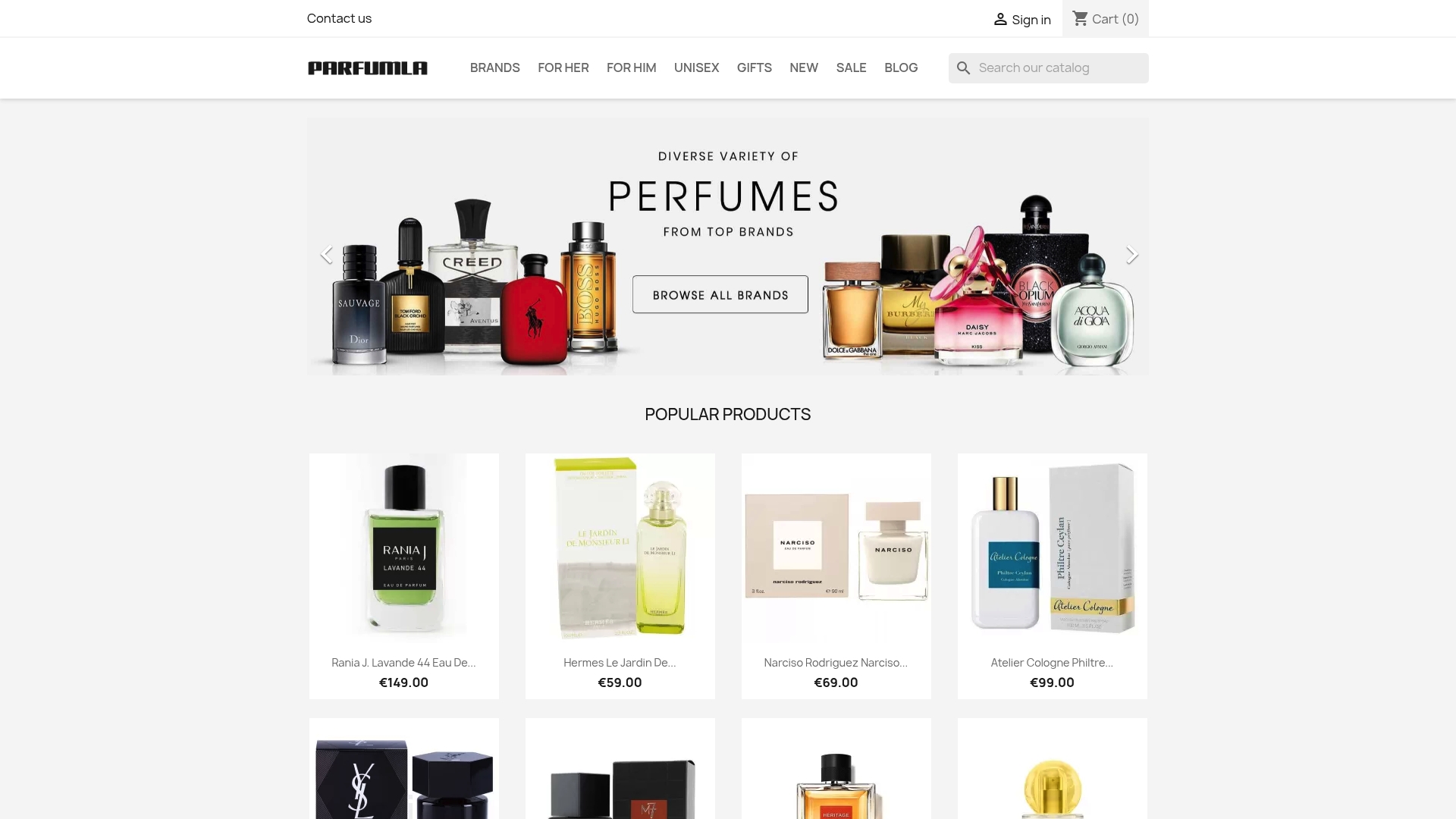
Our catalog offers a wide selection of fragrances, so there are many lighter, fresher alternatives if a heavier composition turns out to be too strong for hair application.
- Browse women's fragrances or men's fragrances for full-size options once you have found a scent that works.
- Check our unisex category for lighter, gender-neutral compositions that tend to suit hair application well.
- Consider gift sets when you want a few smaller formats to test side by side.
If you want to buy the exact scent you have tested, you can buy perfume online through our catalog with reliable shipping across the US and EU.
FAQ
Can you put perfume on your hair?
Yes, but perfume is formulated for skin, not hair, so direct daily spraying can dry out strands due to its high ethanol content. Occasional light misting, or using a hair-formulated mist instead, is the safer approach.
What happens when perfume gets in your hair?
The alcohol in perfume evaporates quickly and can pull moisture out of the hair shaft along with it, leaving strands drier and more prone to frizz with repeated exposure. Fragrance ingredients can also trigger allergic contact dermatitis on sensitive scalps.
How do I get perfume out of my hair?
Air drying, brushing through and applying a small amount of water or leave-in conditioner can dilute lingering scent quickly. For heavier buildup, massaging in a light oil before shampooing, or using a clarifying shampoo, removes residue more thoroughly.
How do you turn perfume into a hair mist?
You cannot fully convert a regular perfume into a hair-safe product, since the high ethanol concentration that makes perfume work on skin is the same thing that can dry out hair. The closest safe approach is diluting a light spray with water in a separate bottle or switching to a product formulated as a hair perfume with lower alcohol content.
Sources
- Perfume on Hair: Why You Should (and Shouldn’t) Do It — Healthline
- Fragrances in Cosmetics — FDA
- Effects of hair cosmetics on FAEE concentrations — Bournemouth University ePrints
- Cosmetic science study on fragrance substantivity and hair fibers — SCC/Journal excerpts
- Hair Perfumes, Explained — New York Magazine (The Strategist)