
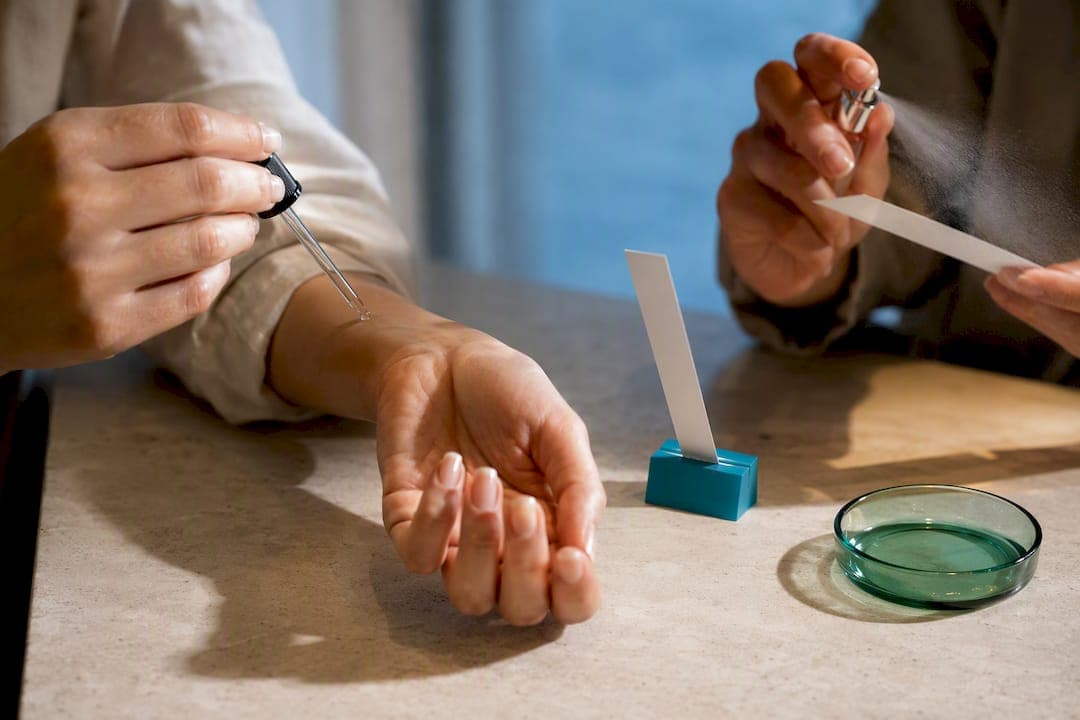
Perfume oil sits closer to the skin and typically outlasts a spray, often running 6 to 10 hours or more, while alcohol-based sprays project farther and deliver a brighter, more noticeable opening. Oil suits desk jobs, dates, and anyone with dry or reactive skin. Spray suits events, layering, and anyone who wants to be smelled from across the room. The right pick depends on how close you want the scent to stay.
TL;DR:
- Perfume oils typically last 6 to 10 hours or more, making them ideal for long wear, while sprays generally last 4 to 8 hours and provide immediate projection.
- Oil uses a carrier like jojoba or coconut oil, which slows evaporation and keeps the scent close to the skin, whereas sprays rely on alcohol to produce a louder, more immediate scent opening.
- Skin hydration, season, and fragrance type influence wear time and projection, with moisturized skin extending fragrance longevity and woody scents lingering longer regardless of format.
- Testing on one skin site for 15 to 60 minutes and layering oil followed by spray can optimize both scent staying power and projection, especially for all-day wear.
- Oil bottles are smaller and less prone to leaks, making them a practical choice for travel, especially when combined with sprays for prominent occasions.
Table of Contents
- Perfume Oil vs Spray: The Quick Comparison
- How Carrier and Concentration Change the Scent
- Longevity vs Projection: What to Actually Expect
- How to Apply and Test Perfume Oil and Spray
- Skin Sensitivity and Fabric Considerations
- How to Choose: Oil, Spray, or Both
- Parfumla's Take on Testing Before You Commit
- Try Both Formats Without the Guesswork
- Sources
- FAQ
Perfume Oil vs Spray: The Quick Comparison
Before getting into the mechanics, here's how the two formats stack up on the factors that actually change your day-to-day experience.
- Carrier: Oils use a carrier like jojoba or fractionated coconut oil; sprays use an alcohol base.
- Application: Oils get dabbed or rolled on; sprays get spritzed from a distance.
- Longevity: Oil tends to last longer on skin because it evaporates slowly; sprays fade faster but announce themselves immediately.
- Projection: Sprays throw scent outward (sillage); oils stay close, almost like a skin scent.
- Best use: Oil for the office, small rooms, or sensitive skin. Spray for parties, dates, or anywhere you want to be noticed walking in.
Neither format is objectively better. They're built to do different jobs, and once you see how the carrier changes performance, the choice gets a lot easier.
How Carrier and Concentration Change the Scent
The entire difference between oil and spray comes down to one ingredient: alcohol. Sprays are alcohol-based, and alcohol evaporates fast. That rapid evaporation is what launches top notes into the air the second you spritz, creating the loud opening sprays are known for. It's also why that opening fades faster than an oil's slow burn.
Oil skips the alcohol entirely. Oil-based perfumes rely on a carrier oil that slows evaporation, which is why oil clings to skin instead of launching into the room. The scent molecules release gradually as body heat warms the oil, rather than all at once.
Atomization plays a role too. A spray nozzle breaks liquid into a fine mist that spreads across a wider surface area, which means more skin (and air) contact and a stronger initial hit. A dab of oil covers a small, concentrated spot, so the scent reads quieter but more personal. That trade-off between projection and staying power explains why oil can feel weaker in the first five minutes yet still be detectable hours after a spray has faded. Skin chemistry, warmer or drier skin especially, speeds up how fast either format evaporates.
Longevity vs Projection: What to Actually Expect
Here's the number that matters most: perfume oil commonly lasts 6 to 10 hours or longer on skin, while eau de parfum sprays typically run 4 to 8 hours. Eau de toilette sprays, with even less concentrated oil and more alcohol, usually land on the shorter end of that range or below it. Concentration class matters as much as format here, which is worth understanding if you're choosing between an EDP and an EDT.
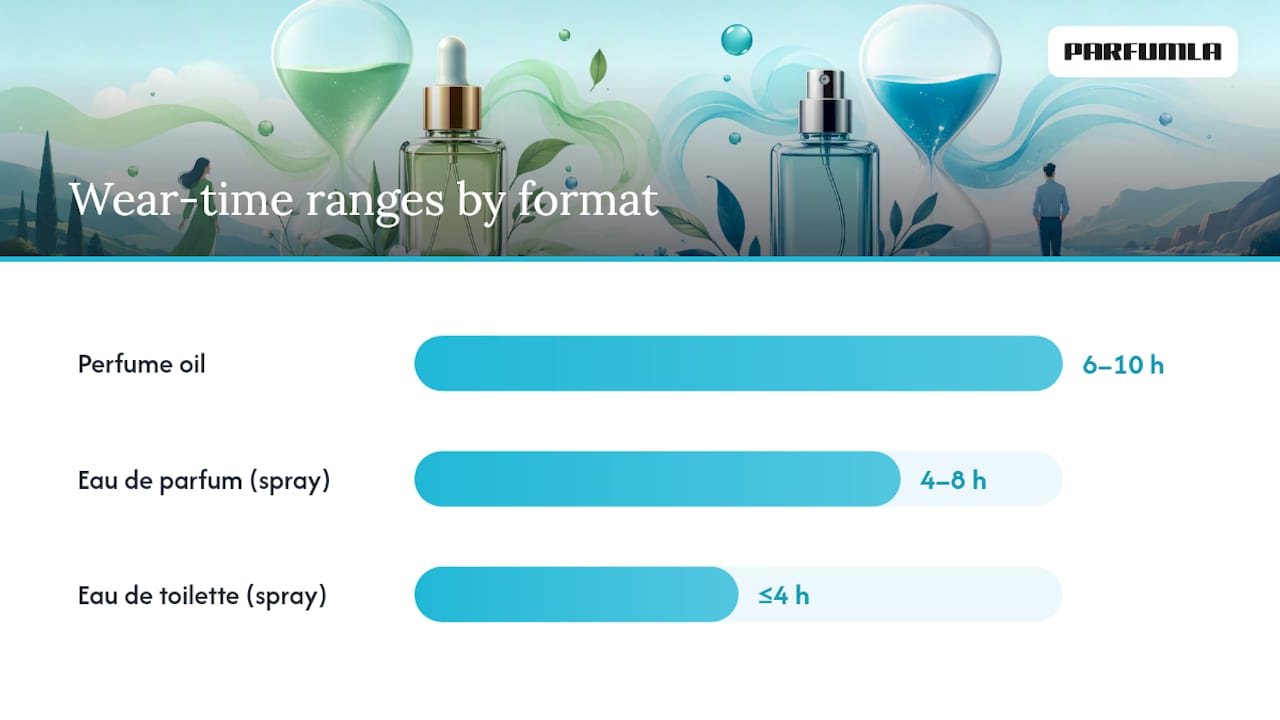
Statistic Callout: Perfume oil's longer wear time doesn't mean it's the "stronger" scent. Spray wins on projection immediately after application; oil wins on staying power hours later. They're solving different problems, not competing on the same scale.
A few things shift these numbers in real conditions:
- Skin hydration: Moisturized skin holds fragrance longer than dry skin, for either format.
- Season: Heat speeds up evaporation for both, shortening wear time in summer.
- Fragrance family: Gourmand and woody scents linger longer than citrus or aldehydic ones, which fade fast regardless of format.
For an eight-hour office shift or a long flight, oil's slow release wins. For a night out where you want people to notice you walking past, spray's upfront sillage does the job.
How to Apply and Test Perfume Oil and Spray
Testing perfume properly takes more patience than most people give it. Here's a simple protocol that actually works:
- Pick one test site per scent. Use a different spot on your wrist or forearm for each fragrance so they don't blend.
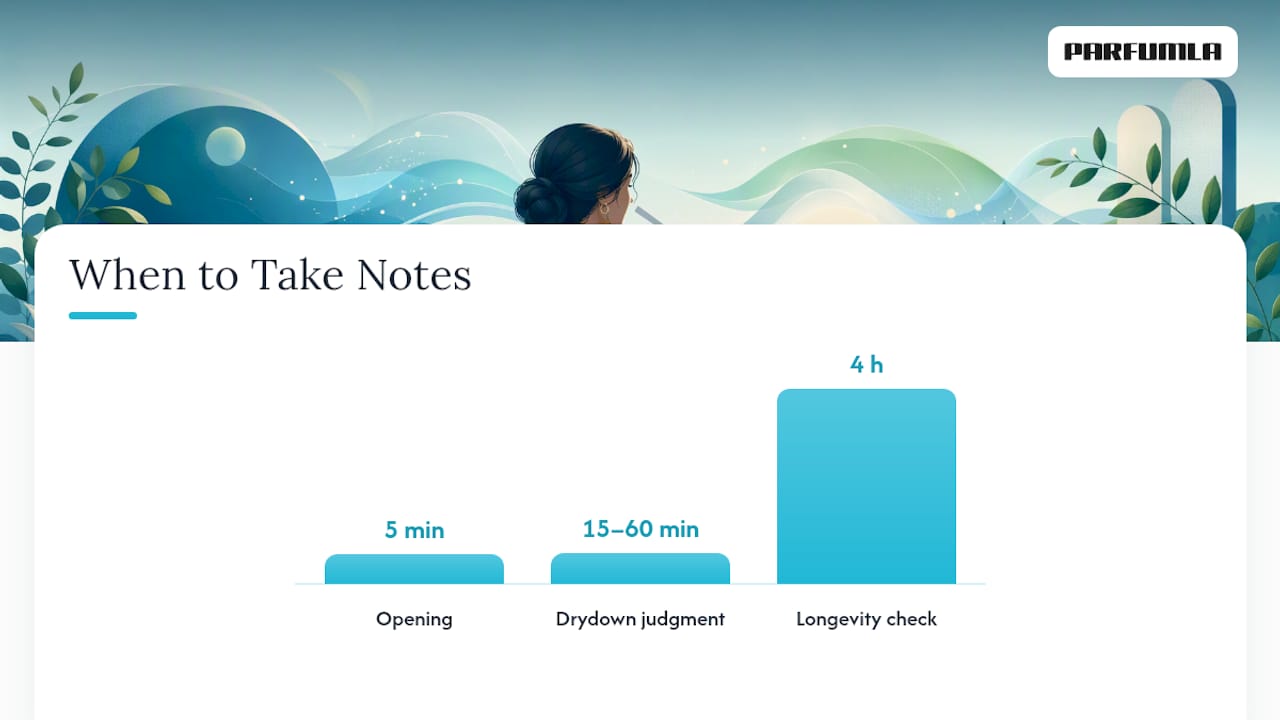
- Apply and wait. Give it 15 to 60 minutes before judging the scent so you're smelling the drydown, not just the opening.
- Take notes. Write down what you smell at the 5 minute, 1 hour, and 4 hour marks.
- Apply oil with restraint. One to three drops, pressed into skin rather than rubbed (rubbing breaks down the scent molecules).
- Apply spray at a distance. Hold the bottle 6 to 8 inches from skin and use 1 to 3 sprays on pulse points.
If you want both effects, layer oil first as a base, then spray on top once the oil settles. The oil anchors the scent while the spray adds lift, and the combination often outlasts either format alone.
Pro Tip: Test on both moisturized and bare skin. Hydrated skin holds fragrance noticeably longer, and seeing the difference yourself is more convincing than any chart.
For a deeper walkthrough, see this step-by-step perfume testing guide.
Skin Sensitivity and Fabric Considerations
Alcohol can dry out skin with repeated use, especially in winter or for anyone with eczema-prone patches. Oil skips that issue since it's built on an emollient base, though it's not automatically hypoallergenic. Fragrance ingredients themselves can still cause irritation regardless of carrier, so a patch test still matters.
Quick guidelines to keep in mind:
- Patch-test any new scent on your inner forearm and wait 24 hours before applying elsewhere.
- Redness, itching, or bumps mean stop use immediately, regardless of format.
- Sprays carry a higher staining risk on light fabrics due to alcohol and oils in the formula; apply to skin or hair, not clothing.
- Oil is often gentler for hair application since it avoids the drying alcohol that can leave strands brittle.
How to Choose: Oil, Spray, or Both
Run through a short set of questions before you buy:
- Do you want to be noticed from across a room? Choose spray.
- Is your skin sensitive or prone to dryness? Lean oil.
- Are you traveling with limited liquids or carry-on restrictions? Oil bottles are smaller and less prone to pump leaks.
- Do you want maximum wear time without reapplying? Oil generally holds longer per application.
Price-per-wear tells a story numbers alone don't. Oil often wins the cost-per-use math because a couple of drops go as far as several sprays, even when the per-milliliter price runs higher. A $60 oil rollerball that lasts 200 wears can beat a cheaper spray bottle that needs three times the product per application.
If you're still unsure, don't commit to a full bottle right away.
- Buy samples of both formats in the same scent if available.
- Keep both on rotation if your budget allows: oil for daytime, spray for evenings.
- Commit to one format only after you've tested it through a full day, not just a five-minute sniff.
Parfumla's Take on Testing Before You Commit
Every fragrance behaves differently on your skin than it does on a tester card, which is why Parfumla recommends testing before locking into a full bottle. Cross-check performance claims against real customer reviews before buying since actual wear time varies more by person than by marketing copy.
With over 14,000 fragrances across popular, niche, and celebrity brands, Parfumla makes it practical to compare both formats side by side without guessing. Start with a smaller size or travel format if one exists, save the full bottle purchase for a scent you've already tested through a complete day.
— Parfumla
Try Both Formats Without the Guesswork
Parfumla stocks both spray and oil formats across more than 14,000 fragrances, with savings up to 60% off retail and reliable shipping across the US and EU. That means you can buy Parfumla perfume online and compare formats side by side without paying department-store prices twice.
If you're leaning toward projection, the Ex Nihilo Venenum Kiss Eau De Parfum is a strong spray-format pick with real sillage. Prefer something closer to skin with excellent staying power, the NARCISO RODRIGUEZ Eau De Parfum is a reliable place to start. For the best price for Parfumla fragrances and a full breakdown of what to check before checkout, run through this online perfume shopping checklist before you buy, then head to your cart and grab the format that matches how you actually want to wear it.
Sources
For more on how format and concentration affect wear:
- Perfume Oil vs Spray: Which Wears Better? | Perfume On Skin
- Perfume oil vs spray: What's actually different (Onekind)
- Perfume Oil vs Spray: Which Lasts Longer | WhatScent
- Perfume Oil vs Spray Perfume: Which Lasts Longer? (CWC Shop)
FAQ
What is the difference between perfume oils and sprays?
Perfume oil uses a carrier oil that releases scent slowly and stays close to the skin, while spray uses alcohol that evaporates fast and projects farther into the air. The carrier is the entire reason the two formats behave differently.
Which is stronger, perfume or perfume oil?
Spray perfume is stronger in the first few minutes because alcohol lifts scent molecules into the air immediately. Perfume oil is quieter up close but often lasts longer, commonly 6 to 10 hours or more compared to 4 to 8 hours for a typical eau de parfum spray.
Is perfume oil better than spray for sensitive skin?
Oil is generally gentler because it skips the alcohol that can dry out skin, though the fragrance ingredients themselves can still trigger a reaction. Patch-test any new scent on your inner forearm regardless of format.
Can you layer perfume oil and spray together?
Yes. Applying oil first as an anchor, letting it settle, then spraying on top can extend overall wear time and balance the quiet base of the oil with the spray's lift.
Does perfume oil work well for travel?
Oil bottles tend to be smaller, free of pressurized nozzles, and less likely to leak in a bag, which makes them a practical travel companion alongside a spray bottle for evenings out.