
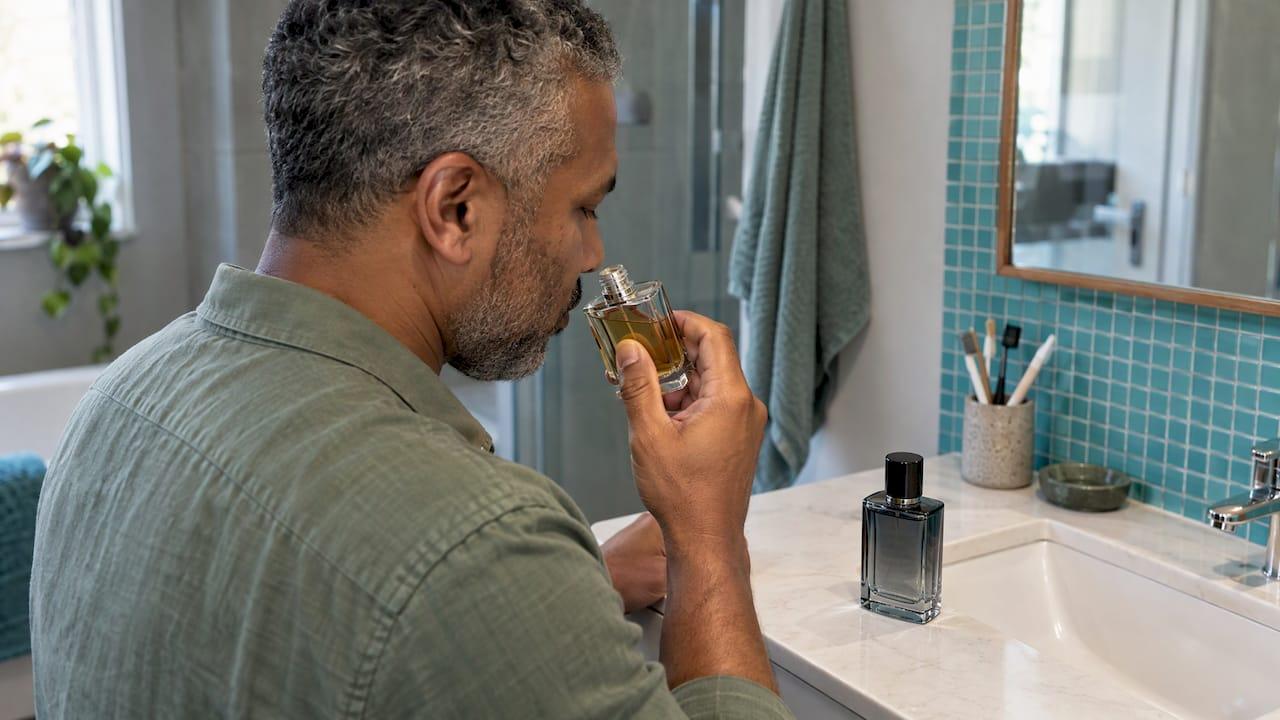
Price and quality in perfume are related, but not in a straight line. A higher price often buys richer ingredients, more complexity and longer wear, yet part of every bottle's price is packaging, distribution and marketing. The smartest way to get the quality without overpaying is to buy an authentic luxury or designer fragrance at a lower price, and to try it on your skin first. That is how we think about it at Parfumla, where you can browse more than 14,000 discounted fragrances and explore scents through travel sprays and samples before you commit to a full bottle.
Below, you will see what the price tag pays for, how to recognize quality with your own nose, and when an expensive perfume is worth it.
TL;DR
- Higher prices often reflect better and more costly materials, greater complexity and longer wear, but a large share also covers packaging, distribution and marketing.
- Quality shows in three things you can check yourself: how the scent develops, how it smells (rich, not thin or "diluted"), and how long it lasts.
- Judge value per spray and per hour of wear, not by the shelf price alone.
- Trying a sample on your skin tells you more than any review or price.
- Buying authentic luxury and niche fragrances at a discount lets you keep the quality and pay less.
Table of Contents
- What you are really paying for in a perfume
- The price of a spray, not a bottle
- How to tell a high-quality perfume by smell
- When an expensive perfume is worth it
- How to test a perfume before you pay for a full bottle
- Our perspective
- Find your scent at a price that makes sense
- FAQ
- Sources
What you are really paying for in a perfume
A perfume price is a stack of costs. Amouage's chief creative officer Renaud Salmon lists them as ingredients, bottle, packaging, employees, logistics, distribution, advertising and marketing. The liquid is only one layer. A Lush perfumer quoted in the same piece says raw materials are a relatively small portion of the price of high-end fragrances.
That does not mean the liquid is unimportant. It means two bottles at the same price can put very different amounts of their price into what you smell. Here is how the main cost layers work.
Ingredients and concentration
Perfumer Gabriela Chelariu explains that bigger budgets allow more natural ingredients at higher concentrations and rarer, more expensive materials. She adds that rich woody, amber or opulent compositions cost more to make than fresh, fruity or clean ones. So a deep amber-and-wood scent will usually carry a higher price than a light citrus, even before branding enters the picture.
Concentration matters too. Perfume types are sorted by the share of fragrance oil: parfum is the strongest at 20 to 30%, and eau fraîche the lightest at 1 to 3%, and higher concentration generally means higher development and retail cost. In everyday terms, eau de cologne is lighter than eau de toilette, which is lighter than eau de parfum, and the price tends to climb the same way. Real Simple's guide makes the same point about concentration tiers and price.
Both luxury and budget houses use synthetic ingredients, and some materials, such as musk, are now synthetic only because animal sourcing has been banned, according to the same SCMP piece. Synthetic does not mean poor. What matters is how the whole composition is built.

Bottle, packaging and distribution
Heavy glass, a magnetic cap, a gift box: all of it adds to the cost. So do the steps between the maker and your cart, from distributors to retailers. These costs are real, but they are not what you smell. This is where a discount retailer can change the math: the fragrance inside is the same authentic product, and the price you pay is lower.
Marketing and brand prestige
A large campaign with a famous face is paid for by the people who buy the bottle. A 2026 article on why luxury perfumes cost so much from our blog goes through the full cost breakdown, and our guide to what makes designer fragrance expensive covers the same ground for designer names. If you like the wider picture of how luxury goods are priced, luxury fashion terminology explained clarifies terms like "bespoke" and "ready-to-wear" that also shape how premium products are valued.
One caution from the industry itself: Salmon says the belief that niche brands put more into ingredients simply because they skip celebrity campaigns is changing, and that the focus across the industry is now more than ever on what is inside the bottle. In other words, a name alone is a weak guide. Your nose is a better one.
The price of a spray, not a bottle
A bottle price looks big, but a bottle holds a lot of perfume. A 100 ml bottle contains around 900 sprays, and the analysis cited by Hypebae puts Dior Sauvage at about 19 cents a spray and Le Labo Santal 33 at about 33 cents. Even a niche favorite costs well under a dollar each time you press the nozzle.
This changes how you should compare. A fragrance that costs more per bottle but projects well from two sprays can cost less per wearing than a cheaper one you need to apply six times. Before you decide, ask:
- How many sprays do I need for it to be noticeable?
- How many hours does it last on my skin?
- How often will I really wear it?
The same logic works for niche perfume. Circana data reported by Vogue España shows the average niche purchase in Europe at €111 versus €59 for conventional perfumery, and that seven in ten consumers are willing to pay more for exclusive formulas and higher concentrations. Many buyers clearly feel the extra is worth it.
How to tell a high-quality perfume by smell
You do not need a perfumer's training to notice the signs, but you do need to pay attention over time rather than in the first ten seconds.
Complexity and development
Fragrance expert Aimee Majoros says cheaper perfumes are typically less complex: one note, often a top note like lemon or a single floral, dominates, while expensive perfumes have mystery and evolve on the skin. Perfumer Christophe Laudamiel describes quality as originality of structure and complexity with different facets "dancing together". If a scent smells the same at hour four as in the first minute, it is simple. If it opens bright, settles into something warmer and finishes differently, it has depth.
Richness versus thin or diluted
Laudamiel notes that cheap ingredients show when a scent smells diluted or lacks freshness. DSM-Firmenich perfumer Frank Voelkl told Byrdie's testers that luxury notes tend to be sophisticated and elegant, such as precious flowers, woods and amber, with richness and depth signaling luxury. Ask yourself: does it feel full, or flat and sharp?
Longevity
Luxury fragrances almost always last longer on skin. In the first blind perfume tests by the UK consumer group Which?, most originals began to fade only after three or more hours, while cheaper copies weakened after about an hour. Laudamiel's rule of thumb is similar: a fragrance that collapses one to two hours after application is a typical sign of a lesser one.
Skin, climate and how you apply it all change the result, so treat these as guidelines. Longevity is also one reason our guide on perfume oil versus spray suggests testing the format on your own skin.
A quick quality checklist
| What to check | Higher-quality sign | Lower-quality sign |
|---|---|---|
| First 15 minutes | Balanced, with several facets | One note dominates |
| After 1 to 2 hours | Still present, changing | Faded or flat |
| Texture of the scent | Rich, round, full | Thin, sharp, "diluted" |
| Hour 3 and beyond | Soft but present on skin | Gone |
| Your reaction | You keep smelling your wrist | You forget it is there |
Laudamiel is clear that judging quality takes experience and lots of comparison, like learning coffee or wine. The more you sample side by side, the faster your nose learns.
When an expensive perfume is worth it
The honest answer is that it depends on what you want from it. A pricier perfume is usually worth it when:
- You want a signature scent. If you will wear the same fragrance for years, longevity, depth and the way it changes on you matter more than the up-front price.
- You like rich, layered styles. Amber, woods, resins and opulent florals are the costly end of the palette, and this is where luxury formulations stand out.
- You want to use less. Majoros argues a more expensive fragrance can end up better value because you need very little to make an impact.
- It is a gift. A recognizable, well-made scent in good packaging is easier to give with confidence. Our comparison of luxury versus affordable gift scents goes into what really differs.
A first-time buyer does not need to start at the top. A good designer fragrance in eau de toilette or eau de parfum strength is a sound entry point, and our guide to best value luxury perfume houses shows where the quality-to-price ratio is strongest. Shoppers watching their budget can also look at our list of affordable designer perfumes under 50, and anyone curious about how much of the price comes from ingredients can read about natural versus synthetic fragrances.
The real trick is to stop treating the full retail price as a fixed fact. The same authentic bottle can be priced very differently depending on where it is bought, which our overview of why perfume prices vary widely explains.
How to test a perfume before you pay for a full bottle
The most expensive mistake in fragrance is buying a full bottle based on a first sniff. Which? found that some testers who disliked a perfume at first warmed to it as it aged, a reminder that first impressions can mislead. Use this routine:
- Start small. Choose a travel spray or sample rather than a full bottle. We carry travel sprays and samples so you can live with a scent first.
- Spray on skin, not paper. Skin chemistry changes how a perfume develops. Use one wrist.
- Wait. Smell it at 15 minutes, one hour, three hours and at the end of the day.
- Wear it for a full day. Notice whether it still feels good in the office, outside or at dinner.
- Compare two at a time. Try one scent on each wrist to sharpen your sense of quality, the way you learn wine by comparing glasses.
- Decide on the dry-down. The last stage is what you will smell the most. If you love it, buy the full bottle.
Testing is also where the price-versus-quality question answers itself. You will quickly know whether the extra cost buys something you can smell.
Our perspective
We hear the same question from first-time buyers and from collectors: is the expensive one really better? Our answer is that quality is something you can smell, and price is only a rough guide to it. A well-made fragrance has structure, richness and staying power, and those qualities are worth paying for.
What we do not think is worth paying for is a markup that has nothing to do with what is in the bottle. That is why we focus on authentic European fragrances, sourced directly from trusted distributors, from globally known houses to rare artisanal creators, at competitive prices. With more than 14,000 fragrances to browse, you can compare a mainstream favorite with a niche discovery and see the difference for yourself.
We also believe you should be able to explore before you commit. Travel sprays and samples exist for exactly that reason: so your nose, not a price tag, makes the decision.
Parfumla
Find your scent at a price that makes sense
If you are ready to put these checks to work, start with the category that fits you: women's fragrances, men's fragrances, unisex scents or gift ideas. Every fragrance at Parfumla is 100% authentic, and we ship across the US and the EU.
Prefer to browse everything at once? Our main store lists the full catalog of luxury, designer, niche and celebrity perfumes, and our product pages carry detailed reviews to help you choose.
FAQ
Are expensive perfumes worth it?
Often, yes, when the extra cost goes into richer ingredients, complexity and longer wear. Luxury fragrances tend to last longer and evolve more on skin, and you may need fewer sprays. Since part of any price is also packaging and marketing, the best approach is to try the scent and judge it yourself.
How can I tell if a perfume is high quality?
Look for complexity that changes over time, a rich rather than thin or diluted feel, and longevity. A scent that fades within one to two hours is typically a lesser one, according to perfumer Christophe Laudamiel. Wear it on your skin for a full day before deciding.
Does a higher concentration mean a better perfume?
Not automatically, but it usually means a stronger, longer-lasting scent that costs more to make. Parfum has the highest oil concentration at 20 to 30%, and eau fraîche the lowest at 1 to 3%. Eau de parfum is a popular middle ground for strength and price.
What is a reasonable price for a good perfume?
There is no single number, because size, concentration and style all change the price. Compare cost per spray rather than per bottle: a 100 ml bottle holds roughly 900 sprays, so even pricier fragrances cost cents per use. Comparing the same authentic bottle across sellers is where you save the most.
How can I try a perfume before buying a full bottle?
Start with a travel spray or sample, apply it to your skin, and check it at 15 minutes, one hour and three hours. We offer travel sprays and samples so you can explore a scent before choosing the full size.
Sources
- How Is the Price of Perfume Determined? | Hypebae
- The 11 Best Affordable Perfumes of 2025, Tested by Byrdie
- Is expensive perfume worth the money? | South China Morning Post
- What's the Difference Between Cheap and Expensive Perfume? | Real Simple
- Vogue España: la generación Z busca autenticidad en la perfumería de autor
- How to Judge a Good Perfume From a Bad Perfume | Big Think
- We Tested Dozens of Luxury Perfumes | Byrdie
- Which? perfume tests
- Best perfumes for women 2026 | Which?
- Luxury fashion terminology explained