
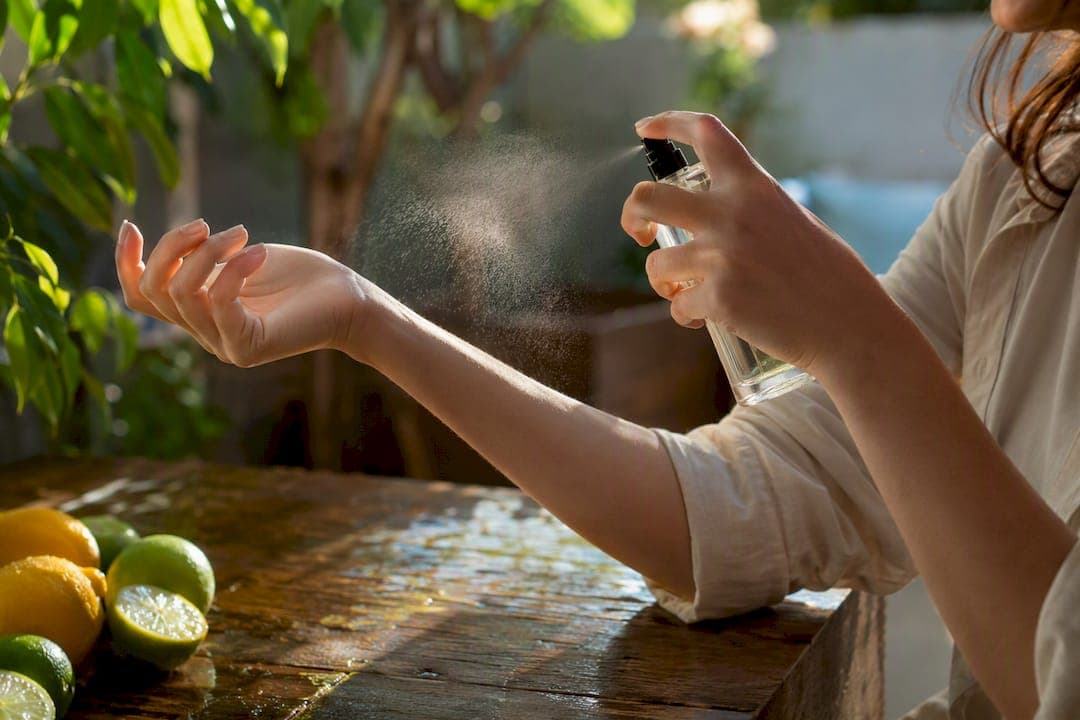
Perfumes for humid weather work best when you build them around airy citrus, green, or aquatic openings anchored by clean musks or dry woods, not heavy sweetness. Humidity thickens the air around your skin, so a scent that would smell balanced in dry conditions often turns cloying or sour by afternoon. The fix is simple: apply less, choose a fragrance with a slightly deeper base so it doesn't collapse after the top notes burn off, and reapply with light mists instead of full resprays.
Here's the fast version, sorted by what you actually need it for:
- Daytime pick: citrus-woody. Bright bergamot or grapefruit opening, dry cedar or vetiver anchor. Holds up through heat without turning heavy.
- Office pick: tea-and-musk. Quiet, clean, skin-close. Won't compete with air conditioning or close quarters.
- Evening pick: soft amber, used with restraint. A trace of warmth without the syrupy weight that humidity punishes.
- Travel/refresh pick: a mist or rollerball in your bag for quick reapplication without overdoing concentration.
Pro Tip: Cut your usual spray count in humid weather. Fewer sprays of an eau de parfum can outlast multiple sprays of a lighter cologne, because humidity slows evaporation and keeps scent sitting closer to your skin.
Key Takeaways
The most reliable humid-weather fragrances pair a fresh citrus, green, or aquatic opening with a restrained musk or dry wood base, applied lightly and tested on an actual warm day before you commit to a bottle.
| Point | Details |
|---|---|
| Favor fresh-anchored structures | Choose citrus, green, aquatic, or tea families over heavy gourmands or dense amber. |
| Test midday, not at the counter | Check comfort at the 2 to 4 hour mark on a real warm day, not right after spraying. |
| Apply less, more often | Use 1 to 3 sprays of EDT or eau fraiche and refresh with a light mist rather than a full respray. |
| Watch for red flags | Metallic, syrupy, or sour shifts during testing mean the fragrance won't hold up in your climate. |
| Start small with Parfumla | Test samples or travel sizes from Parfumla's extensive catalog before buying a full bottle, often available at significant discounts. |
Table of Contents
- Why Perfumes For Humid Weather Behave Differently On Skin
- Which Fragrance Families Work Best In Hot, Humid Climates?
- How Do You Choose And Apply Perfume For Hot, Humid Days?
- Shortlists By Use Case: Day, Office, Evening, And Travel
- Parfumla's Shopping Guide For Humid-Weather Fragrance
- How To Test A Perfume On A Real Warm, Humid Day
- Find Your Humid-Weather Scent At The Right Price
- Sources
- FAQ
Why Perfumes For Humid Weather Behave Differently On Skin
Heat and moisture change the physics of how fragrance leaves your skin, and that's the whole story behind why a scent you love in October turns strange in July. Water molecules in humid air interfere with the way fragrance compounds evaporate, which speeds up some notes and holds back others, according to ScentNose's breakdown of humidity's effect on perfume. Citrus and light aromatic tops burn off faster in heat. Base notes like woods, musks, and resins often linger longer than intended, sometimes reading as heavier or more concentrated than they would on a cool, dry day.
Sweat compounds the problem. Perspiration shifts the pH of your skin, and that shift interacts with fragrance molecules in ways that can push a perfume toward sourness or make synthetic musks smell sharper than they should. This is why a scent that's elegant at 9 a.m. can feel almost metallic by 2 p.m. if it wasn't built to survive the transition.
What this means practically:
- Top notes fade faster in heat, so don't buy a perfume based on the first five minutes alone.
- Base notes can intensify, so a heavy vanilla or thick amber base will likely get heavier, not lighter, as the day goes on.
- Skin chemistry under sweat is a variable you can't fully control, but you can choose structures that tolerate it better.
The practical implication is straightforward: pick fragrances built to stay pleasant after the opening evaporates, not just during it. A perfume that smells incredible in the first ten minutes but relies entirely on a fragile citrus top will likely disappoint by lunch. One that pairs a fresh opening with a low, clean base has somewhere to go once the volatile top notes are gone.
Which Fragrance Families Work Best In Hot, Humid Climates?
Some families are built for this weather, and others are working against you the moment the temperature climbs. Citrus anchored by dry woods is close to a universal winner: the brightness reads as clean and energizing, while cedar, vetiver, or sandalwood keep the composition from disappearing entirely once the top notes burn off. Aquatic and marine accords do something similar, evoking coolness even as the air around you gets thick and sticky.
Green and herbal accords, think crushed leaves, basil, mint, fig, hold up remarkably well because they read as fresh rather than sweet, and fresh scents tend to age more gracefully in heat than sweet ones do. Harper's Bazaar notes that green notes and fresh fruit are particularly effective in hot weather because they provide a crisp quality that stays legible even when humidity is working against most other structures. Tea notes, especially green tea and white tea, occupy a similar space: understated, slightly bitter, never cloying. Light white florals, jasmine, neroli, orange blossom, in restrained doses, and clean musks round out the list of families that consistently perform.
Notes to use with caution in humidity:
- Heavy vanilla, particularly the sugary gourmand style, tends to thicken and turn syrupy as heat builds.
- Dense amber can feel suffocating rather than warm once humidity traps it against your skin.
- Thick oud often intensifies in ways that read as harsh rather than luxurious in hot, wet air.
- Heavy gourmands (caramel, chocolate, thick praline) frequently curdle into something closer to sour than sweet by midday.
- Resinous spices like heavy frankincense or myrrh can feel dense and smoky rather than warm.
The winning compositional strategies almost always pair a fresh, clear top with a restrained base rather than relying on either extreme alone. Citrus plus soft musk is the most forgiving combination for daily wear. Tea plus vetiver gives you something quiet and grounded without tipping into heaviness. Neroli plus dry cedar splits the difference between floral and woody in a way that survives heat well. Even vanilla has a humid-weather version: a light, salted vanilla accord reads as warm skin rather than dessert, which is the entire difference in hot weather. A guide to perfumes for humid climates from Qanzari echoes this same principle: pair a fresh top with a restrained base to preserve both clarity and longevity.
How Do You Choose And Apply Perfume For Hot, Humid Days?
Choosing correctly matters more in humidity than in any other season, because the margin for error is smaller. A scent that's slightly too heavy in cool, dry weather is uncomfortable in July. Judge a fragrance on four things: how clean the opening feels, how it holds up at midday, what the dry-down texture is like after a few hours, and whether the concentration actually fits where you're wearing it.
Here's a testing routine that actually tells you something useful before you commit to a full bottle:
- Apply a sample on a genuinely warm or humid day. Testing indoors under air conditioning tells you almost nothing about how a perfume performs in real heat.
- Note the opening between 0 and 30 minutes. This is the phase most people judge on, but it's the least useful for humid-weather decisions.
- Check back at the 2 to 4 hour mark. This is where you learn whether the dry-down stays pleasant or turns sour, metallic, or syrupy.
- Test under light activity, a short walk, errands, anything that raises your body temperature slightly, since that's closer to how you'll actually wear it.
PerfumerOnline points out that a well-structured eau de parfum can outperform a weaker eau de cologne in humidity precisely because it has enough depth to stay pleasant once the opening dissipates, a detail worth testing for yourself on a warm afternoon rather than assuming concentration alone determines performance.
On application: favor eau de toilette or eau fraiche concentrations for daytime wear, since they're built to fade gracefully rather than intensify. One to three sprays is typically enough, depending on concentration, and rainy-season fragrance guides suggest one to two sprays is often sufficient since humidity slows evaporation and keeps scent closer to skin anyway. Spraying onto clothing or hair, rather than only skin, extends wear time since fabric holds fragrance longer than skin does in heat. Testing advice from PerfumerOnline recommends applying 15 to 20 minutes before you head out, giving the alcohol time to evaporate so you're judging the true opening, not the initial alcohol sting. Avoid heavy application at the neck in intense heat, where body warmth will amplify the scent past comfortable. When you need a refresh, reach for a light mist rather than another full application.
Pro Tip: If a fragrance turns metallic, syrupy, sour, or suddenly overpowering during your midday check, that's your answer. Don't buy it hoping it will behave differently next time. Humidity tends to expose the same weaknesses consistently.
Shortlists By Use Case: Day, Office, Evening, And Travel
Different settings call for different structures, and matching concentration to context matters as much as matching notes to weather.
Daytime, general wear:
- Citrus-woody: bright bergamot or lemon opening over dry cedar or vetiver. Works as an EDT for everyday wear.
- Green-aromatic: crushed basil or fig leaf with a light musk base. Reads as clean rather than sweet.
- Aquatic-fresh: marine or watery accords with a touch of white musk. Good as an EDT or fragrance mist.
Office and close quarters:
- Tea-and-musk: green or white tea over a soft, skin-close musk. Quiet enough for shared spaces, an EDT or light EDP.
- Neroli-cedar: orange blossom paired with dry wood. Professional without reading as cologne-heavy.
Evening, softer intensity:
- Restrained amber: a light amber with citrus or green top notes to keep it from turning heavy. Best as an EDP, applied sparingly.
- Salted vanilla: warm without sugar, works when tempered with a green or marine top, per Vogue's editorial picks for hot-weather scents.
Travel and refresh:
- Rollerball or mist versions of your daytime pick, ideal for reapplication without carrying a full bottle. Testers consistently favor small-format mists for hot-weather refreshes since they solve the reapplication problem without over-concentrating.
- A light body mist layered under your main fragrance extends wear without adding weight, a strategy worth exploring through our guide to travel-size luxury perfumes for packing formats that survive heat and TSA rules alike.
For layering, a lightly scented lotion under a matching mist tends to outlast perfume alone in humidity, since the lotion holds fragrance against skin longer than alcohol-based spray does by itself. If you're traveling, a hair mist is worth adding to your kit. Hair holds scent differently than skin does and often carries fragrance further into the evening.
Parfumla's Shopping Guide For Humid-Weather Fragrance
Before committing to a full bottle, start small. Travel sizes, samples, and rollerballs let you run the full midday test outlined above without risking $100 or more on a bottle that turns sour in your climate. That's especially true if you're shopping for humid-weather wear somewhere far from where the fragrance was originally marketed.
Every listing includes detailed reviews from other buyers, useful for spotting patterns like "turns sweet in heat" or "lasts all day in humidity" before you commit.
A few practical ways to shop smarter:
- Filter by concentration first. Eau de toilette and eau fraiche generally behave better in heat than heavier eau de parfum concentrations.
- Read reviews specifically for mentions of hot or humid climates, not just general longevity comments.
- Use sample packs to test two or three candidates side by side over a single humid week before choosing a full bottle. Our guide to sampling perfumes affordably walks through exactly how to do this without overspending.
- Check the best sales page regularly, since discounted humid-weather-friendly bottles rotate frequently.
How To Test A Perfume On A Real Warm, Humid Day
Skip the store counter test. Air-conditioned retail environments tell you almost nothing about how a fragrance behaves once you're outside in real heat, and that gap is exactly where humid-weather buying mistakes happen.
Apply your sample in the morning, then go about a normal warm-weather day: commute, errands, whatever raises your body temperature and exposes you to actual outdoor air. Check in at three points. First, right after application, to judge the true opening once the alcohol has evaporated. Second, around midday, which is the real test, since this is when heat and any perspiration have had time to interact with the fragrance and reveal whether it's turning sour, sharp, or syrupy. Third, late afternoon, to see what the dry-down actually smells like after hours of heat exposure.

Midday comfort is the single most useful checkpoint. A fragrance that still smells balanced and pleasant six or seven hours after application, without needing a respray, has passed the hardest test humid weather can throw at it. If it's turned unrecognizable or unpleasant by then, no amount of reapplication will fix the underlying structure.
Test under mild activity too, not just sitting at a desk. A short walk or errand run raises skin temperature slightly and gives you a more honest read than testing in a cool, still room. If a fragrance survives an active, humid afternoon and still smells good at hour six, it's a safe bet for your climate.
A Note From Parfumla On Curating Humid-Weather Picks
Curating recommendations for humid climates means paying attention to the same details this guide covers: opening clarity, dry-down behavior, and how a fragrance holds up past the first hour. Parfumla leans on customer reviews and testing patterns across its catalog to flag which bottles consistently perform in heat and which ones tend to disappoint.
Samples and small formats exist specifically so you can test before committing to a full bottle, and straightforward returns mean a fragrance that doesn't suit your climate isn't a dead end. Questions about a specific bottle's behavior in heat are always worth asking before you buy.
The goal here has never been to push one brand over another. It's to help you find what actually works on your skin, in your climate, at a price that makes testing a few options feel low-risk rather than expensive.
— Parfumla
Find Your Humid-Weather Scent At The Right Price
Parfumla is the place to test humid-weather fragrance recommendations without gambling a full retail price on a bottle you've never worn in real heat.
If you want a skin-close option that leans into the clean musk category this guide recommends, the Narciso Rodriguez Eau de Toilette is a solid daytime candidate worth testing on a warm afternoon. Prefer something built specifically around a summer profile? The Christian Dior J'adore Le Jasmin Summer Fragrance EDP pairs a bright opening with enough depth to survive an afternoon of heat. And if you want a nearly weightless skin scent for the most humid days, the Escentric Molecules Molecule 01 is worth a sample before you commit. For an inexpensive body mist to layer underneath any of these for extra staying power, Rose Petal Glam's handcrafted body sprays are worth a look too.
Search "buy Parfumla perfume online" or check the best price for Parfumla fragrance before your next humid-season purchase; where to buy original Parfumla perfume comes down to going straight to the source and testing small before you buy full-size.
Sources
- Best summer perfumes to try when it’s hot outside | Harper's Bazaar
- Perfume smells different humid weather: why & how to fix it | ScentNose
- Best summer perfumes for hot weather and humid days | PerfumerOnline
- Monsoon fragrance tips: scents for the rain | Typsy Beauty
FAQ
Which perfume is best for humid weather?
There's no single best bottle, but the best-performing structures pair a citrus, green, or aquatic opening with a restrained musk or dry wood base. Test any candidate on a real warm day and check comfort at the 2 to 4 hour mark before committing to a full bottle.
What perfumes perform best when you sweat?
Clean musks, tea-based compositions, and citrus-wood pairings tend to hold up best under perspiration because they don't rely on sweetness that can turn sour as skin pH shifts. Heavy gourmands and dense ambers are more likely to curdle under the same conditions.
What is the best perfume for a hot summer?
Look for eau de toilette or eau fraiche concentrations built around citrus, green, or aquatic families with a dry woody or musky base, since a well-structured eau de parfum can also outperform a weak cologne if the base has enough depth. The safest approach is testing a sample through a full warm day before buying a full bottle.
What perfumes are good for the summer?
Green tea accords, neroli and dry cedar pairings, and light salted vanillas tempered with citrus all read well in summer heat. Editorial picks from Vogue consistently favor watery accords and airy musks over heavier winter-leaning compositions.
How many sprays of perfume should I use in humid weather?
One to three sprays is typically enough, since humidity slows evaporation and keeps scent closer to skin, meaning you need less product than you would in dry, cool conditions. Reapply with a light mist rather than a full respray if you need a midday refresh.