
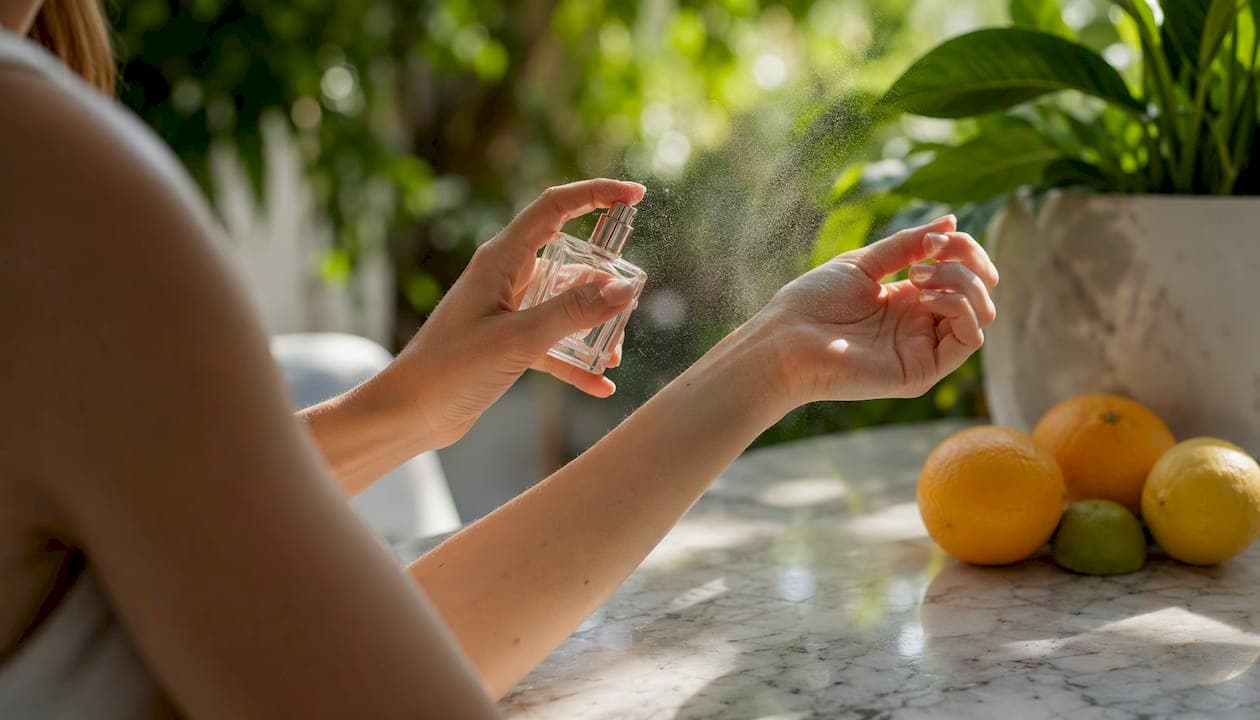
Test on your skin, not a paper strip, and wait at least 30–60 minutes before deciding. That single habit separates a good fragrance purchase from an expensive mistake. Clinical fragrance research confirms that most scent variation between people comes from physical evaporation driven by heat, skin oil, and moisture, not from major chemical transformation of the fragrance itself. That means you can actually control the outcome. Moisturize first, spray a pulse point, and give the fragrance time to move through its stages. Parfumla's step-by-step perfume testing guide and 2026 shopping checklist walk you through exactly this process.
Three checks to do right now:
- Apply to a pulse point (inner wrist or inner elbow), not paper
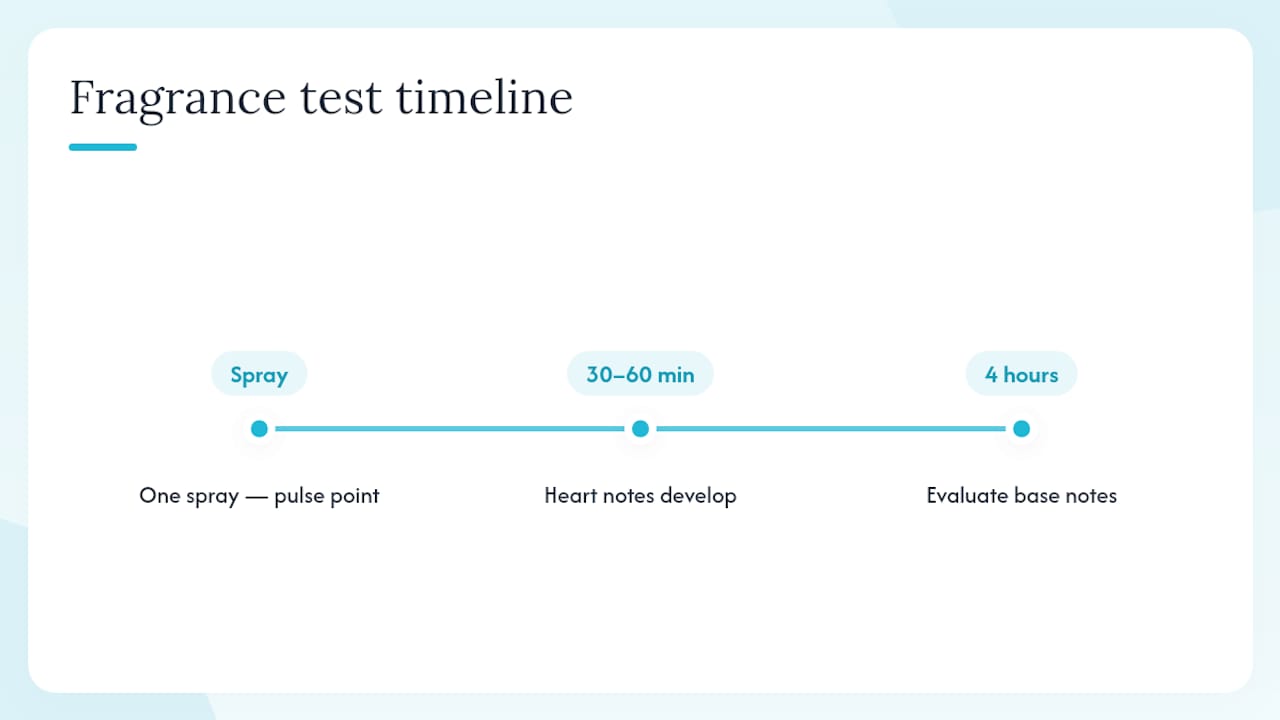
- Wait at least 30 minutes before smelling again to allow the fragrance to develop and get a sense of its longevity and evolution
- Note longevity, projection, and whether the dry-down still appeals to you
Table of Contents
- What is the right protocol for testing a fragrance on your skin?
- How do you test safely if you have sensitive skin or fragrance allergies?
- How should you sample and buy fragrances to avoid wasting money?
- What resources does Parfumla offer to help you test before you buy?
- Key Takeaways
- The part most fragrance advice gets wrong
- Parfumla makes it easier to test before you buy
- Useful sources and further reading
- FAQ
What is the right protocol for testing a fragrance on your skin?
Follow this exact sequence and you will know within one session whether a fragrance suits your skin chemistry.
- Moisturize first. Apply an unscented lotion to your pulse points 10 minutes before testing. Snif's body chemistry guide confirms moisturized skin holds scent better and gives a more accurate read of how the fragrance will perform daily.
- Spray, don't rub. Apply one spray to the inner wrist or inner elbow. Rubbing breaks down top notes and distorts the dry-down. Eden Perfumes' testing protocol specifically flags this as one of the most common testing mistakes.
Test the same fragrance on a different day before buying. Hormones, sleep, and diet all shift skin chemistry, and Eden Perfumes recommends multiple-day checks for exactly this reason.
Pro Tip: If testing multiple scents, use coffee beans or plain unscented skin (the inside of your elbow) to reset between samples. Never spray two fragrances on the same spot.
How do you test safely if you have sensitive skin or fragrance allergies?
Always patch-test any new leave-on fragrance before wearing it fully, especially if you have a history of skin reactions.
DermNet NZ's fragrance allergy guidance outlines two practical approaches:
- Patch test: Apply a small amount to the inner forearm, cover with a bandage, and check at 48 and 96 hours for redness, swelling, or itching
- Repeat open application test (ROAT): Apply a small dot to the same spot twice daily for two weeks without covering it. This is more practical for everyday consumers and catches delayed reactions that a single patch test misses
Common fragrance allergens to watch for (per DermNet NZ's clinical list): Balsam of Peru, Fragrance Mix I and II components including cinnamal, eugenol, isoeugenol, geraniol, and hydroxycitronellal. DermNet NZ lists 26 recognized fragrance allergens in total.
Red flags that require a doctor:
- Hives, swelling, or difficulty breathing after fragrance exposure
- A rash that spreads beyond the application site
- Reactions that worsen after repeated exposure
One common misconception: "natural" does not mean safer. Many natural fragrance ingredients, including oakmoss, tree moss, and several citrus compounds, are among the most common contact allergens. The role of natural ingredients in niche perfume matters here, but natural origin is not a safety guarantee.
How should you sample and buy fragrances to avoid wasting money?
Always sample before buying a full bottle. One good in-store sniff is not enough.
Sampling options, ranked by skin-test accuracy:
- Decants: Small portions of the actual formula, tested on your skin over multiple days
- Discovery sets: Curated mini bottles from a brand or retailer, often the most cost-effective way to test several at once
- Store testers: Convenient but limited to one environment and one moment
- Travel sprays: Good for extended wear testing across different conditions
- Sample subscription services: Useful for exploring fragrance families broadly before narrowing down
Before ordering online, check:
- Ingredient list transparency (look for known allergens)
- Return or exchange policy for unopened bottles
- Authenticity signals: authorized retailer status, batch codes, sealed packaging
- Shipping conditions (heat exposure damages fragrance)
Parfumla's online perfume shopping checklist covers all of these points for 2026 purchases. Buy the full bottle only after you have worn the fragrance on at least two different days, in different environments, and still want to reach for it.
What resources does Parfumla offer to help you test before you buy?
Parfumla offers practical guides and a broad catalog designed to support skin-compatibility testing before you commit to a full bottle.
Resources worth bookmarking:
- PubMed — Clinical fragrance research (19245452)
- DermNet NZ — Fragrance allergy
- Snif — The science behind body chemistry and perfume
- MioLook — Cold and hot skin: perfumes and body chemistry
- Perfumegini — How to choose perfumes according to skin type
- Eden Perfumes — How to test perfume for skin compatibility
- Delacourte — Perfume and skin type: the guide to longevity and chemistry
With over 14,000 fragrances across popular, niche, and celebrity lines, Parfumla's catalog gives you the range to test across fragrance families without overpaying. Detailed product reviews on each listing help you cross-reference what other buyers experienced on their skin before you order.
Key Takeaways
Your skin's oil level, temperature, and hydration drive fragrance performance far more than the formula alone, and a simple multi-day testing protocol is the most reliable way to find your match.
| Point | Details |
|---|---|
| Test on skin, not paper | Spray on a moisturized pulse point and evaluate at 5 min, 30–60 min, and 4+ hours. |
| Skin type sets expectations | Oily skin extends longevity; dry skin fades fragrance faster and benefits from EDP or Parfum concentrations. |
| Patch-test for safety | Apply a small amount twice daily for two weeks (ROAT) to screen for allergic contact dermatitis before full wear. |
| Sample before committing | Use decants or discovery sets across multiple days and environments before buying a full bottle. |
| Parfumla as your starting point | Parfumla's catalog of 14,000+ fragrances, detailed reviews, and testing guides reduce purchase risk at every step. |
The part most fragrance advice gets wrong
The standard advice is to "trust your nose in the store." That works for about five minutes. What it misses is that a fragrance you love on a blotter at 10 AM in an air-conditioned mall may smell completely different on your skin at 3 PM after lunch, a walk outside, and a change in humidity. Skin chemistry is not static. It shifts with hydration, hormones, what you ate, and even stress levels.
The more useful frame is to treat fragrance shopping like a short experiment. You are not deciding in the moment; you are collecting data across days. One session tells you the opening. A second session, on a different day and in a different environment, tells you whether the base notes still work on your skin when conditions change. That second test is the one most people skip, and it is the one that prevents buyer's remorse on a $150 bottle.
There is also a persistent myth that "natural" fragrances are automatically safer for sensitive skin. They are not. Some of the most common contact allergens in clinical patch testing come from natural sources: oakmoss, tree moss, and citrus compounds. Reading the ingredient list matters more than the "natural" label on the box.
Parfumla makes it easier to test before you buy
Spending $150 on a fragrance you have only smelled on a paper strip is a gamble most buyers lose at least once. Parfumla offers a smarter route: over 14,000 fragrances at up to 60% off retail, with detailed reviews that tell you how each scent performs on real skin before you order.
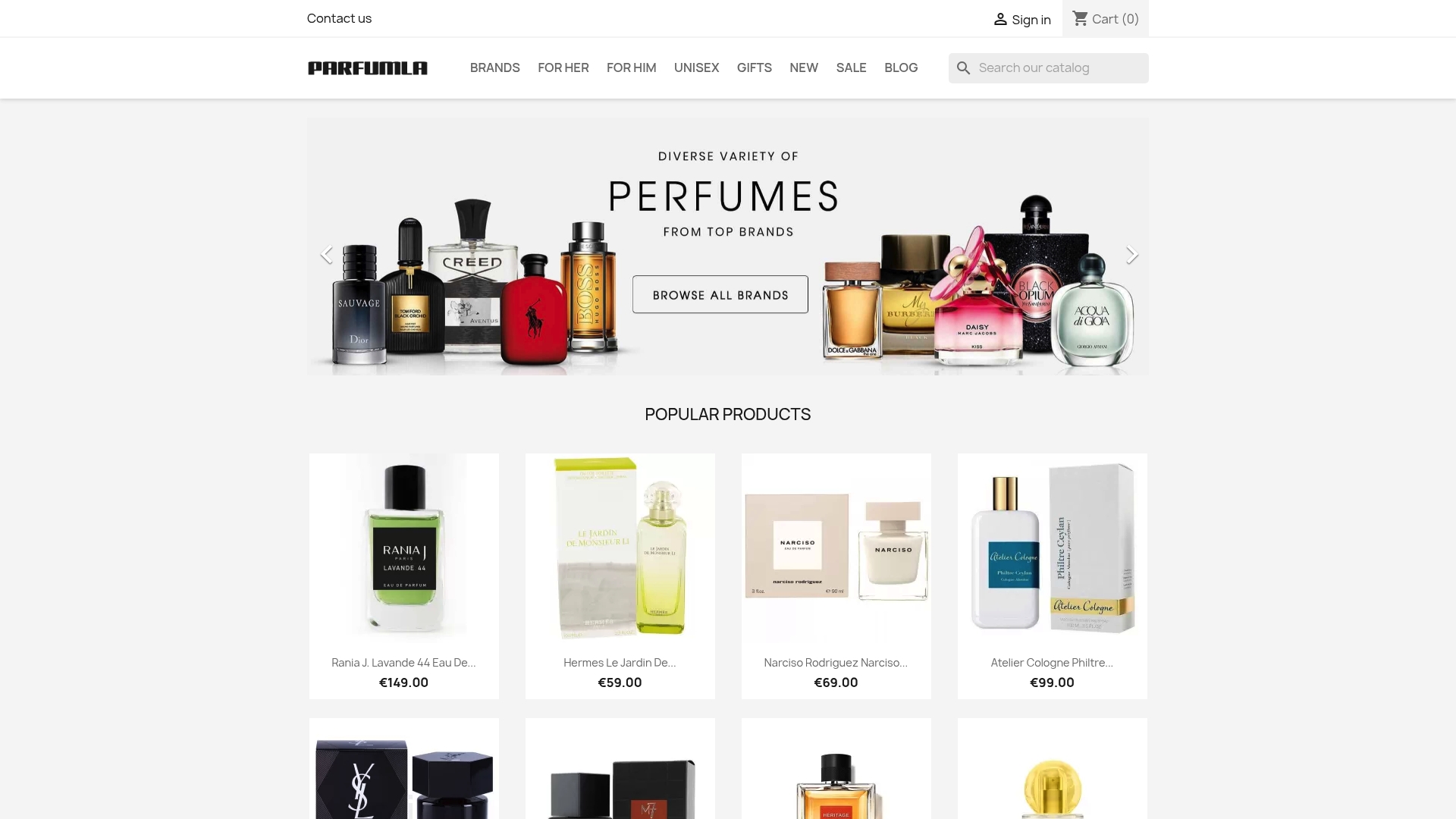
Whether you are drawn to a rich EDP like Ex Nihilo Venenum Kiss or a floral summer option like Christian Dior J'adore Le Jasmin, Parfumla's catalog lets you compare concentrations, read buyer feedback, and order with confidence. Shipping covers both the US and EU, and the pricing means you can afford to test more options before settling on the one that truly works with your skin. Browse Parfumla's full fragrance catalog at parfumla.com and use the testing protocol in this guide to make your next purchase count.
Useful sources and further reading
These are the clinical and practical resources that informed this guide.
- PubMed — Clinical fragrance research (19245452): Supports the evaporation-over-chemical-transformation claim in the science section
- DermNet NZ — Fragrance allergy: Primary source for patch testing, ROAT, and the list of 26 common fragrance allergens
- Snif — Body chemistry and perfume: Explains skin oil, pH, and temperature effects; recommends moisturizing before testing
- MioLook — Hot and cold skin and perfume chemistry: Covers skin temperature differences at pulse points and note-family recommendations
- Perfumegini — Perfumes by skin type: Practical skin-type tips and concentration guidance
- Eden Perfumes — Testing perfume for skin compatibility: Source for the step-by-step testing protocol and multi-day retest advice
- Delacourte — Perfume and skin type: Covers hydration, diet, season, and medication as factors in fragrance performance
FAQ
Why does the same perfume smell different on me than on others?
Physical factors, primarily skin temperature, sebum level, and hydration, change how quickly fragrance molecules evaporate. Clinical research confirms this is mostly a physical process, not a chemical one.
How many sprays and how long should I wait when testing?
One spray on a pulse point is enough per test site. Wait at least 30–60 minutes for heart notes to develop, and check again at 4 hours to evaluate the base.
Does oily skin really make perfume last longer?
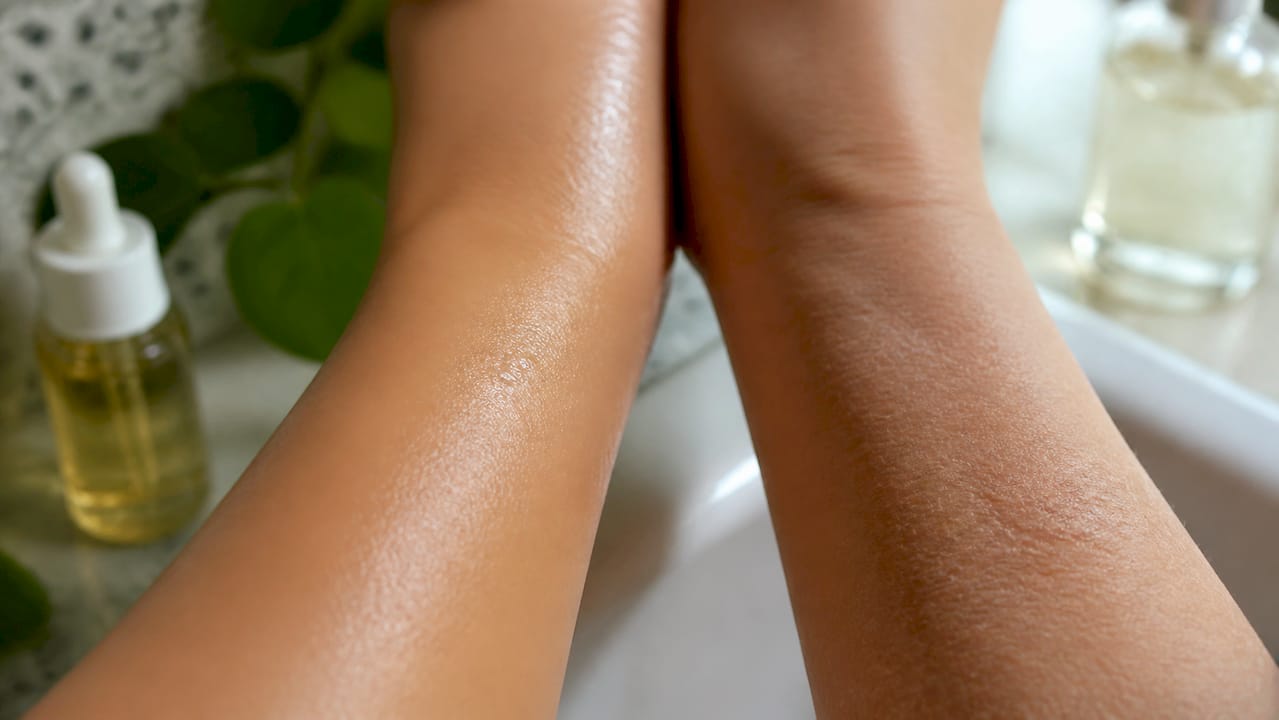
Yes. Sebum acts as a natural fixative that slows evaporation. Dry skin loses fragrance faster, which is why Perfumegini recommends moisturizing before application or choosing higher-concentration formulas like EDP or Parfum.
How do I know if I am allergic to a fragrance ingredient?
Use the repeat open application test: apply a small amount to the same skin spot twice daily for two weeks and watch for redness, itching, or swelling. DermNet NZ recommends a formal dermatology patch test if reactions occur or if you have a history of contact dermatitis.
Where can I find samples and discovery sets before buying a full bottle?
Parfumla carries over 14,000 fragrances with detailed reviews that help you narrow down options before purchasing. Their affordable sampling guide covers decants, discovery sets, and budget strategies for testing multiple scents.