
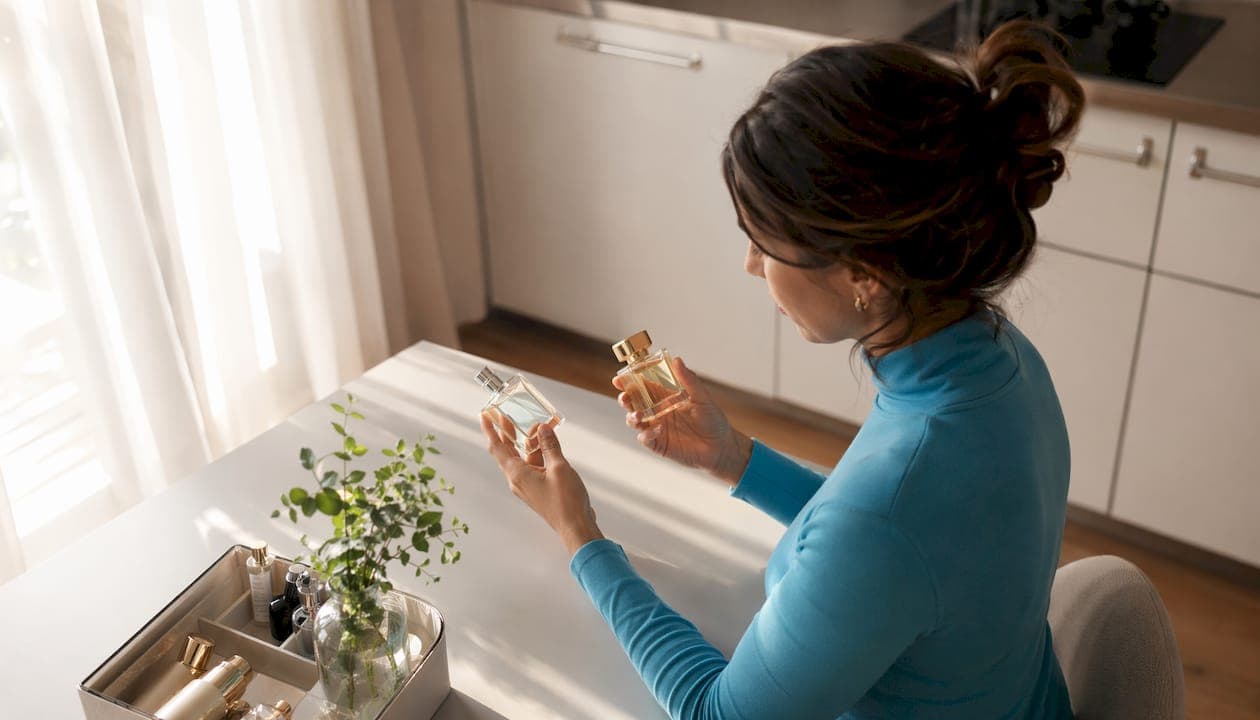
A tester perfume is defined as an authentic fragrance produced by the brand specifically for in-store sampling, filled with the exact same formula as the retail bottle but packaged without the decorative box, cellophane wrap, or branded inserts. The difference tester vs retail perfume comes down almost entirely to presentation, not scent. Testers often carry labels like "not for individual sale" or simply "tester," which signals their original purpose but says nothing about quality. For buyers focused on fragrance rather than packaging, this distinction matters a great deal. Parfumla stocks over 14,000 authentic fragrances, including both tester and retail formats, at up to 60% off retail prices.
What physical and packaging differences distinguish tester perfumes from retail bottles?
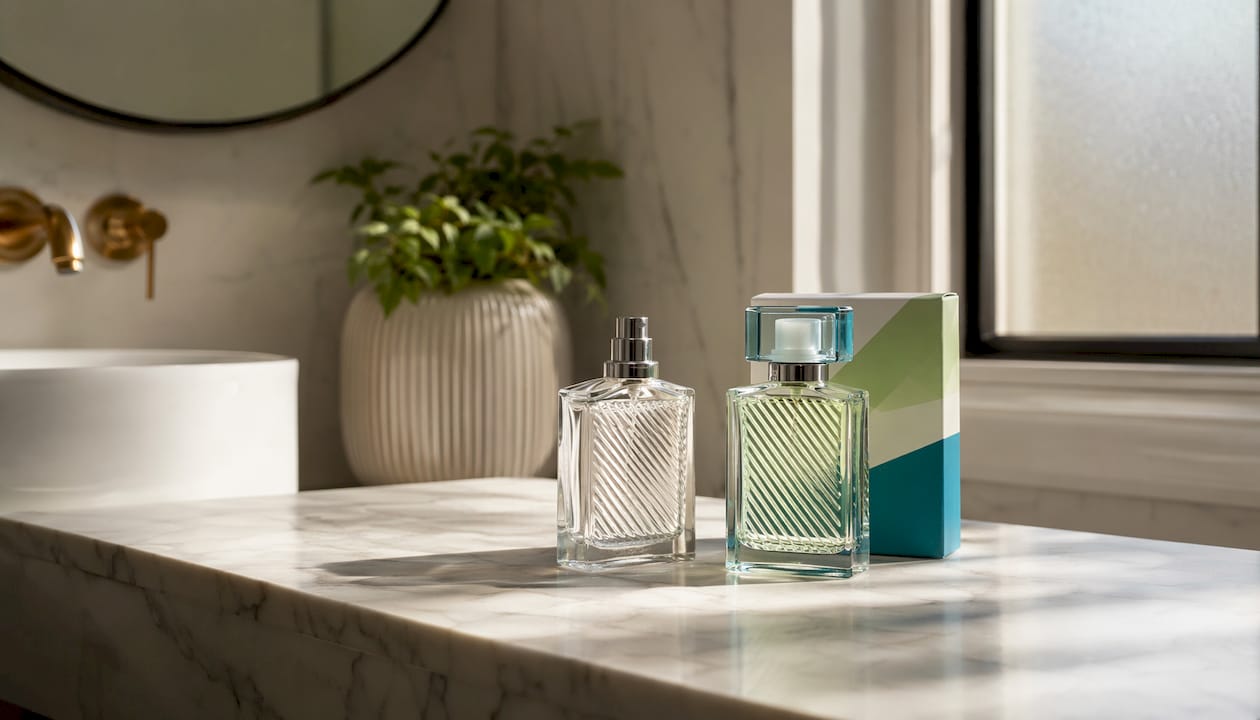
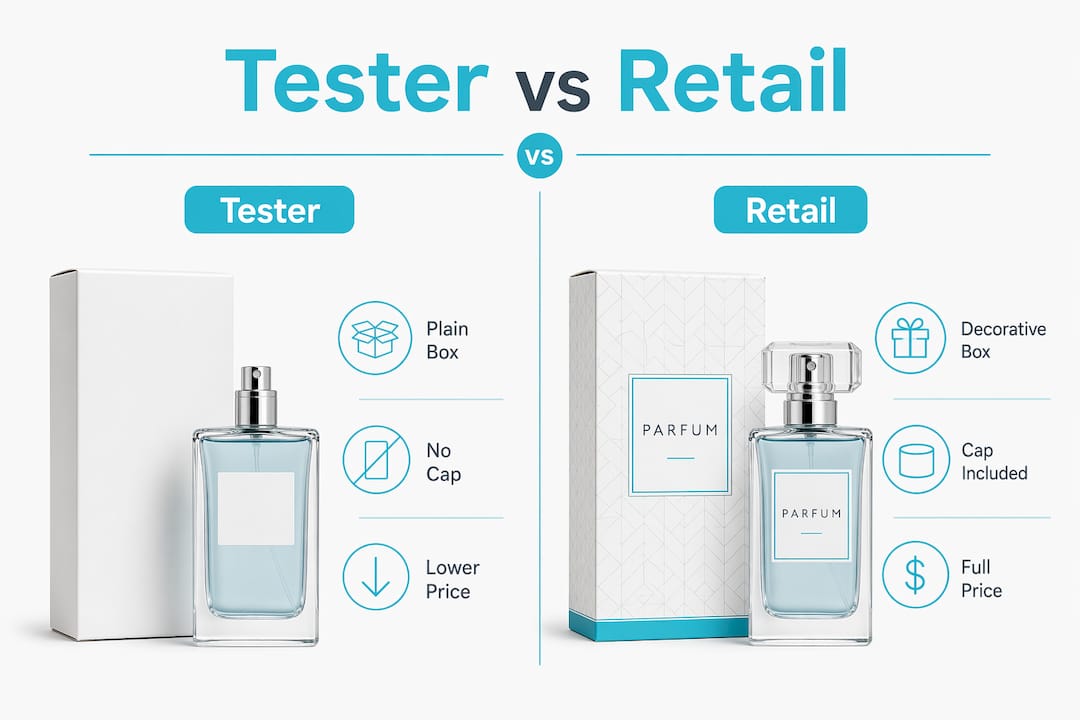
The most visible difference between testers and retail perfumes is the box. Testers arrive in plain white or brown boxes, often stamped with "tester" or "not for individual sale," while retail bottles come in branded, decorative packaging with foil printing, booklets, and sealed cellophane. The retail box is part of the luxury experience brands sell. Strip it away, and the bottle inside is essentially the same product.
Beyond the box, a few other physical details set testers apart:
- No cellophane wrap. Retail bottles are sealed at the factory. Testers are not.
- Simplified or missing caps. Many testers lack decorative caps entirely, since counter bottles are sprayed repeatedly and caps get in the way.
- No insert booklets. Retail packaging often includes brand literature, ingredient cards, or promotional materials. Testers skip all of that.
- Identical bottle glass. The actual perfume bottle is usually the same design as the retail version, sometimes with a "tester" stamp on the base.
The table below summarizes the key physical differences at a glance.
| Feature | Tester | Retail bottle |
|---|---|---|
| Outer box | Plain white or brown | Branded, decorative |
| Cellophane seal | None | Factory sealed |
| Cap | Often absent or basic | Full decorative cap |
| Booklets or inserts | Not included | Typically included |
| Fragrance formula | Identical | Identical |
| Label markings | "Tester" or "Not for sale" | Standard retail label |
These differences do not affect the scent. They affect how the product looks on a shelf or inside a gift bag. For personal use, most buyers never notice what they are missing. For gifting, the absence of a polished box is a real consideration.
Is there any difference in fragrance quality between testers and retail?
Testers and retail bottles contain the same fragrance concentration and formula. Both are filled on the same production lines. The myth that testers are diluted or somehow weaker is false. Any variation a buyer notices between two bottles of the same fragrance comes from normal batch differences, which affect retail bottles just as much as testers.
Testers are authentic products made by the brand. They are not knockoffs, overstock from a different supplier, or reformulated versions. Brands produce them specifically so customers can smell the real fragrance before buying. That purpose requires the liquid to be genuine.
Pro Tip: If you are buying a tester online and want to verify authenticity, check that the seller lists the bottle as brand-produced and look for the "tester" stamp on the bottle base rather than just on a sticker. Legitimate testers are marked by the manufacturer, not added later.
Scent longevity is also consistent between formats. A tester of Narciso Rodriguez Eau de Toilette will perform the same on skin as its retail counterpart. The label markings like "tester" are standard identifiers, not quality warnings. Buyers who have avoided testers out of concern for quality have been leaving real savings on the table.
Why are tester perfumes often priced lower than retail?
The price gap between testers and retail bottles exists because of packaging costs, not fragrance costs. Packaging, branded boxes, and booklets add meaningful expense to every retail unit. Testers skip those elements entirely, which reduces the cost to produce and distribute each unit. That saving passes down the chain to the buyer.
A few specific reasons drive the lower price:
- No packaging design costs. Luxury brands spend heavily on box design, printing, and materials. Testers use plain stock packaging.
- No cellophane or sealing costs. Factory sealing adds a step and a cost. Testers bypass it.
- Surplus stock dynamics. Surplus tester stocks flow to discount retailers, creating buying opportunities at lower prices. Brands and distributors move this inventory through secondary channels rather than letting it sit.
- Lower perceived gift value. Because testers are not gift-ready, demand is lower, which keeps prices down.
- No marketing premium. Retail prices include a share of the brand's advertising spend. Testers, sold outside the main retail channel, often carry less of that markup.
Learning why online perfume prices are lower helps put tester pricing in context. The fragrance inside a tester is not cheaper to make. The savings come entirely from what surrounds it.
When should you buy a tester versus a retail bottle?
The right choice depends on what you plan to do with the fragrance. Testers make the most sense for personal, everyday use. If you wear a scent daily and go through bottles quickly, paying less for the same liquid is a straightforward win. The plain box ends up in recycling anyway.
Retail bottles are the better choice in three specific situations:
- Gifting. A tester marked "not for individual sale" in a plain brown box does not read as a thoughtful gift. For occasions like birthdays, anniversaries, or holidays, the full retail presentation matters. A guide on gifts for fragrance lovers confirms that packaging shapes how a gift is received, even when the scent inside is identical.
- Collecting. Fragrance collectors value the complete package. Testers hold lower resale value because the retail box is central to what collectors and resellers consider a complete item.
- Long-term storage. Retail bottles come sealed and capped, which protects the fragrance from light and air. Testers designed for counter use are often built without caps, which means alcohol can evaporate faster if the bottle is not stored carefully.
Pro Tip: If you buy a tester without a cap, store it in a cool, dark drawer and consider picking up an aftermarket cap that fits the bottle neck. This simple step prevents alcohol loss and keeps the scent stable for months longer.
For buyers who want to sample perfumes affordably before committing to a full retail purchase, testers also serve as a practical middle ground. You get the full bottle at a lower price, and you confirm the scent works for you before buying a gift-ready version.
Key Takeaways
Tester perfumes contain the same fragrance formula as retail bottles. The only real differences are packaging, price, and suitability for gifting or collecting.
| Point | Details |
|---|---|
| Same formula, different box | Testers use identical fragrance liquid filled on the same production lines as retail bottles. |
| Lower price, same scent | Packaging costs drive the price gap; the fragrance quality is not reduced. |
| Not ideal for gifting | Plain packaging and "not for sale" markings make testers a poor choice for gift occasions. |
| Cap storage matters | Testers without caps lose alcohol faster; store in a cool, dark place or add an aftermarket cap. |
| Authenticity is real | Testers are brand-produced products, not counterfeits or inferior versions. |
The honest case for buying testers in 2026
At Parfumla, we have watched buyers hesitate over testers for years, and the hesitation almost always comes from the same misunderstanding: they assume "tester" means "lesser." It does not. The fragrance is the same. The box is not.
Where I think buyers genuinely get tripped up is the cap issue. A tester sitting uncapped on a bathroom counter in a warm room will degrade faster than a sealed retail bottle. That is not a flaw in the tester format. It is a storage problem with a simple fix. Most buyers who complain about tester longevity are storing them incorrectly, not buying inferior products.
The gifting question is real, though. Handing someone a plain brown box with "not for individual sale" stamped on it sends the wrong signal, regardless of what is inside. For personal use, testers are an excellent value. For a birthday or a holiday gift, spend the extra amount on the retail version. The scent is the same, but the moment of receiving a beautifully packaged bottle is part of what you are giving.
One trend worth watching: as more buyers shop online and care less about physical retail theater, the stigma around testers is fading. Buyers who understand the retail vs tester fragrance distinction are increasingly choosing testers for everyday wear and saving retail bottles for occasions that call for presentation. That is a rational approach, and it reflects a more informed fragrance market overall.
— Parfumla
Authentic fragrances at Parfumla: testers and retail, both at real prices
Parfumla carries over 14,000 authentic fragrances, including both tester and retail formats across popular, niche, and celebrity lines.
Whether you want a Narciso Rodriguez Eau de Toilette for daily wear or a fully packaged Christian Dior J'adore for a gift, Parfumla sources every bottle from verified suppliers. Savings reach up to 60% off retail prices, with detailed product reviews to help you choose confidently. Shipping covers both the US and EU, and customer support is available to guide you through any buying decision. Browse the full catalog at Parfumla and find the right format for your needs.
FAQ
Are tester perfumes the same quality as retail?
Yes. Testers are filled with the same fragrance formula and concentration as retail bottles, produced on the same lines by the same brand.
Why do testers say "not for individual sale"?
That label indicates the bottle was originally produced for in-store counter use. It does not affect the fragrance composition or quality in any way.
Can I give a tester perfume as a gift?
Testers are generally not suited for gifting because they come in plain packaging and carry "not for sale" markings, which reduce the perceived value of the gift regardless of the scent inside.
Do testers last as long as retail perfumes?
The fragrance concentration is identical, so longevity on skin is the same. However, testers without caps can lose alcohol through evaporation faster if stored improperly. Proper storage eliminates this risk.
Are tester perfumes authentic or counterfeit?
Testers are authentic, brand-produced products. They are not counterfeits. Brands make them specifically for sampling purposes, which is why they carry official bottle markings rather than aftermarket labels.