
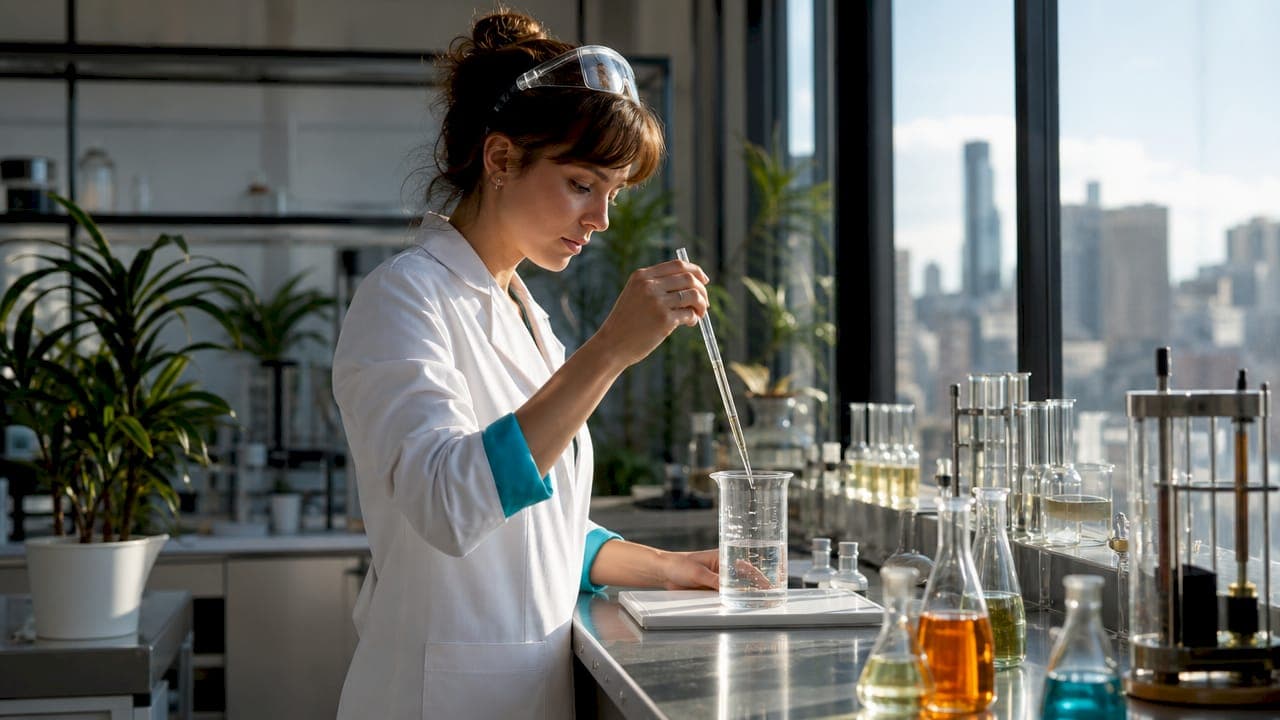
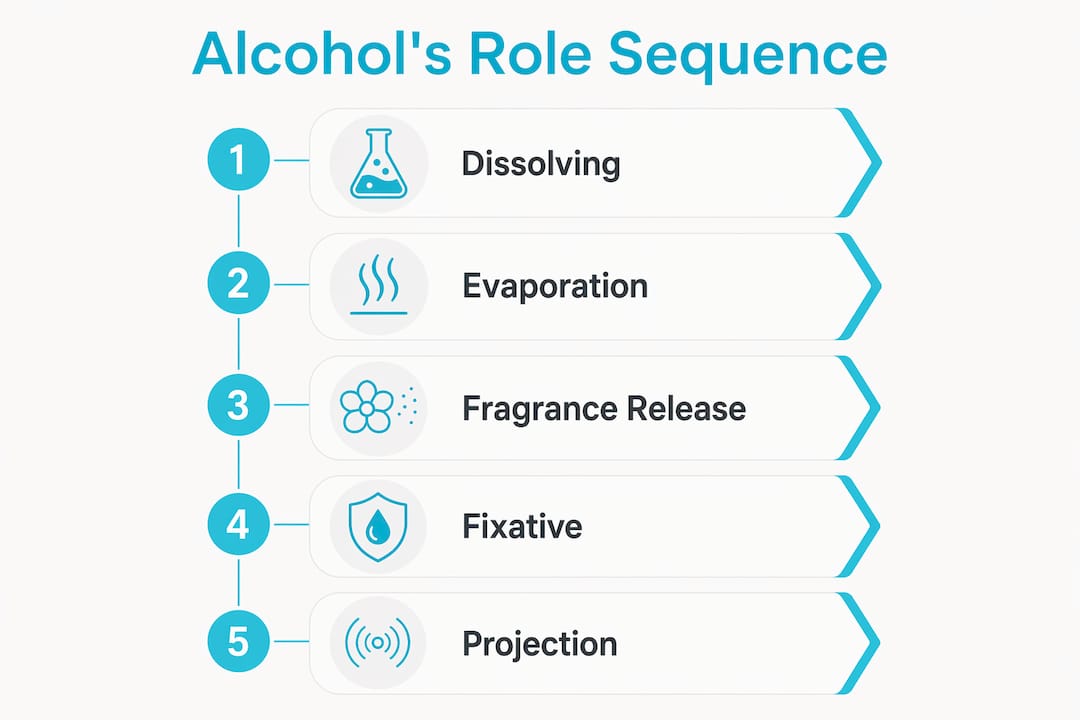
Alcohol is defined as the primary solvent and carrier medium in perfume formulations, responsible for dissolving fragrance oils and enabling controlled scent release. The role of alcohol in perfume goes far beyond simply diluting ingredients. High-purity ethanol at 70–90% concentration forms the backbone of most Eau de Parfum and Parfum products, while benzyl alcohol contributes fixative properties that extend wear time. Understanding these two alcohols, their chemistry, and their interaction with fragrance molecules explains why professional perfumers treat solvent selection as a craft decision, not a commodity choice.
What is the role of alcohol in perfume formulations?
Ethanol is the workhorse of perfume chemistry. Ethanol dissolves both polar and non-polar fragrance compounds, creating a clear, stable liquid from what would otherwise be a cloudy mixture of oils and resins. No other widely available solvent matches ethanol's combination of solubility, safety, and evaporation speed.
The chemical structure of ethanol gives it this versatility. Its hydroxyl group bonds with water-soluble compounds, while its carbon chain interacts with oil-soluble aromatic molecules. The result is a single, uniform solution rather than a separated, unstable mixture. This is why water alone cannot carry a fragrance effectively. Water lacks the chemical affinity for the non-polar oils that give perfume its character.
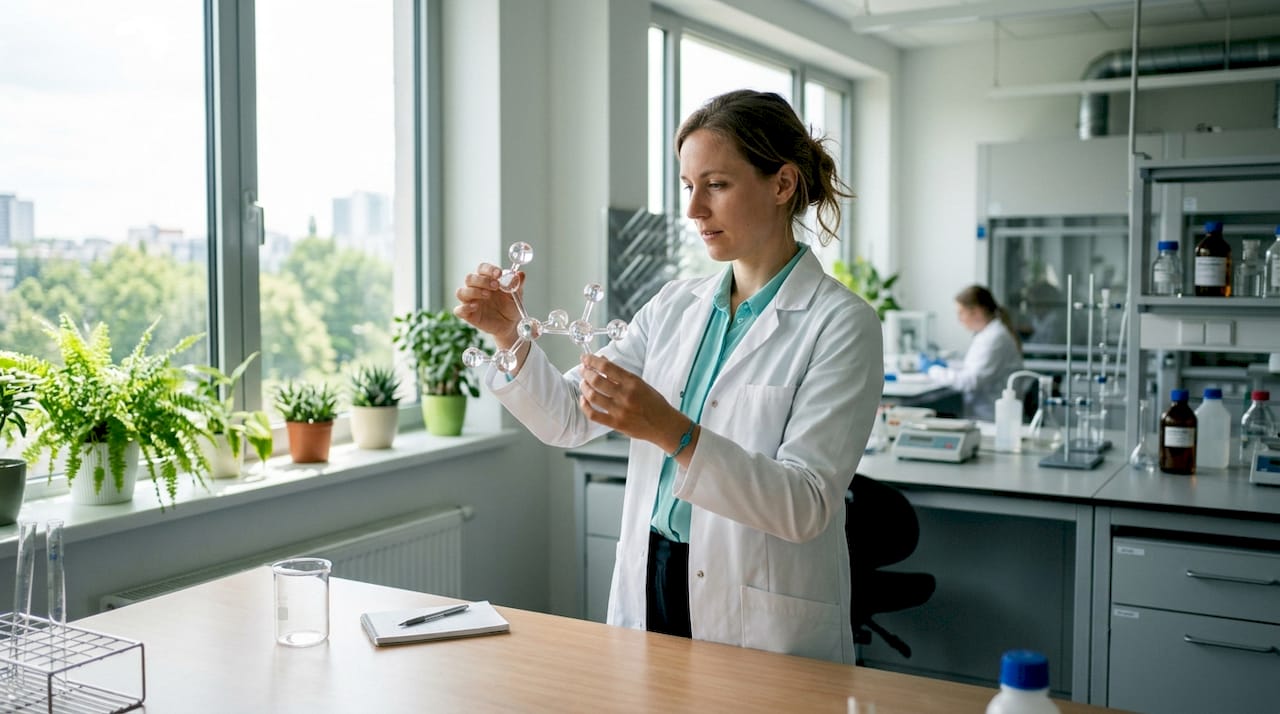
Ethanol also shapes the sensory experience directly. Evaporation carries fragrance molecules into the air, creating the projection and sillage that make a perfume noticeable from a distance. Without rapid evaporation, a fragrance would sit flat on the skin with minimal throw. The function of alcohol in fragrance is therefore both chemical and physical, acting as both solvent and delivery mechanism.
Regulatory bodies like IFRA (International Fragrance Association) and RIFM (Research Institute for Fragrance Materials) set safety standards for ethanol and other solvents used in fine fragrance. These standards govern purity requirements and acceptable denaturant levels, ensuring that the alcohol in scent formulation meets consistent quality benchmarks across the industry.
How does ethanol function chemically in perfume formulations?
Professional perfumers use ethanol at 95–96% ABV, not the diluted spirits found in a liquor store. This purity level matters because water is ethanol's main impurity, and water disrupts the solubility of fragrance oils. Even small amounts of water can cause cloudiness, phase separation, or off-notes in a finished perfume.
The evaporation profile of high-purity ethanol is precisely what makes it ideal for layered scent release:
- Top notes evaporate first, carried by the initial burst of ethanol off the skin.
- Heart notes emerge as the ethanol dissipates and the mid-volatility molecules take over.
- Base notes linger longest because their heavier molecules evaporate slowly after the alcohol is gone.
This sequential release is not accidental. Perfumer's alcohol manages the evaporation profile so that notes unfold naturally rather than hitting the nose all at once. A perfume without this controlled release would smell flat and one-dimensional.
Ethanol used in fine fragrance is also processed to remove any residual grain or fermentation odors. This deodorization step produces a neutral-smelling carrier that does not compete with the fragrance itself. Using 190-proof food-grade ethanol ensures all fragrance components dissolve fully and evaporate cleanly, preserving the intended scent profile from bottle to skin.
Pro Tip: If you apply a fragrance and notice an immediate sharp alcohol smell that fades within 30 seconds, that is the ethanol evaporating and releasing the top notes. A lingering alcohol smell after that window suggests lower-purity ethanol in the formula.
What is benzyl alcohol's role beyond ethanol in perfume?
Benzyl alcohol is a different compound entirely from ethanol, and its function in perfume is more nuanced. Where ethanol evaporates quickly and drives projection, benzyl alcohol slows evaporation of top and heart notes, extending how long a fragrance lasts on skin and fabric. This dual role as both a fragrance ingredient and a functional fixative makes it one of the more interesting molecules in modern perfumery.
The scent contribution of benzyl alcohol is subtle. It adds a mild almond-floral sweetness that blends easily into floral, oriental, and gourmand compositions without dominating. Perfumers typically use it at 1–5% concentration in fine fragrance. At full concentration, benzyl alcohol can extend scent duration noticeably, which is why it appears in many long-lasting formulas.
Benzyl alcohol also functions as a co-solvent. It improves miscibility of heavier aromatic molecules with lighter solvents, stabilizing complex formulas that would otherwise separate or become unstable over time. It is compatible with dipropylene glycol and other common fragrance bases, making it a flexible tool in the perfumer's kit.
The key properties of benzyl alcohol in perfume:
- Fixative effect: Slows the evaporation of volatile top and heart notes.
- Co-solvent: Helps heavier molecules blend with lighter carrier solvents.
- Scent contribution: Adds soft almond-floral nuance at low concentrations.
- Stability: Reduces the risk of phase separation in complex formulas.
Pro Tip: When a perfume maintains its character hours after application rather than fading to a thin base-note whisper, benzyl alcohol is often part of the reason. Look for it listed in ingredient disclosures on fragrance packaging.
How does alcohol concentration impact perfume performance?
Alcohol concentration directly influences projection, drying sensation, and how long a fragrance lasts on skin. Higher alcohol content increases evaporation speed, which boosts initial projection but can reduce wear time. Lower alcohol content softens the opening but may affect clarity and stability if the formula is not adjusted accordingly.
The standard concentration ranges across fragrance categories follow a clear pattern:
| Fragrance Type | Alcohol Concentration | Fragrance Oil Concentration | Typical Wear Time |
|---|---|---|---|
| Parfum | 70–80% | 20–30% | 6–8 hours |
| Eau de Parfum | 75–85% | 15–20% | 4–6 hours |
| Eau de Toilette | 80–90% | 5–15% | 2–4 hours |
| Aftershave / Cologne | 85–95% | 1–5% | 1–2 hours |
Higher alcohol in Eau de Toilette and aftershave products means faster evaporation and a lighter, fresher feel. That is the intended effect for daytime or warm-weather wear. Eau de Parfum formulas use slightly less alcohol relative to fragrance oil, which is why they feel richer and last longer on the skin.
Water content in the alcohol is the hidden variable most buyers never consider. Impurities in the ethanol dilute the fragrance oil concentration and reduce stability. This is why high purity ethanol is critical for clarity, stability, and proper scent evolution. A fragrance made with lower-grade alcohol may smell slightly different from batch to batch, or turn cloudy over time.
Fragrance enthusiasts who prefer longevity over projection should look for Eau de Parfum or Parfum concentrations. Those who want a lighter, more casual scent experience will find Eau de Toilette formulas more suited to their needs. Understanding how alcohol affects perfume at each concentration level makes these choices much easier to navigate. For a deeper look at how formulation choices drive price differences, the breakdown of what makes designer fragrance expensive covers solvent quality alongside other cost factors.
Why is perfumer's alcohol better than vodka for making perfume?
The misconception that vodka works as a perfume base is widespread in DIY fragrance communities. Vodka at 40% ABV contains 60% water, which prevents proper dissolution of fragrance oils and causes cloudiness. The resulting mixture is unstable, smells different from the intended formula, and often separates on the skin.
Professional perfumer's alcohol operates at 95–96% ABV. That difference is not marginal. At 95% ethanol, fragrance oils dissolve completely and the mixture stays clear and stable. The remaining 5% is mostly water, which is low enough not to interfere with solubility. Vodka's 60% water content is simply too high for reliable fragrance chemistry.
Denaturants are added to perfumer's alcohol to make it legally undrinkable and exempt from beverage alcohol taxes. Denaturants like Bitrex are added at olfactorily neutral concentrations, meaning they do not affect the scent of the finished perfume. This is a common concern among DIY perfumers, but at the concentrations used in professional-grade alcohol, the denaturants are undetectable by smell.
Common pitfalls when using low-proof spirits in DIY perfumery include cloudy mixtures that never fully clear, fragrance oils that float on the surface rather than dissolving, and a wet or damp smell that competes with the intended scent. Switching to food-grade 190-proof ethanol or purpose-made perfumer's alcohol eliminates all three problems. For those interested in how ingredient quality connects to overall fragrance value, wholesale premium perfumes sourced from established brands consistently use professional-grade alcohol as a baseline standard.
Pro Tip: If you are experimenting with DIY fragrance blending, source perfumer's alcohol from a cosmetic ingredient supplier rather than a liquor store. The difference in clarity and scent stability is immediately visible.
Key Takeaways
Alcohol is the chemical foundation of every liquid perfume, and its purity, type, and concentration determine how a fragrance performs from the first spray to the final dry-down.
| Point | Details |
|---|---|
| Ethanol is the primary solvent | High-purity ethanol at 95–96% ABV dissolves fragrance oils and drives scent projection. |
| Benzyl alcohol extends longevity | Used at 1–5%, it slows evaporation of volatile notes and adds mild floral sweetness. |
| Concentration shapes performance | Higher alcohol content boosts projection; lower content increases wear time and richness. |
| Purity determines stability | Water impurities in alcohol cause cloudiness, off-notes, and inconsistent scent evolution. |
| Vodka is not a substitute | At 40% ABV, vodka contains too much water to dissolve fragrance oils reliably. |
The chemistry you smell every time you spray
After years of working with fragrances at Parfumla, the detail that surprises most people is how much of what they call "the scent" is actually the alcohol doing its job. The first 30 seconds after you spray a perfume are almost entirely ethanol evaporating and pulling fragrance molecules into the air. What you smell in that opening burst is not the perfume at its truest. It is the delivery mechanism at work.
The part I find most underappreciated is benzyl alcohol's fixative role. Most fragrance buyers focus on top notes because those are what they smell in the store. But the reason a perfume still has character four hours later often comes down to how well the formula uses fixatives like benzyl alcohol to anchor the heart and base. A perfume that smells beautiful for 20 minutes and then vanishes is usually missing this layer of formulation care.
When shopping for a fragrance, I pay attention to how the scent evolves rather than how it opens. A well-formulated perfume built on quality ethanol and proper fixatives will shift through distinct phases. A poorly formulated one will smell sharp at first, then flat. That evolution, or lack of it, tells you more about the alcohol quality than any ingredient list. For a broader view of how ingredient choices connect to overall fragrance value, the luxury perfume cost breakdown at Parfumla is worth reading alongside this.
— Parfumla
Fragrances built on quality formulation, available at Parfumla
Parfumla carries over 14,000 perfumes, including Eau de Parfum and Eau de Toilette options from both established designers and niche houses. Every fragrance in the catalog is sourced from brands that use professional-grade alcohol and meet IFRA formulation standards.
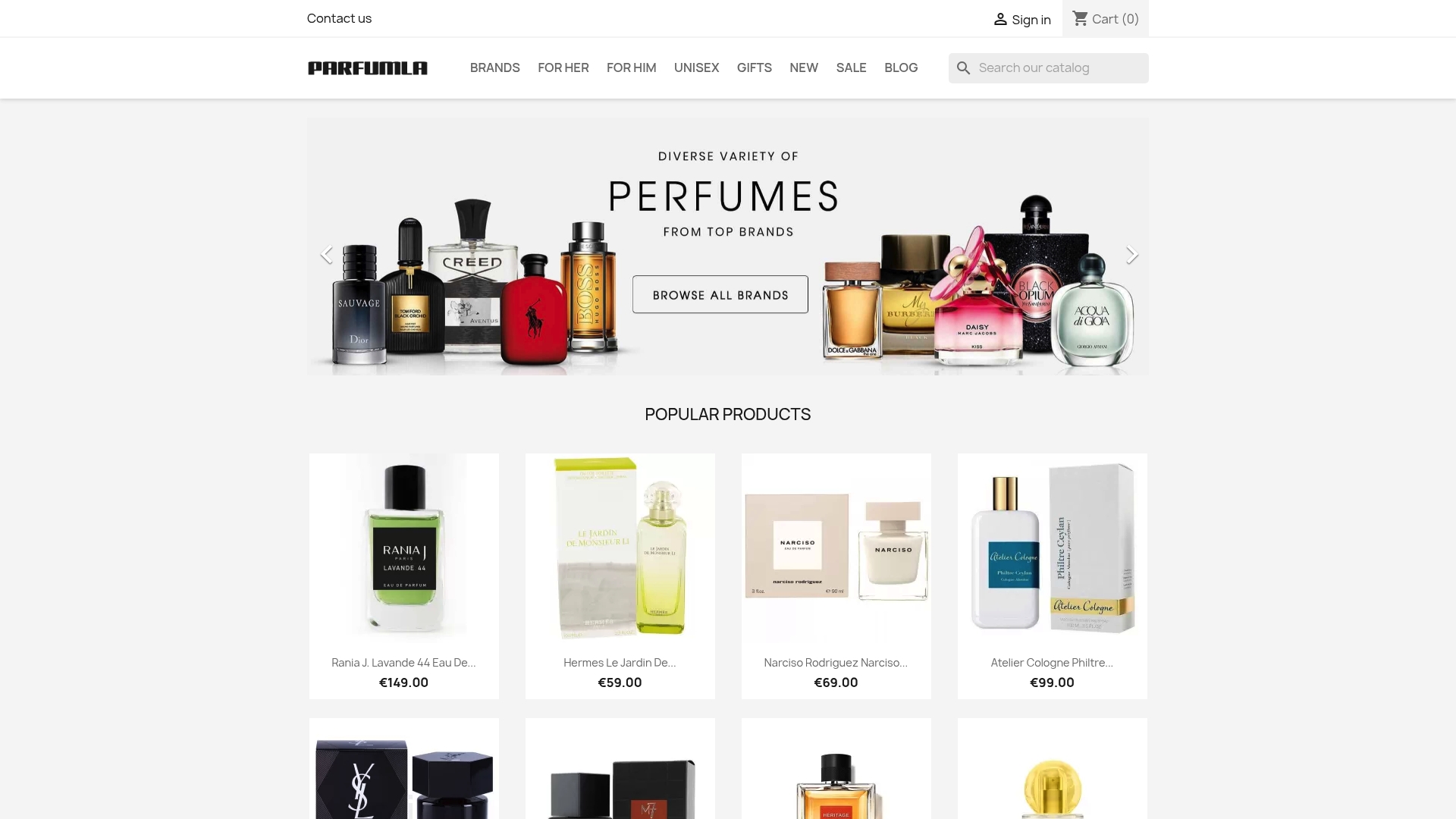
The NARCISO RODRIGUEZ Eau de Toilette for Women is a strong example of a well-balanced alcohol formulation, with clean projection and a dry-down that holds its character for hours. For those who prefer the richer concentration of an Eau de Parfum, the NARCISO RODRIGUEZ Eau de Parfum for Women offers the same signature scent with extended wear. Parfumla offers up to 60% off retail prices with detailed reviews to help you choose with confidence.
FAQ
What does alcohol do in a perfume?
Alcohol dissolves fragrance oils and resins into a clear, stable liquid, then evaporates on the skin to carry scent molecules into the air. This evaporation drives both projection and the sequential release of top, heart, and base notes.
Why do perfumes use ethanol instead of other alcohols?
Ethanol at 95–96% ABV dissolves both polar and non-polar fragrance compounds, evaporates cleanly without leaving residue, and is safe for skin contact at standard perfume concentrations. No other widely available alcohol matches this combination of properties.
What is benzyl alcohol's role in perfume?
Benzyl alcohol acts as a fixative and co-solvent, slowing the evaporation of volatile fragrance notes and improving the miscibility of heavier aromatic molecules. It also contributes a mild almond-floral scent at concentrations of 1–5%.
Does higher alcohol content make a perfume last longer?
Higher alcohol content increases initial projection but typically reduces wear time because the fragrance evaporates faster. Eau de Parfum formulas use slightly less alcohol than Eau de Toilette, which is why they tend to last longer on skin.
Can you use vodka to make perfume at home?
Vodka at 40% ABV contains too much water to dissolve fragrance oils properly, resulting in a cloudy, unstable mixture. Professional perfumer's alcohol at 95–96% ABV is required for a clear, stable, and correctly scented result.