

Natural ingredients in niche perfume are the primary source of scent complexity, authenticity, and the kind of sensory depth that evolves differently on every person who wears it. The term "natural perfumery" refers to the practice of building fragrances from botanically derived materials: essential oils, absolutes, resins, and plant extracts. Niche perfumers treat these materials as the artistic core of their work, not just a marketing angle. Niche fragrances blend natural extracts for texture and character with synthetics for stability, creating a balance that mass-market perfumery rarely achieves. If you want to understand why a niche fragrance feels alive on your skin, the answer starts with what grows in the ground.
What is the role of natural ingredients in niche perfume?
Natural ingredients give niche fragrances their defining character. A rose absolute, an oud resin, or a vetiver extract carries hundreds of aromatic molecules that no single synthetic compound can replicate. A single rose essential oil contains over 300 identifiable aromatic molecules, and regional harvests produce distinct scent profiles depending on soil and climate. That chemical richness is exactly what creates the layered, evolving quality that fragrance enthusiasts seek.
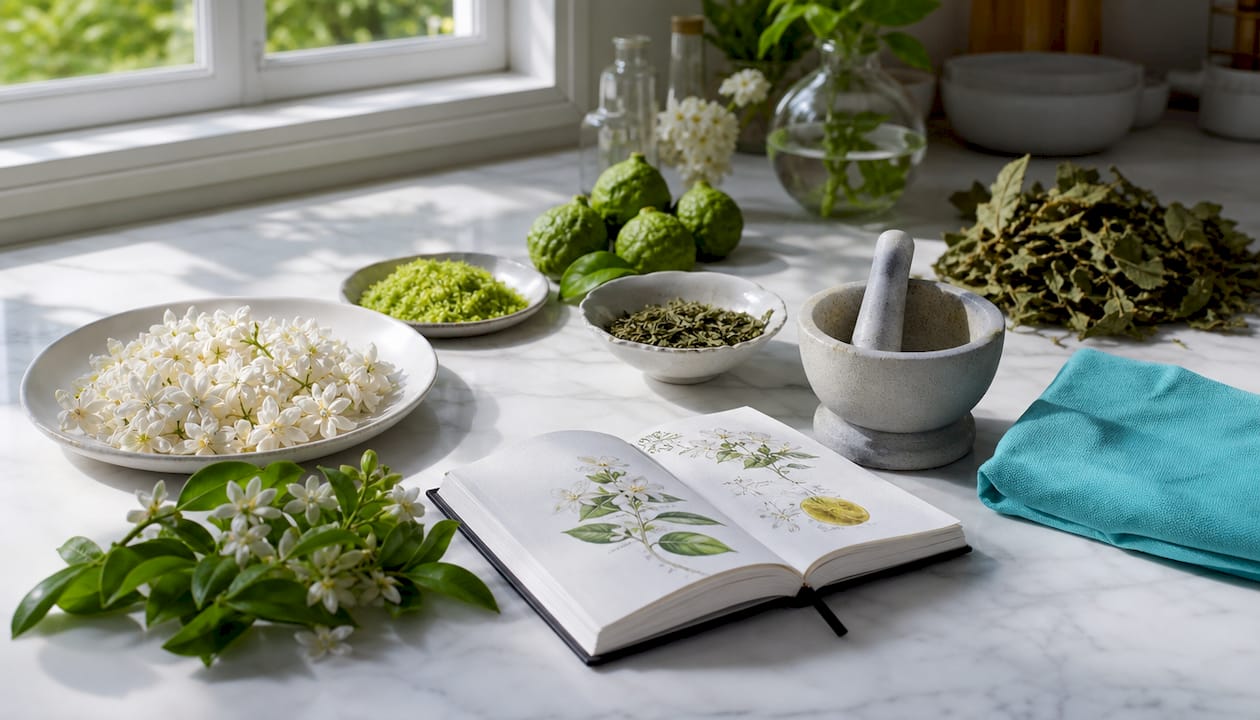
Niche perfumers source their naturals through three main extraction methods: steam distillation, solvent extraction, and CO₂ extraction. Each method yields different aromatic complexities and scent weight. Steam distillation produces lighter, cleaner profiles. Solvent extraction captures delicate floral absolutes that heat would destroy. CO₂ extraction preserves the most complete aromatic picture of the raw material. The method a perfumer chooses shapes the final scent as much as the ingredient itself.
Sourcing natural ingredients also involves real constraints. Seasonality, terroir, and ethical harvesting all affect availability and cost. Sandalwood from Mysore, India, smells different from Australian sandalwood because the soil and climate are different. This is the terroir effect, borrowed from wine, and niche perfumers treat it as a feature. Sustainable sourcing and supply chain traceability have become non-negotiable for brands that want to maintain credibility with informed buyers.
- Essential oils: Distilled from flowers, leaves, bark, and roots. Examples include lavender, rose, and cedarwood.
- Absolutes: Solvent-extracted concentrates, typically from delicate flowers like jasmine or tuberose.
- Resins and balsams: Harvested from tree sap. Frankincense, myrrh, and benzoin are common examples.
- CO₂ extracts: Produced under pressurized carbon dioxide. They capture the fullest aromatic profile of the plant.
Pro Tip: When reading a niche perfume's ingredient list, look for named botanical sources like "Rosa damascena absolute" or "Boswellia sacra resin" rather than generic terms like "floral accord." Specific sourcing language signals genuine natural content.
How do natural ingredients shape the fragrance experience?
Natural ingredients create scent profiles that change over time in ways synthetics alone cannot. Botanical extracts produce layered aroma profiles with authentic shifts across top, heart, and base notes throughout the day. A natural jasmine absolute opens bright and indolic, then softens into a creamy warmth as it dries down. That arc is the result of dozens of volatile compounds evaporating at different rates. No single synthetic molecule delivers that kind of movement.
Variability between batches is another defining quality. Natural ingredient variability arises from terroir influences like soil, climate, and harvest timing, making each batch unique. Niche brands embrace this rather than correct for it. A slightly different harvest of Bulgarian rose may shift the heart note of a fragrance from year to year. That variation is the signature of a living material, and serious fragrance enthusiasts recognize it as a mark of authenticity.
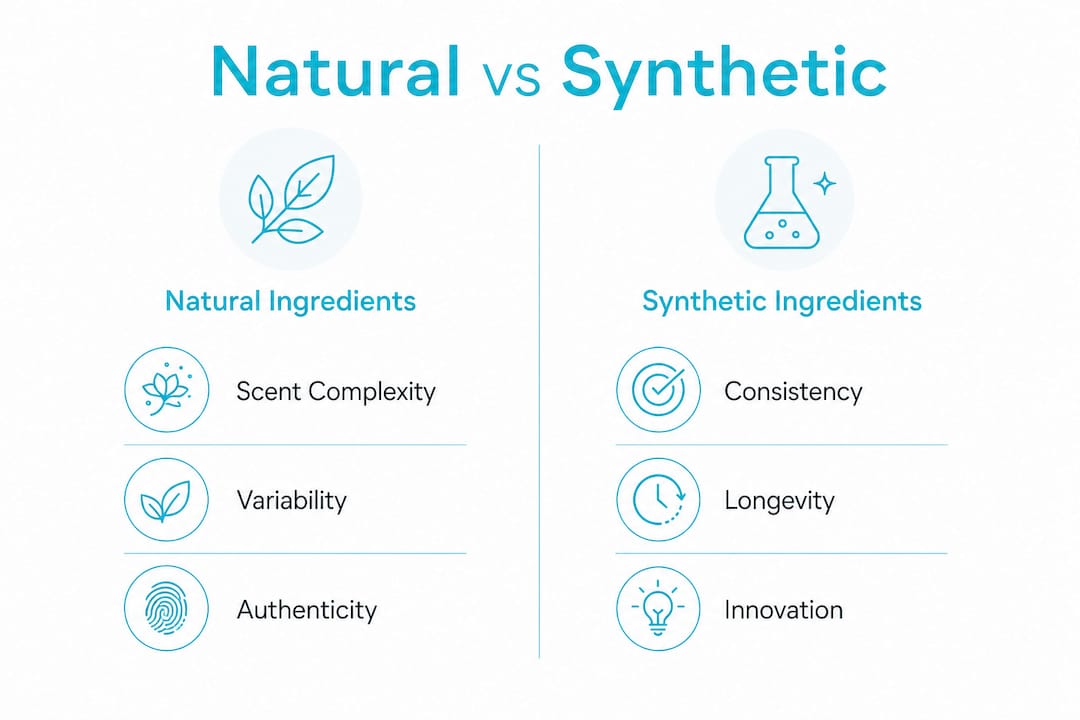
Synthetics serve a different but equally important function. Synthetic molecules like Iso E Super and Ambroxan are engineered for stability across climates and long-lasting wear. They project further, last longer on skin, and behave consistently from bottle to bottle. The best niche fragrances use both: naturals for depth and character, synthetics for structure and longevity.
| Quality | Natural ingredients | Synthetic ingredients |
|---|---|---|
| Scent complexity | Very high, multi-molecular | Lower, single-note precision |
| Batch consistency | Variable by harvest | Highly consistent |
| Longevity on skin | Moderate | High |
| Projection | Softer, skin-close | Stronger, longer-range |
| Sustainability | Dependent on sourcing | Generally more controlled |
| Cost | Higher, supply-limited | Lower, lab-produced |
Pro Tip: Spray a niche fragrance with strong natural content on your wrist, then check it again at the 30-minute, two-hour, and four-hour marks. The scent you smell at each stage will be noticeably different. That evolution is the clearest sign of genuine botanical complexity.
What are the practical challenges of using natural ingredients?
Natural ingredients create real formulation problems that niche perfumers must solve. Batch-to-batch variability means a perfumer cannot guarantee that the 2025 edition of a fragrance smells identical to the 2024 edition. Some brands treat this as a selling point. Others invest in careful blending to minimize the difference. Either way, it requires more skilled labor and more time than working with synthetics alone.
Allergenicity and regulatory compliance add another layer of complexity. Many natural essential oils contain compounds like linalool and limonene that require labeling as allergens under IFRA guidelines and EU cosmetic regulations. A perfumer using a high concentration of natural oakmoss, for example, must either reformulate or add specific allergen disclosures. These regulations exist to protect consumers, but they also limit how much of certain beloved naturals a perfumer can legally use.
The cost structure of niche perfumery is also frequently misunderstood. Up to 80–90% of niche perfume costs derive from marketing, branding, and exclusivity rather than ingredient expense. That does not mean the naturals are cheap. It means the total cost of a niche bottle reflects many factors beyond raw materials. Understanding this helps you evaluate whether a high price reflects genuine ingredient quality or primarily brand positioning. You can read more about what drives luxury pricing in fragrance to sharpen that judgment.
The main commercial challenges of natural ingredient use in niche perfumery break down as follows:
- Supply risk. Crops fail, harvests vary, and geopolitical issues can cut off access to specific botanicals. Oud from Cambodia and rose from Bulgaria are both vulnerable to supply disruption.
- Scalability limits. A small-batch niche brand can source 10 kilograms of a rare absolute. Scaling to 10,000 units may be impossible without substituting ingredients.
- Regulatory burden. IFRA and EU regulations require reformulation or allergen labeling for many naturals, adding cost and complexity.
- Price sensitivity. Consumers who see a $300 bottle expect natural ingredients. Explaining why a reformulation was necessary without losing trust is a genuine brand challenge.
How can you choose niche perfumes with natural ingredients?
Reading a fragrance label critically is the first skill to develop. Ingredient transparency varies widely across the niche sector. Brands that list specific botanical names, extraction methods, and sourcing regions are signaling genuine commitment to natural materials. Generic terms like "fragrance" or "parfum" on a label tell you nothing about what is actually inside. Demand for botanically driven fragrances is projected to grow by more than 7% annually, which means more brands are using natural language in marketing without always backing it up with natural content.
Evaluating scent evolution is the most reliable test. A fragrance built on genuine natural ingredients will change noticeably over four to six hours on skin. If a fragrance smells identical at hour one and hour four, it is likely synthetic-dominant. That is not necessarily bad, but it tells you something about the formulation. Natural-heavy fragrances also tend to perform differently depending on your skin chemistry, body heat, and even diet. This is why sampling before buying is non-negotiable.
- Sample first. Request samples or buy decants before committing to a full bottle. Natural fragrances perform differently on different skin types.
- Test on skin, not paper. Blotter strips do not replicate how your skin chemistry interacts with botanical materials.
- Allow full dry-down. Wait at least two hours before judging a fragrance. The base notes, often the richest natural components, take time to emerge.
- Check for IFRA compliance statements. Brands that publish their IFRA compliance are more likely to be transparent about ingredient sourcing overall.
- Consider natural body oils as a layering base. A natural skin oil applied before fragrance can extend the life of botanical notes on skin and deepen the overall scent experience.
Skin sensitivity matters too. If you react to certain essential oils, check allergen disclosures before purchasing. Linalool, limonene, eugenol, and citronellol are among the most commonly declared allergens in natural fragrances. Knowing your triggers lets you shop confidently rather than reactively.
Key Takeaways
Natural ingredients are the defining source of scent complexity and authenticity in niche perfumery, and the best fragrances combine them with synthetics to deliver both character and longevity.
| Point | Details |
|---|---|
| Natural complexity | A single botanical can contain hundreds of aromatic molecules, creating scent depth no synthetic alone can match. |
| Terroir effect | Soil, climate, and harvest timing make each batch of natural ingredients unique, which niche brands treat as a feature. |
| Synthetic partnership | Synthetics like Iso E Super add stability and projection that naturals alone often lack. |
| Regulatory awareness | IFRA and EU regulations require allergen labeling for many natural compounds, so check disclosures before buying. |
| Smart selection | Sample on skin, allow full dry-down, and prioritize brands that name specific botanical sources on their labels. |
The art is in the tension
At Parfumla, we have spent years curating fragrances across every category, and the most consistent observation is this: the niche fragrances that generate the most passionate responses are almost always the ones where natural ingredients are doing real work. Not as a marketing claim. As an actual sensory experience you can track across hours of wear.
The trend toward "natural" in fragrance has created a lot of noise. Brands use botanical imagery and earthy packaging to suggest natural content that may not exist in meaningful quantities. The enthusiasts who cut through that noise are the ones who know what to smell for. A genuine natural rose absolute has a slightly green, almost waxy quality in the opening that no synthetic rose accord fully replicates. A real vetiver has an earthy, smoky complexity that shifts as it warms on skin. These are not subtle differences once you know them.
The practical reality is that pure natural perfumery has limits. Longevity suffers. Projection is softer. Some of the most beloved aromatic materials are now restricted or endangered. The perfumers who do this best accept those limits and work within them creatively, using synthetics not as a compromise but as a structural tool. The result is a fragrance that feels alive because the naturals are doing the emotional work, and feels wearable because the synthetics are holding everything together.
My honest advice: stop chasing the idea of a "100% natural" perfume as a purity standard. Start chasing complexity, evolution, and the feeling that a fragrance is responding to you rather than just sitting on top of you. That experience is what natural ingredients make possible, and it is worth learning to recognize.
— Parfumla
Niche fragrances worth experiencing at Parfumla
Parfumla carries over 14,000 fragrances, including a strong selection of niche and artisan options where natural ingredients play a central role in the scent profile.
If you want to experience how botanical materials shape a fragrance, the Ex Nihilo Venenum Kiss Eau de Parfum is a strong starting point. For a classic example of natural florals done with precision, Christian Dior J'adore Le Jasmin delivers jasmine absolute in a form that shows exactly how a natural heart note evolves. Parfumla offers up to 60% off retail prices with detailed reviews on every product, so you can research before you buy. Shipping covers both the US and EU.
FAQ
What makes natural ingredients different from synthetic ones in perfume?
Natural ingredients are chemically complex, containing hundreds of aromatic molecules that create evolving, layered scent profiles. Synthetics are engineered for consistency, stability, and longevity, which naturals alone often cannot deliver.
Why do niche perfumes cost more than designer fragrances?
Niche perfume pricing reflects limited production scale, brand positioning, and the higher cost of sourcing quality natural materials. Up to 80–90% of the price can relate to branding and exclusivity rather than raw ingredient expense alone.
How do I know if a niche perfume actually contains natural ingredients?
Look for specific botanical names on the label, such as "Rosa damascena absolute" or "Boswellia sacra resin." Brands that publish IFRA compliance statements and name sourcing regions are the most transparent about genuine natural content.
Are natural perfumes safe for sensitive skin?
Many natural essential oils contain declared allergens like linalool and limonene under IFRA and EU regulations. Always check the allergen disclosure on the product before purchasing if you have known sensitivities.
What is the best way to test a niche fragrance with natural ingredients?
Apply the fragrance to your wrist and evaluate it at 30 minutes, two hours, and four hours. Genuine natural ingredients produce a noticeably different scent at each stage, which is the clearest sign of botanical complexity.