
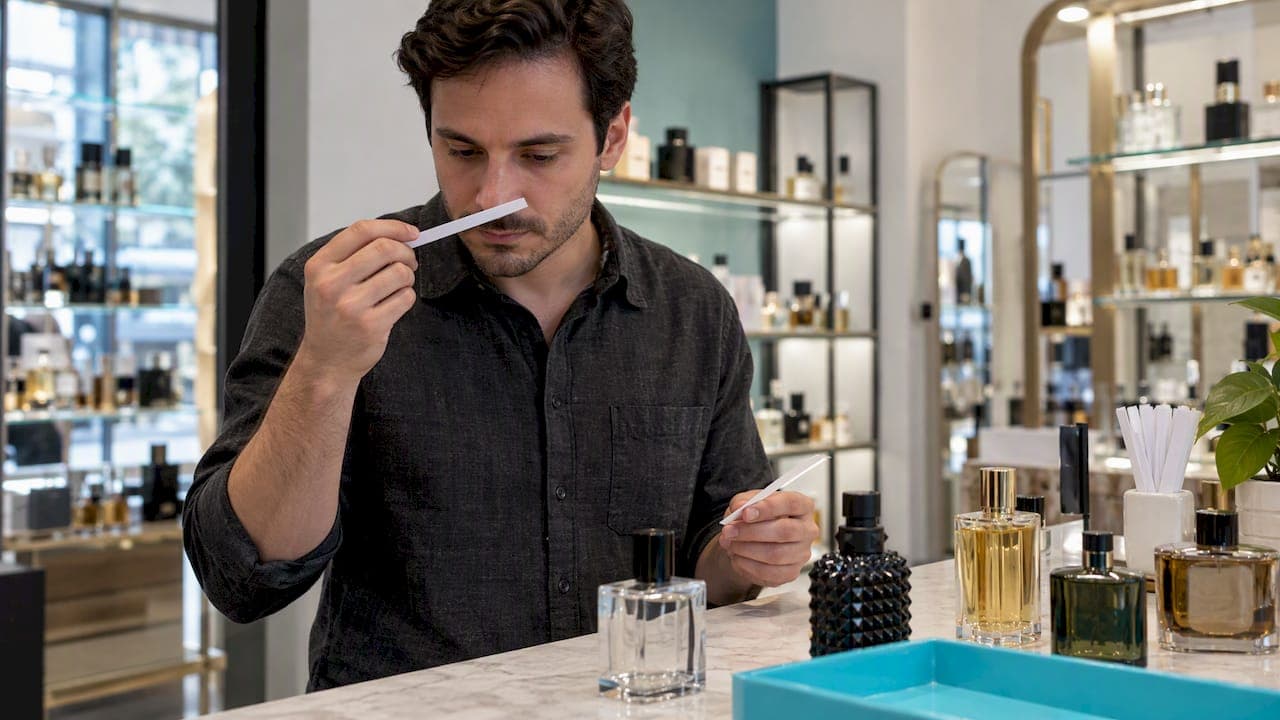
A flanker perfume is a new fragrance released under the name or packaging family of an existing, successful scent, but built from a different formula. It borrows a name element, a bottle shape, or a general character from its parent, without being the same juice in different dress. Think of it as a relative, not a twin.
TL;DR:
- Intense, Elixir, and Noir are marketing labels, not concentration standards, so they do not guarantee stronger scent or longer wear.
- An added word usually marks a separate flanker; the same name with a changed formula signals reformulation, while a reissue revives a discontinued scent.
- Test it on skin, then wait 20 to 30 minutes and compare its opening, heart, and dry down with the original before buying.
- Before paying for a full bottle, check seller reviews and authenticity signals, then compare the candidate side by side with its parent scent.
Table of Contents
- What a flanker is and how it relates to the original fragrance
- Common types of flankers you'll see in stores
- How flankers differ from reformulations and limited editions
- Why brands release flankers in the first place
- How to test, compare, and buy the right flanker
- A few examples that make the categories concrete
- Collectors, casual buyers, and the flanker debate
- Try a flanker before you commit, with Parfumla's samples and decants
- FAQ
- Sources
What a flanker is and how it relates to the original fragrance
A flanker starts as a new composition, created by a perfumer and signed off by a brand, that deliberately references an existing scent's identity. According to the entry on perfume flankers), a flanker shares attributes like name, packaging, or notes with its parent fragrance but remains a distinct, newly developed scent rather than a repackaged original.
What gets shared varies case by case. Sometimes it is just a name suffix and a similar bottle silhouette. Other times the house keeps a signature note, say a rose heart or a vanilla base, and changes everything around it: the opening, the dry down, the overall mood. A flanker can smell like a close cousin of the original or barely related beyond the label.
The term itself comes from a marketing idea: a flanker "flanks" the flagship scent on shelves, supporting it rather than replacing it. That origin explains why flankers tend to cluster around a brand's best sellers. A house rarely flanks a slow mover. It flanks the fragrance that already sells.

Common types of flankers you'll see in stores
Flankers tend to fall into a handful of recognizable patterns, according to WhatScent's breakdown of flanker types, which identifies six common categories built around concentration, intensity, and audience.
- Concentration variants step up from Eau de Toilette to Eau de Parfum or Extrait, often with richer base notes.
- Intensified or "Intense" versions push the original's character into darker, heavier territory.
- Lighter or summer editions strip out heavy notes for something fresher and easier to wear in heat.
- Reinterpretations keep the name but rework the structure almost entirely.
- Gender counterparts adapt a scent originally marketed to one gender for another.
- Limited or seasonal editions add a temporary twist, often tied to a holiday or collaboration.
Labels like "Intense," "Elixir," or "Noir" are marketing names, not technical standards. Bois de Jasmin notes that these words carry no guaranteed concentration or wear time; a bottle marked "Intense" might simply mean a different note balance, not stronger performance.
Pro Tip: Treat a flanker's name as a hint about direction, not a promise about strength.
How flankers differ from reformulations and limited editions
Confusing a flanker with a reformulation or a reissue is an easy mistake, and it can lead to buying the wrong bottle entirely.
- A reformulation keeps the exact same name but changes the formula inside, usually due to ingredient restrictions or cost.
- A flanker gets a new name or added word and is sold as a separate product alongside the original.
- A reissue brings back a discontinued scent, sometimes with minor formula tweaks, under its original name.
- A limited edition is often the original formula in new packaging, or occasionally a flanker with a short shelf life.
To tell them apart on a shelf, read the full name printed on the box, not just the brand and collection. Check batch codes against the house's own announcements when something seems off, and look for words like "edition," "limited," or a release year printed near the barcode. If you specifically want the original formula and not a flanker, sample before you commit and compare the full name against what the brand lists as its current, non-flanker release.
Why brands release flankers in the first place
Flankers exist because a hit fragrance is a proven asset, and houses want more ways to sell against it. A flanker can reach a different price point, fit a season the original misses, such as a lighter summer version of a heavy winter scent, or simply bring attention back to a line that has been on shelves for years.
For buyers, this cuts both ways. More flankers mean more choice and a better shot at finding a version that fits your taste or climate. It also means more confusion, since a crowded line makes it harder to know which bottle is "the" fragrance people are talking about. Commentary from The Perfumed Perspective points out that excessive flanking can dilute a line's identity, even as it opens the door to new buyers. Some flankers go on to outsell their parent scent entirely, which is often the whole point.
How to test, compare, and buy the right flanker
Buying a flanker without testing it first is how people end up with a bottle that smells nothing like what they expected.
- Read the full name on the box, including every added word like "Intense" or "Noir," before assuming it matches a scent you already know.
- Smell the opening, heart, and dry down separately, since flankers often diverge most in the first ten minutes.
- Apply it to skin, not just paper, and give it 20 to 30 minutes before judging the final character.
- Compare side by side with the original or with another flanker if you are deciding between versions.
- Check seller reviews and authenticity signals before paying for a full bottle.
Our guide on how to sample perfumes affordably and our step-by-step testing walkthrough both cover this in more depth.
| Step | What to check | Why it matters |
|---|---|---|
| Label | Full name, added words | Confirms which version you're buying |
| Skin test | Opening, heart, dry down | Reveals how far it drifts from the original |
| Seller check | Reviews, authenticity claims | Confirms you're getting the real formula |
A few examples that make the categories concrete
Costume National's Scent Intense is a straightforward example of a concentration flanker, deepening the original Scent with a heavier base. Christian Dior's J'adore Le Jasmin, a lighter summer take on the J'adore line, shows how a flanker can shed weight rather than add it. Carolina Herrera's Good Girl Glitter Collector Edition sits in limited edition territory, built on the original structure with a seasonal twist. How close each one lands to its parent scent depends entirely on the house and the brief given to the perfumer, which is why sampling beats assuming.

Collectors, casual buyers, and the flanker debate
Collectors often side-eye flankers, worried that a crowded line erodes what made the original distinctive in the first place. Casual buyers tend to see the opposite: more variety, more seasonal options, more chances to find a scent that fits a specific day. Neither view is wrong. The practical move for anyone new to this is to stop assuming a flanker smells like its parent and just sample it. A small decant settles the question faster than any description can.
— Parfumla
Try a flanker before you commit, with Parfumla's samples and decants
We make testing flankers simple instead of guesswork dressed up as a purchase. Our catalog covers many fragrances, including flankers and originals readers are trying to tell apart, each with detailed customer reviews to help you compare before you buy.
- Try a flanker first through our Decants & Samples selection instead of committing to a full bottle blind.
- Move up to a full size once you know the version fits, with savings off retail across our catalog.
- Browse women's, men's, and unisex lines in one place when you're ready to buy the original or its flanker.
Buy Parfumla perfume online, or search for the best price for a Parfumla fragrance when you're ready, and start with a sample from our decants and samples page to confirm it's the right call.
FAQ
What does "flanker" mean in perfume terms?
A flanker is a new fragrance released under an existing scent's name or packaging line, built from a different formula than the original, as described in the Wikipedia entry on perfume flankers. It shares a name element or bottle style with its parent but smells distinct.
What perfume has the most flankers?
Specific counts vary by source and change as brands release new editions, so there is no single confirmed leader. Fragrance community sites like Fragrantica track release histories for heavily flanked lines if you want to explore specific examples.
How can I smell rich on a budget?
Sampling decants of richer, more concentrated versions, like Intense or Extrait flankers, lets you test a luxurious character before buying a full bottle. Our budget-friendly perfume shopping guide covers specific tactics for stretching a fragrance budget further.
How do I know if I'm buying the original or a flanker?
Check the full name printed on the box for added words like "Intense," "Noir," or "Elixir," since these usually signal a flanker rather than the base formula. Our online perfume shopping checklist walks through verifying the exact version and seller authenticity before you pay.
Should I apply perfume near leather goods or watch straps?
Perfume contact can affect leather finishes over time, so it's worth letting a fragrance dry before it touches a leather strap or accessory. ChronoCare's guidance on perfume and watch straps recommends waiting several minutes after application before putting on a leather-strapped watch.