
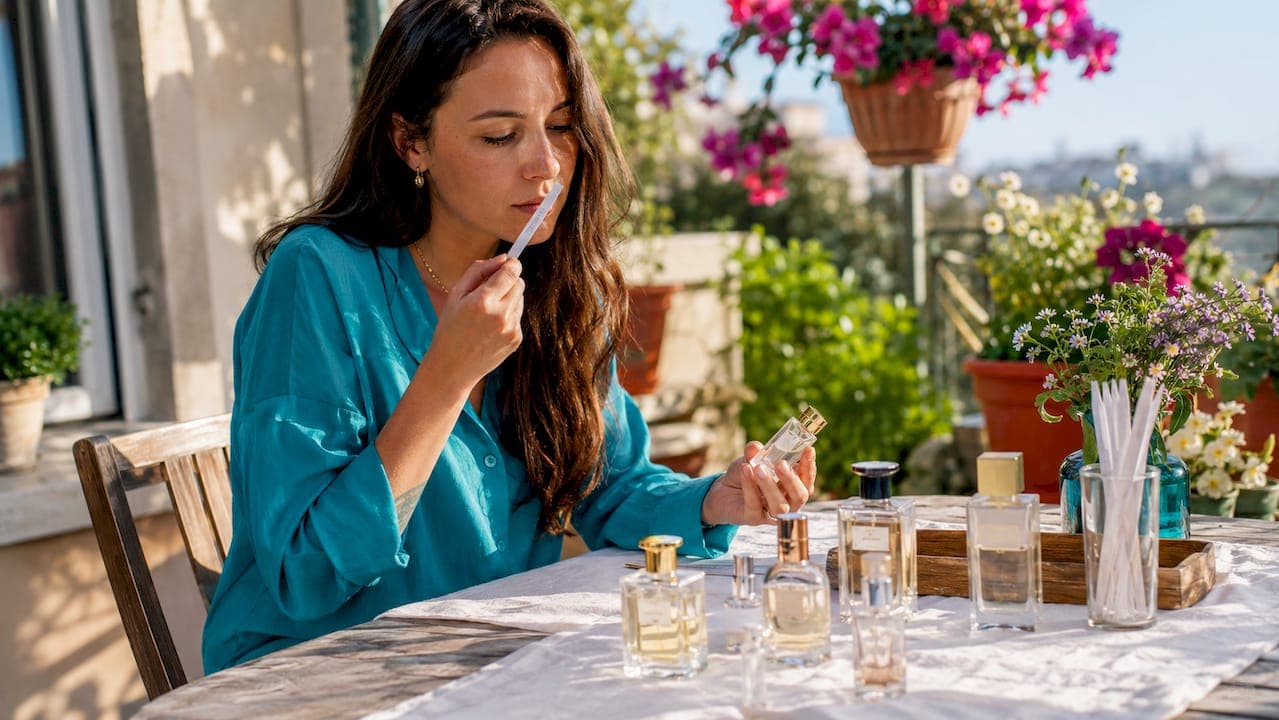
A signature scent is the personal fragrance you wear consistently enough that it becomes part of how others recognize and remember you. It goes beyond smelling good. It functions as an olfactory identity, a form of personal branding as deliberate as your wardrobe or your handwriting. Perfumers like Frank Voelkl of Firmenich describe it as a lasting emotional bond that extends beyond trends or popularity. Understanding what is a signature scent means understanding how fragrance intersects with memory, chemistry, and self-expression. This article breaks all of that down, practically and clearly.
What is a signature scent, really?
Defining a signature scent starts with one distinction: it is not simply your favorite perfume. It is the fragrance you reach for so consistently that it becomes inseparable from your presence. Think of Coco Chanel and No. 5, or the way certain people walk into a room and their scent arrives a half-second before they do. That is a signature scent at work.
The industry term for this concept is personal fragrance identity. It describes the deliberate or intuitive choice to anchor your daily life to one scent or a tightly related family of scents. Narciso Rodriguez For Her, with its musky skin-like warmth, has become a signature for thousands of women precisely because it disappears into the skin rather than announcing itself. That subtlety is often what makes a fragrance feel like "you" rather than something you are wearing.

A signature scent also carries social weight. People around you begin to associate that smell with your presence, your reliability, your personality. Scent is the only sense processed directly by the brain's limbic system, the region governing emotion and memory. That neurological shortcut is why a single whiff of a familiar perfume can trigger a vivid memory years later.
How do perfume notes create a signature experience?
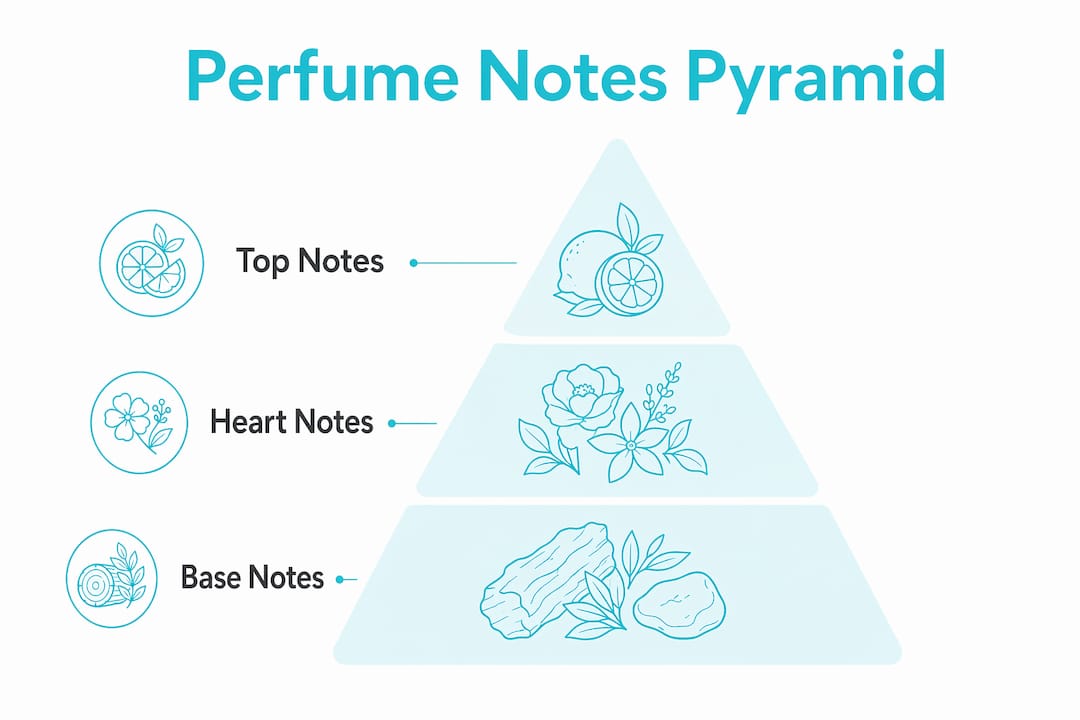
Every fragrance is built on a three-layer structure called the olfactory pyramid. Understanding this structure is the fastest way to understand why some perfumes feel like "you" and others do not.
- Top notes are what you smell in the first 5–15 minutes. They are bright, volatile, and often citrus or herbal. Examples include bergamot, lemon, and pink pepper. They create the first impression but fade quickly.
- Heart notes form the core of the fragrance and last 20–60 minutes after application. Rose, jasmine, and geranium are classic heart notes. They define the character of the scent.
- Base notes are the foundation. They emerge after the top notes fade and can linger for hours. Sandalwood, vetiver, musk, and amber are common base notes. They are what people smell on your skin at the end of the day.
Professional perfumers follow the 30-50-20 formulation rule: 30% top notes, 50% heart notes, and 20% base notes. This ratio creates balance so no single layer overwhelms the others.
Pro Tip: When testing a new fragrance, wait at least 30 minutes before deciding. The drydown, the phase when top notes fade and base notes emerge, is where the real character of a scent lives.
The way a fragrance evolves on your skin is also shaped by your personal chemistry. Natural botanical fragrances interact with individual skin chemistry, creating a living, personalized scent experience. Two people wearing the same perfume can smell noticeably different by the end of the day. That is not a flaw. It is what makes a fragrance truly yours.
| Scent Layer | Timing on Skin | Common Examples |
|---|---|---|
| Top notes | First 5–15 minutes | Bergamot, lemon, pink pepper |
| Heart notes | 20–60 minutes | Rose, jasmine, geranium |
| Base notes | 1–6 hours | Sandalwood, vetiver, amber |
The olfactory pyramid works like a musical composition, telling a scent story that evolves over time rather than delivering a single static smell. A fragrance that smells flat from start to finish rarely becomes anyone's signature.
Why does scent shape identity so powerfully?
Scent reaches the brain differently than any other sense. Dr. Thomas Schultz explains that scent processes in brain regions tied to memory and emotion, making fragrance an unusually intimate personal branding tool. Sight and sound travel through the thalamus first. Smell does not. It goes directly to the amygdala and hippocampus. That is why scent triggers emotion and memory faster and more viscerally than a photograph or a song.
This neurological reality is what makes a signature scent so powerful as a form of self-expression. When you wear the same fragrance consistently, you train the people around you to associate that smell with you. It becomes part of how they experience your presence, even when you are not in the room.
"A signature scent is an extension of self-identity, forming a lasting emotional bond that goes beyond trends or popularity." — Frank Voelkl, Principal Perfumer at Firmenich
The cultural appetite for personal fragrance identity is real and growing. As of april 2025, the #signaturescent hashtag had over 39,200 posts on TikTok. That number reflects a generation actively seeking to define themselves through scent, not just wear it. Scent is now openly discussed as part of personal style in the same way clothing or skincare is. You can explore how this connects to broader style choices in this piece on scent and personal style.
Gifting a signature scent carries its own meaning. When you give someone a fragrance you associate with them, or one you believe captures their personality, it signals deep attention and intimacy. It says you have paid close enough attention to know how they want to be perceived.
How to choose a signature scent that fits your life
Finding your personal fragrance is not about picking the most expensive bottle or the most popular option. It is about matching a scent to your actual life. Choosing a signature scent requires considering lifestyle, climate, occasions, and personal preferences, not just scent notes alone.
Here is a practical process that works:
- Identify your scent family. Do you gravitate toward fresh and citrus, warm and woody, floral, or oriental? Spend time in a fragrance store and notice which category makes you linger.
- Test on skin, not paper. Blotter strips show you the top notes. Your skin shows you the full story. Apply to your wrist and wait 30 minutes before deciding.
- Consider your context. A heavy oud or tobacco fragrance may feel perfect in winter but suffocating in July. Think about where and when you will wear it most.
- Try before you commit. Sampling is the most underrated step in fragrance selection. Parfumla's guide on sampling perfumes affordably is a practical resource for testing options without spending full bottle prices.
- Wear it for a full day. A fragrance that still feels right after eight hours is a strong candidate for your signature.
Pro Tip: Avoid testing more than three fragrances in one session. Olfactory fatigue sets in quickly, and your nose stops distinguishing between scents accurately after the third or fourth sample.
The modern approach to personal fragrance identity does not require locking yourself into a single scent forever. David Benedek notes that a fragrance wardrobe of two or three scents sharing similar DNA offers a flexible way to express identity across seasons and moods. You might wear a lighter, citrus-forward version in summer and shift to a deeper, woodier version in winter, while both still feel unmistakably like you.
How do you maintain and evolve your signature scent?
A signature scent is not a permanent tattoo. Life changes, and your fragrance preferences often change with it. The key is staying intentional rather than just defaulting to whatever you have always worn.
- Reassess seasonally. Heat amplifies fragrance projection. A scent that feels balanced in fall can become overwhelming in August. Keep a lighter option available for warm months.
- Store your fragrances correctly. Heat, light, and humidity degrade perfume molecules. Store bottles away from windows and bathrooms. A cool, dark drawer or closet shelf extends the life of a fragrance significantly.
- Use repetition deliberately. Scent repetition solidifies the association between a fragrance and your identity. Wearing the same scent consistently is what transforms a perfume you like into a signature others recognize.
- Allow for evolution. A fragrance that felt perfect at 25 may not reflect who you are at 40. Revisiting your scent choices every few years is not inconsistency. It is growth.
- Layer thoughtfully. Wearing a scented body lotion in the same fragrance family as your perfume extends longevity and depth without adding a competing smell.
If you are curious how public figures use fragrance as identity, the celebrity signature scent examples on the Parfumla blog show how deliberate scent choices function as part of a public persona.
Key takeaways
A signature scent works because it combines personal chemistry, consistent wear, and emotional resonance to create a fragrance identity that others recognize as distinctly yours.
| Point | Details |
|---|---|
| Definition matters | A signature scent is a personal fragrance identity, not just a favorite perfume. |
| Composition drives fit | The 30-50-20 note balance shapes how a scent evolves and whether it suits you. |
| Scent reaches emotion directly | Fragrance bypasses the thalamus and hits memory and emotion centers first. |
| Lifestyle shapes selection | Climate, occasion, and skin chemistry all determine which scent becomes truly yours. |
| Repetition cements identity | Wearing the same fragrance consistently is what makes it a signature others recognize. |
The part nobody tells you about finding your scent
Most fragrance advice tells you to "trust your nose." That is true but incomplete. What I have found, after years of paying close attention to how people relate to fragrance, is that the scents people dismiss on first spray are often the ones that become their most enduring signatures. The first impression of a perfume is almost entirely top notes, and top notes are the least representative part of the fragrance. They are the opening act, not the headliner.
The other thing worth saying plainly: do not let anyone else choose your signature scent for you. Not a salesperson, not a partner, not a trending TikTok recommendation. A fragrance that earns the word "signature" has to feel like a second skin, not a costume. That feeling is deeply personal and often takes time to find. Be patient with the process. The right scent does not always announce itself immediately. Sometimes it just quietly becomes the one you keep reaching for, and one day you realize you have been wearing it for three years without thinking about it. That is when you know.
— Hamster777
Find your signature scent at Parfumla
Parfumla carries over 14,000 fragrances, including popular, niche, and celebrity scents, at up to 60% off retail prices. Whether you are drawn to the skin-close warmth of Narciso Rodriguez Eau de Parfum, the luminous floral depth of Christian Dior J'adore Le Jasmin, or something entirely unexpected from the Ex Nihilo or Escentric Molecules range, Parfumla makes it easy to explore without overspending. Detailed reviews on every product help you understand a fragrance before you commit. Shipping covers both the US and EU, so your next signature scent is never far away.
FAQ
What makes a fragrance a "signature" scent?
A fragrance becomes a signature scent when you wear it consistently enough that others associate it with your presence. Frank Voelkl of Firmenich defines it as a lasting emotional bond that goes beyond trends.
How many perfumes should i test before choosing one?
Test no more than three fragrances per session to avoid olfactory fatigue. Apply each to skin and wait at least 30 minutes to evaluate the full drydown before deciding.
What does gifting a signature scent mean?
Gifting a signature scent signals deep personal attention. It communicates that you know the recipient well enough to understand how they want to be perceived, making it one of the most intimate gift choices.
Can i have more than one signature scent?
Yes. The modern fragrance wardrobe approach, noted by expert David Benedek, uses two or three scents with similar DNA to cover different seasons and moods while maintaining a consistent personal identity.
How do i make my signature scent last longer?
Apply fragrance to pulse points right after showering, store bottles away from heat and light, and layer with a matching scented lotion. Consistent daily wear also deepens the scent's association with your skin over time.