

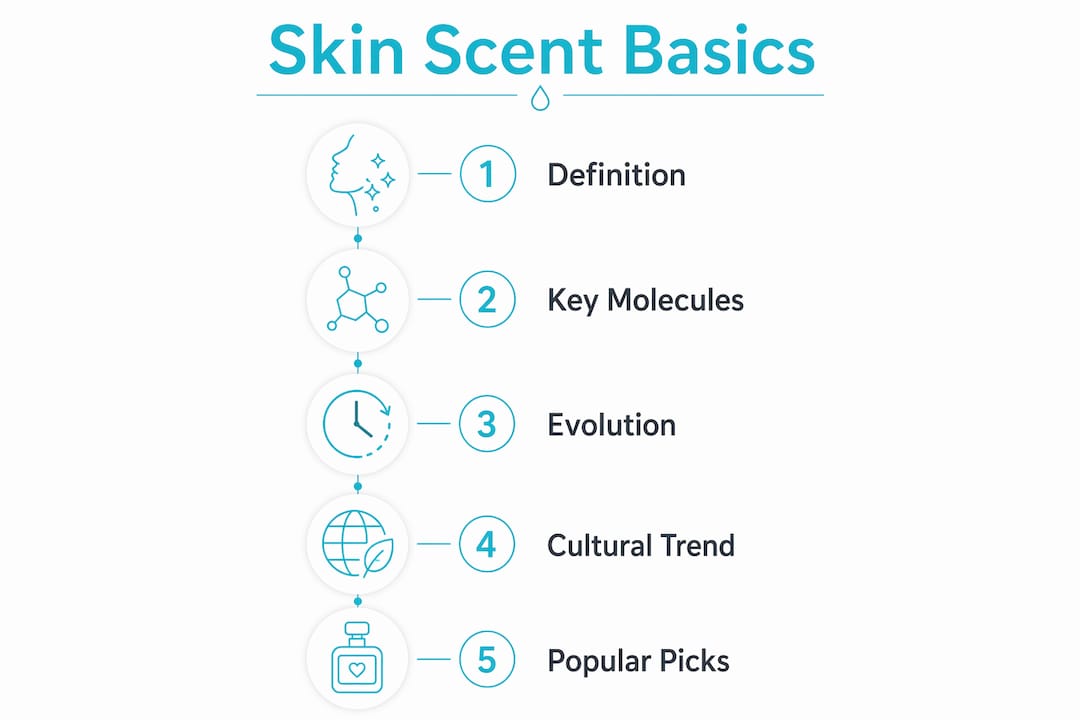
A skin scent is a fragrance designed to smell like an extension of your own body, not a separate thing you sprayed on. It sits close to the skin, projects minimally, and creates what perfumers often call a "you but better" effect. You won't fill a room with it. Someone has to lean in to catch it, and when they do, it feels like it's coming from you rather than a bottle.
The category has a specific ingredient signature. Most skin scents rely on synthetic molecules chosen to mimic natural body warmth: clean musks, Iso E Super, Ambroxan, Cashmeran, Hedione, Cetalox, and ambrette seeds. These materials don't announce themselves. They fuse with your chemistry and amplify what's already there rather than layering something foreign on top.
At a glance, skin scents share these defining traits:
- Low sillage: detectable only up close, not across a room
- Intimate projection: rewards closeness rather than broadcasting presence
- Body-chemistry dependent: the same formula smells different on every person
- Gender-neutral by nature: warm, clean, and wearable in almost any setting
- Built on musks, ambers, and soft woods rather than bold florals or sharp citrus
Why skin scents have become so popular
Skin scents became popular in the mid-2020s as minimalism and authenticity took over beauty culture, and they haven't slowed down. They're gender-neutral, office-appropriate, and easy to wear without worrying about overwhelming a colleague or a crowded elevator. That versatility alone explains a lot of their appeal.

Fragrance experts consistently describe this category as "introverted," focused on comfort rather than announcement. The scent doesn't arrive in a room before you do. For someone to notice it, they need to be close, which gives it an almost magnetic quality. Chriselle Lim, creative director of Phlur, put it plainly: "When you detect a skin scent on someone, it's usually unexpected."
The post-pandemic desire for closeness and intimacy pushed this trend further. After extended periods of distance, people gravitated toward fragrances that reward proximity rather than project across space. Skin scents fit that mood perfectly.
Occasions where skin scents work especially well:
- Office and professional environments
- First dates or intimate gatherings
- Everyday wear when you want presence without performance
- Layering under a stronger fragrance as a base
Seven iconic skin scents worth trying
The best way to understand what a skin scent actually smells like is to try one. These seven are widely considered the clearest examples of the category, each illustrating the concept through different ingredient approaches.
- Phlur Missing Person Eau de Parfum: White musk, jasmine, and orange blossom in a soft, skin-close blend that became a TikTok phenomenon. It adapts to the wearer rather than overpowering them.
- Byredo Blanche Eau de Parfum: A clean, powdery white floral built on rose, violet, and sandalwood. It reads like freshly laundered skin, barely there but unmistakably present.
- D.S. & Durga I Don't Know What Eau de Parfum: Warm and slightly abstract, with a musky, skin-like drydown that resists easy description. The name is honest.
- Glossier You Eau de Parfum: Pink pepper and iris over a musk base. The pink pepper mimics the subtle spiciness of human skin, and the iris softens it into something cozy and personal.
- Snif Me Eau de Toilette: A lighter, approachable take on the category, with clean musks and soft woods that stay close and wear comfortably all day.
- Escentric Molecules Molecule 01 Eau de Toilette: Built almost entirely around Iso E Super, this one is a direct demonstration of how a single synthetic molecule interacts differently with each person's body chemistry. It smells like nothing on a strip and like something entirely your own on skin.
- Juliette Has a Gun Not a Perfume Eau de Parfum: Cetalox is the only ingredient. No top notes, no florals, just a clean, amber-musky molecule that becomes whatever your skin makes of it.
Pro Tip: Before committing to a full bottle, try sampling perfumes affordably in smaller sizes. Skin scents in particular vary dramatically from person to person, so what smells perfect on a friend may read completely differently on you.
How skin scents evolved from a niche idea to a mainstream category
The story starts with a single molecule. Iso E Super was first mentioned in 1958 and patented in 1973 by International Flavors & Fragrances. It was the first time perfumers could reliably create a soft, skin-like presence in a formula without relying on animal-derived ingredients like ambergris. That patent quietly changed what was possible in fragrance.
For most of the 20th century, the dominant fragrance ideal was projection. The 1980s and 1990s were the era of powerhouse scents, fragrances that entered a room ahead of you and lingered long after you left. Celebrity fragrances and designer blockbusters through the early 2000s kept that loud aesthetic alive. Skin scents existed on the margins, appreciated by fragrance insiders but rarely marketed as a category.
The shift happened gradually. As wellness culture grew and consumers started pushing back against excess in beauty, the idea of a fragrance that enhanced rather than replaced your natural scent started gaining real traction. Master perfumer Honorine Blanc described the change directly: "Skin scents are about self-pleasure. There has been a growing interest around wellness and self-empowerment, so fragrance has become more about individualisation rather than following trends."
TikTok's #PerfumeTok community accelerated everything. Phlur's Missing Person became a viral moment, and suddenly skin scents had a mainstream audience that didn't come from traditional fragrance media. The category went from niche to widely recognized in a short window.
What experts say about the ingredients and cultural moment behind skin scents
The technical foundation of a skin scent comes down to a handful of synthetic molecules that behave unlike traditional fragrance materials. Iso E Super, for instance, amplifies other notes while remaining almost imperceptible on its own. Spray it on bare skin and it intensifies your natural scent rather than covering it. Ambroxan adds a woody, creamy, musky quality that reads as warmth. Cashmeran brings a spicy-soft musky character with hints of floral and wood. Together, these molecules create the signature effect: a scent that feels like it belongs to the wearer.
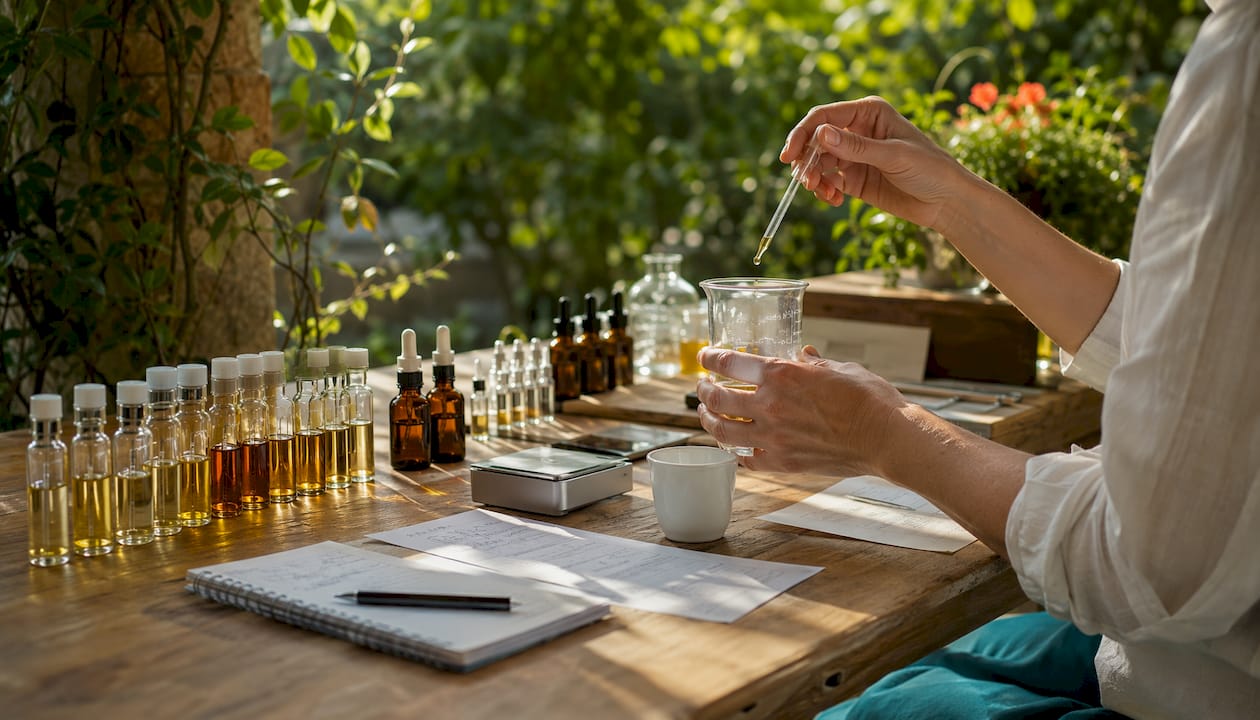
Thibaud Crivelli, founder of Maison Crivelli, explains that the category isn't limited to one texture: "Their formulation can be rather clean and transparent or warm and sensual." That range is part of why skin scents work across so many different preferences and body chemistries. Powdery notes like iris or carrot, creamy woods like sandalwood, and balsamic base notes all serve as vehicles for that close-to-skin effect.
The cultural context matters too. Honorine Blanc's observation that "you don't have to be loud or wear a bold scent to be strong and confident" captures something real about where fragrance is heading. Skin scents represent a version of quiet luxury in perfumery, where the pleasure is personal rather than performative. Understanding sillage and projection helps clarify exactly what sets this category apart from traditional fragrances built to project.
Parfumla carries an extensive selection of skin-adjacent fragrances, including options from Escentric Molecules and other niche houses that specialize in this style, with detailed reviews to help you find the right match before you buy.
Ready to find your skin scent?
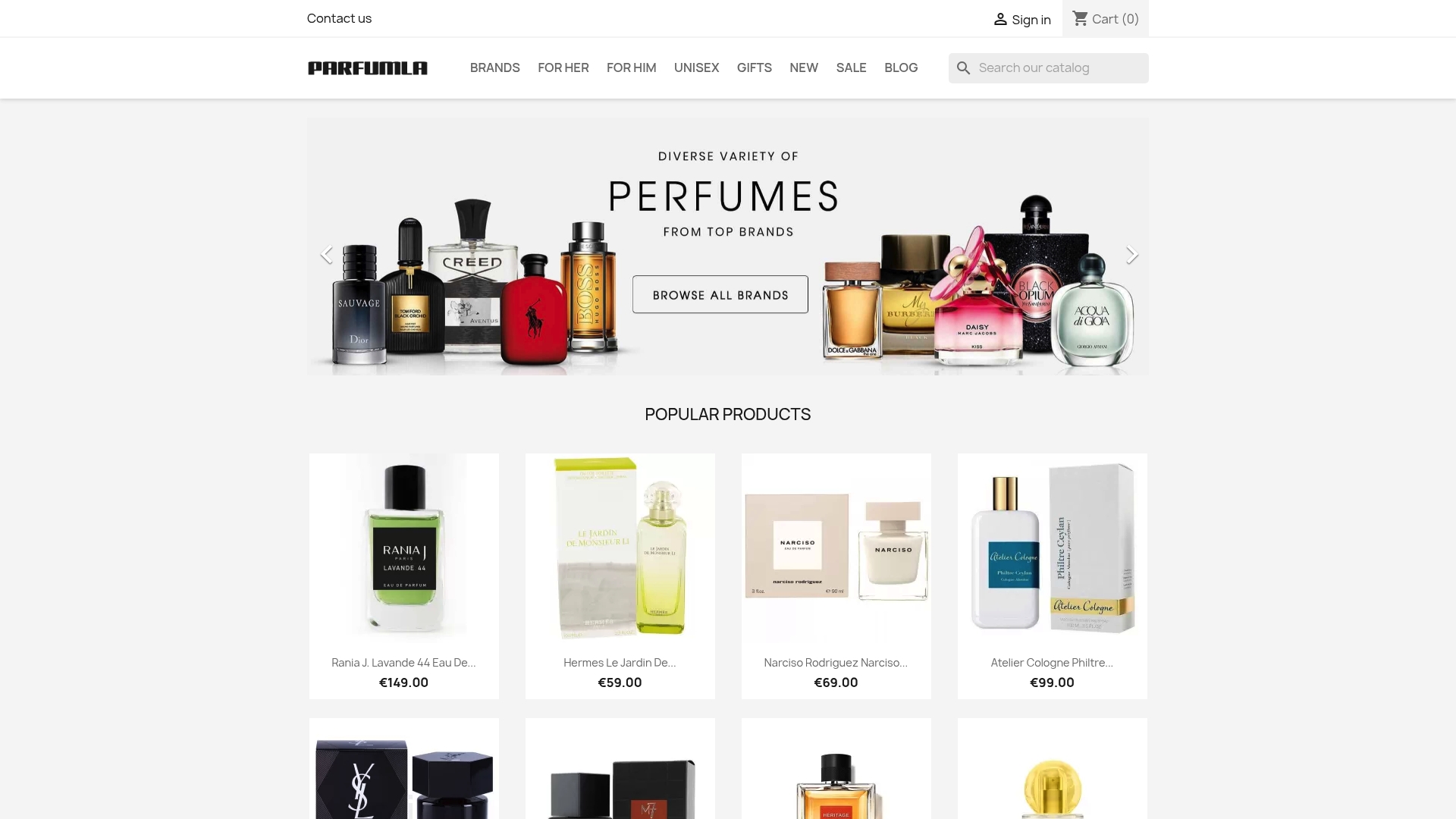
Parfumla offers over 14,000 fragrances at up to 60% off retail, including skin scents from niche and popular houses alike. If you're drawn to the close-to-skin, intimate style this category delivers, the NARCISO RODRIGUEZ Eau de Toilette is a strong starting point: clean musks, soft woods, and a warmth that sits close and lasts. The Escentric Molecules Escentric 01 Eau de Toilette is another excellent choice for anyone who wants to experience exactly how Iso E Super transforms on skin.
Key Takeaways
Skin scents are intimate, body-close fragrances built on synthetic musks and ambers that blend with your chemistry rather than projecting outward.
| Point | Details |
|---|---|
| Core definition | A skin scent sits close to the body and is detectable only up close, creating a personal, "you but better" effect. |
| Key ingredients | Iso E Super, Ambroxan, Cashmeran, Cetalox, and clean musks form the backbone of most skin scents. |
| Body chemistry matters | The same formula smells different on every person, making sampling before buying especially important. |
| Cultural moment | Post-pandemic intimacy cravings and the minimalism trend drove skin scents from niche to mainstream in the mid-2020s. |
| Best examples to try | Phlur Missing Person, Glossier You, Escentric Molecules Molecule 01, and Juliette Has a Gun Not a Perfume are the clearest entry points. |