

Knowing when to buy perfume on sale is the difference between paying full retail and saving 20–50% on the exact same bottle. Fragrance discounting follows predictable seasonal patterns, but the sharpest deals often come from tracking individual bottle prices year-round rather than waiting for a single big event. This guide covers every major discount window, explains how seasonal demand shifts pricing, and shows you when buying immediately beats waiting for a sale.
When to buy perfume on sale: the major discount seasons
The fragrance retail calendar clusters discounts around a handful of predictable events. Knowing what each window offers helps you plan purchases months in advance.
Black Friday and Cyber Monday
Black Friday and Cyber Monday deliver the deepest and most predictable fragrance discounts of the year. Typical reductions run 15–40% on designer gift sets and popular eau de parfums, and many retailers allow coupon stacking on top of sitewide sales. This is the best window for buying designer crowd-pleasers like Guerlain, Christian Dior, or Narciso Rodriguez, especially in gift set formats that bundle full bottles with travel sizes.

Pro Tip: Sign up for retailer email lists in october. Early-access Black Friday deals often go live two weeks before the official date and sell out before the public sale begins.
Post-Christmas and january clearance
The period from december 26 through late january is one of the most underrated windows for fragrance bargains. Discounts during this window can reach 20–50%, particularly on slow-moving stock and discontinued fragrances. Retailers clear holiday gift sets to make room for spring launches, which means you can find premium bottles at clearance prices. The catch is that selection narrows fast, so checking daily during this window pays off.
Mother's Day, Father's Day, and summer promotions
Major gifting holidays like Mother's Day and Father's Day bring targeted promotions on classic fragrance sets. Discounts tend to be shallower than Black Friday, but the selection focuses on crowd-pleasing, widely loved scents that rarely go on sale at other times. Summer sales in june and july also surface deals on lighter, fresh fragrances as retailers push seasonal inventory.
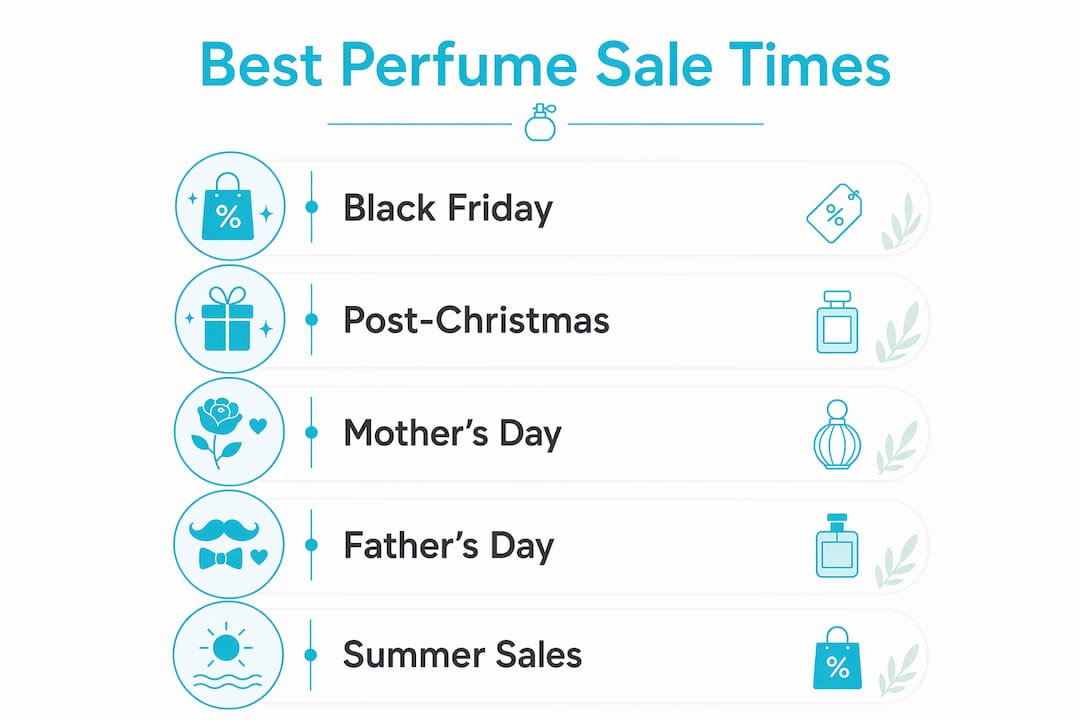
Here is a quick reference for the main fragrance sale windows:
| Sale period | Typical discount | Best categories |
|---|---|---|
| Black Friday / Cyber Monday | 15–40% | Designer gift sets, popular EDPs |
| Post-Christmas / January | 20–50% | Overstock, discontinued bottles |
| Mother's Day / Father's Day | 10–25% | Classic, crowd-pleaser sets |
| Summer sales (june–july) | 10–30% | Fresh, light seasonal scents |
| Travel retail / duty-free | 5–30% | Designer flagships |
Travel retail and duty-free shops offer savings of 5–30% on designer fragrances, but stock and pricing vary significantly. Exchange rates and limited selection require careful calculation before assuming you are getting a deal.
How does seasonal demand affect perfume pricing?
Fragrance pricing is not static. It moves with consumer demand, and understanding that cycle gives you an edge most shoppers ignore.
Buying winter fragrances during summer months yields lower prices because retailers clear seasonal stock to make room for new releases. The same logic applies in reverse: a fresh, aquatic summer scent bought in october or november will often be cheaper than it was in june. This contrarian approach to timing is how experienced fragrance shoppers build collections at a fraction of retail cost.
Pro Tip: Buy your next winter scent in july and your next summer fragrance in november. You will almost always find better prices than during the season when everyone else wants the same bottle.
The categories that benefit most from off-season buying include:
- Heavy oriental and woody scents (oud, amber, vanilla): buy in may through july when demand drops
- Fresh aquatic and citrus scents: buy in october through december when summer is over
- Floral spring fragrances: buy in september or october after the spring launch cycle ends
- Holiday limited editions from prior years: buy in january when clearance pricing kicks in
Seasonal scent pricing reflects stock clearing ahead of new releases, not a judgment on quality. A great winter fragrance does not become less good in july. It just becomes cheaper because fewer people are thinking about it.
What are fragrance price alerts and how do they work?
Price alerts are the most underused tool in fragrance shopping. They let you set a target price for a specific bottle and receive a notification when that price is hit, regardless of whether a major sale is happening.
Shoppers who set alerts approximately 60 days before major retail events often capture better deals than the event sales themselves. This happens because manufacturers and distributors run clearances tied to inventory cycles, not the retail calendar. A random restock or overstock situation can push prices below Black Friday levels with no fanfare. You only catch those deals if you are watching.
Here is how to use price alerts effectively:
- Identify the bottles you want. Build a specific wish list with exact sizes and concentrations. Vague interest in a fragrance family will not help you act fast when a deal appears.
- Set your target price. Research the lowest historical price for that bottle, not just the current retail price. Aim for 20–30% below the current listing as your alert threshold.
- Monitor multiple retailers. The same fragrance can vary by 15–25% across different online retailers at any given time. Tracking one source misses deals elsewhere.
- Act quickly when an alert fires. Supply-driven price dips are often short-lived. A bottle priced below market due to overstock can sell out or return to normal pricing within 24–48 hours.
- Check Parfumla's catalog regularly. With over 14,000 fragrances and up to 60% off retail prices, Parfumla surfaces deals on popular, niche, and celebrity scents that do not require waiting for a calendar event. You can find perfume discounts online that beat seasonal sale pricing year-round.
Price alerts work best when combined with a clear wish list. Shoppers who track 10 or more specific bottles are far more likely to catch a meaningful deal than those waiting passively for a sitewide event.
When should you skip the sale and buy immediately?
Not every fragrance rewards patience. For limited editions and niche releases, waiting for a discount is often a losing strategy.
Limited edition and niche fragrance releases rarely go on sale and often increase in value after launch. Waiting for a discount can result in missing the product entirely or paying a premium on the secondary market. A bottle that retails for $180 at launch can appear at $250 or more on resale platforms within weeks if the run sells out.
The categories where you should buy at launch rather than wait:
- Niche house limited editions (small-batch releases from independent perfumers): these rarely restock and never discount
- Seasonal exclusives from designer houses: once the season ends, they are gone
- Collaboration or anniversary releases: collector demand drives prices up, not down, over time
- Any fragrance with a stated limited production run: the scarcity is real, not a marketing tactic
Limited editions generally require buyers to purchase within 24–72 hours of launch to avoid scarcity and premium secondary market prices. That window is tighter than most shoppers expect. Following brand newsletters and fragrance communities on social media is the most reliable way to know exactly when a release drops.
The practical rule is straightforward. If a fragrance is a permanent catalog item from a major designer house, patience and timing will save you money. If it is a limited run, niche, or collaboration release, buy it when you see it at a price you can accept. Balancing your collection intent against everyday use also matters. A bottle you plan to wear daily justifies waiting for a sale. A collector piece does not.
Key takeaways
The best time to buy perfume on sale is during Black Friday, post-Christmas clearance, or off-season windows, but price alerts capture deals that beat all of them.
| Point | Details |
|---|---|
| Black Friday is the peak discount window | Expect 15–40% off designer gift sets and popular eau de parfums during this period. |
| Post-Christmas clearance runs deep | January discounts reach 20–50% on overstock and discontinued bottles. |
| Off-season buying beats the calendar | Buying winter scents in summer and summer scents in fall yields consistent savings. |
| Price alerts catch the best random deals | Setting alerts 60 days before major events captures manufacturer clearances that outperform sale pricing. |
| Limited editions do not discount | Buy niche and limited releases at launch or risk paying resale premiums. |
What I have learned from years of buying fragrance off-cycle
Most fragrance advice fixates on Black Friday as the one unmissable event. I understand the appeal. The discounts are real, the gift sets are good value, and the timing is convenient. But treating Black Friday as your only buying window is leaving money on the table for most of the year.
The deals I am most proud of came from watching specific bottles for weeks. A seasonal fragrance I wanted in december showed up at a 35% discount in august because a retailer was clearing summer inventory. I had it on my list, I saw the alert, and I bought it the same day. No major sale event required.
The uncomfortable truth about fragrance shopping is that patience works better than calendar obsession, but only if you are actively watching. Passive waiting for a sale that may never come on your specific bottle is not a strategy. Active monitoring of the bottles you actually want is.
I have also learned to treat limited editions completely differently. I missed a niche release I wanted by waiting two weeks to think it over. It sold out and appeared on resale at nearly double the launch price. That lesson cost me more than any sale ever saved me.
The shoppers who consistently pay less are the ones who combine a clear wish list, off-season awareness, and price alerts. They do not rely on any single event. They treat fragrance buying like a year-round practice, not a holiday sprint.
— Hamster777
Parfumla makes year-round fragrance savings practical
Finding the right moment to buy a fragrance is easier when you have a single destination that keeps prices low all year. Parfumla carries over 14,000 fragrances, including popular designer bottles, niche releases, and celebrity scents, all at up to 60% off retail prices.
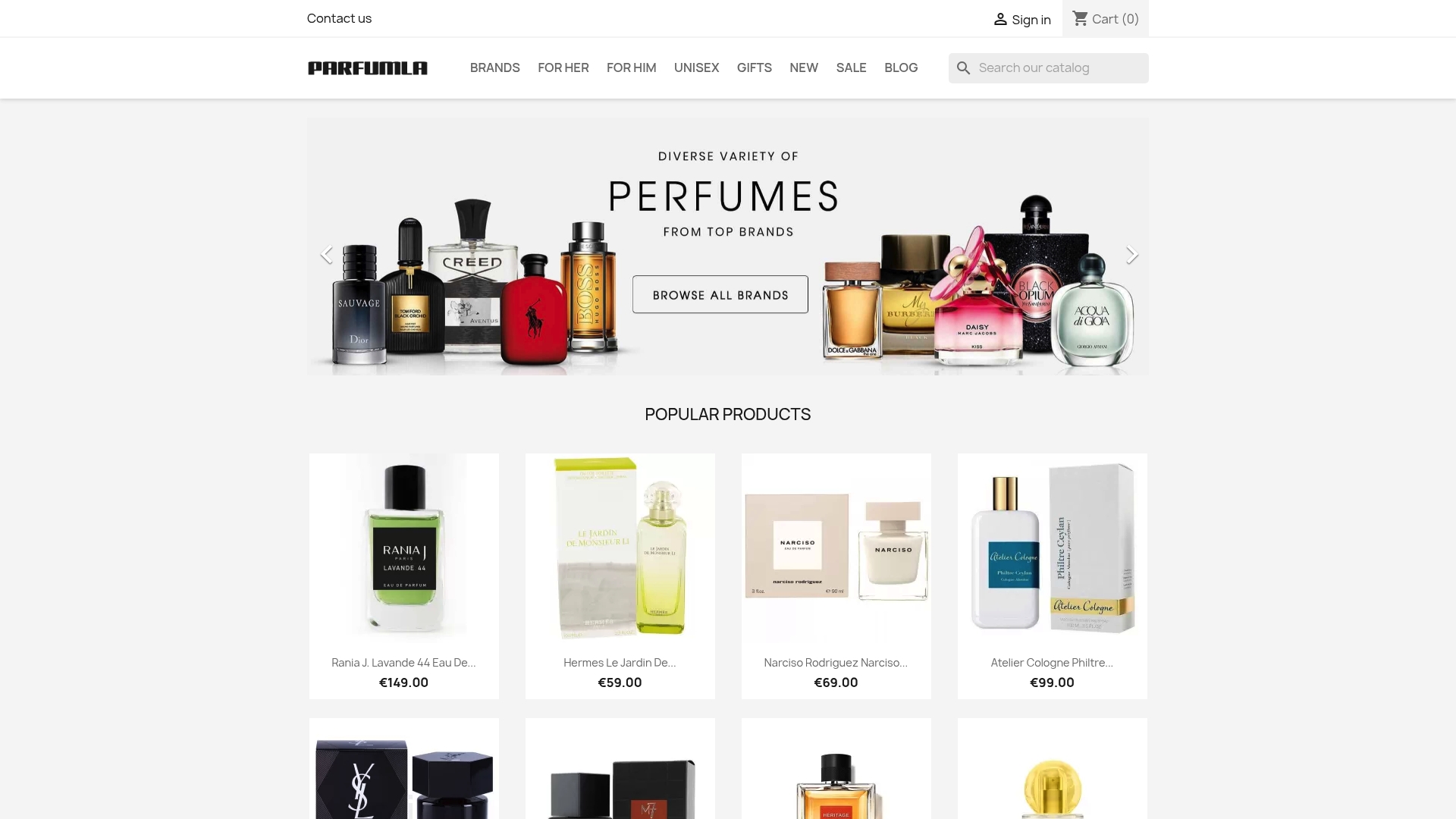
Whether you are looking for a seasonal designer scent to buy off-cycle at a lower price or a classic like Guerlain Eau de Lingerie for a gift, Parfumla's catalog covers both. Detailed reviews on every listing help you buy with confidence, and reliable shipping across the US and EU means your order arrives when you need it. Check the online shopping checklist to make sure you are getting the most from every purchase.
FAQ
When is the best time to buy fragrance on sale?
Black Friday and Cyber Monday offer the deepest discounts, typically 15–40% on designer fragrances. Post-Christmas clearance in january is the second-best window, with discounts reaching 20–50% on overstock and discontinued bottles.
Do perfume prices drop after the holidays?
Yes. January is a strong clearance period as retailers move unsold gift sets and holiday stock. Discounts during this window can reach 50% on slow-moving or discontinued fragrances.
What is the contrarian buying strategy for perfumes?
The contrarian strategy means buying winter fragrances in summer and summer fragrances in fall, when seasonal demand is low and retailers clear inventory. This approach consistently yields lower prices than waiting for major sale events.
Should I wait for a sale on limited edition perfumes?
No. Limited edition and niche releases rarely discount and often sell out within days of launch. Waiting for a sale on these fragrances typically results in missing the product or paying a resale premium.
How do price alerts help with fragrance shopping?
Price alerts notify you when a specific bottle drops to your target price, capturing random stock-driven discounts that occur outside major sale periods. Setting alerts roughly 60 days before major retail events can surface deals that beat official sale pricing.