
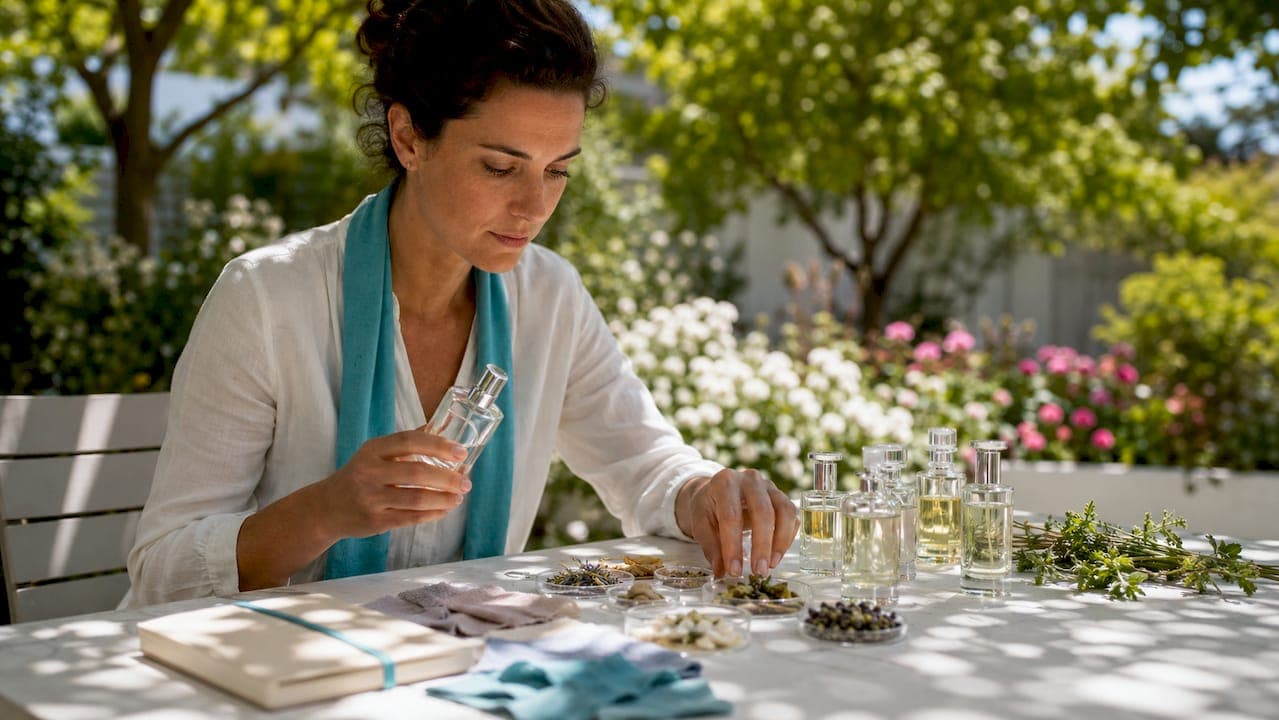
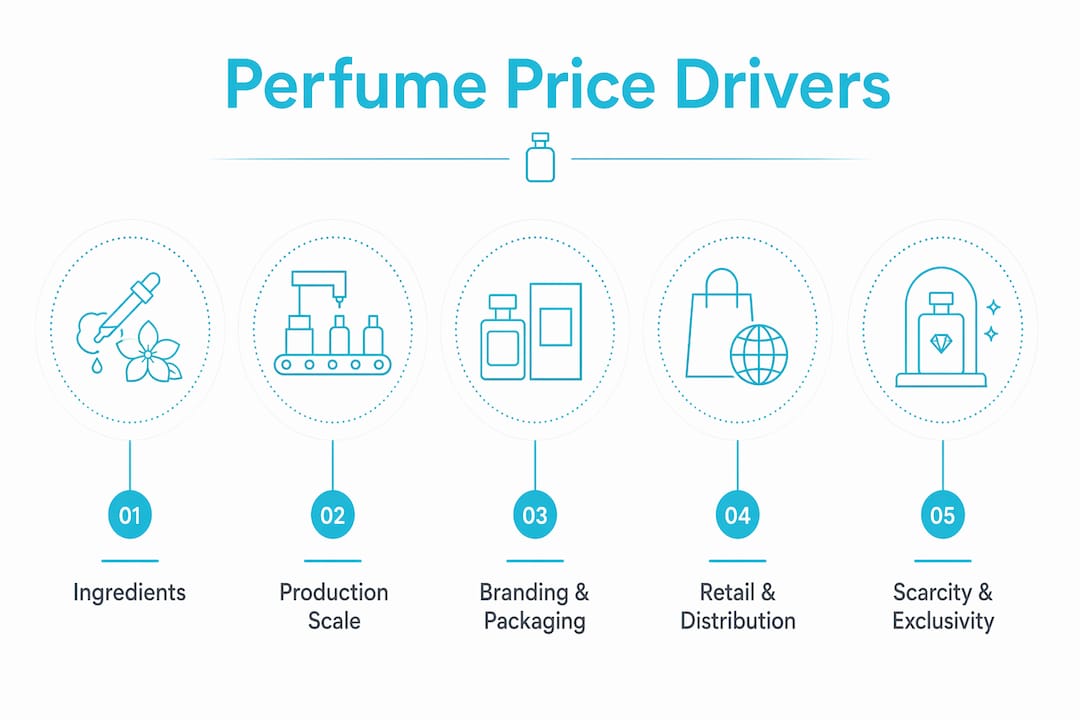
Perfume pricing is determined by ingredient quality, production scale, brand positioning, and packaging investment, not by a single factor. A bottle of Chanel No. 5 and a drugstore fragrance may both smell pleasant, yet one costs ten times more. Understanding why perfume prices vary widely helps you spend smarter, whether you are drawn to luxury perfume houses like Maison Francis Kurkdjian or exploring affordable perfume options from celebrity lines. The gap between a $15 bottle and a $500 one is real, but the reasons behind it are more nuanced than most shoppers realize.
Why do perfume prices vary so widely?
Perfume pricing reflects a stack of costs that compound from the lab to the shelf. Ingredient sourcing sits at the base, but production method, brand strategy, and retail channel each add their own layer. The result is a market where two 100ml bottles can differ by hundreds of dollars while containing similar fragrance concentrations.
The fragrance industry uses terms like Eau de Parfum (EDP) and Eau de Toilette (EDT) to signal concentration, but concentration alone does not explain price. A budget EDT can cost $20 while a niche EDP from a house like Ex Nihilo or Creed runs $300 or more. The real drivers live in the details below.
How does ingredient quality affect perfume cost?
Raw materials are the single largest variable in perfume production costs. Natural oud costs up to $30,000 per kilogram, and ambergris fetches comparable prices due to rarity and extraction difficulty. That cost flows directly into the retail price of any fragrance built around these ingredients.
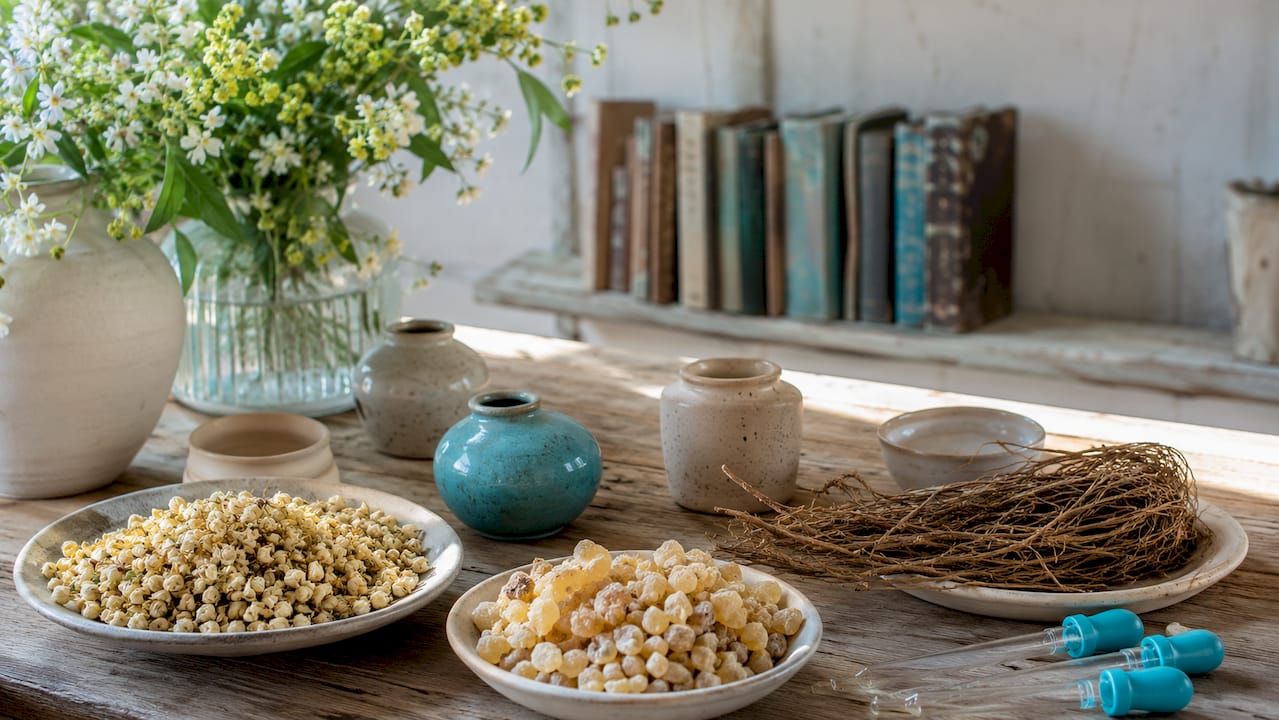
The contrast with synthetic compounds is stark. Synthetic musks, aldehydes, and lab-created woods cost a fraction of their natural counterparts. Many respected perfumers at houses like Givaudan and Firmenich use synthetics deliberately, not as a shortcut, but because certain molecules simply do not exist in nature. The choice between natural and synthetic is artistic as much as financial.
Quantity matters as much as quality. Expensive perfumes use higher quantities of natural oils, which produces richer, more complex scent profiles. Budget brands may use the same raw materials but in smaller amounts, resulting in sharper and less full-bodied scents. The difference shows up in how a fragrance opens, develops, and dries down over hours.
- Natural oud and ambergris: Among the most expensive raw materials in perfumery, used in small quantities even in luxury formulas
- Rose absolute and jasmine absolute: Require thousands of flowers per liter, making them costly but central to many classic perfumes
- Synthetic aroma chemicals: Cost-effective and consistent, used across all price tiers to extend or anchor natural ingredients
- Fixatives and base notes: Ingredients like sandalwood and vetiver anchor a scent; their quality determines how long a fragrance lasts on skin
Pro Tip: When reading a fragrance description, look for named natural ingredients like Bulgarian rose or Haitian vetiver. These signal genuine sourcing investment and usually predict better scent depth.
Does production scale change what you pay?
Production volume directly controls per-unit cost. Mass production lowers unit price because brands buy ingredients in bulk and run continuous production lines. A brand like L'Oréal producing millions of bottles per year pays far less per liter of fragrance oil than an artisan house making 500 bottles per batch.
Small-batch and niche perfumers absorb higher costs at every step. Ingredient minimums from suppliers are fixed, so a small order costs proportionally more per unit. Labor, quality control, and bottling are also less efficient at low volumes. This is why a niche fragrance from a house like Byredo or Diptyque carries a premium that reflects genuine production economics, not just brand theater.
| Production Type | Batch Size | Cost Per Unit | Price Range |
|---|---|---|---|
| Mass market | Millions of units | Low | $15–$60 |
| Designer / prestige | Hundreds of thousands | Medium | $60–$200 |
| Niche / artisan | Under 10,000 | High | $150–$500+ |
| Limited edition | Under 1,000 | Very high | $300–$1,000+ |
Limited editions add another pricing layer. Scarcity is a real cost driver when production runs are intentionally capped. Brands like Tom Ford and Clive Christian use limited releases to maintain exclusivity, and the secondary market often pushes prices even higher than the original retail.
Pro Tip: If a niche fragrance you love goes on sale, buy it. Small-batch perfumes are frequently discontinued without notice, and restocks are not guaranteed.
How much do branding and packaging add to the price?
Marketing and advertising are not hidden costs. They are approximately 40% of a perfume's retail price. That figure covers celebrity endorsements, magazine campaigns, department store placement fees, and the global brand infrastructure that keeps names like Dior, Chanel, and Yves Saint Laurent visible year-round. You are paying for that visibility every time you buy a designer fragrance.
Packaging investment follows the same logic. Luxury packaging uses durable, high-quality materials including heavy glass, metal caps, and custom-molded bottles. Budget fragrances often use lighter glass and plastic components that feel noticeably less solid. The bottle is part of the product experience, and its cost is built into the price.
Retail channel shapes the final number significantly:
- Department stores like Nordstrom and Saks add markups of 30–50% over wholesale, plus they charge brands for counter space and staff training
- Boutiques and concept stores can mark up over 100%, reflecting lower volume and higher operating costs
- Online authorized retailers operate on thinner margins and pass some savings to buyers
- Discount and closeout platforms move overstock at reduced prices, often for the same authentic product
Price differences across stores for the same fragrance reflect store rent, import costs, taxes, and profit margins rather than any difference in the product itself. A bottle of CHRISTIAN DIOR J'adore bought at a Paris airport duty-free costs less than the same bottle at a Manhattan department store counter.
Luxury vs. budget perfumes: what actually differs?
The artistic nuance and exclusivity of luxury perfumes remain genuine advantages, even as fragrance chemistry has narrowed the quality gap. A luxury fragrance from a house like Guerlain or Hermès typically features a complex three-act structure: a bright top note, a developed heart, and a long-lasting base. Budget fragrances often skip the middle act, jumping from opening to dry-down without much evolution.
Longevity is a measurable difference. A luxury fragrance often lasts longer on skin, sometimes lingering for hours or even days after application. That staying power comes from higher concentrations of fixatives and base ingredients. Over time, a longer-lasting fragrance can represent better value per wear even at a higher upfront cost.
That said, affordable perfumes have closed the quality gap significantly by 2026, thanks to advances in fragrance chemistry. Here is how the two segments compare across the factors that matter most:
- Scent complexity: Luxury perfumes layer 20 or more ingredients with deliberate transitions. Budget options typically use 8–12 ingredients with a flatter scent arc.
- Longevity: Luxury EDPs regularly last 8–12 hours. Budget EDTs often fade within 3–4 hours.
- Ingredient sourcing: Luxury houses source named naturals from specific regions. Budget brands use generic synthetic blends.
- Bottle and presentation: Luxury packaging is designed to be kept and displayed. Budget packaging is functional but rarely collectible.
- Scent balance: The perception of smelling expensive is linked to balance and blend rather than price alone. A well-formulated $40 fragrance can smell more refined than a poorly blended $200 one.
The practical takeaway is that luxury and budget perfumes serve different needs. Luxury is worth the investment for signature scents you wear daily. Affordable options are smart for seasonal experiments or casual wear.
How can you assess perfume value before buying?
Cost-per-wear is the most useful metric for evaluating fragrance value. A small bottle of a versatile scent worn regularly delivers more value than a large bottle used twice a year. Divide the price by the number of times you expect to wear it, and the math often favors a well-chosen smaller bottle over a bargain-priced large one.
Skin chemistry changes everything. Selecting fragrances based on skin chemistry and personal scent evolution produces better results than choosing by brand reputation alone. A fragrance that smells extraordinary on one person can smell flat or sharp on another because skin pH, moisture level, and body chemistry all interact with the formula.
Practical steps for smarter fragrance shopping:
- Test on skin, not paper: Blotter strips show the top note only. Skin reveals the full scent arc over 30–60 minutes.
- Compare concentration labels: An EDP of the same fragrance costs more than its EDT version but lasts longer. Check whether the price difference is worth it for your usage pattern.
- Check authorized discount retailers: Online perfume prices are often lower than department store prices for identical, authentic products.
- Consider travel sizes first: A 10ml or 30ml bottle lets you live with a fragrance before committing to a full bottle.
Pro Tip: Before buying a full bottle, check if the brand offers a sample or discovery set. Houses like Jo Malone and Maison Margiela sell sample kits that let you test multiple scents for under $30.
If you are building a fragrance wardrobe on a budget, a smart perfume shopping guide can help you prioritize which categories to invest in and where to save without sacrificing scent quality.
Key takeaways
Perfume prices are driven by ingredient cost, production scale, brand marketing, and retail channel, and understanding each factor lets you buy with confidence at any price point.
| Point | Details |
|---|---|
| Ingredients set the floor | Natural oud and ambergris cost up to $30,000 per kilogram, directly raising the price of any formula that uses them. |
| Production scale matters | Mass-market brands pay far less per unit than artisan houses, which is why niche perfumes cost more by design. |
| Marketing adds up to 40% | Brand advertising, celebrity deals, and retail placement fees can account for nearly half of what you pay at the counter. |
| Luxury lasts longer | Higher concentrations of fixatives give luxury fragrances 8–12 hour longevity versus 3–4 hours for many budget options. |
| Value is personal | Cost-per-wear and skin chemistry are better guides to fragrance value than bottle size or brand name alone. |
The price tag tells half the story
I have spent years testing fragrances across every price tier, and the most persistent myth I encounter is that a higher price guarantees a better scent. It does not. What a higher price guarantees is more expensive ingredients, more elaborate packaging, and a larger marketing budget. Whether those things translate to a fragrance you love wearing is a separate question entirely.
The shift I have noticed most clearly by 2026 is how good affordable perfumes have become. Houses producing mid-range fragrances now have access to the same synthetic aroma chemicals used by luxury perfumers. The difference is not the molecules. It is the quantity, the artistry of the formula, and the story the brand tells around it. A $45 fragrance from a well-regarded house can outperform a $200 designer bottle if the formula is better balanced for your skin.
My honest advice: stop anchoring on price as a proxy for quality. Spend time with a fragrance on your skin before buying. Use the sampling guide approach to test before committing. And when you find something that works, understand whether the price reflects genuine ingredient investment or mostly brand overhead. That knowledge alone will make you a far better fragrance buyer.
— Hamster777
Find your fragrance at the right price with Parfumla
Parfumla carries over 14,000 perfumes across every price tier, from accessible everyday scents to niche and designer fragrances, all at up to 60% off retail prices. Whether you are looking for a classic like NARCISO RODRIGUEZ Eau De Parfum or a statement piece like CHRISTIAN DIOR J'adore Le Jasmin, Parfumla lists detailed product reviews so you know exactly what you are buying before it ships. Shipping covers both the US and EU, and the pricing is transparent with no hidden markups.
Explore the full Parfumla collection and use the ingredient and concentration details on each product page to apply what you have learned here. Knowing why fragrances cost what they do makes every purchase more satisfying.
FAQ
What makes some perfume ingredients so expensive?
Rare natural ingredients like oud and ambergris are expensive because of limited supply and difficult extraction. Natural oud can cost up to $30,000 per kilogram, making it one of the most costly raw materials in any consumer product.
Do luxury perfumes actually smell better than budget ones?
Not always. Luxury perfumes offer greater scent complexity and longer longevity, but the perception of smelling expensive is linked to balance and blend rather than price. A well-formulated affordable fragrance can outperform a poorly blended luxury one.
Why does the same perfume cost different amounts in different stores?
Price differences across stores reflect store rent, import duties, taxes, and profit margins, not product differences. Department stores add 30–50% markups, while online authorized retailers often operate on thinner margins.
Is eau de parfum always better value than eau de toilette?
EDP concentrations last longer on skin, which can make them better value per wear. However, concentration alone does not guarantee quality, and skin chemistry affects how any formula performs on your body.
How do i find quality perfumes without overpaying?
Test fragrances on skin before buying, compare cost-per-wear rather than bottle price, and shop authorized online retailers where prices are typically lower than department stores for the same authentic product.