

Scent is defined as the most personal style element you own, because it communicates your identity, mood, and presence before a single word is spoken. While clothing covers your body, fragrance precedes you into every room and lingers after you leave. Why scent is part of personal style is not a question of preference but of psychology: your chosen fragrance shapes how others perceive and remember you at a neurological level. The way you smell is as deliberate a statement as the clothes you choose, the colors you wear, or the way you carry yourself. Ignoring it means leaving a critical part of your self-presentation to chance.
Why scent is part of personal style: the invisible garment
Fragrance functions as what fashion experts call the "invisible garment" completing a personal style narrative, providing an atmosphere layer that visual elements cannot independently deliver. Your outfit communicates silhouette, color, and texture. Your scent communicates energy, warmth, and character. Together, they create a complete impression.
Consider the mismatch problem. A sharp, structured blazer paired with a heavy, syrupy oriental fragrance sends two conflicting signals. The visual says precision; the scent says indulgence. Neither element is wrong on its own, but the combination creates friction in the mind of anyone who encounters you. Style experts confirm that scent and visual style must align to avoid a "clashing aesthetic" that reduces perceived refinement, even when individual elements are high quality. This is why matching perfume to personal style matters as much as matching your shoes to your belt.

The practical implication is straightforward. Before you leave the house, ask whether your fragrance matches the energy of your outfit and the occasion. A linen shirt and tailored trousers call for something clean and citrus-forward. A velvet dress at an evening event earns a deeper, more complex woody or floral oriental. The scent should feel like the final sentence of the story your clothes are already telling.
| Style energy | Fragrance family | Example occasion |
|---|---|---|
| Minimal and clean | Citrus, aquatic, white musk | Office, casual daytime |
| Romantic and soft | Floral, powdery, gourmand | Dates, brunches, social events |
| Bold and confident | Woody, spicy, leather | Evening events, presentations |
| Earthy and grounded | Vetiver, patchouli, green | Outdoor settings, creative spaces |
Pro Tip: Spray your chosen fragrance before you get dressed and let both the scent and the outfit settle together for five minutes. If they feel like they belong in the same room, you have your pairing.
How scent connects to memory, emotion, and identity
Scent directly engages the limbic system, triggering emotion and memory before conscious recognition occurs. Unlike sight or sound, smell bypasses the thalamus entirely, which means a fragrance hits your emotional brain before your rational brain has time to process it. No other sensory input works this fast or this deep.
This neurological shortcut is why certain scents feel like they belong to specific people. You have almost certainly walked into a room and recognized someone's presence from their fragrance alone, before seeing them. That recognition is not accidental. It is the result of repeated scent exposure building a neural association between the person and the smell. Wearing a consistent fragrance creates an identity marker that builds recognition and emotional association over time, signaling presence and fostering trust in ways that clothing simply cannot replicate.
"Fragrance preferences mirror values, temperament, and emotional tendencies. They are not mere marketing, but rooted deeply in environmental and sensory psychology." — Perfume Gini
This is also why scent feels more intimate than clothing. A jacket can be borrowed or changed in seconds. A signature scent, worn consistently over months and years, becomes inseparable from how others experience you. It creates emotional memories that outlast any trend. The importance of scent in style, viewed through this lens, is not about smelling pleasant. It is about being remembered.
How does personality type shape your scent choices?
Personality frameworks like MBTI and style archetypes map reliably onto fragrance families, and 4 to 6 distinct personality archetypes correlate with specific scent profiles including floral, woody, and aromatic families. Understanding where you fall gives you a starting point for choosing a signature scent that feels authentic rather than arbitrary.
Here are the most recognized personality-scent pairings:
- The Minimalist: Clean, uncluttered, and precise in both dress and thought. Citrus, white musk, and aquatic fragrances mirror this aesthetic. Think cool water notes, light woods, and barely-there florals. Armani Mania offers a refined, understated profile that suits this archetype well.
- The Romantic: Drawn to soft textures, warm colors, and emotional depth. Floral and powdery fragrances with rose, jasmine, or iris are natural fits. Cacharel Amor Amor is a textbook example of a fragrance built for this personality.
- The Boss: Structured, authoritative, and intentional. Woody, leather, and spicy oriental fragrances project confidence and command attention. Giorgio Armani Code Couture fits this profile with its bold, sophisticated character.
- The Free Spirit: Unconventional, expressive, and drawn to the unexpected. Earthy, green, and gourmand fragrances with unusual combinations reflect this energy. Patchouli, vetiver, and fig-based scents work here.
- The Sensualist: Drawn to luxury, texture, and physical pleasure. Rich orientals, amber, and vanilla-heavy compositions feel most authentic. Warm skin-like musks amplify this archetype's natural magnetism.
The strongest perfumes are those that feel most true to who you are, beyond price or trendiness. Authenticity in scent enhances confidence and deepens your emotional connection to your own style.
Pro Tip: Build a small scent wardrobe of two or three fragrances that each serve a different mood or occasion. One for daily wear, one for evenings, and one for high-stakes moments. Rotate them intentionally rather than randomly.
Practical steps for building a scent-style identity
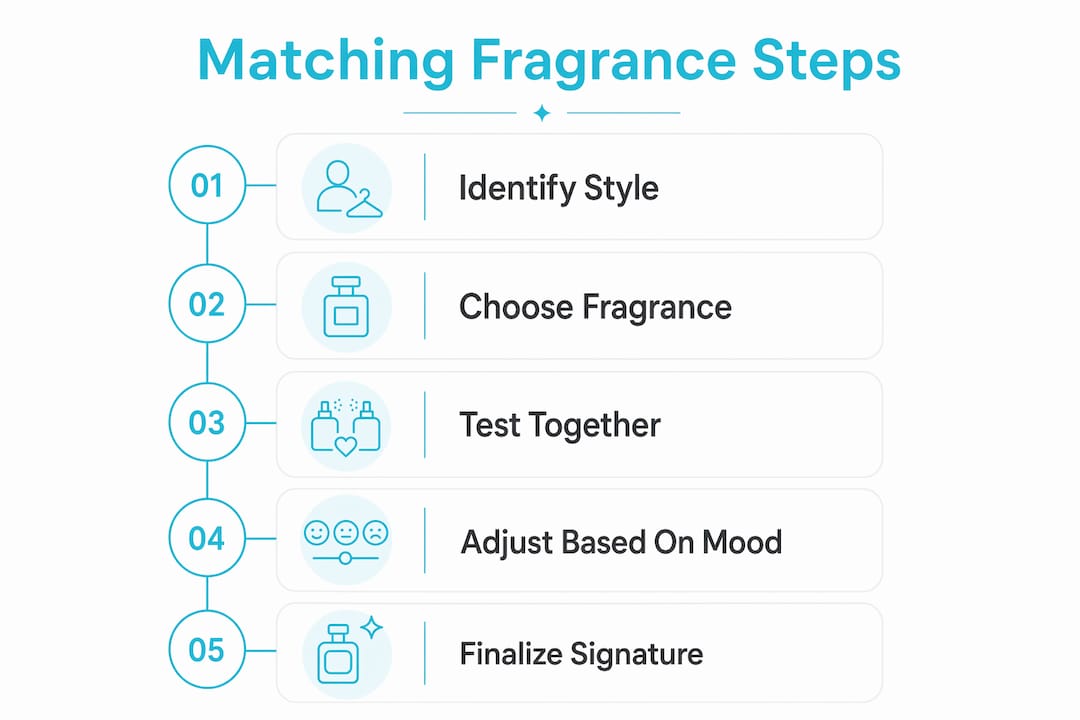
Integrating scent consistently into your personal style requires the same intentionality you bring to building a wardrobe. Many people treat fragrance as an afterthought, but it deserves equal weight in daily personal preparation alongside clothing selection. Here is how to approach it with purpose:
-
Audit your current wardrobe energy. Look at the colors, silhouettes, and fabrics you wear most. Are they soft and romantic, sharp and minimal, or bold and expressive? Your fragrance should reflect the same energy. If your wardrobe is mostly neutral tones and clean lines, a heavy oriental fragrance will feel out of place on your skin.
-
Choose one signature scent for daily wear. A cohesive olfactory-visual identity improves social and professional perception. Consistency matters more than variety in building recognition. Pick one fragrance that feels most authentically you and wear it regularly enough that people begin to associate it with your presence.
-
Layer scent with occasion, not just outfit. A job interview calls for something clean and confident, not heavy or distracting. A dinner with close friends allows for something warmer and more personal. The occasion sets the emotional register; your fragrance should match it.
-
Test on skin, not paper. Fragrance strips give you the opening notes. Your skin gives you the full story. Body chemistry alters how a fragrance develops over hours, so always test a new scent on your wrist and wear it for at least two hours before deciding. Scent as personal expression only works when the fragrance actually works with your chemistry.
-
Avoid the mismatch trap. Wearing a delicate floral with heavy streetwear, or a sharp aromatic with a flowing bohemian dress, creates the kind of subtle dissonance that people feel without being able to name. Style experts describe this as a clashing aesthetic that confuses perception even when individual elements are high quality.
How does scent compare to other style elements?
Scent occupies a category of its own when placed alongside clothing, accessories, and grooming. Visual style elements communicate in the moment and fade from memory quickly. Fragrance communicates subliminally and creates emotional imprints that persist far longer than clothing trends endure. This is the core argument for why scent is uniquely personal in a way that fashion rarely achieves.
Scent also operates in close physical proximity, which means it creates intimate impressions and stronger social memory links than visual cues. When someone leans in to hear you better, or sits beside you at a meeting, your fragrance is the element of your style they experience most directly. No jacket, watch, or hairstyle reaches them at that distance with the same impact.
| Style element | Trend lifespan | Memory impact | Intimacy level | Replaceability |
|---|---|---|---|---|
| Clothing | Seasonal | Low to moderate | Low | High |
| Accessories | 1 to 3 years | Moderate | Low | High |
| Grooming | Ongoing | Moderate | Moderate | Moderate |
| Fragrance | Timeless | Very high | Very high | Low |
The role of fragrance in fashion has always been present, but it is consistently underestimated. A fragrance worn for years becomes part of how your closest relationships experience you. No trend cycle touches that. The fragrance notes guide from Wick and Glow offers a useful primer on how top, middle, and base notes each contribute to the full scent story you project, which is worth understanding before committing to a signature choice.
Key takeaways
Scent is a core personal style element because it shapes emotional memory, reinforces identity, and communicates who you are at a neurological level that visual fashion cannot reach.
| Point | Details |
|---|---|
| Scent completes your style | Fragrance provides an atmosphere layer that clothing and accessories cannot independently deliver. |
| Personality drives scent choice | Archetypes like Minimalist, Romantic, and Boss map reliably to citrus, floral, and woody fragrance families. |
| Consistency builds recognition | Wearing one signature scent regularly creates an emotional identity marker others associate with you. |
| Mismatches reduce refinement | A clashing aesthetic between visual style and fragrance confuses perception even when both elements are individually strong. |
| Scent outlasts trends | Fragrance memories persist as emotional imprints long after clothing trends have cycled out. |
Why I stopped treating fragrance as an afterthought
I spent years picking up whatever was on sale at the drugstore and calling it done. My wardrobe was intentional. My fragrance was not. The shift happened when someone told me they recognized I had walked into a building before they saw me, because of a scent I had worn consistently for about three months. That moment reframed everything.
What I have learned since is that scent works on a timeline that clothing does not. You can change your outfit in minutes. You cannot change the emotional associations people have built around your fragrance over months. That permanence is both the challenge and the power. Getting it right takes time and honest self-reflection about who you actually are versus who you want to be seen as.
The personality-archetype approach changed how I shop for fragrance entirely. I stopped testing things because they smelled interesting on paper and started asking whether they felt true to how I move through the world. A fragrance that feels like a costume is no different from wearing clothes that do not fit. The confidence that comes from wearing something that genuinely reflects your personality is not subtle. People notice it, even if they cannot name what changed.
My advice: treat your next fragrance purchase with the same seriousness you give a wardrobe staple. Try it on your skin, wear it through a full day, and ask whether it feels like you or like a performance. The answer will tell you everything.
— Hamster777
Find your signature scent at Parfumla
Building a fragrance identity that genuinely reflects your personal style starts with access to the right options. Parfumla carries over 14,000 perfumes, from niche and luxury to popular and celebrity scents, at up to 60% off retail prices. Whether you are a Minimalist searching for a clean citrus signature or a Sensualist drawn to rich orientals, the catalog covers every personality archetype with detailed reviews to guide your decision.
For a standout signature that sits at the intersection of bold and intimate, the Ex Nihilo Venenum Kiss Eau De Parfum is one of Parfumla's highest-converting picks. It delivers the kind of complex, skin-close warmth that creates exactly the lasting impression this article describes. Parfumla ships reliably across the US and EU, so your next signature scent is never more than a few days away.
FAQ
Why is scent considered part of personal style?
Scent is part of personal style because it communicates mood, identity, and presence before visual recognition occurs. Fragrance acts as an invisible garment that completes the narrative your clothing begins.
How do I match a perfume to my personal style?
Start by identifying your style archetype, whether Minimalist, Romantic, or Bold, and match it to the corresponding fragrance family such as citrus, floral, or woody. Test the fragrance on your skin alongside your typical outfit to confirm the energies align.
Can scent really affect how others perceive me?
A cohesive olfactory-visual identity improves social and professional perception by making you appear more intentional and sophisticated. Scent in close proximity also creates stronger social memory links than visual cues alone.
What is a signature scent and why does it matter?
A signature scent is a fragrance worn consistently enough that others begin to associate it with your presence. Repeated use builds an emotional identity marker that fosters recognition, trust, and lasting memory.
How often should I change my signature fragrance?
There is no fixed rule, but frequent changes prevent the emotional association-building that makes a signature scent powerful. Most style-conscious individuals maintain one core fragrance for at least a full season before reconsidering.