
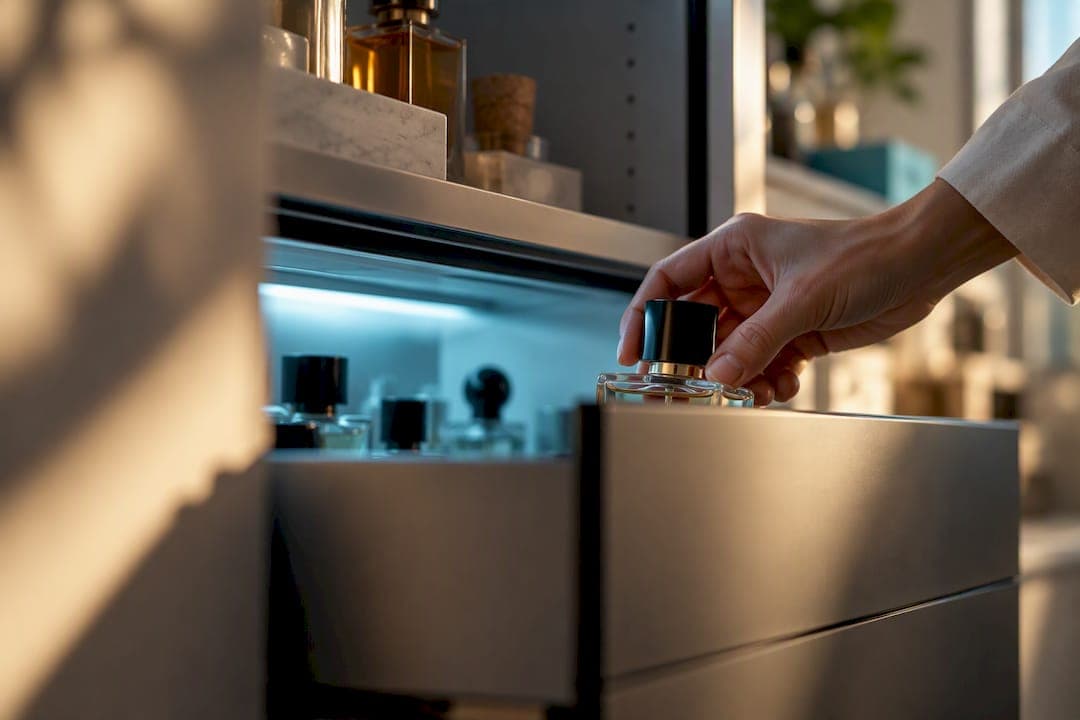
Refrigerating perfume is not necessary for most bottles and can introduce more problems than it solves, so cool, dark, stable storage like a closet shelf or drawer remains the better default. The main exception is short, careful chilling for a handful of delicate or vintage compositions, a practice closer to archival methods like those used at Osmothèque than tossing a bottle next to the milk. It's a good idea to try a scent before committing to long-term storage of any kind.
TL;DR:
- Most perfumes are best stored in dark, stable environments like a closet shelf, avoiding frequent temperature fluctuations that accelerate degradation.
- Refrigeration can extend scent life only if it avoids moisture, condensation, and temperature shocks caused by frequent fridge door openings.
- Fragile natural or citrus scents benefit most from cool storage, while resinous or heavily fixed perfumes are more resilient at room temperature.
- Short-term cooling can be effective for rescue or testing, but bottles should be sealed and gradually brought back to room temperature before use.
- Signs of perfume spoilage include color darkening, cloudiness, sour odors, or an odd dryness, and degraded scents can still be repurposed for home use.
Table of Contents
- Why cooler temperatures can slow perfume degradation
- Risks of keeping perfume in a kitchen fridge or freezer
- Which fragrances might actually benefit from cooler storage
- Practical storage habits that work better than a kitchen fridge
- How to chill a bottle safely for short-term use or to rescue an aging scent
- How to tell if a perfume has gone bad
- A storage-conscious approach to buying fragrance
- Try a sample first with Parfumla
- Sources
- FAQ
Why cooler temperatures can slow perfume degradation
Heat speeds up the chemical reactions that break perfume down, so lower, steady temperatures slow oxidation and help volatile top notes stay intact longer. This is the logic behind archival storage: places like Osmothèque keep their fragrance collections at cool, consistent temperatures rather than letting them swing between warm and cold.
The word that matters here is consistent. A bottle held at a steady 15°C ages more slowly than one that bounces between a warm bedroom by day and a cold car by night, even if the average temperature works out the same. Stability protects the fragile aromatic compounds that give a scent its opening character, while temperature swings stress the same molecules through repeated expansion and contraction.
That is why the standard advice from fragrance experts is not "colder is always better" but "cooler and steadier beats warm and erratic." A drawer or closet that holds a moderate, unchanging temperature does more for a bottle's lifespan than any appliance that gets opened twenty times a day. Refrigeration can, in theory, extend that same slowing effect, but only if it avoids the instability that ordinary kitchen fridges are built around.
Risks of keeping perfume in a kitchen fridge or freezer
A standard kitchen fridge is not designed with fragrance in mind, and several of its normal functions work directly against a bottle's longevity. Cold surfaces invite condensation, and once moisture reaches a label or a metal cap, it can warp packaging or seep past the seal.
- Condensation and humidity can dilute the juice over time and cloud both the liquid and the label.
- Frequent door openings cause thermal shock, repeatedly stressing the seal and cap with every swing in temperature.
- Nearby food creates the risk of odour contamination, letting garlic, onion, or leftovers bleed into a fragrance's scent profile.
- Freezers go further still, risking cracked bottles and permanently altered oils if the liquid partially solidifies.
Fridges and freezers are humid and prone to swings that can work against the very preservation effect cold is supposed to offer. The theoretical benefit of slower oxidation is easily canceled out by these everyday risks.
Pro Tip: If you must use a fridge, dedicate a small, rarely opened bin or drawer to perfume only, away from strong-smelling foods.
Which fragrances might actually benefit from cooler storage
Not every bottle needs the same care. Citrus-forward, very green, or fragile natural compositions oxidize fastest because their top notes rely on delicate, unstable molecules, and these are the scents most at risk of turning within a shorter window.

Heavily fixed or resinous perfumes, built around ingredients like amber, oud, or vanilla bases, tend to hold up well at normal room temperature since their heavier molecules resist oxidation better.
Vintage bottles or scents built on rare natural ingredients sit in a different category. These sometimes merit controlled cool storage, not as an everyday habit but as a deliberate archival choice, echoing the reasoning behind collector-grade storage for high-value fragrances.
Practical storage habits that work better than a kitchen fridge
Most bottles do best with simple, consistent habits rather than any appliance. The goal is always the same: cool, dark, and stable.
- Keep bottles in their original box on a closet shelf or in a dresser drawer, since the box blocks light and buffers temperature changes.
- Minimize the air pocket in partly used bottles by decanting into small travel sprays, which slows oxidation and reduces waste.
- Keep perfume out of the bathroom, where daily humidity and heat from showers accelerate breakdown.
- Avoid windowsills, car interiors, and radiators, since direct sunlight and heat are two of the fastest ways to degrade a fragrance.
- Aim for a stable range around 10 to 20°C, or 50 to 68°F, and prioritize consistency over hitting an exact number.
Decanting into travel-size sprays does more than protect against air exposure. It also lets you rotate through several scents without opening and closing a single full bottle for months, which itself reduces oxidative stress. Guidance from Lancôme reinforces the core principle: avoid extreme cold, since shocking a fragrance with a sudden drop in temperature can dull its intensity rather than preserve it.
Pro Tip: A closed drawer inside an interior closet, away from exterior walls and windows, is one of the most naturally stable spots in most homes.
How to chill a bottle safely for short-term use or to rescue an aging scent
Short, occasional chilling is different from long-term fridge storage, and it can be done safely with a few precautions.
- Place the bottle in the least cold part of the fridge, away from the back wall and the freezer compartment.
- Seal it inside a zip-top bag first, which blocks condensation and odour transfer from other contents.
- Limit the time in the fridge to a short window rather than leaving it there indefinitely.
- Let the bottle return fully to room temperature before spraying, since cold liquid changes how a fragrance projects on skin.
Anyone building a real collection is better served by a dedicated wine cooler set to a stable 10 to 15°C than by rotating bottles through a shared kitchen fridge.
How to tell if a perfume has gone bad
A few warning signs are easy to catch without any special equipment. Watch for a darkened or noticeably shifted color, cloudiness in a liquid that used to be clear, a sour or sharp chemical smell where the top notes used to be, or an odd dryness when it's worn on skin.

Before writing a bottle off, give it a dry-down test: spray it and wait 5 to 10 minutes. Top notes are often the first to turn, but the heart and base notes underneath sometimes still perform normally, which means the bottle may still be wearable even if the opening seems off.
If a fragrance is clearly degraded, it doesn't have to go straight into the trash. A turned bottle can often still work as a light room spray or a linen freshener for closets and drawers. When the smell has become unpleasant or the liquid looks genuinely spoiled, it's time to let it go, and anyone with sensitive skin should be cautious about applying an aged fragrance directly, since oxidized compounds can behave differently on skin than a fresh formulation. For related concerns around skin reactions, Lord's Love Butter's guide to fragrance-free versus unscented products is a useful outside reference.
A storage-conscious approach to buying fragrance
The most storage-friendly habit we can recommend is simple: buy less at once and rely on samples or decants instead of committing to a full bottle you might not finish for years. Decants & Samples selections exist for this reason, letting you test a scent without taking on years of storage responsibility.
Some retailers account for temperature-sensitive fragrance products in their shipping and offer storage guidance for collectors. If you're unsure how a specific bottle should be stored, our customer service team can help before you buy.
— Parfumla
Try a sample first with Parfumla
Sampling first can solve the problem before committing to a full bottle and its years of storage responsibility.
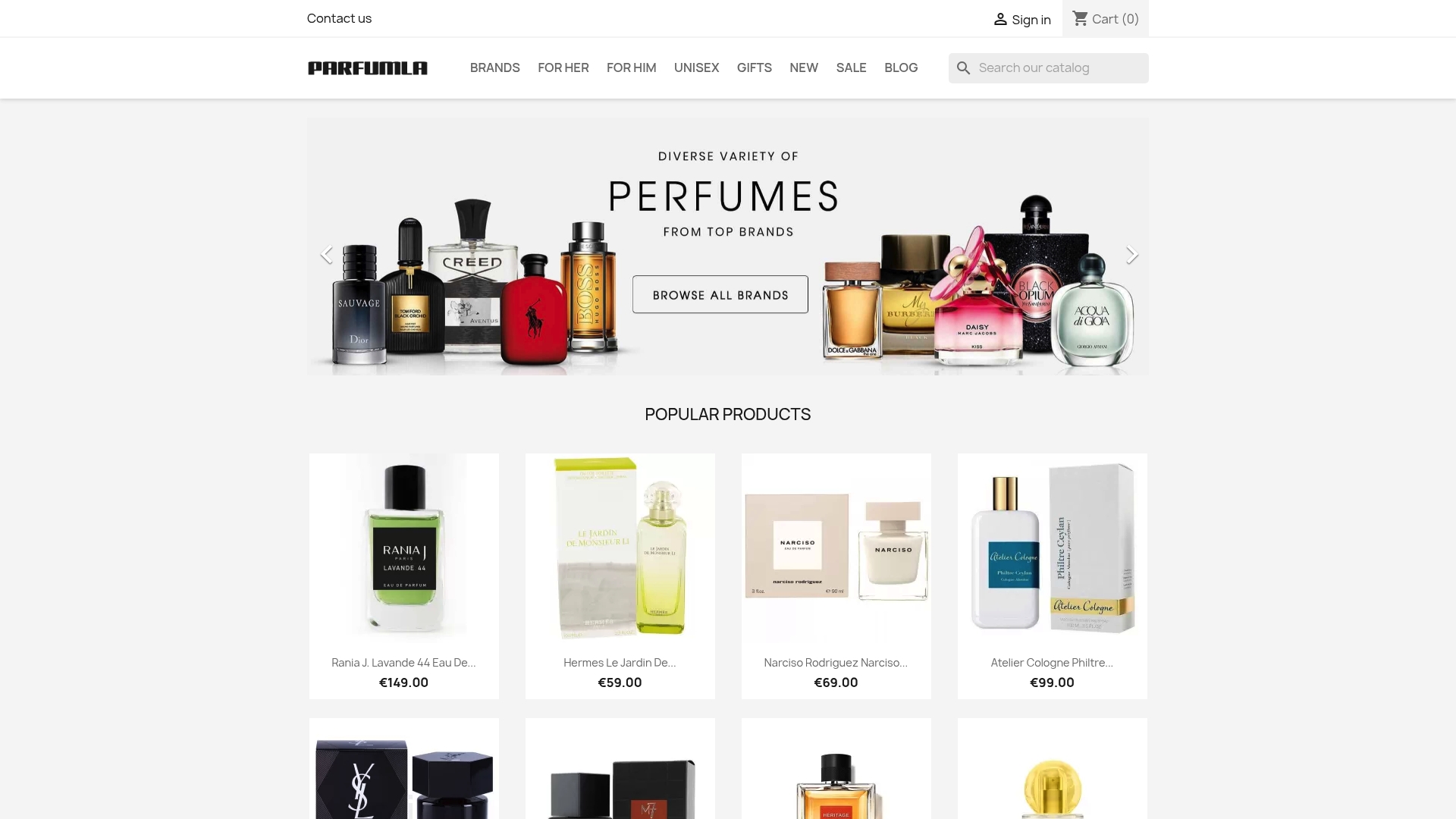
Buy Parfumla perfume online with confidence, starting with a small-format trial before choosing a full-size bottle.
- Browse Decants & Samples to try a scent without long-term storage commitment.
- Explore full-size options in WOMEN, MEN, or UNISEX once you know what you love.
- Check GIFTS if you're shopping for someone else and want to skip the guesswork on their behalf.
For the best price for Parfumla fragrance and to find where to buy original Parfumla perfume, start with a sample size and scale up only once you're sure.
Sources
- Should you store perfume in the fridge to make it last longer? | GQ India
- How To Properly Store Perfume, According To An Expert
- How to Properly Store Perfume - Lancôme
- Fridge Storage for Perfume: Pros and Cons for Longevity | WhatScent
FAQ
Can I wear 10 year old perfume?
It depends on the composition and how it was stored, since some heavily fixed or resinous perfumes hold up well over a decade while lighter, citrus-forward scents can turn much sooner. Check for color change, cloudiness, or a sour top note before wearing it, and try a small dry-down test on skin first.
What is the 3:1:1 rule for perfume?
This isn't a term used in the sourcing behind this article, and definitions of it vary widely online. Rather than relying on an unverified rule, follow the consistent guidance from fragrance experts: store perfume in a cool, dark, stable spot and avoid heat, light, and humidity.
Where should I store my perfume to keep it fresh?
A drawer or closet shelf away from windows, radiators, and bathroom humidity is the ideal spot for most bottles. Keeping the original box on works even better, since it blocks light and buffers against temperature shifts.
Where should I put my perfume to make it last longer?
Aim for a stable, moderate temperature, roughly 10 to 20°C or 50 to 68°F, away from direct sunlight and heat sources. Decanting part of a bottle into a smaller travel spray also helps by limiting the bottle's exposure to air each time it's opened.