
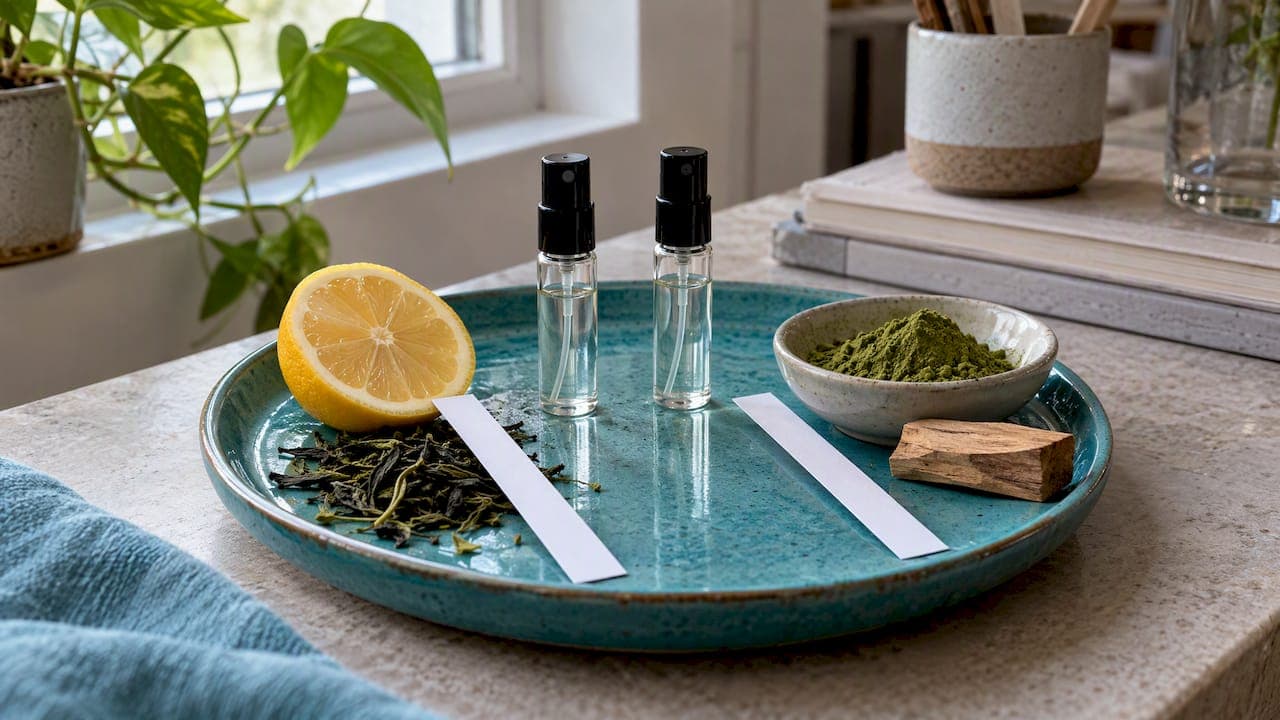
Green tea perfumes split into two directions: fresh and citrus, or warm and matchable. If you want energy and a clean finish, lean fresh. If you want something quiet and skin-hugging, lean matcha. Either way, sample before you commit, and match your concentration (EDT or EDP) to how long you need the scent to last. We carry decants and samples so you can test both directions before buying a full bottle.
TL;DR:
- Fresh citrus green tea perfumes typically last 4 to 6 hours and are best suited for spring, summer, or office environments.
- Warm matcha-style scents generally provide 6 to 8 hours of longevity and are more intimate, ideal for cooler weather or evening wear.
- Authentic green tea accords often include notes like mate absolute or green tea ketone, which create a more genuine tea-like smell.
- Sampling decants before buying full bottles helps ensure the scent matches personal preferences and performs well on individual skin.
- Longevity and projection vary significantly by concentration and note composition, making notes and reviews critical for accurate expectations.
Table of Contents
- Understanding the two green tea scent directions
- How to choose a green tea perfume: a buying checklist
- What fragrance communities say about green tea archetypes
- How we help you try before you buy
- What buyers actually say in reviews
- How to evaluate authenticity and quality
- Price range and value in green tea perfumes
- Layering green tea perfumes with other scents
- Why "green tea" is a direction, not a destination
- Ready to try green tea perfumes for yourself
- FAQ
- Sources
Understanding the two green tea scent directions
"Green tea" on a perfume label rarely means one smell. It means a mood, and that mood usually falls into one of two camps.
Fresh and citrus-driven green tea opens with sparkle. Expect top notes like bergamot and lemon layered over a green tea accord, which reads clean, energizing, and a little soapy. These scents fade quickly on skin, often within a few hours, which makes them better suited to spring and summer or office wear where subtlety matters. Manufacturers frequently pair this direction with jasmine and light musks to round out the brightness, a pattern visible on Elizabeth Arden's own product listings, which note top notes of bergamot and lemon, a middle of green tea accord and jasmine, and a base of amber and musk.
Warm, matcha-style green tea is a different animal. It leans into supporting notes like fig, skin musk, and soft woods, producing something quiet and cocooning rather than bright. Reviewers describe this style as prioritizing atmosphere over literal leaf realism, and reviews of Le Labo Thé Matcha 26 call it a quiet-luxury take that sits close to the skin with moderate projection. This direction suits cooler months, evening wear, or anyone who wants a scent that reads as personal rather than announced.
A third category exists alongside these two: fruity or novelty green tea hybrids. Think strawberry, pistachio, or basil paired with a green tea accord. These are playful twists rather than serious interpretations of tea, and they work best when you want something fun and seasonal rather than a signature scent.
When you are scanning a product description, a few words tell you which direction you are looking at:
- Bergamot, citrus, or lemon signal the fresh direction.
- Fig, musk, or woods signal the warm matcha direction.
- Mate absolute or matcha suggest a more deliberate, realistic tea accord rather than a generic citrus-musk blend.
- Strawberry, pistachio, or basil mark a novelty hybrid, not a straight tea interpretation.
Perfume construction guides note that hedione, bergamot, nerolidol, linalool, and beta-ionone are common building blocks for fresh green tea accords, which explains why so many "green tea" perfumes smell more like clean laundry and citrus than actual brewed leaves. That gap between the name and the smell is exactly why direction matters more than the words "green tea" on the box.
How to choose a green tea perfume: a buying checklist
Picking a green tea perfume comes down to five decisions, and getting them in order saves you from a bottle that sits unused in a drawer.
- Decide on concentration first. Eau de toilette (EDT) formulas are lighter and fade faster, while eau de parfum (EDP) versions carry more oil and typically last longer. Premium EDP formulations in this category report longevity around 6 to 8 hours, while lighter EDT green tea scents often land closer to 4 to 6 hours, based on community and retail review summaries of several Elizabeth Arden flankers.
- Read sillage language carefully. "Skin scent" or "close wear" means low projection, good for the office or layering. "Fills a room" means the opposite, better for evenings out.
- Look for realism cues in the notes. Accords built with mate absolute or green tea ketone tend to read as more tannic and tea-like, while a plain citrus-musk blend will smell pleasant but generic.
- Sample before a full bottle purchase. A decant or sample vial lets you test how the scent develops over several hours on your own skin, which matters more than how it smells on a paper strip.
- Match the format to your confidence level. A blind buy makes sense for a familiar brand or a scent you have smelled before on someone else. Anything unfamiliar, especially in the matcha or niche category, is worth sampling first.
Pro Tip: Spray a sample on your wrist in the morning and check back at hour 4 and hour 7. That tells you more about real-world longevity than any review ever will.
Our guide to fragrance projection breaks down how reviewers use terms like sillage and dry-down, which helps when you are translating a product page into what you will actually experience.
What fragrance communities say about green tea archetypes
Three archetypes come up again and again when fragrance communities discuss green tea scents, and each one carries its own expectations.
- Fresh or iced-tea archetype: Built on bergamot and citrus with a green tea accord and light musk base. Community review summaries describe this style as 4 to 6 hours of longevity with moderate sillage, and users often call it "shower-fresh," a description that can mean approachable or generic depending on what you want.
- Warm matcha archetype: Built around fig, musk, and soft woods rather than citrus. This style reads as quieter and more intimate, with longevity in the 6 to 8 hour range for premium formulations and projection that stays close to the skin.
- Fruity or novelty hybrid archetype: Pairs green tea with strawberry, pistachio, or basil. Retail listings for variants like Green Tea Pistachio Crunch show how added notes shift both the mood and the season a scent fits best, from a summer picnic vibe to something closer to a dessert.
User reviews on Parfumo for Green Tea Strawberry Basil describe the scent as straightforward and linear, with solid warm-season appeal but moderate longevity, a pattern consistent with the fresh archetype generally. The takeaway across these three groups is simple: decide which mood you want first, then let the notes confirm it, rather than assuming every "green tea" bottle will smell the same.
If you are drawn to the quiet-luxury matcha style, our Le Labo category page is a useful starting point for exploring that warmer direction.

How we help you try before you buy
Choosing between a fresh citrus tea and a warm matcha direction gets a lot easier when you can test both without committing to a full bottle. A recommended path is to start with a decant or sample, wear it through a full day, then move to a full bottle once you know how it performs on your own skin. Reliable shipping across the US and EU enables a sample bought today to turn into a full-size order without waiting on a slow restock, and product pages carrying buyer feedback help you gauge how a scent wears before you decide.
What buyers actually say in reviews
Review patterns for green tea perfumes tend to cluster around two complaints and two compliments. On the positive side, buyers consistently praise the fresh direction for being easy to wear daily without overwhelming a room, and they praise the matcha direction for feeling distinctive compared to typical fruity-floral releases. On the critical side, the most common complaint across both directions is longevity: citrus-forward versions fade fast, and even warm matcha styles are skin scents by design, which some buyers interpret as weak performance rather than an intentional trait.
Parfumo user review summaries illustrate this pattern well, scoring scent appeal reasonably high while longevity and sillage trail behind. That gap between how much someone likes a scent and how long it lasts is the single most useful thing to watch for when reading reviews, more than star ratings alone. If a review praises the opening but goes quiet on staying power, assume you will need to reapply or choose the EDP version if one exists.
How to evaluate authenticity and quality
Quality in a green tea perfume comes down to how the accord is built, not just what the label says. A convincing tea accord usually layers a few specific elements: citrus for top-note sparkle, an airy floral like hedione for lift, and something tannic such as mate absolute or green tea ketone to mimic the slightly bitter, brewed quality of real tea. Formulation resources describe this layering approach as the difference between a scent that reads as genuinely tea-like and one that is really just a citrus-musk blend wearing a tea label.
Authenticity in the retail sense matters just as much as authenticity in the formula. Buying from a seller that guarantees original product protects you from the counterfeit risk that affects popular fragrance lines, and checking for detailed note breakdowns on a product page, rather than vague marketing copy, is a reliable way to judge whether a listing takes the scent seriously. When a description lists specific accord-level detail like mate absolute or green tea ketone, that is usually a sign the brand invested in the tea character rather than leaning on the name alone.

Price range and value in green tea perfumes
Green tea perfumes span the full spectrum from drugstore-adjacent designer releases to niche houses charging a premium for accord complexity. Rather than quote a specific figure that varies wildly by brand and bottle size, the practical value question is whether the longevity and projection match what you are paying for. A fresh citrus tea scent that fades in four hours is a fair deal at a lower price point, while a warm matcha fragrance asking a premium price should deliver the 6 to 8 hour performance that category is known for.
Sampling is the real value lever here. Buying a decant first means you spend a small amount to confirm a scent works on your skin before committing to a full bottle, which protects you from the most common value failure: a full-size purchase that gets worn twice and then abandoned. We offer decants and samples specifically to let you test that fit economically, alongside savings up to 60% off retail on full bottles once you know which direction suits you.
Layering green tea perfumes with other scents
Green tea's modest projection, especially in the matcha direction, makes it a strong base for layering rather than a scent that always needs to stand alone. Applying an unscented lotion first helps trap the fragrance and extends how long you perceive it on skin, a tactic that matters more for green tea perfumes than for heavier, more tenacious fragrance families. Layering a fresh citrus tea under a light floral spray can add dimension without clashing, since both tend to sit in similar territory. For the warm matcha direction, pairing with something woody or musky reinforces the quiet, skin-hugging quality rather than fighting it. Spraying green tea perfume on clothing in addition to skin is another simple way to stretch perceived longevity, since fabric holds fragrance differently than skin does. If you are also looking at scent in other parts of your routine, this guide to perfume oil versus spray formats covers how delivery method affects how long any scent, tea-based or otherwise, lasts through the day.
Why "green tea" is a direction, not a destination
The biggest mistake in shopping for green tea perfume is treating the phrase as a single, predictable smell. It is not. It is shorthand for a mood, and two bottles both labeled "green tea" can land on opposite ends of fresh and warm. The conventional advice to just "try a green tea perfume" misses this entirely and sets buyers up for disappointment when their fresh citrus expectation gets matched with a quiet matcha bottle, or the reverse.
What the evidence actually supports is prioritizing the accord detail over the category label. A listing that mentions mate absolute or green tea ketone is telling you something real about how the scent was built. A listing that just says "green tea" with no further detail is a coin flip. Readers should treat note lists as the primary signal and the word "tea" as secondary, then confirm their read with a sample rather than a star rating. That one habit, sample first and trust the notes over the name, solves more buying regret than any brand reputation ever will.
— Parfumla
Ready to try green tea perfumes for yourself
- Browse our WOMEN category for classic and modern green tea releases.
- Check the UNISEX category if you want a gender-neutral take on the matcha direction.
Find where to buy original Parfumla perfume and build your own tea-scented rotation at your own pace.
FAQ
Is Elizabeth Arden Green Tea perfume available?
Yes, Elizabeth Arden's Green Tea line and its flankers, including Green Tea Fig and Green Tea Scent Spray, remain widely available through retail and online fragrance sellers. These releases represent the fresh, citrus-forward direction of green tea perfume rather than the warmer matcha style.
What is the most seductive perfume smell?
"Seductive" is subjective and depends heavily on personal taste and occasion, so there is no single agreed-upon answer. Warm, skin-hugging scents built on musk, woods, or amber are commonly described as sensual, while bright citrus or green scents read as fresh rather than seductive.
What are some tea-scented perfumes available?
Tea-scented perfumes range from fresh citrus interpretations like Elizabeth Arden's Green Tea line to warmer, matcha-style releases such as Le Labo Thé Matcha 26. Hybrid versions that blend tea with fruit notes, like strawberry or pistachio, also exist for a more playful take.
How long does green tea perfume typically last on skin?
Longevity depends on concentration and style: lighter, citrus-forward EDT versions often last around 4 to 6 hours, while richer matcha-style EDP formulations can reach 6 to 8 hours. Reapplying or layering with an unscented lotion can extend wear time for either style.
How do I know if a green tea perfume will smell authentic?
Look for specific accord detail in the product description, such as mate absolute or green tea ketone, rather than just the words "green tea." Formulas built with these ingredients tend to read as more tea-like, while a generic citrus-musk blend will smell pleasant but less distinctive.
Sources
- Le Labo Thé Matcha 26 review — The Fragrance File
- Matcha Green Tea Accord — Olfactorian
- Green Tea Fig — Silloria product page and review summary